
During the Second World War Selkirk’s Branch 42 Legion supported Canada’s war effort through fundraising, advocacy, service, and local veterans contributed in roles like the Veterans Guard of Canada. After the war, the Legion became a key community leader, building memorials and supporting veterans while helping shape Selkirk’s growth.
By 1939 it was becoming obvious that war was a real possibility, and it fueled the patriotism of every Selkirk Branch no 42. Royal Canadian Legion member. Many members were frustrated by being too old to return to war to defend their country. In 1940 a form of service was created to accommodate veterans who were slightly too old for active service. The Veteran’s Home Guard was formed to perform assorted guarding duties and free up younger men for active duty. Men ages 40 to 65 could serve. The name was later changed to The Veterans Guard of Canada and their duties expanded to include guarding military buildings, dockyards, power plants, railways, radio stations, airports. There was no official record of how many Selkirk veterans served, but Manitoba veterans were well represented and that would have included representation from Selkirk.
Total War
1941 was an interesting year for the Legion members. At the Dominion convention in Montreal the Legion called for “Total War” which meant all Legions in Canada would abandon party politics for the duration of the war. Prior to the Second World War the Canadian government stated that overseas military service would be strictly voluntary. The Prime Minister hesitated to enact conscription because he felt it would break a promise. The Dominion Command, the national headquarters of the Legion, had a historically tense relationship with the federal government. Despite this, they supported the Prime Minister and Cabinet in advocating for policy changes to implement “Total War,” releasing the government from its previous non-conscription pledge. The federal government did eventually hold a vote with eight provinces voting overwhelmingly in favour of the government being released from its non-conscription pledge and the nineth, Quebec, voting against conscription. Although no official records of how the 42 Branch voted, older members recalled that Selkirk and the Legion voted with Manitoba.
In 1942 Canada showed it was committed to the war effort and the Legion was committed to Canada. The Dominion Convention in Winnipeg began with a resolution: “Immediate complete and scientific mobilization of all resources, spiritual, intellectual, natural, financial, agricultural, industrial, manpower—in such a manner that Canada be geared to produce essential foods and munitions and to wage war to her maximum capacity.” (MacFarlane, 1977). Branch 42 was helping in every way possible whether it was through the purchase of war bonds or the donation of scrap metal, old batteries and old tires. The Ladies Auxiliary donated many boxes of gifts to soldiers overseas to bring a little joy to an otherwise grim situation.
Canada’s contribution to the war effort throughout the Second World War was enormous. Having just half of one percent of the world’s population, Canada became the fourth largest manufacturer of weapons and munitions, including a million shells a month from steel made in Selkirk.
A Warm Welcome Home
On Tuesday, May 9 1945, Germany surrendered. A victory dance was co-sponsored by the Legion and the Army and Navy. In late July an event at the Memorial grounds was held with almost 1,000 people in attendance. As each of the 160 returning service men were announced loud applause greeted the veterans. The largest response was received by Sergeant Thomas Prince of Scanterbury, one of the most decorated soldiers in the Canadian Army, and after a couple of more medals, he was the most decorated Canadian soldier. Also present was a mother, Mrs. P. Langlois, who had nine sons in the service.
“The membership of the Forty Second Branch today can field an impressive list of men who have earned high honours from their country. Just look around you at the next formal parade and be proud of the medals you see and the actions they represent.” (MacFarlane, 1977).
Canada’s treatment of Second World War veterans was considerably more generous than that experienced by the veterans of the First World War. In fact, it was the most generous of all armies that participated in the war. The advocacy of the Legion so many years prior resulted in these veterans feeling that the government and their Legion had not let them down. Returning soldiers went back to school, to a job, or to start a farm. “It was a good time to be young, to be a veteran and to live in Selkirk.” (MacFarlane, 1977).
Building Community
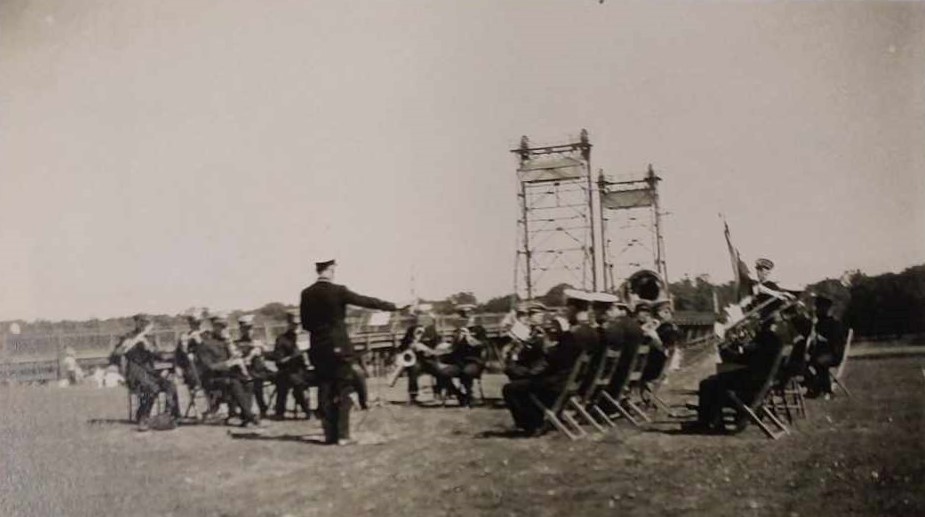
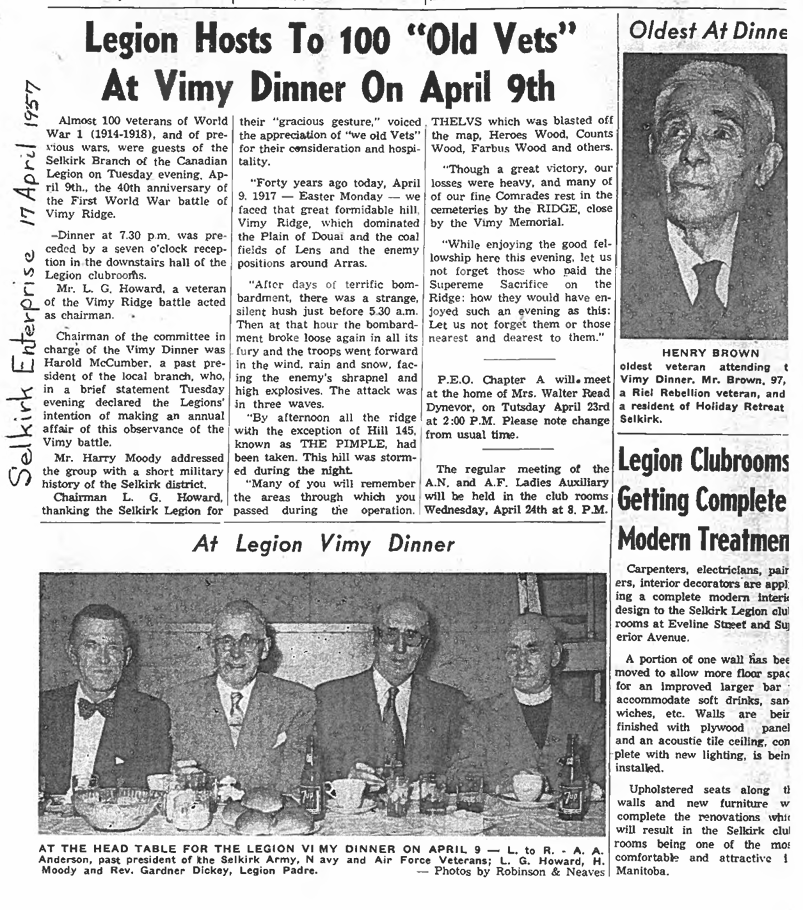
The 1950’s was a time of optimism. The Selkirk Branch of the Army & Navy opened a new club house in 1951. Its relationship with the Legion was always a friendly rivalry, but on this occasion the Army & Navy encouraged the Legion to think big. The Memorial Hall was opened in 1952 and included the Memorial Chapel dedicated to the memory of the service personnel who gave their lives in the Boer War, and the First and Second World Wars. A chapel in the hall was dedicated the same night, and items in the small chapel include a Book of Remembrance containing the names of those who died, a stained-glass window, and the bell from the HMCS Daerwood.
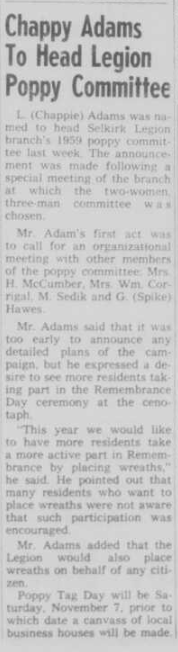
The 42 Branch continued to expand their existing facility. The Ladies Auxiliary continued to extend their helping reach into the community that included providing donated magazines to the patients at the Mental Hospital, as well as all their previous commitments. In 1959, the Cenotaph was expanded by adding a new stone to its centre so that the names of those who died in the Second World War and Korea could be added.
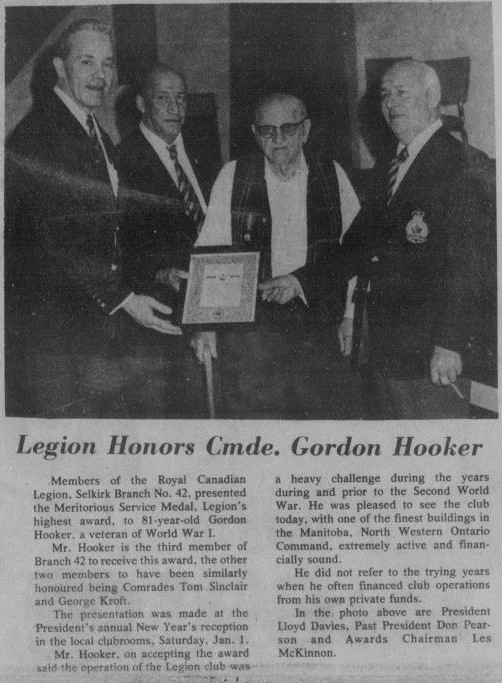
The dedication to community service continued into the 1960’s with the 42 Branch dedicating money and labor to build a school for intellectually disabled children. In 1963, the 42 Branch set its sights on a new clubhouse. Thanks to the generosity of long-time member Gordon Hooker, who offered the land next to Hooker’s Lumber for a price that could not be ignored. Pretty much every trade was represented in the membership and the new facility was a true cooperative effort.
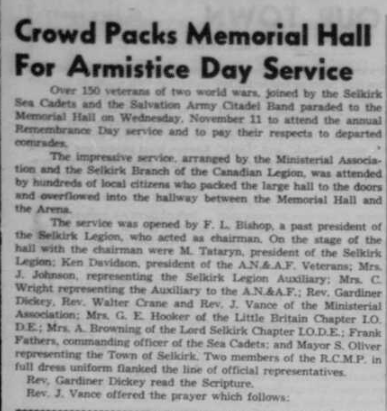
Leadership and Legacy
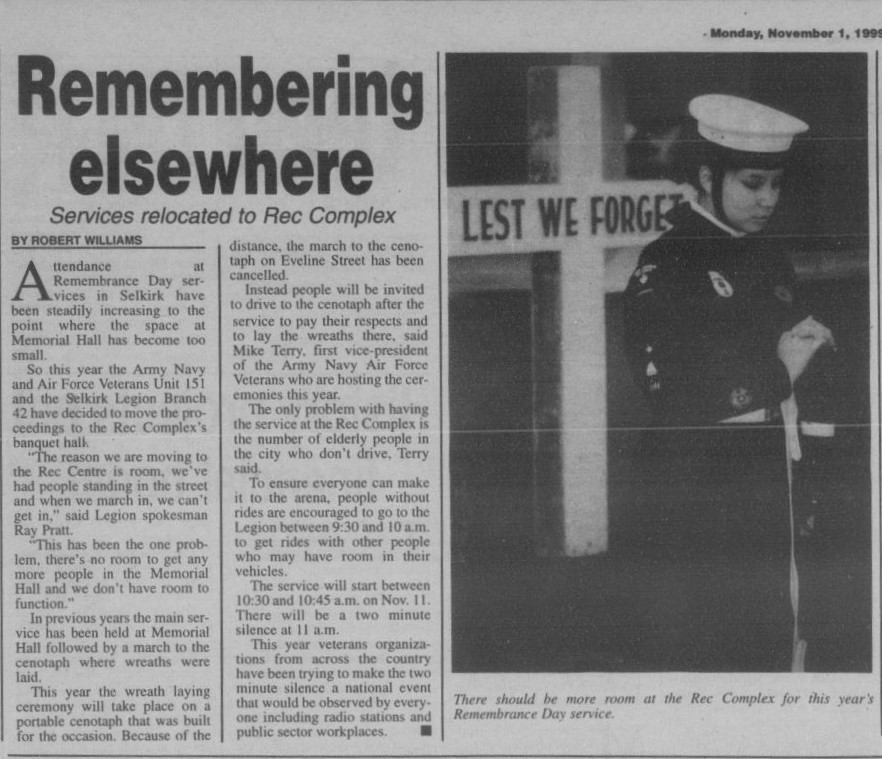
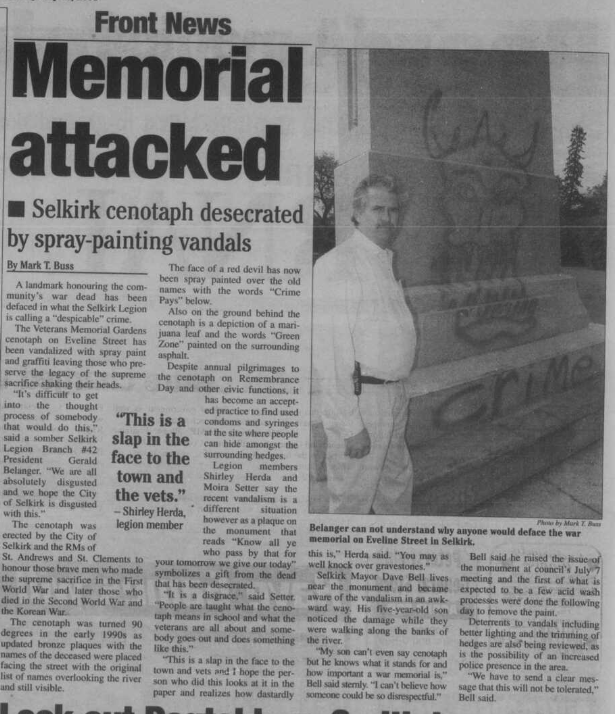
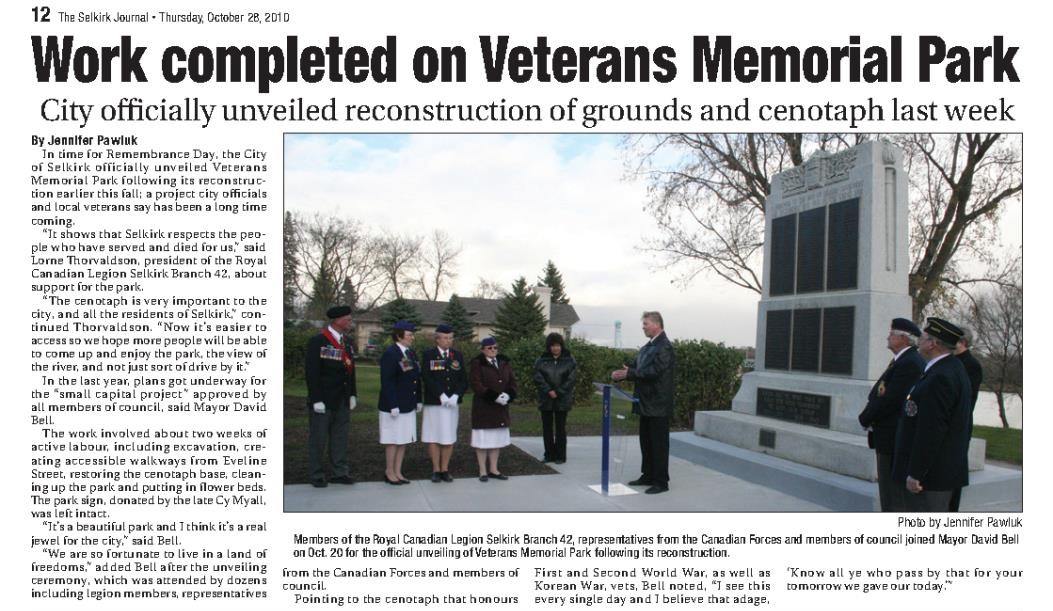
The Selkirk Cenotaph at the Veterans Memorial Gardens on Eveline Street respectfully displays the names of local military personnel who died in the First and Second World Wars and the Korean War. It also holds a plaque that reads:
“Know all ye who pass by that for your tomorrow we gave our today.”
The Legion aims for that message to resonate within today’s population that is long removed from the wars that stole too many brave youths from a young nation.
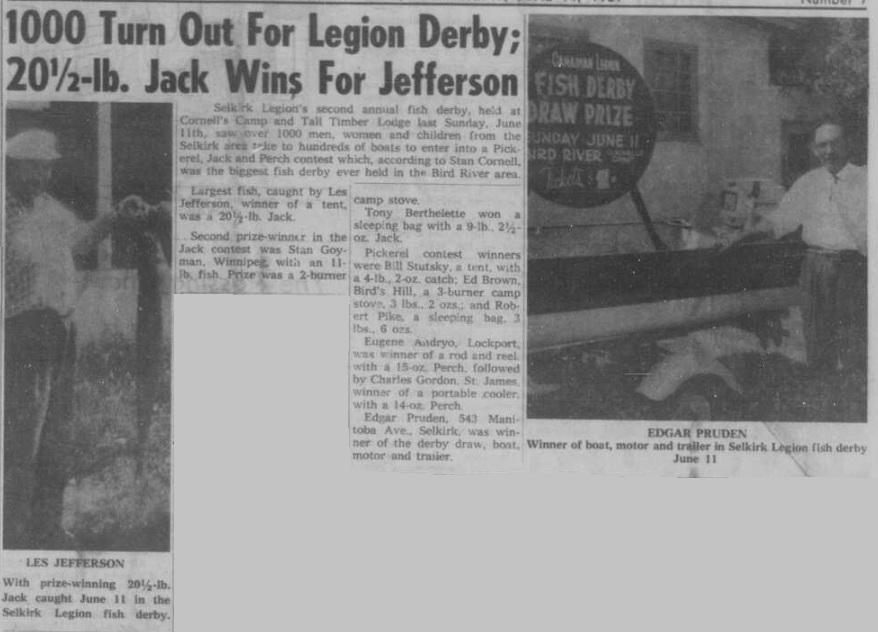
Suffice it to say that the second fifty years of Branch 42 will not describe the organization’s post-war struggles to establish itself within a depressed economy as it did at its onset. Instead Branch 42 now tells a story of success and camaraderie making it one of the most recognized and respected organizations within the Selkirk area. Those soldiers who so long ago “gave our today” could never have imagined how their legacy lives on through the good works of the current Branch 42 Legion members. Whether it was, hosting Christmas parties, sponsoring sports teams, giving scholarships, selling poppies, visiting the sick in the General Hospital, the Mental Hospital, and at Deer Lodge hospital, remembering the fallen, helping to finish the indoor pool; the list goes on and on. Perhaps to summarize, it was best said in 1977 by Mayor Lloyd Wersch, “…In those fifty years the Legion membership has contributed significantly to the welfare and prosperity of Selkirk, and it has adopted a leadership role within the community that makes it a much-admired organization.” (MacFarlane, 1977).
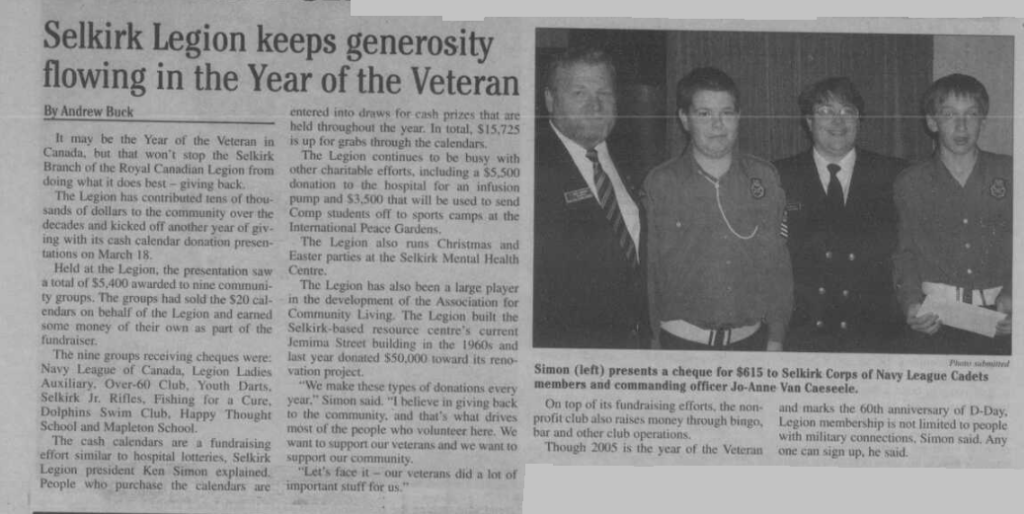
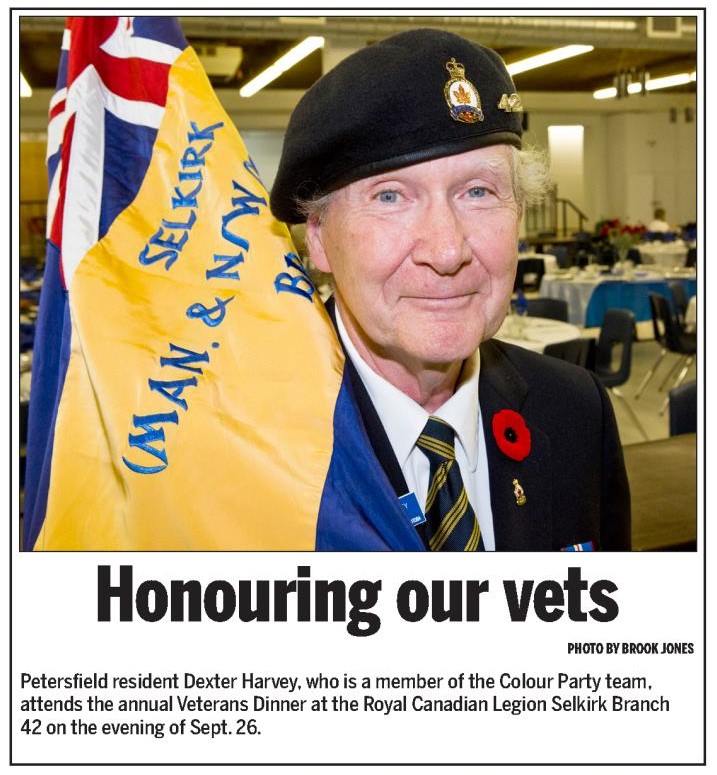
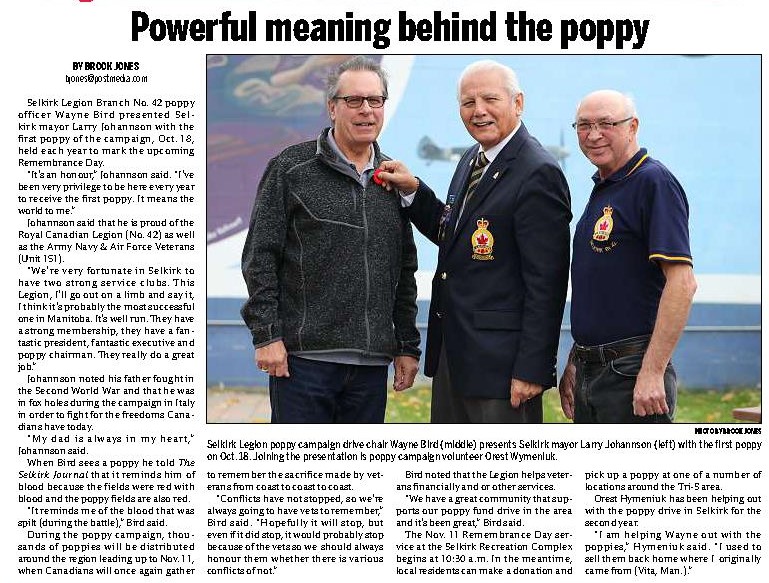
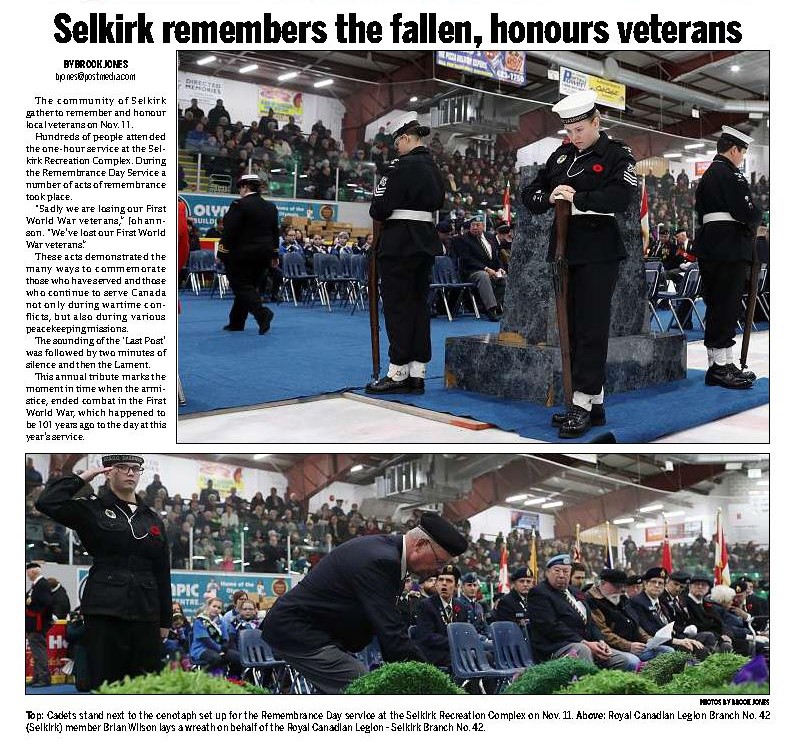
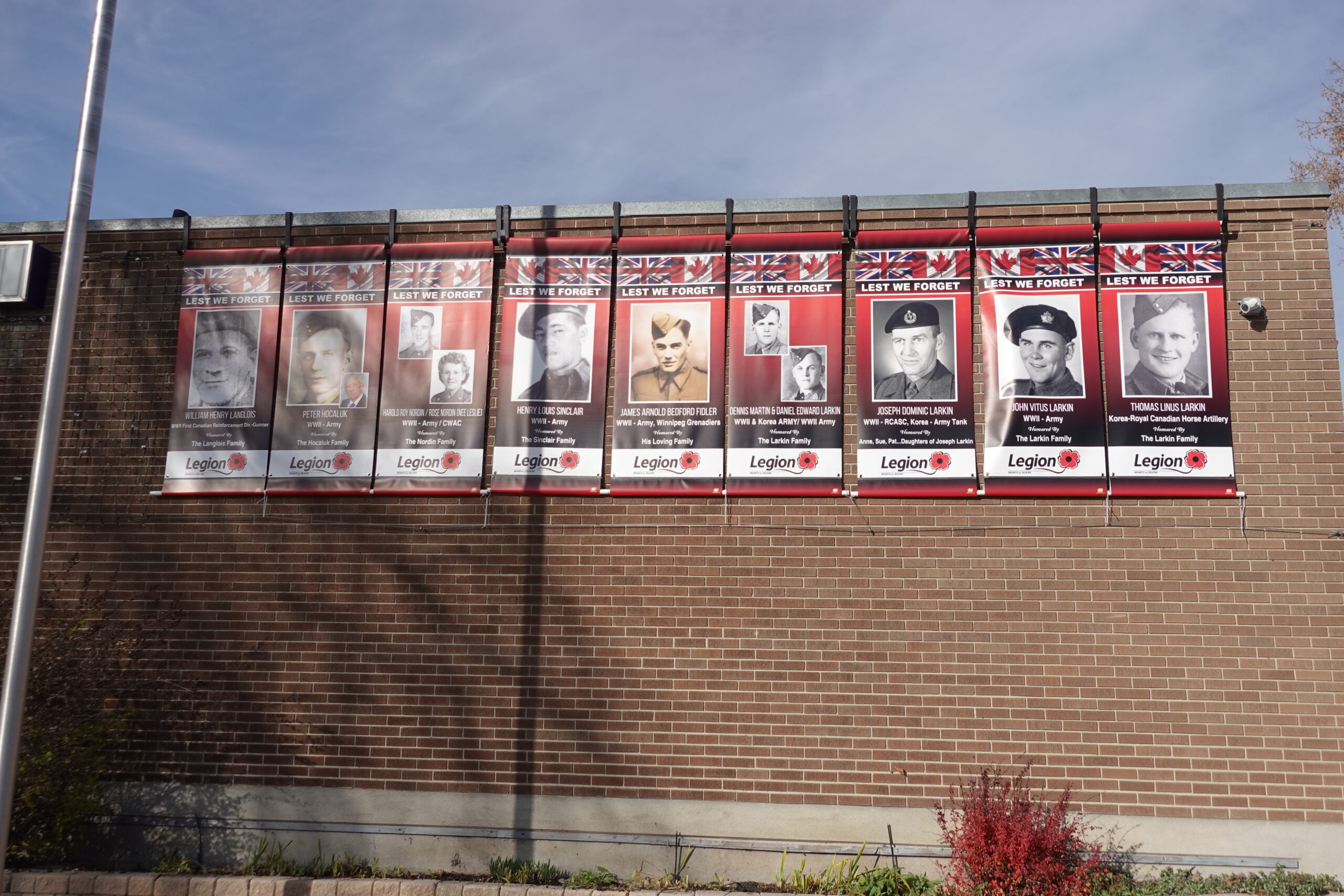
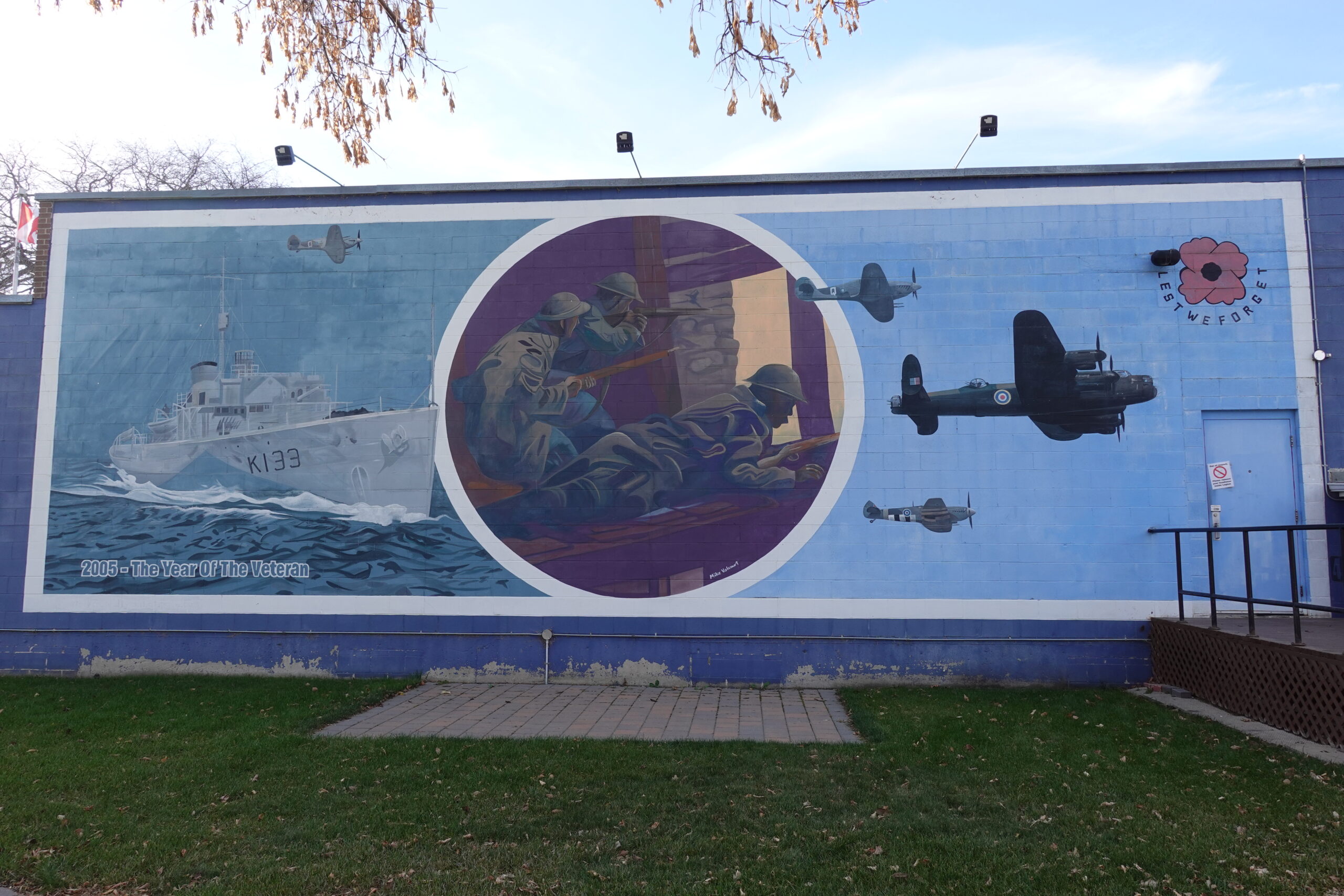
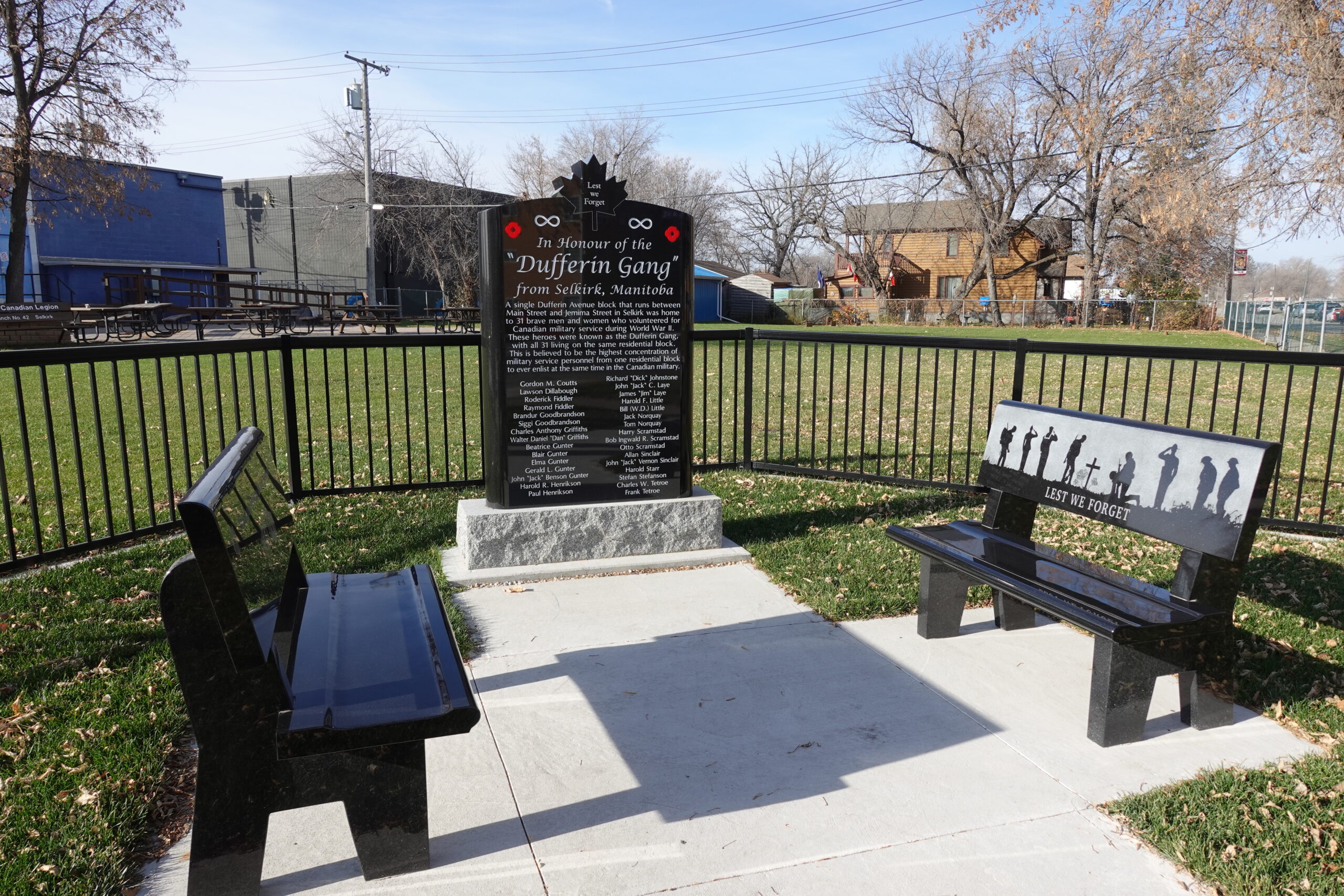
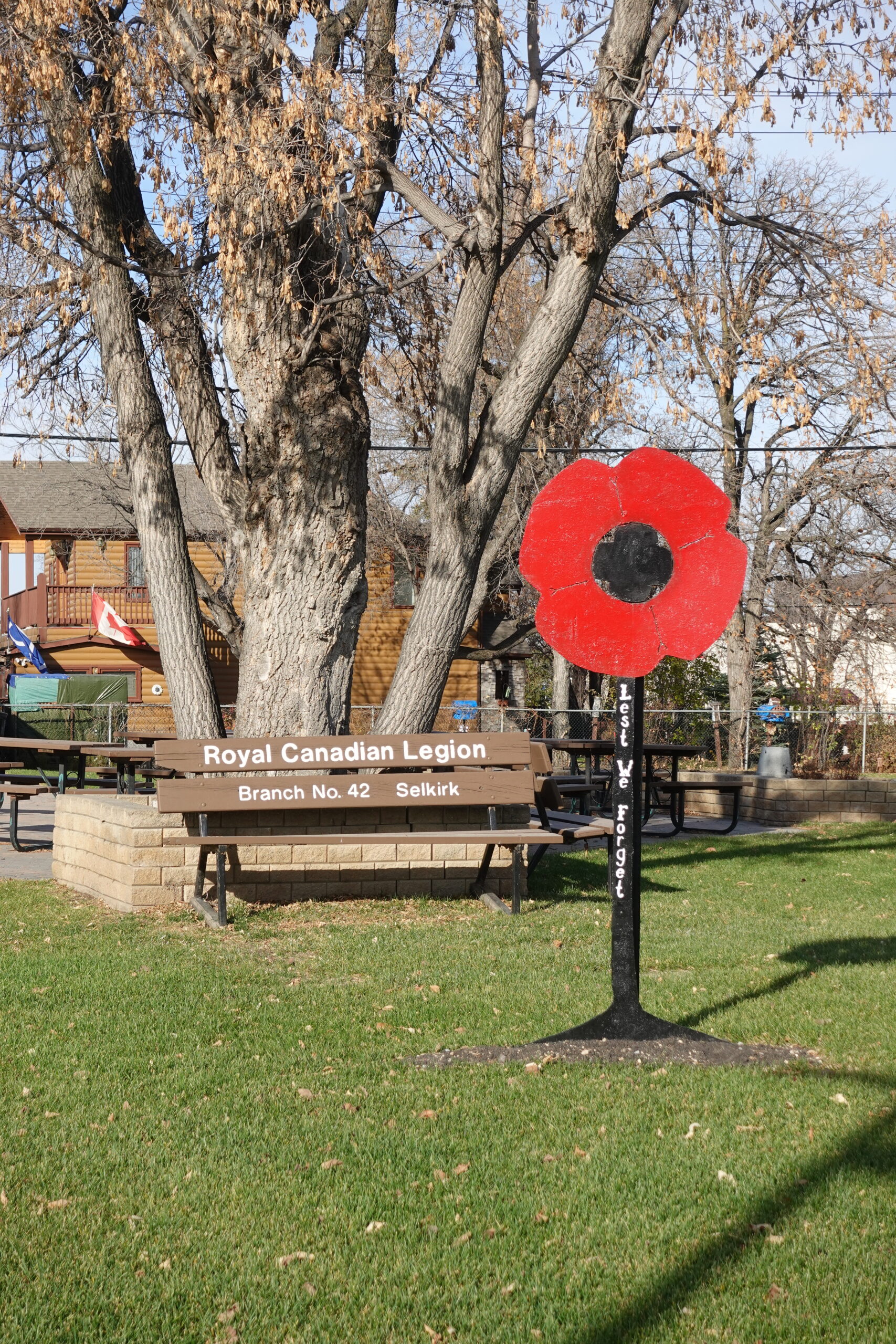
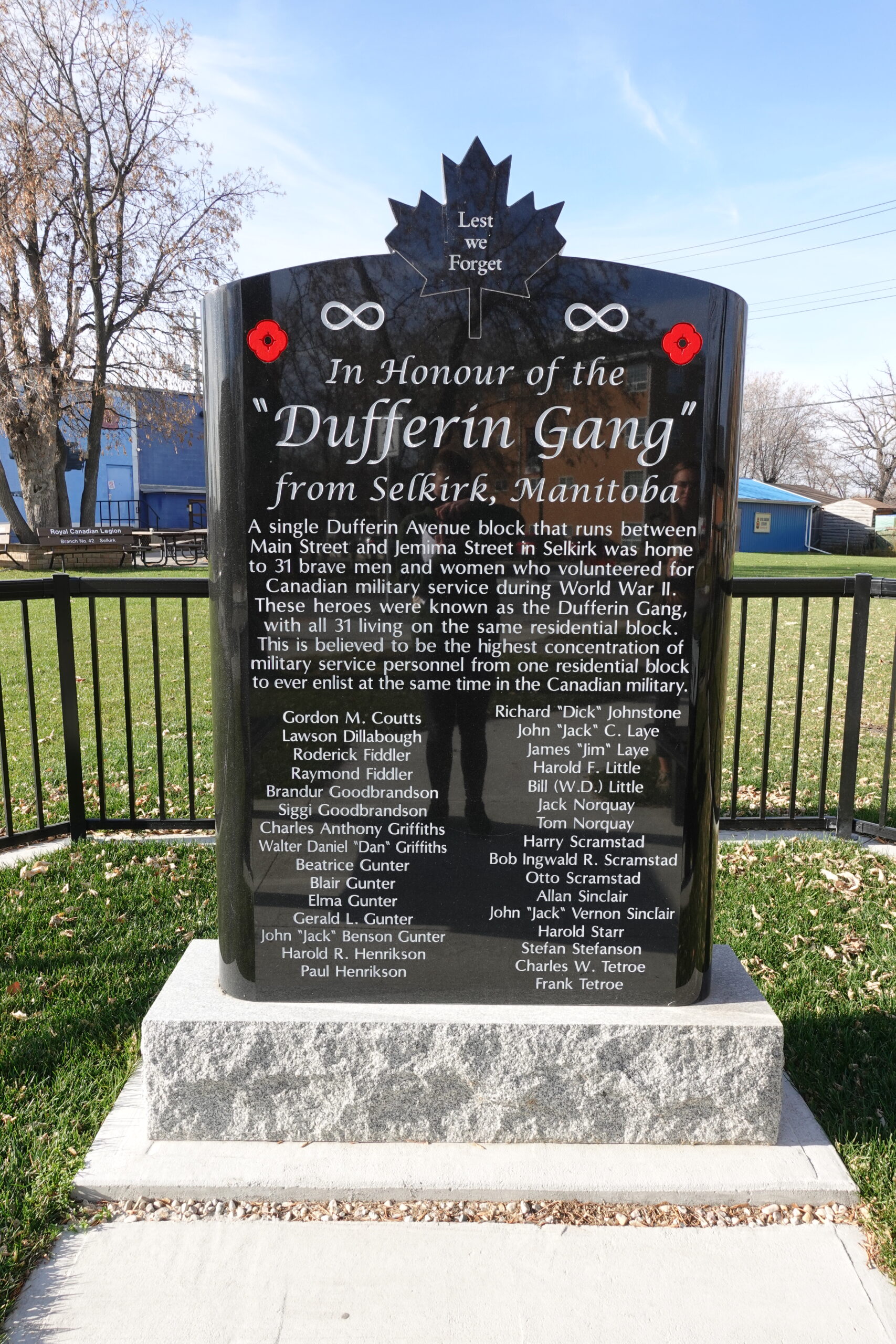
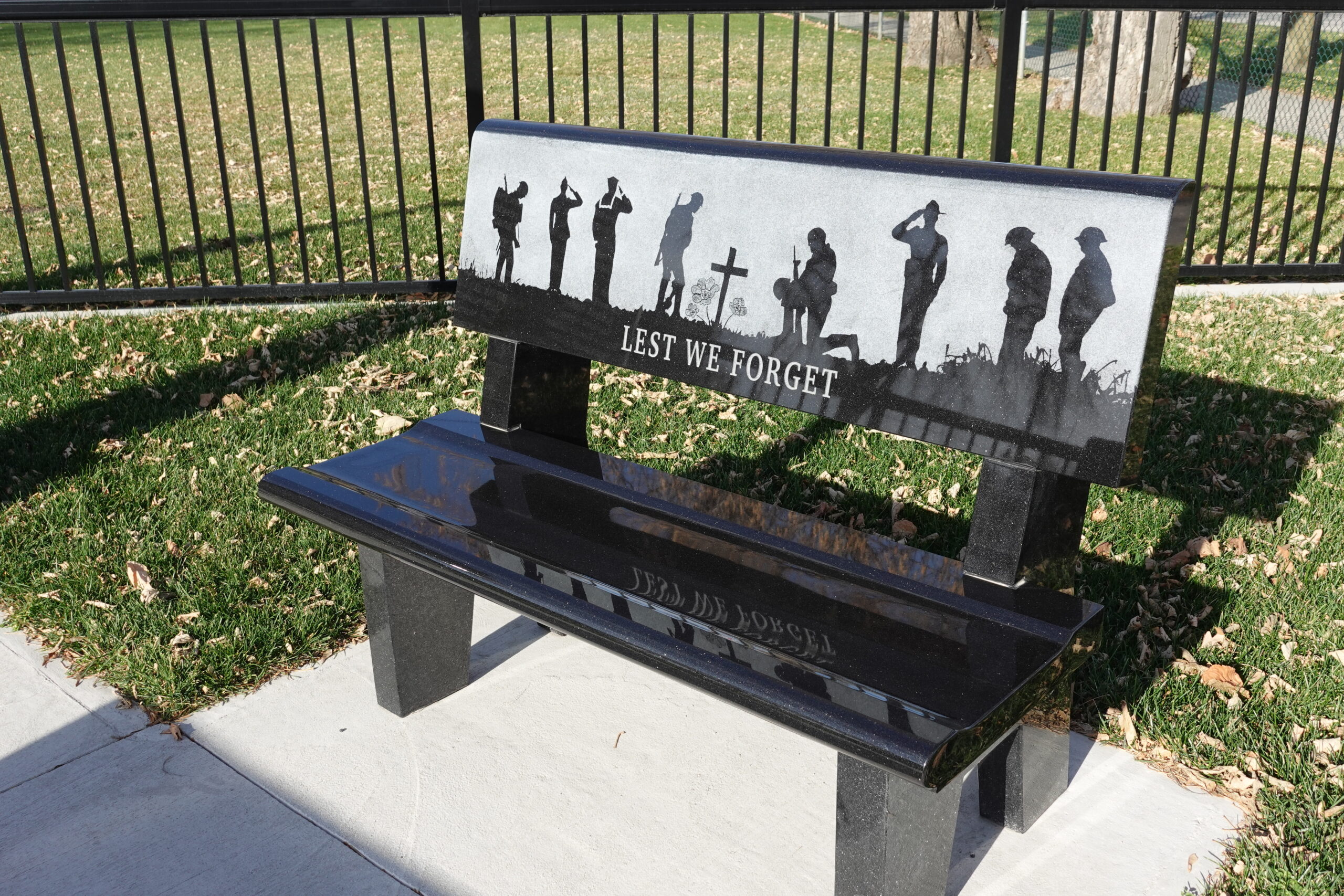
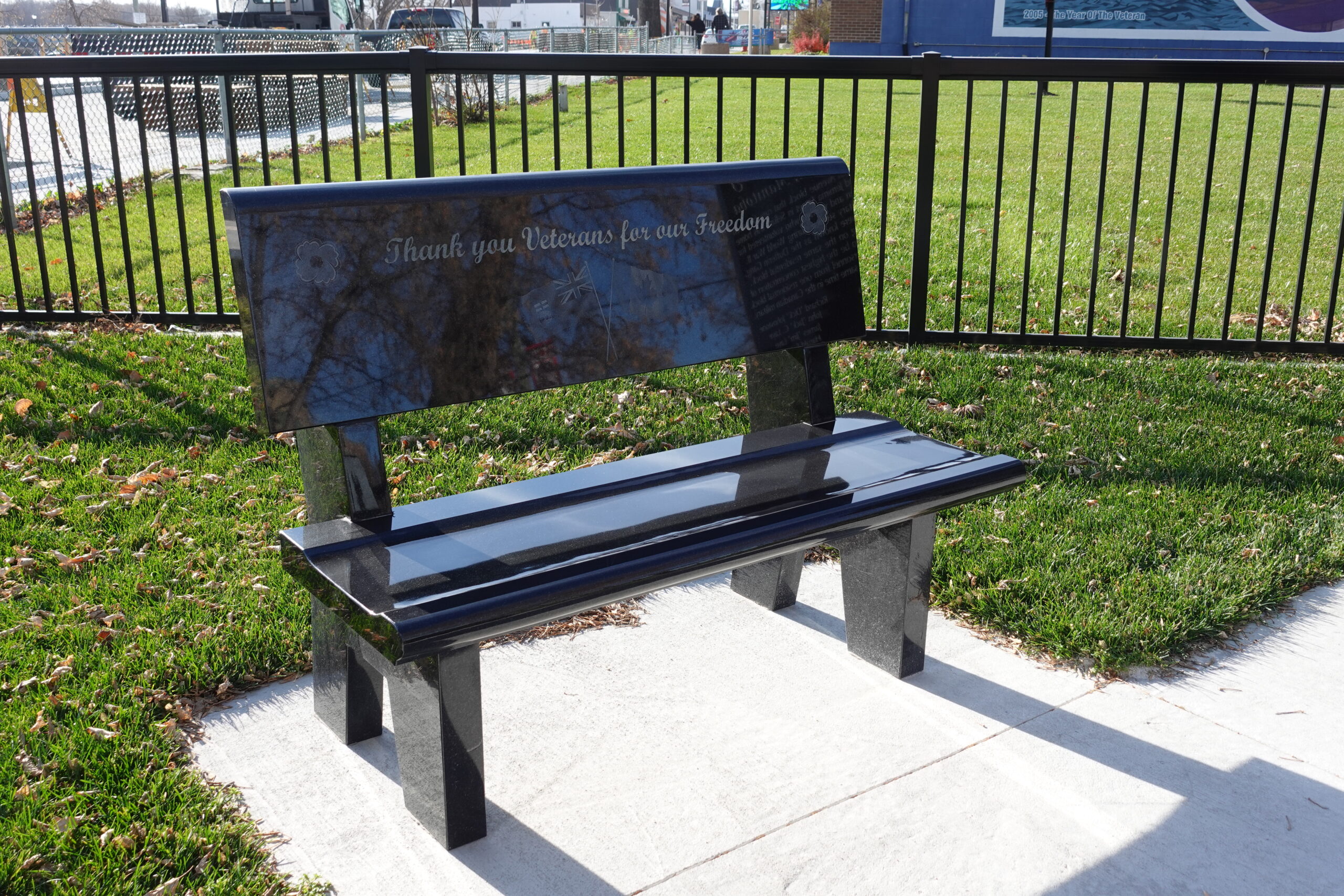
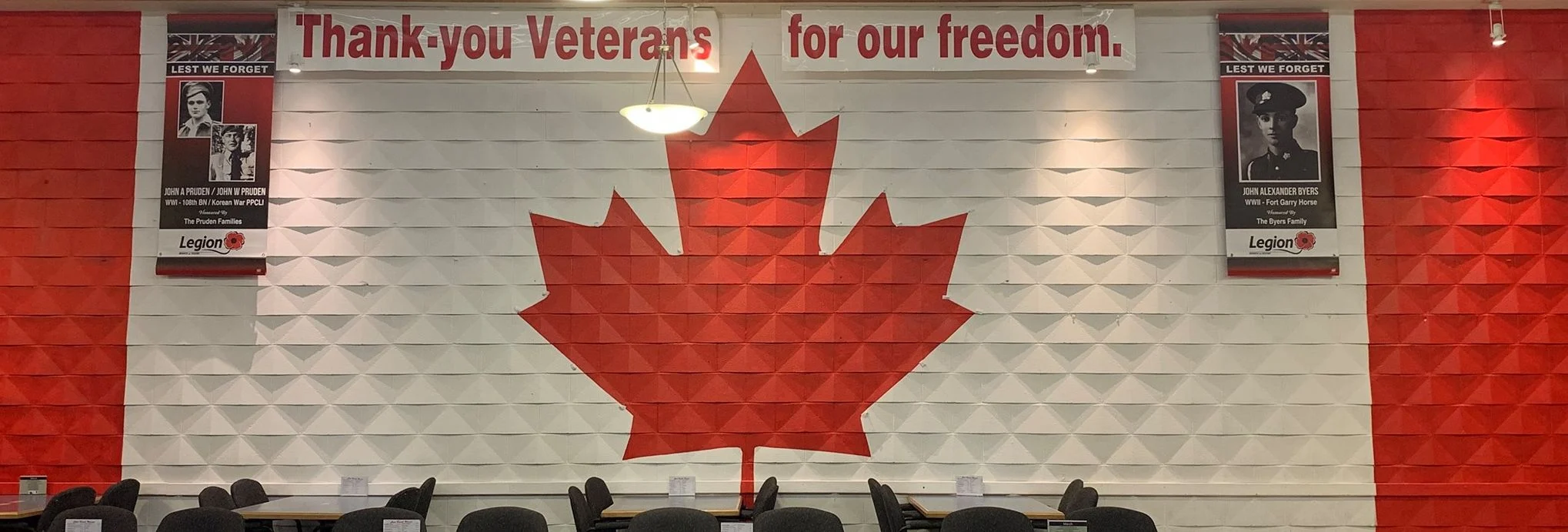
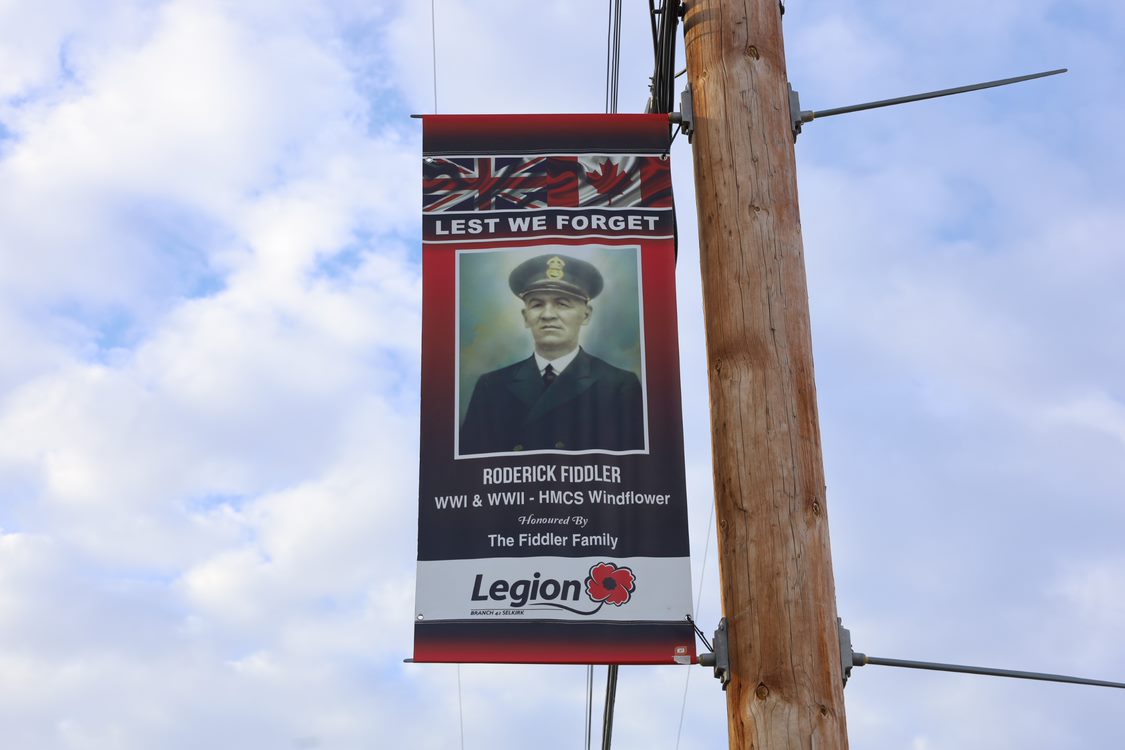
Selkirk Royal Canadian Legion Collection
Click on images to enlarge
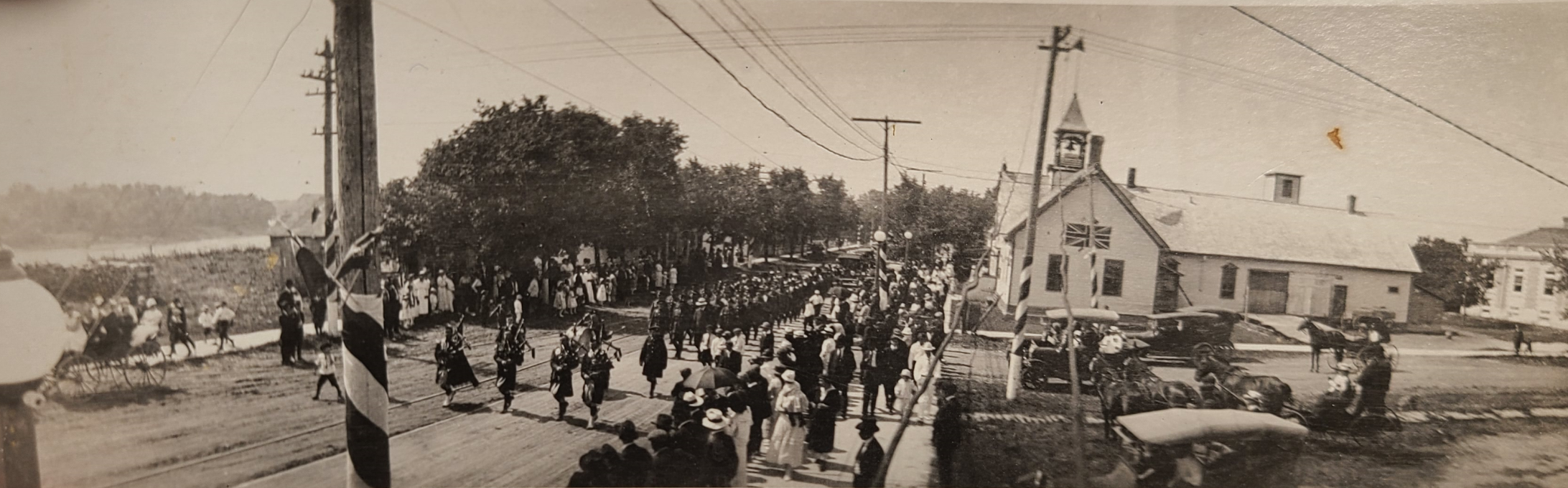
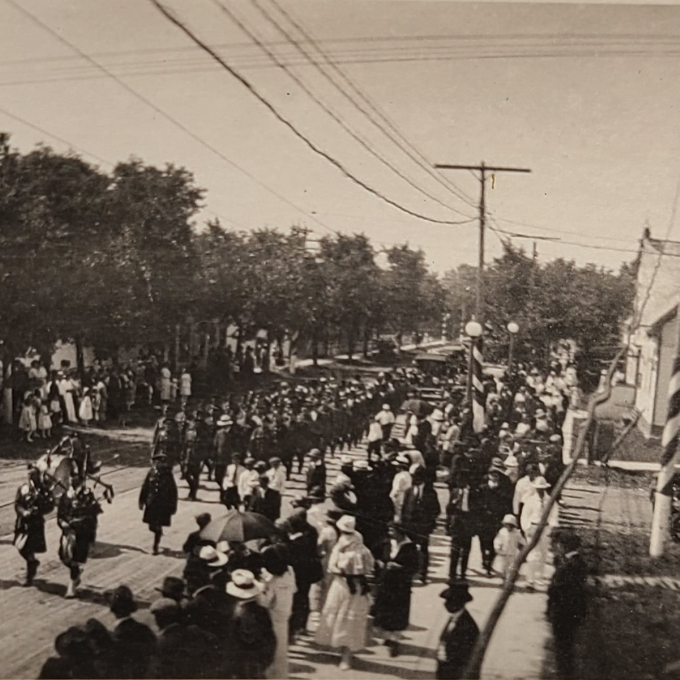 Bagpipe Players and Veterans Marching Down Eveline, 1919, Selkirk Museum Collection




Sources
Macfarlane, Malcolm Macleod, The Forty-Second Branch: The Royal Canadian Legion, Branch No. 42, Selkirk, Manitoba, Canada, (Gordon Publishers, Selkirk, MB), 1977.