
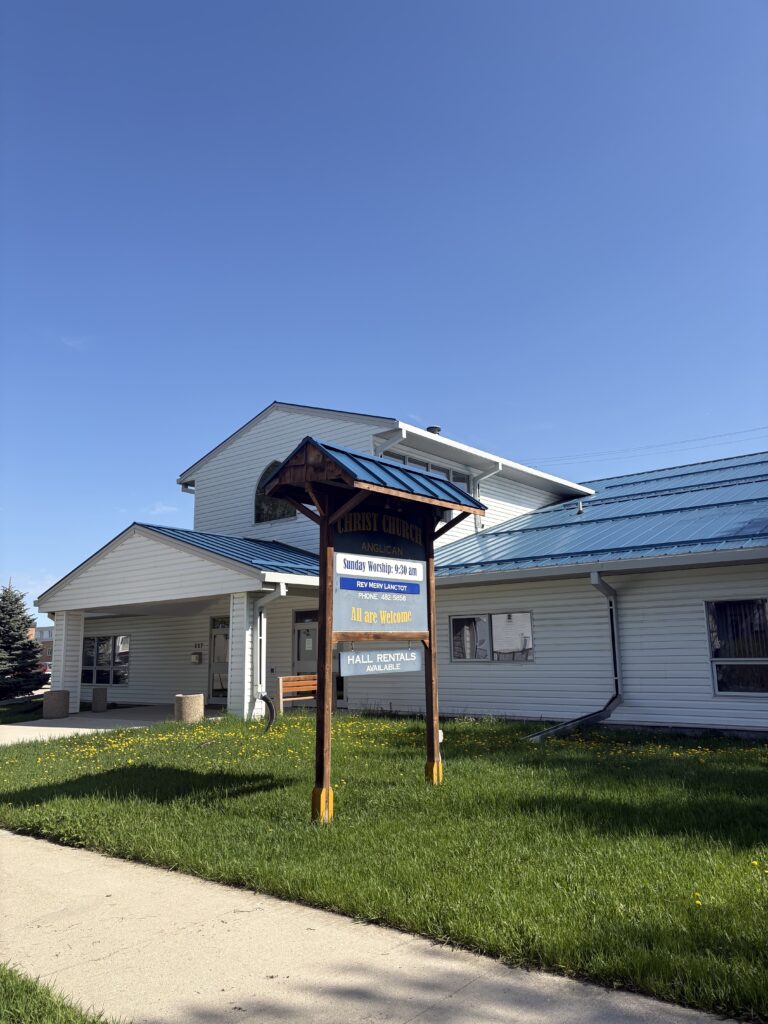
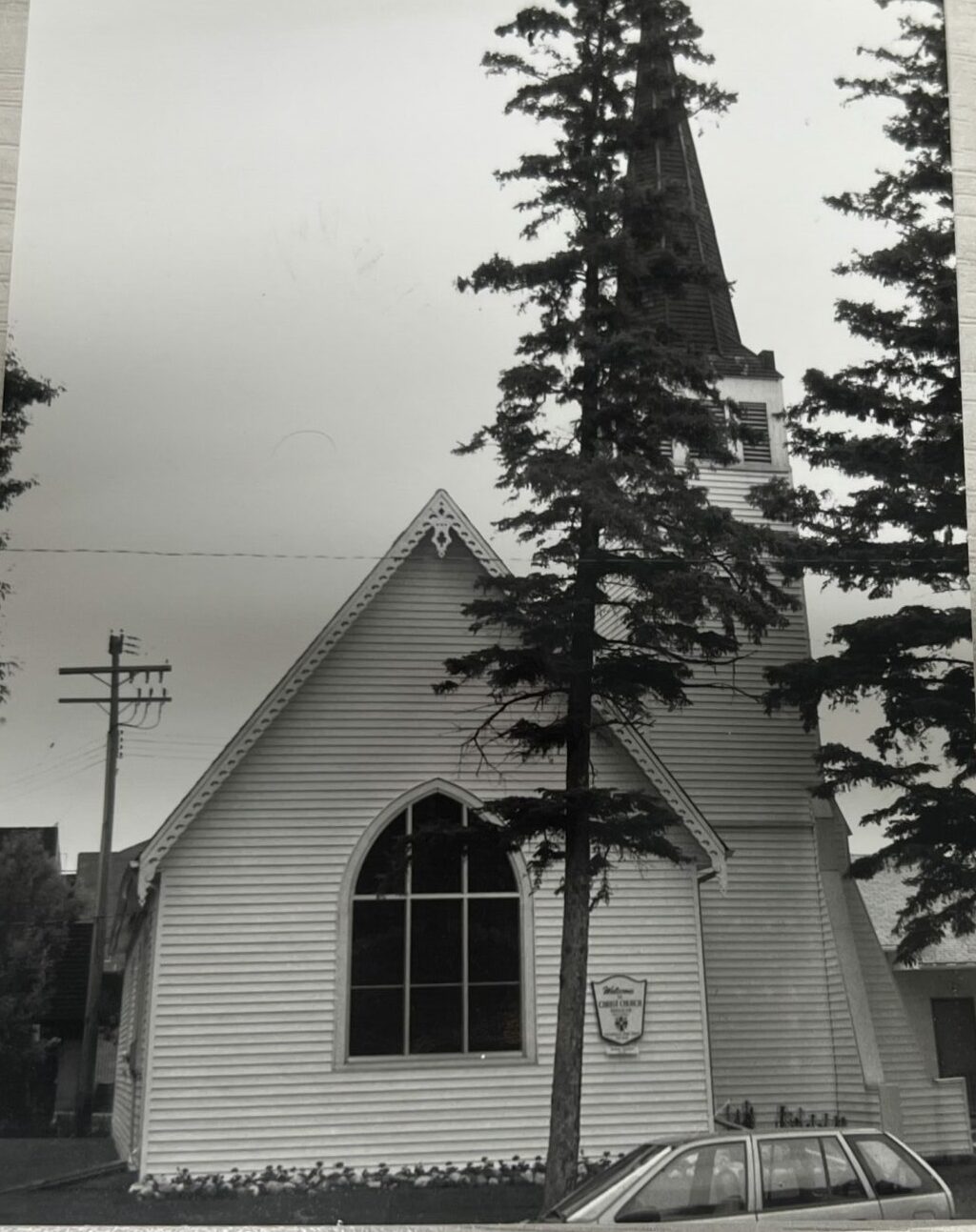
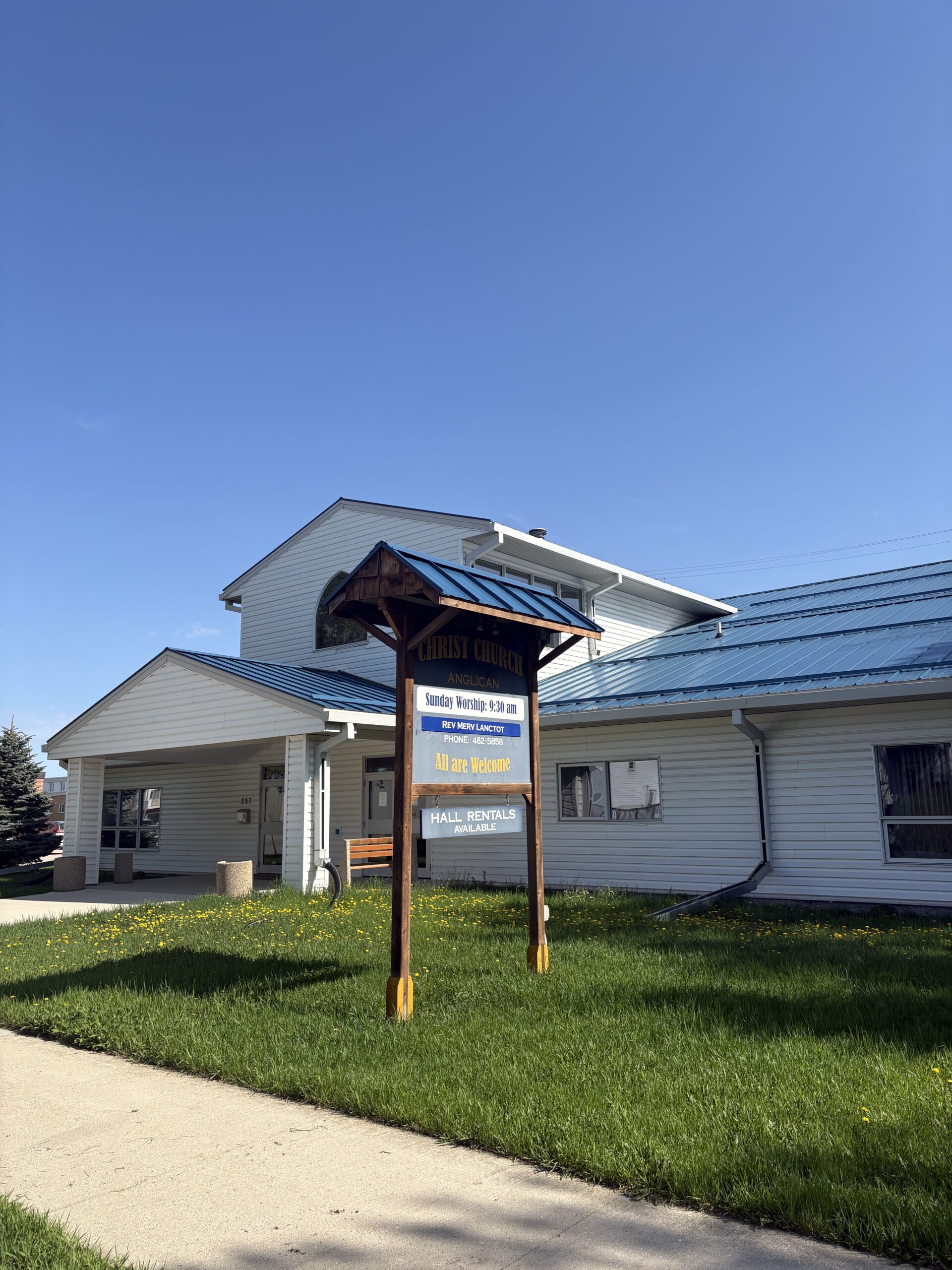
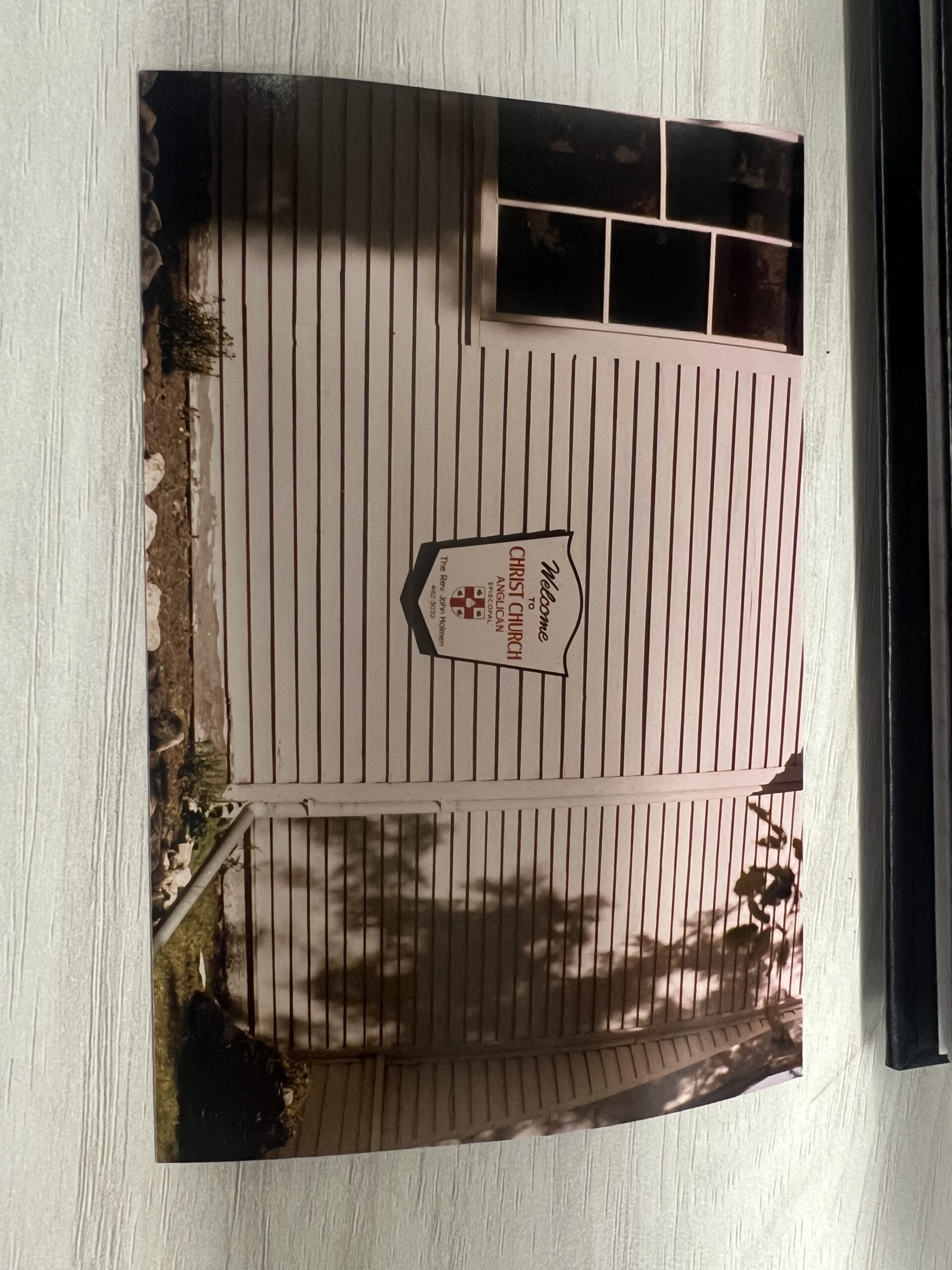
Christ Church in Selkirk began with Anglican gatherings in the 1860s and became an independent parish in 1887 with the construction of a church on McLean Avenue. It grew through continuous expansions and community support, and after replacing the original building in 2001, it remains an active centre of worship and outreach.
The Roots of the Present are Deep in the Past
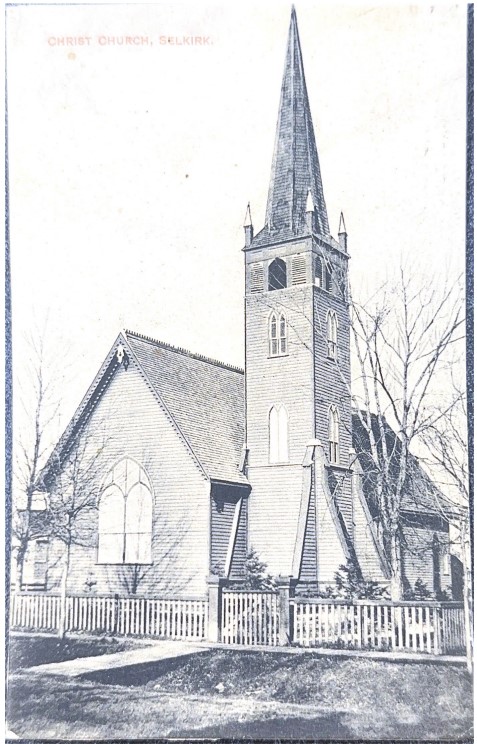
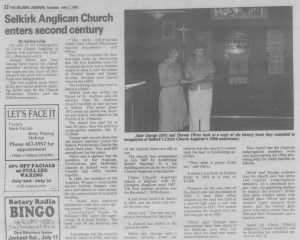
Today, a modern version of Christ Church sits at 227 McLean Avenue, the original site of its predecessor which was built in 1887. The history of the original church was well documented, and then, in the year of its centennial, parishioners Jane George and Doreen Oliver meticulously compiled it into a parish history book titled Gathered in His Name. Their work celebrates the lives and efforts of those who made Christ Church their spiritual home.
A Home for the Congregation
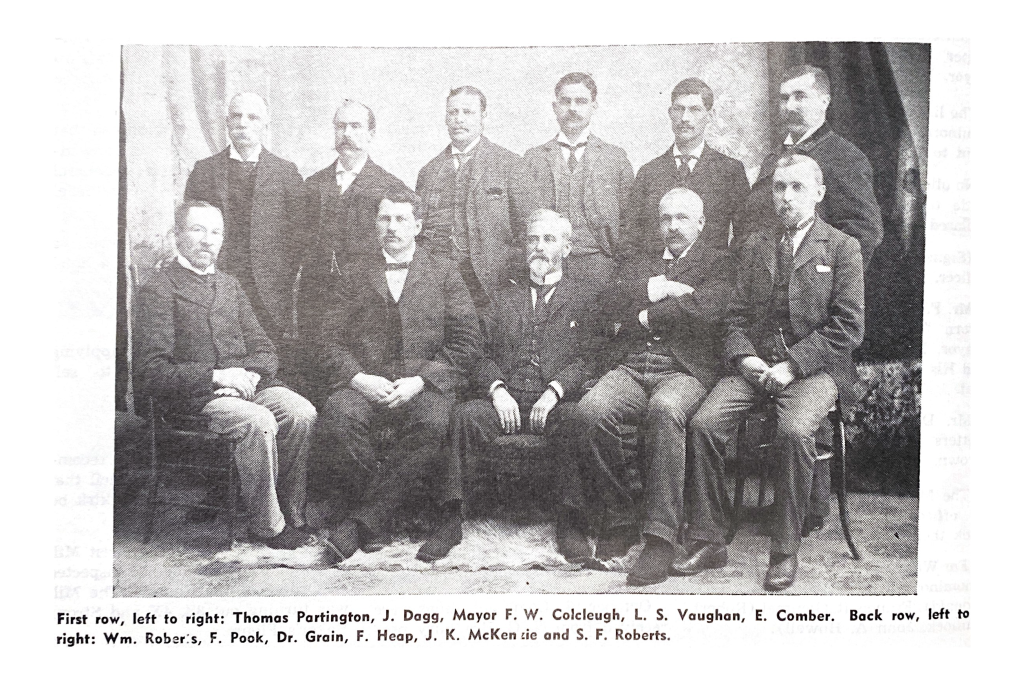
The Church of England played a significant role in the settlement along the Red River as early as 1820. Evidence of the original Church of England in Selkirk can be traced back to the early 1860s with its small gatherings in a house on lower Queen Avenue (the corner of Queen Avenue and Eveline Street today). In 1867 a log chapel/schoolhouse was built to house the congregation on River Lot 63. When the Town of Selkirk was incorporated, in 1882, seven of ten councillors were members of the congregation. Thomas Partington, James Dagg, Lynd Smith Vaughan, E. Comber, F. Pook, Dr. Orton Grain, and S. F. Roberts would be repeatedly mentioned throughout the early history of the church, but also as Selkirk grew.By 1884, the chapel/schoolhouse was deemed unfit for use and sold. The 24 Anglican families that regularly attended services in Selkirk were well-organized and active. They enjoyed the support of neighbouring churches while decisions were considered regarding the future location of their church.
In 1885 “The congregation of the Church of England of Selkirk are now contemplating the erection of a new place of worship. Since the old building became untenable the congregation has been meeting in the Knox Church, in view of arrangements being made for a new building.
A resolution passed by members of the Presbyterian church reads:
Resolved that the church building be rented to the congregation of the Church of England, Selkirk, for one year, from July 1, 1885, for the sum of $30.00. Said sum to include fire and light.”
In 1886, the newspaper reported that the church was in good financial standing. A building committee of notable community leaders, all men, formed to raise funds for a new Episcopal Church. Winnipeg architect, C. O. Wickendon estimated the basic building without a tower, or a chancel would cost $1500. A local contractor, Alfred Sellick submitted an alternate plan at a reduced cost that was eventually accepted. While the men engaged in fundraising, the ladies formed the Ladies Working Association of the Episcopal Church. Their objective was to also raise building funds through sales like bazaars and small dances in private homes. Between the men gathering pledges using a passbook system, and the ladies’ efforts, by July 13, 1886, the Building Committee had a total of $635. The Society for Promoting Christian Knowledge made a grant of $298. The members of the committee signed notes personally guaranteeing that the balance of $368.68 would be paid in four equal installments. The new church could now be built by Mr. Sellick at 227 McLean.
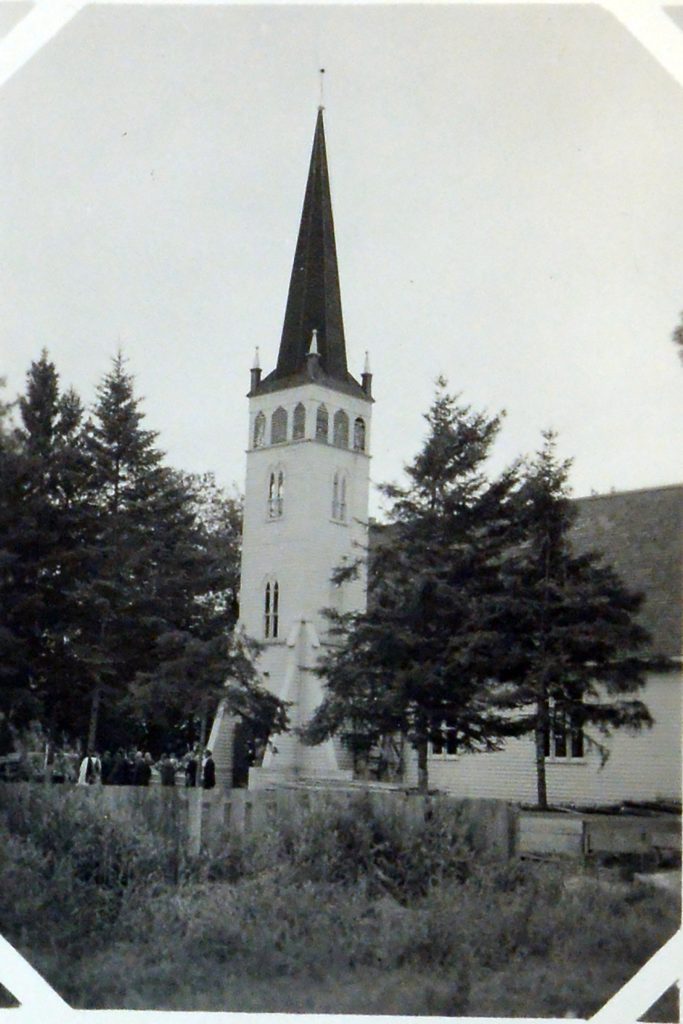
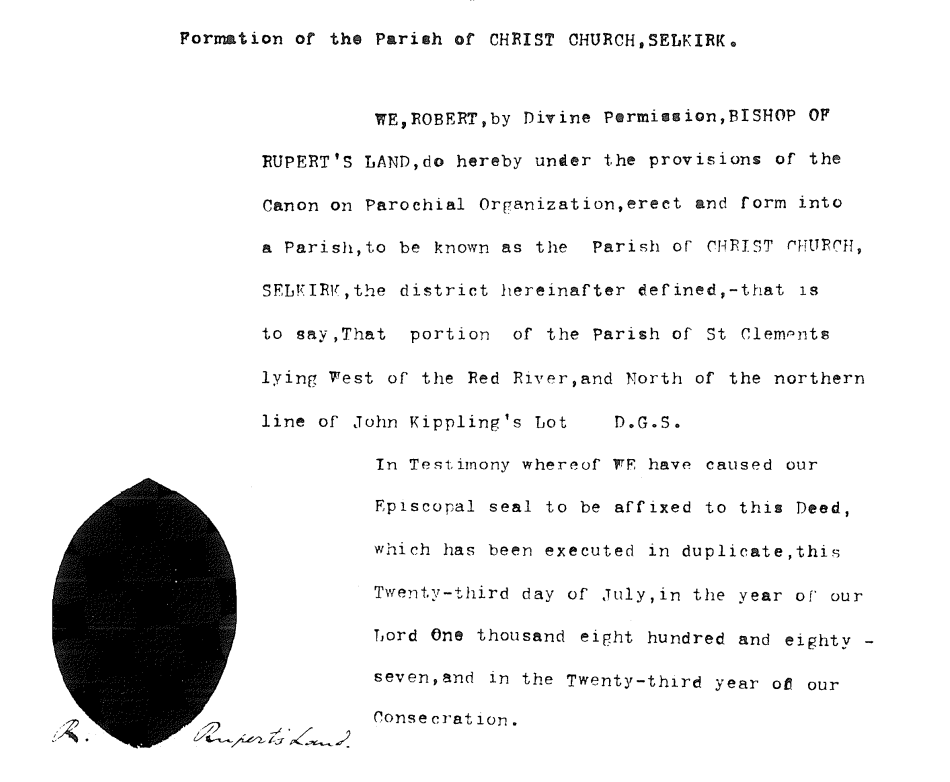
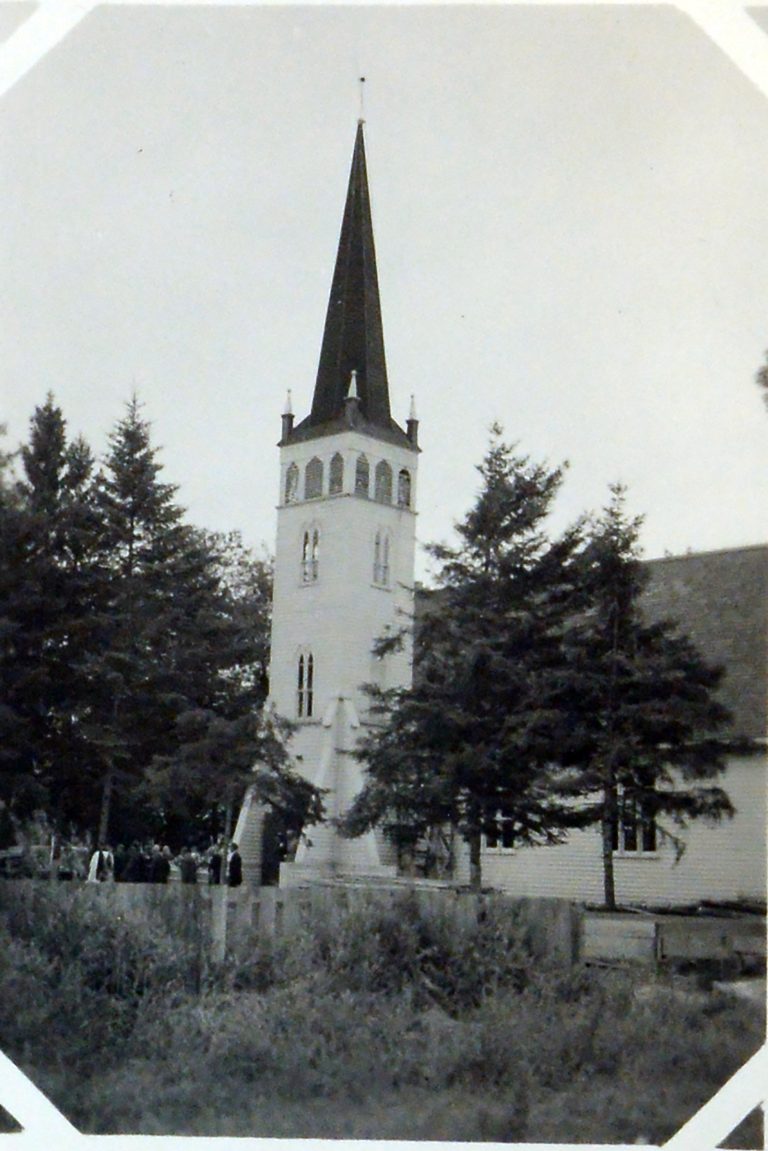
It was at the consecration of the church on July 24, 1887, that the Right Reverend Robert Machray announced that the parish would be known as Christ Church, Selkirk. The district was defined as the portion of the Parish of St. Clements lying west of the Red River, and north of the northern line of John Kippling’s lot. Christ Church was deemed an independent Anglican parish.
Church Bells Ringing
Although Christ Church was built, consecrated and fully functioning, there would be a constant need for purchases of small items like prayer books. Large construction projects were eventually needed to accommodate a growing congregation. As Selkirk grew so did the church. From 1888 and 1889 the congregation over doubled in size with 48 families, 12 unmarried and 32 communicants. In 1889, some interior renovations were required. At that time, the editor of the Selkirk Record recommended that the town council and church purchase a bell so it could also serve as the town fire alarm. It was rung for the first time in June 1890. The 500 lb. bell rang for fires but also ensured that churchgoers had no excuse for being late. Mr. Sellick built a rectory in 1892. A chancel was added to the church, and it was consecrated on 9 September 1894. In 1904, the basement was dug and lined with stone. Over time necessary costly renovations and improvements like a new roof had to be made. The Building Fund was always looking for sources of income. In 1889, the choir held “Penny Readings” during the winter where for the admission of 10 cents the audience could hear recitations, readings and songs. Private homes were used for suppers, music and dances, all for a small charge. The church was used for recitals, and if more space was required, Pearson’s Hall was used with all proceeds going to Christ Church.
Men of Servitude
In the first century of Christ Church, 23 priests served the congregation with the first being Reverend N. C. Martin. Some stayed for a year or less and others longer. Priests brought their Christian faith, knowledge, guidance and in the early years, literacy skills, to share with the congregation. They were present during happy and sad times. But they did come and go, and so the solidarity of the church community often rested with the local church leaders and parishioners. The church provided a shared space for parishioners to worship, celebrate or mourn together. There was also a shared fear and grief that reshaped the world during the First and Second World Wars, the Spanish Flu, the Depression, and bouts of uncontrolled communicable diseases like typhoid fever and measles. The clergy and the parishioners were a team of sorts, with one needing the other for support.
Renovation and Renewal
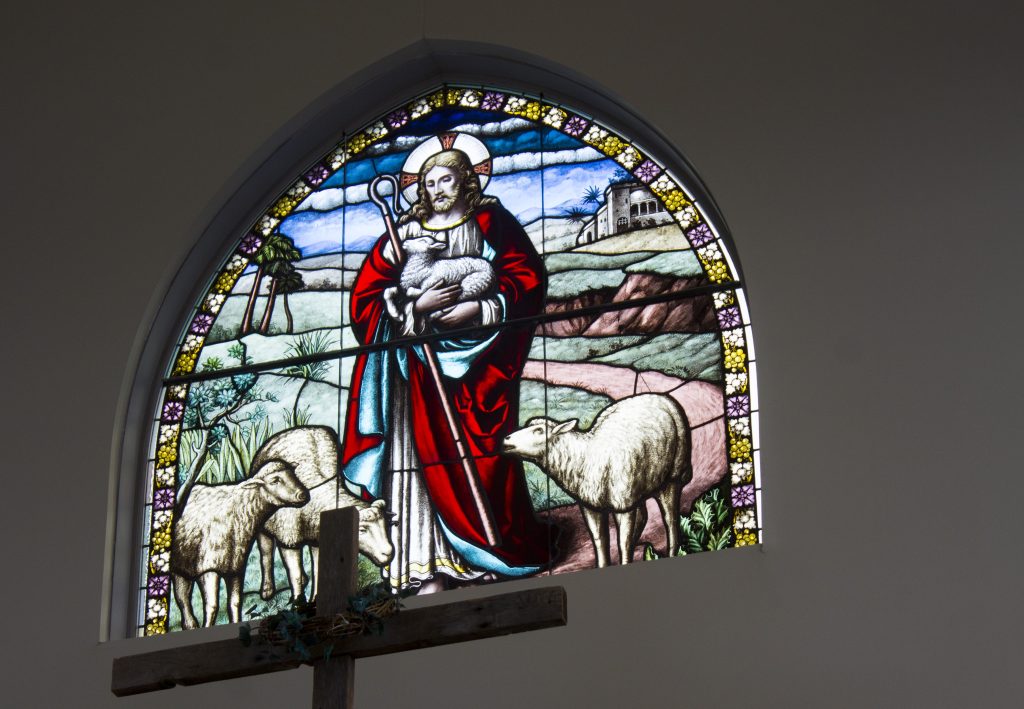
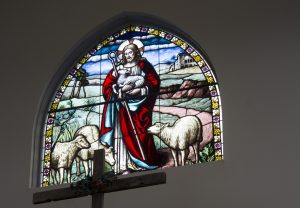
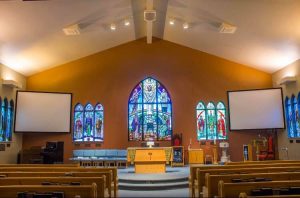
After a terrible storm destroyed the original stained-glass window in Christ Church in 1896, it was replaced around 1900 by one called the Good Shepherd, depicting Jesus gathering his flock.
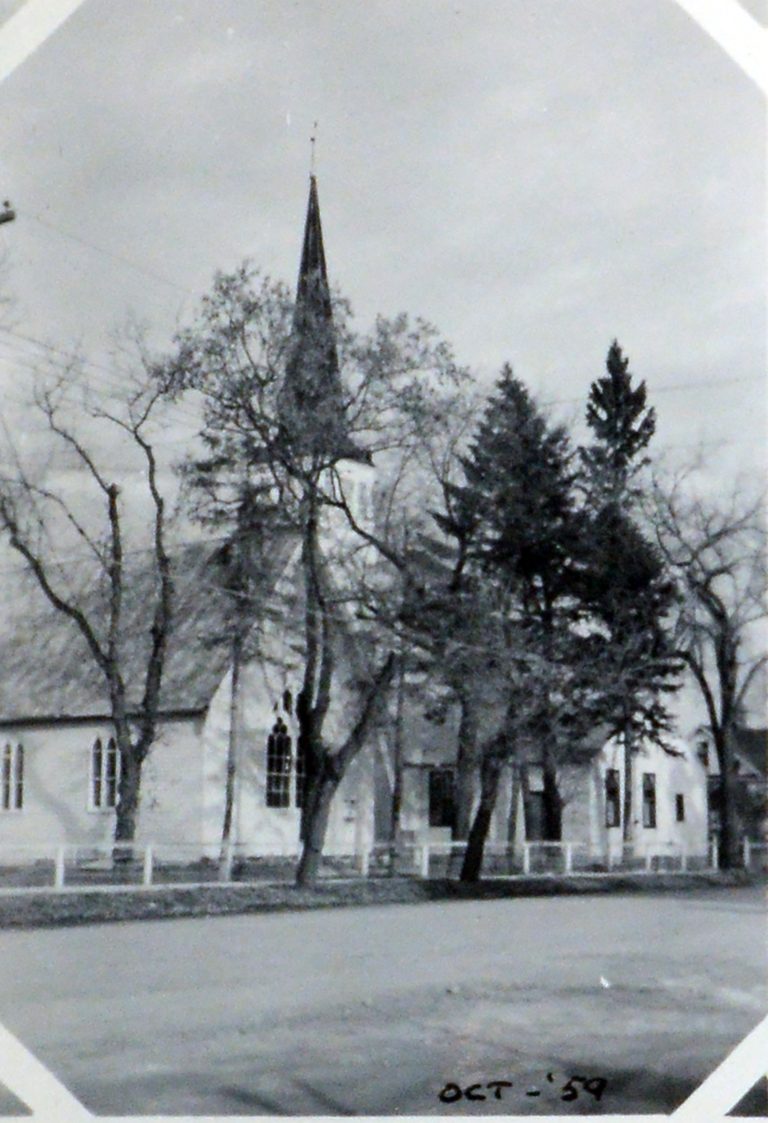
A much-improved parish hall was built in 1953 and in 1959 an annex connecting the church to the hall was added. The church is where the parishioners heard the Word of God, while the church hall is where the parishioners practiced the Word through fellowship. The church hall was a much-needed source of income from rentals. It was the home of the Sunday School, as well as many committees, and men’s and women’s organizations that made Christ Church an important part of Selkirk society. Christ Church was well known for housing children’s organizations like Brownies, Girl Guides, Cub Scouts, and Boy Scouts.
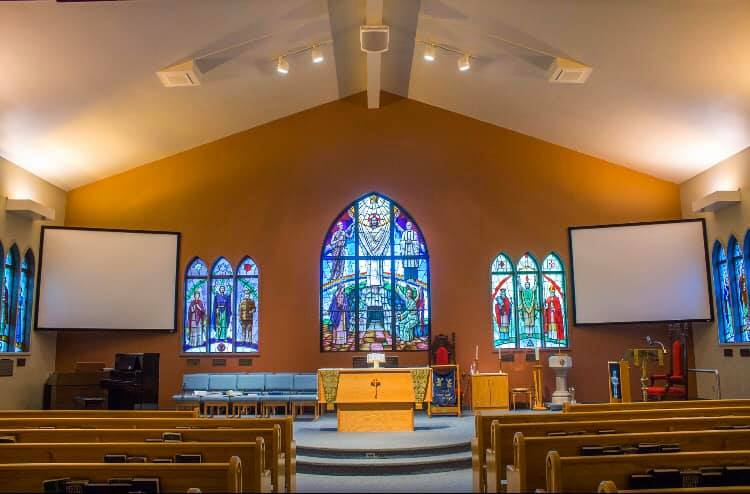
From 1987 to 1989 Christ Church embarked on a both beautiful and meaningful project when it installed 6 sets of stained-glass windows. Their design was a collaboration of ideas between the Winnipeg artist, Ernest Ashcroft, and a committee of parishioners. Each panel set depicts a liturgical season (Pentecost, Advent, Christmas, Epiphany, Lent, Easter) featuring Old and New Testament figures and one prominent local figure who had a lasting impact on the church and community. The windows honour the lives of Archbishop Edward (Ted) Scott, and Christ Church congregation members, nurse Alice Mitchell, Archdeacon Jacob Anderson, Catherine Jane Roberts, Sapper H. Roy Gilhuly, and The Reverend Roy Spalding Montgomery.
As the church aged, the wooden structures on its stone foundation would require continuous and expensive repairs. In the 1990’s the parish reluctantly elected to build a new church on the McLean site. On 13 August 2000, a service of deconsecration was held and the demolition of the building that included careful removal of the stained-glass windows occurred shortly thereafter. The congregation worshipped down the street at the Selkirk United Church until the construction was completed.
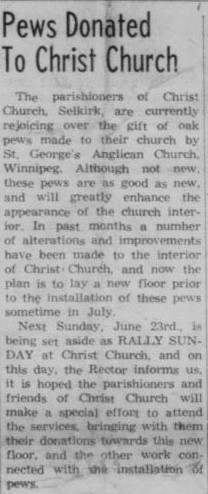
The new church would sit from east to west on the lot, and recognizing the importance of ease of accessibility, it was built on the ground floor entirely, eliminating the need for stairs. The sanctuary and hall were joined by a movable wall making the church’s interior space more versatile when additional seating was required. All the stained-glass windows were reinstalled. Labour to build the church was sourced locally and included some members from the parish. New pews, an improved audio/visual system, a piano and an organ were all acquired as donations from various parishioners. The consecration of the new Christ Church, Selkirk was held on 1 April 2001.
A Faithful Purpose
The Anglican Church is guided by the Mission Statement of the Diocese of Rupert’s Land as adopted at the 106th session of synod dated November 2004.
Currently, the worship of Jesus Christ through morning prayer, Holy Communion, Service of the Word and Sunday School are central to this church. However, the work of building a faith community does not stop at the sanctuary and is not the sole responsibility of the parish priest. Today Christ Church supports community programs like the Food Bank, Our Daily Bread Soup Kitchen, Meals on Wheels, The Selkirk & District Community Foundation, and the Gaynor Family Regional Library, with book purchases for their children’s section. They currently share their sanctuary space with a group of 40 Christian immigrants. The hall kitchen was updated to be commercially viable. The Lord Selkirk School Division uses it to prepare student lunches for the schools with lunch programs. Its support of community-based initiatives is evident throughout Selkirk.
Christ Church is also committed to global outreach projects by donating to the Primate’s World Relief Development Fund, which is the Anglican Church of Canada’s agency for sustainable development and humanitarian relief. They will respond to emergencies and disasters as needed. They will assist with refugees. On a more global level, they advocate for human rights and of course, world peace. On a local and global level, Christ Church has committed itself to fulfilling the mission statement of the Anglican Church.
“Just as it has no beginning, our story has no end and it will continue to unfold.” (George, Oliver) Based on the commitment that this faith community shows, it would appear that the story of Christ Church will continue onward as long as there are people who gather in His name.
Christ Church Collection
Click on images to enlarge
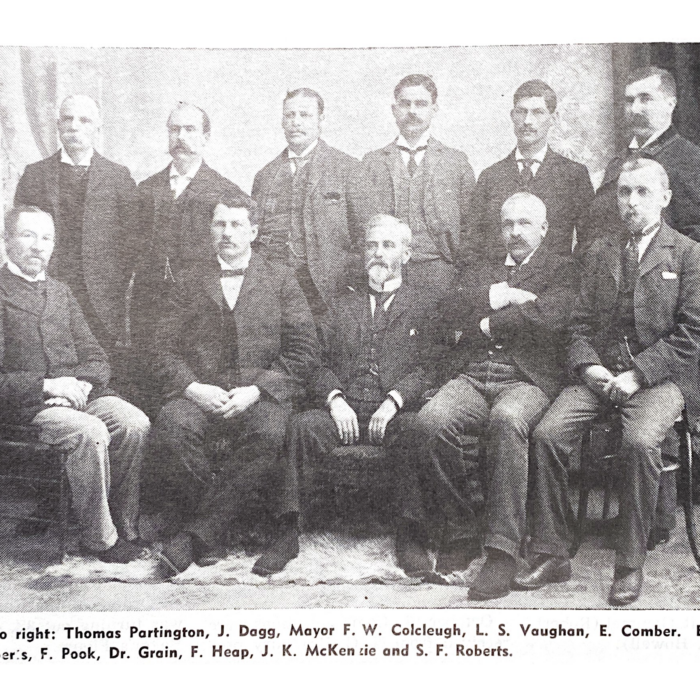 Town Council, 1886, Selkirk Museum Collection
Sources
George, Jane and Doreen Oliver, Gathered in His Name,(Selkirk: Daerwood Press), 1987
Information and photos provided by Conni Cartlidge, January 7, 2025
Information and photo provided by Ms. Thora Cartlidge, January 12, 2025
Conversation with Mr. Bill Shead, January 12, 2025