
232 Manitoba Ave
Alex Pauley, a Selkirk barber shaped by hardship and hard work, grew up helping in his father’s modest shop before serving in the Second World War and returning to rebuild his life. After a family dispute jeopardized his livelihood, community support helped him open a new barbershop that became a local gathering place. His story reflects resilience, strong family ties, and a lasting impact on Selkirk’s business and social life.
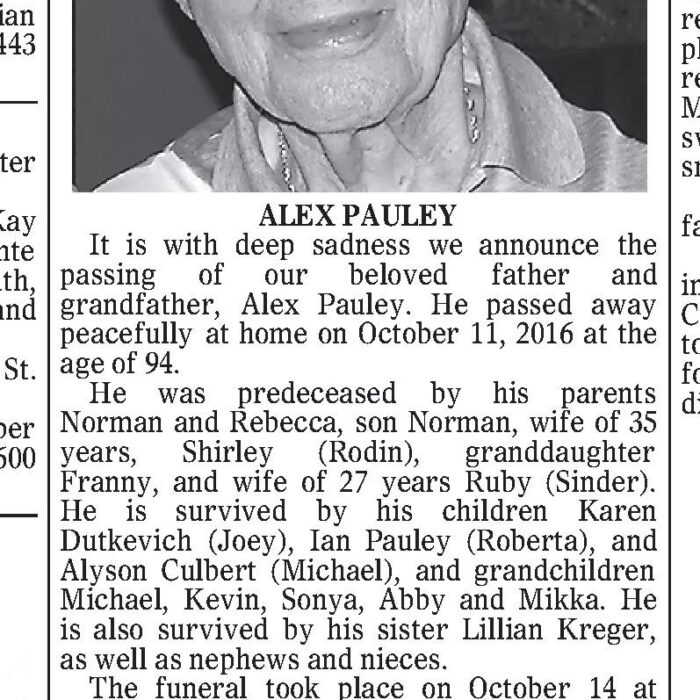
Alex Pauley (1922-2016) was known as a “barber extraordinaire,” according to Kenneth Howard’s, Stories of Selkirk’s Pioneers and their Heritage. But his story is about far more than haircuts— it’s about resilience, family, and a life deeply woven into the fabric of Selkirk.
Born in Winnipeg, Pauley followed in the footsteps of his father, Norman, a barber who fled Russia during a Jewish pogrom in search of a better life. In 1925, the Pauley family moved to Selkirk, renting a space above Billy Epstein’s store in the Robinson Block on Eveline Street. Their time there was short-lived. Less than a year later, a fire sparked by a pot-bellied stove destroyed their home, forcing the family to start over once again.
After a temporary stay in the bank building across the street, the Pauleys moved to Eaton Avenue. Eventually, Norman purchased a home at 126 Morris Avenue. From there, Alex recalled he could see his father’s barbershop— an early sign of how closely home and work would intertwine throughout his life.
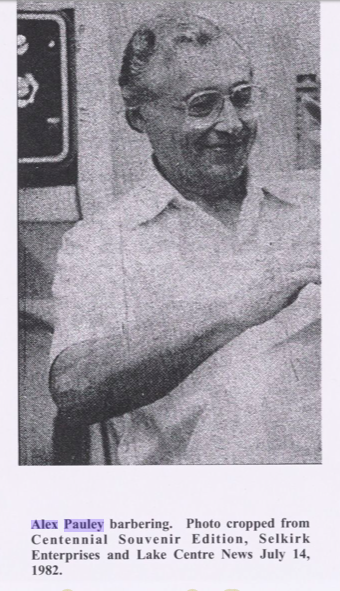
A Boyhood Built Around the Barber Chair
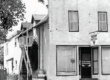
Norman’s shop, located on Manitoba Avenue across from the Garry Theatre, was modest but busy. Heated by a wood-burning stove, it required constant upkeep— much of which fell to young Alex.
From Stories of Selkirk’s Pioneers and their Heritage, Alex said he remembered stacking 16-inch firewood outside and keeping kindling indoors. Much of his time outside school was spent tending the fire, a responsibility that grounded him early in the realities of hard work.
The shop lacked running water in the winter. Water had to be carried in from the Chasanoffs and heated on a copper boiler to make shaving lather “a scene I well recall from my boyhood days,” Alex noted.
Out front, hitching posts served visiting farmers, tying the rhythms of rural life directly to the shop’s doorstep. Inside, the long hours reflected the demand. The shop often stayed open until 9 p.m. on weekdays and as late as 11 or midnight on weekends.
Regulars became part of the shop’s story. Jake Sarbit, father of Syd Sarbit, was always the final customer each Saturday, stopping in for a shave. After closing up, the Pauleys would head to Skinner’s in Lockport for hot dogs—a simple ritual that capped long workdays.
Life Lessons Beyond the Shop
As a teenager, Alex’s responsibilities extended well beyond the barbershop. At just 16, he chauffeured Billy Epstein every Sunday in a black Dodge to poker games at the Hebrew Sick Benefit Hall in Winnipeg— an unusual job during the Great Depression, when young drivers were rare. For his efforts, he received a meal from Child’s Restaurant and $1 per trip.
Alex attended Devonshire Collegiate Institute, graduating Grade 11 in 1938. He briefly worked in a garment factory, earning just $6 a week — below minimum wage — but his boss sectioned him to the shipping department.
When Norman learned his son wasn’t being treated fairly, he confronted the employer, who claimed Alex “wasn’t cut out for the job.” Norman pushed back, demanding proper wages. When the employer refused, Norman threatened legal action. The result: Alex’s pay was raised to meet minimum standards.
Finding His Trade and His Calling
Alex eventually enrolled at the Moler Barber School but quickly realized his greatest teacher was much closer to home. Working alongside his father, he later reflected that he learned more in two weeks in the shop than in six months of formal training.
His path briefly shifted during the Second World War. After being denied entry as a pilot in the Royal Canadian Air Force due to poor vision, Alex became a rear-end gunner, serving in Vancouver, Prince Rupert, and England.
Even overseas, the barbering never stopped. Alex took on the role of base barber, offering free haircuts to fellow servicemen while implying — neither encouraging nor discouraging — generous tips to ensure a quality cut or shave.
Loss, Determination, and a New Beginning
In 1943, while Alex was serving overseas, Norman passed away. Despite the loss, Alex’s mother kept the shop going, paying rent to ensure her son would have a place to return to.
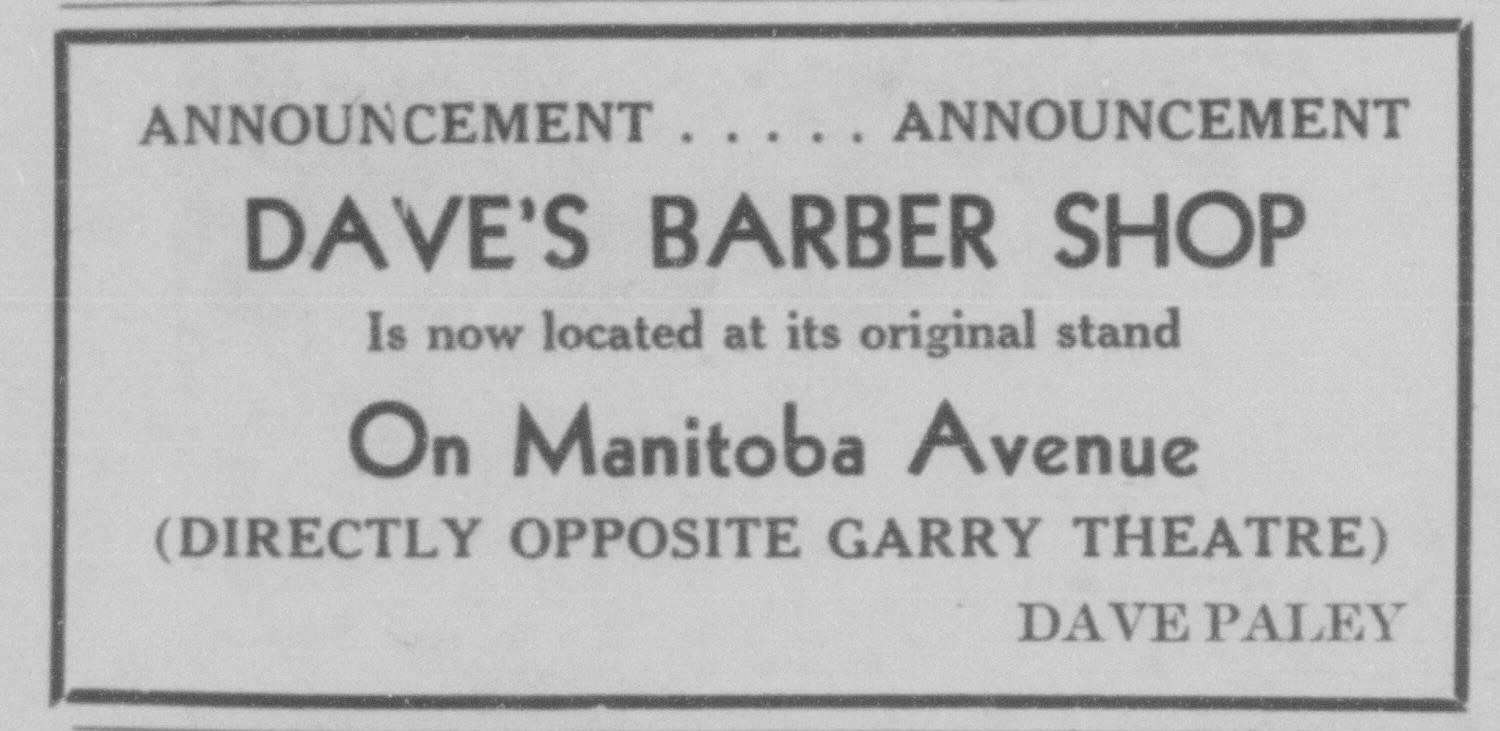
Family tensions complicated matters. Alex’s uncle Dave, also a barber, initially took over operations but later attempted to claim the shop as his own, demanding Alex’s mother remove her belongings. She fought back legally, preventing the eviction. In response, Dave opened a competing shop nearby.
When Alex returned in 1946, the situation escalated further. Dave had secretly purchased the original shop and issued a 30-day eviction notice.
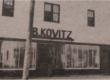
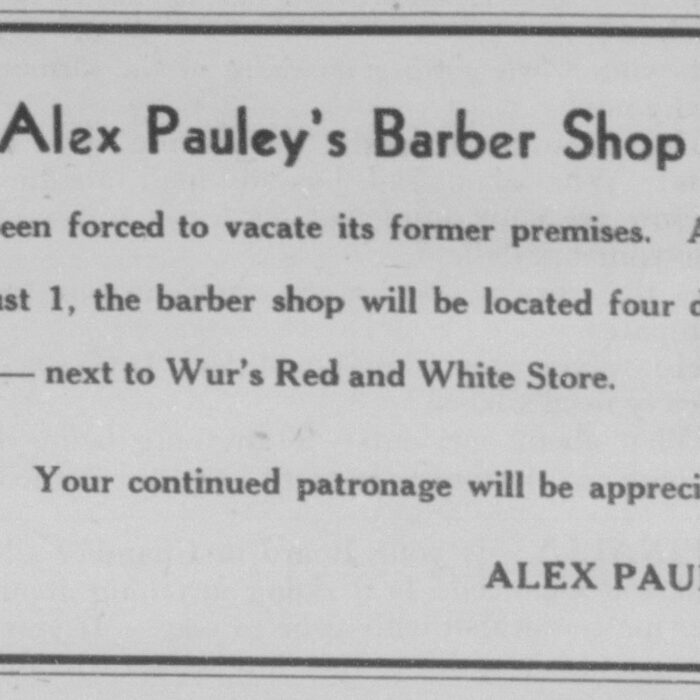
But the community stepped in. The Wur family, who owned property on Manitoba Avenue, offered to build Alex a new shop and completed the build within the 30-day window. Alex reopened just four doors down at 232 Manitoba Avenue, launching his independent career.
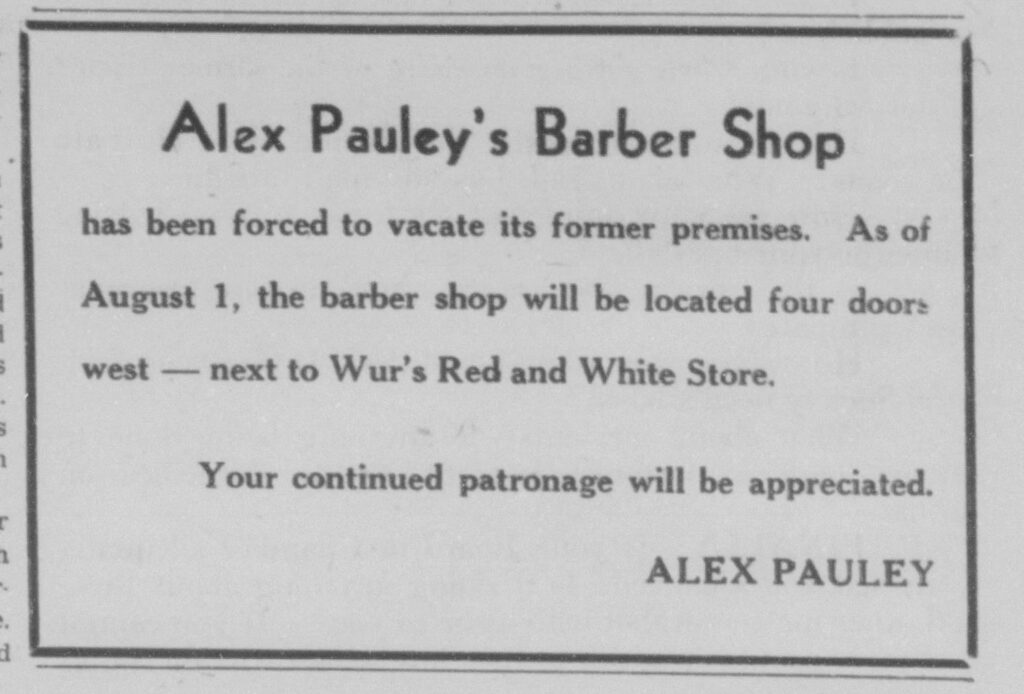
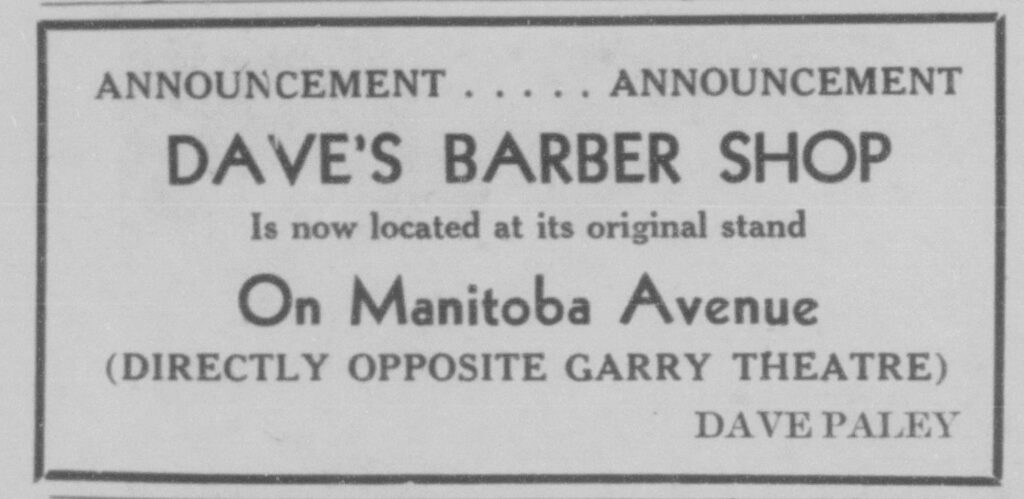
A Shop That Became a Community Hub
The new barbershop had “everything a barber could dream for”— central heating, running water, and insulated walls. But what truly set it apart was the atmosphere Alex created.
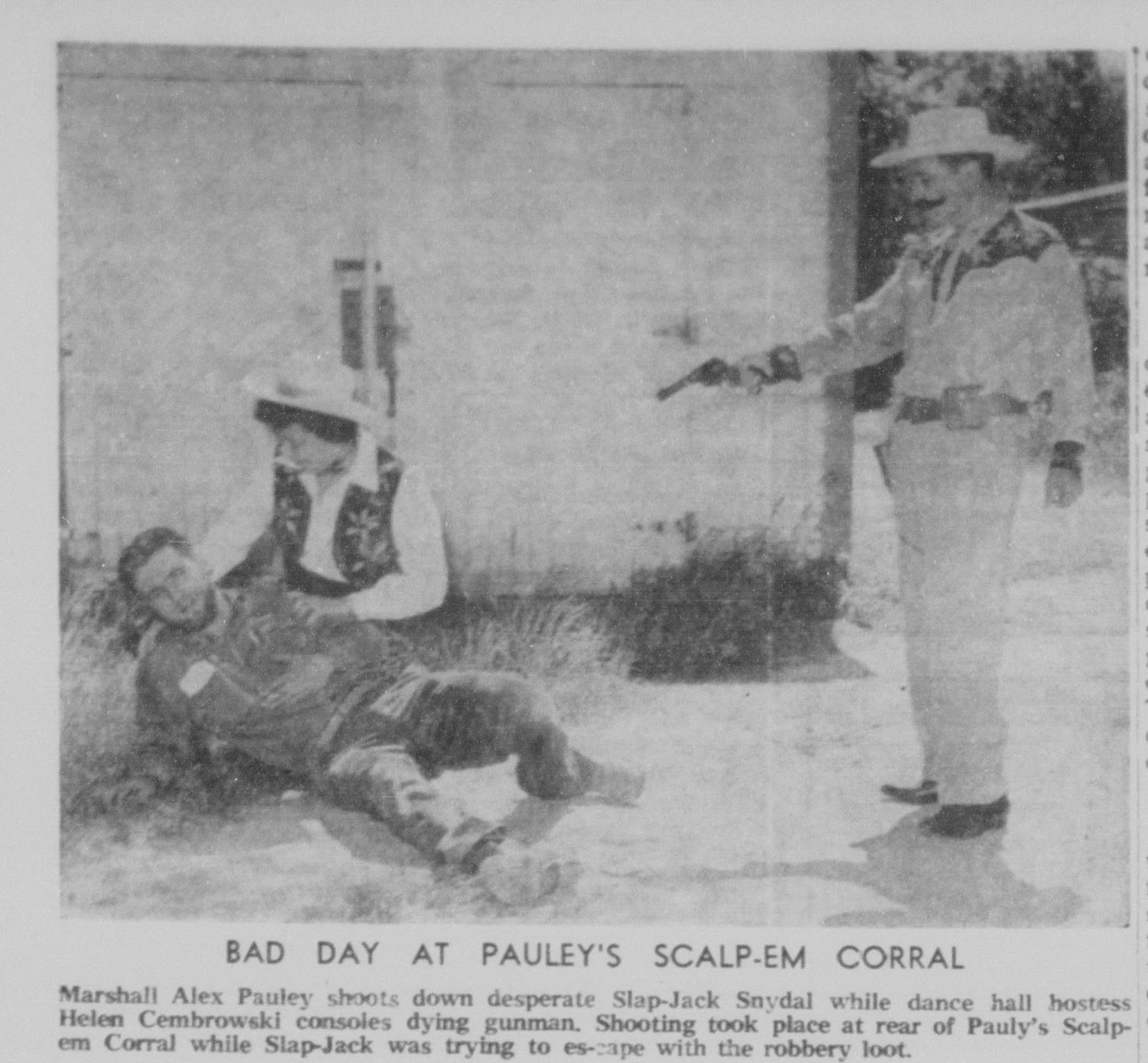
His shop quickly became a gathering place, full of conversation, laughter, and local connection. It even served as the backdrop for a Selkirk “Western Days” promotion, with The Selkirk Enterprise featuring Alex in a cowboy hat and holster, inviting visitors to “Pauley’s Scalp-em Corral.”
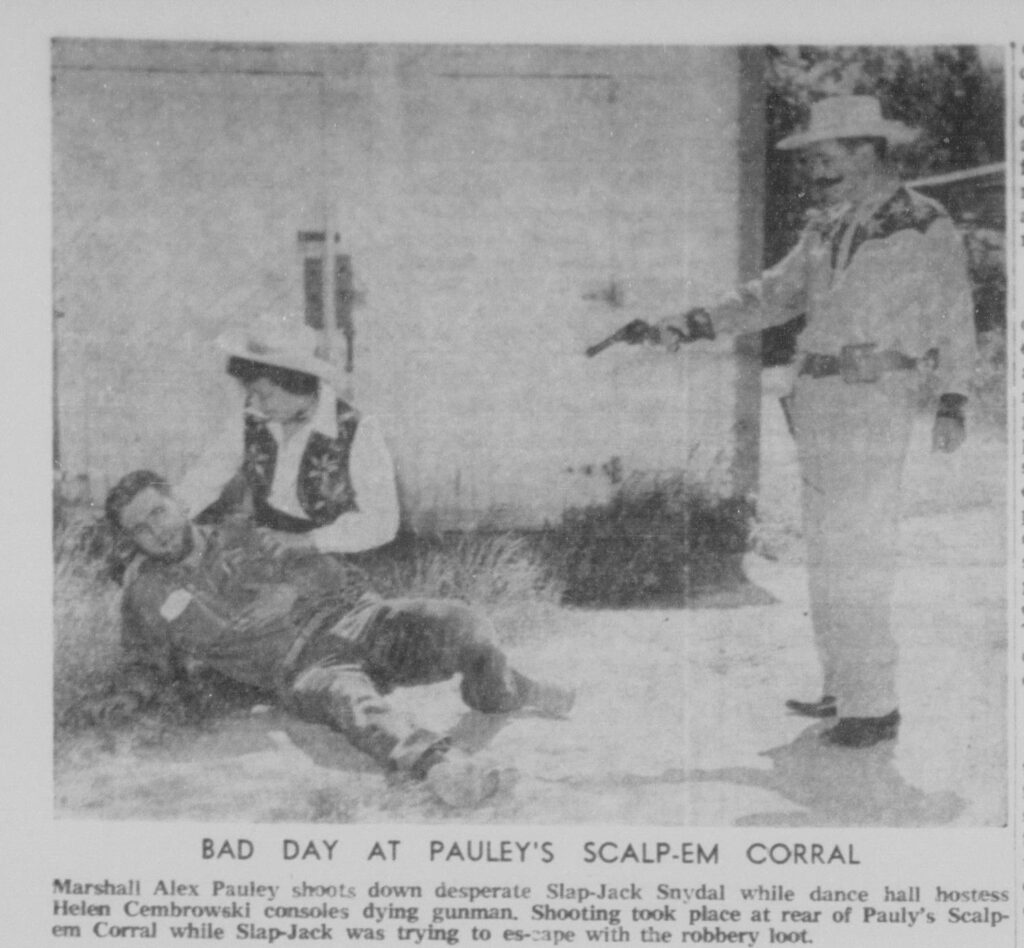
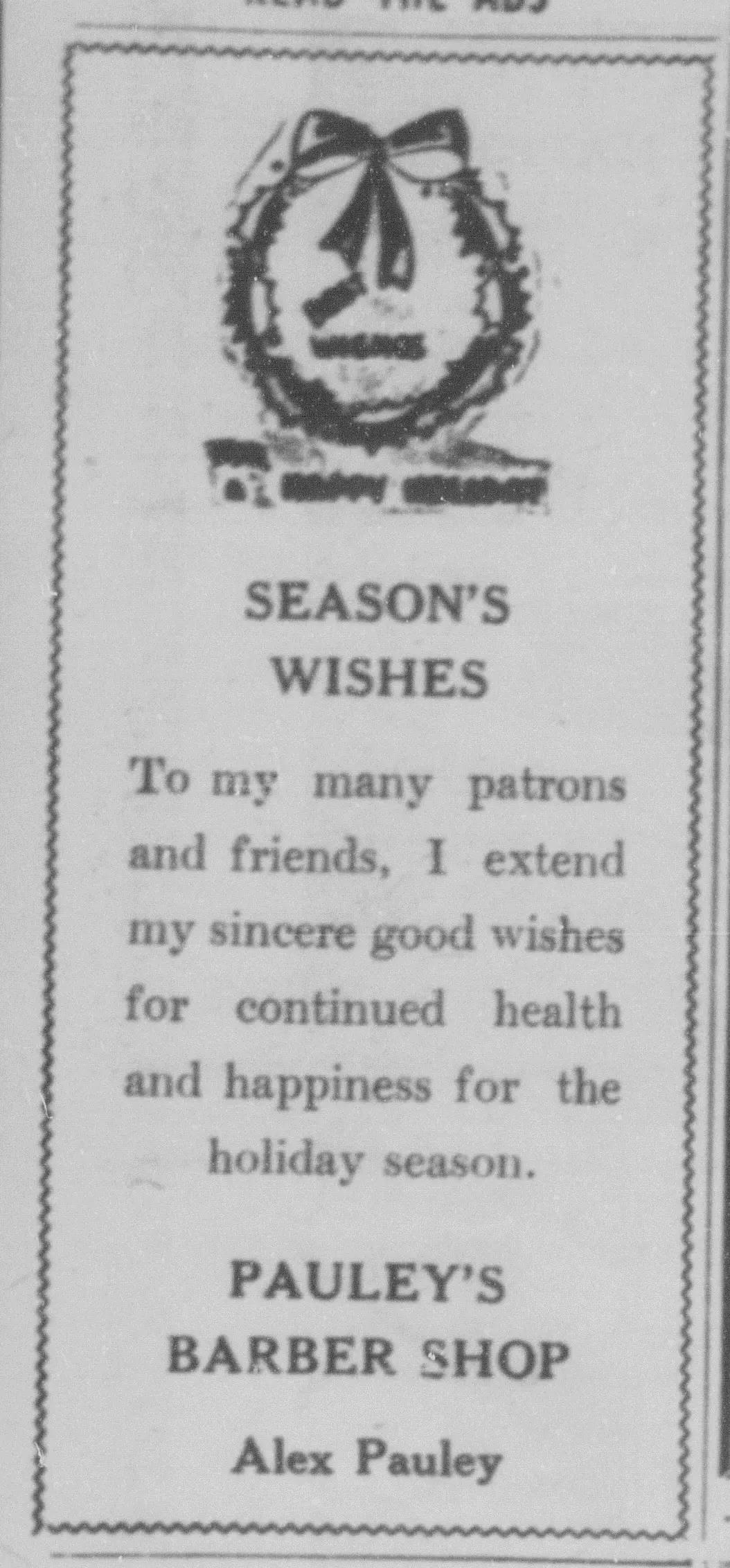
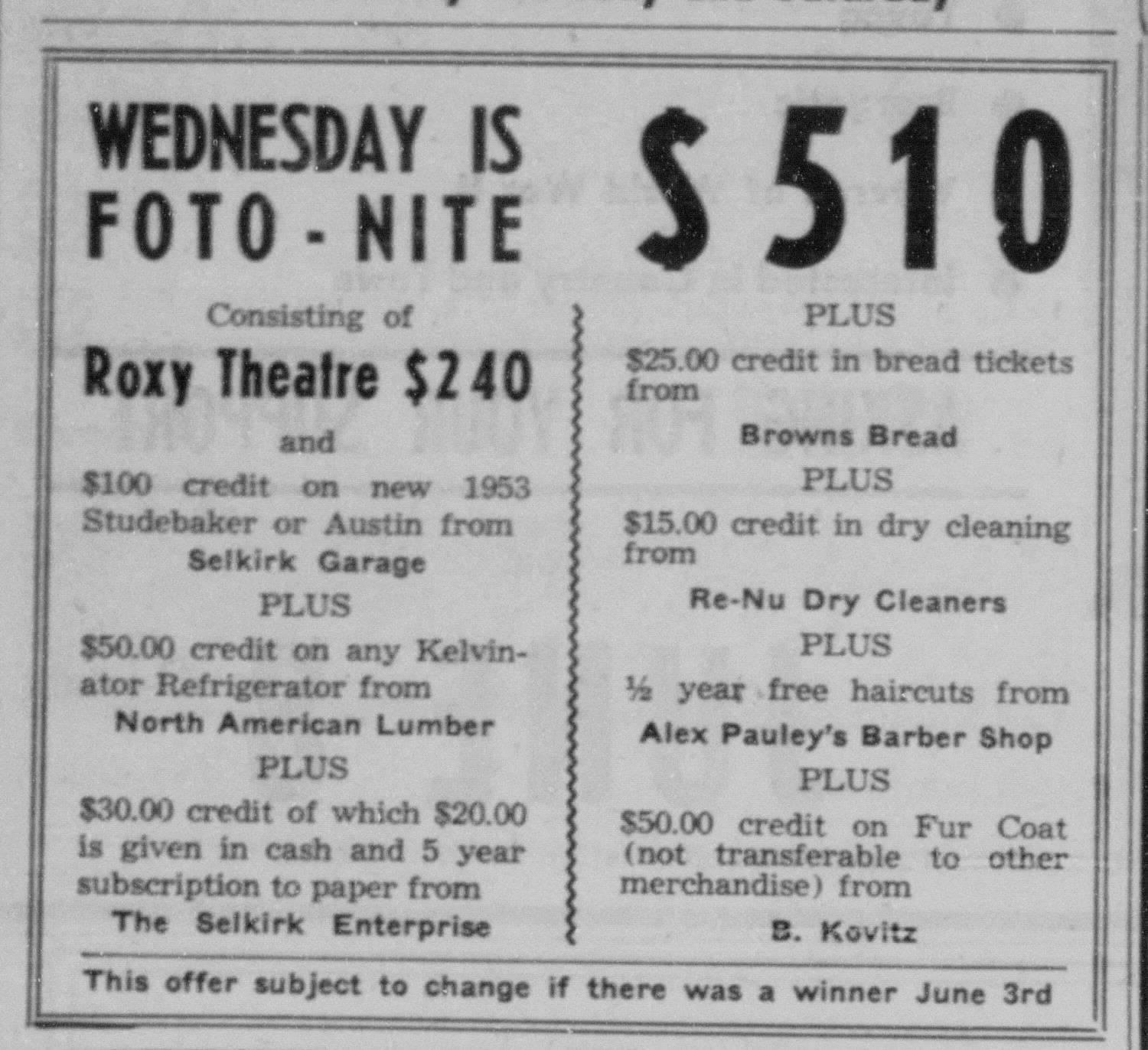
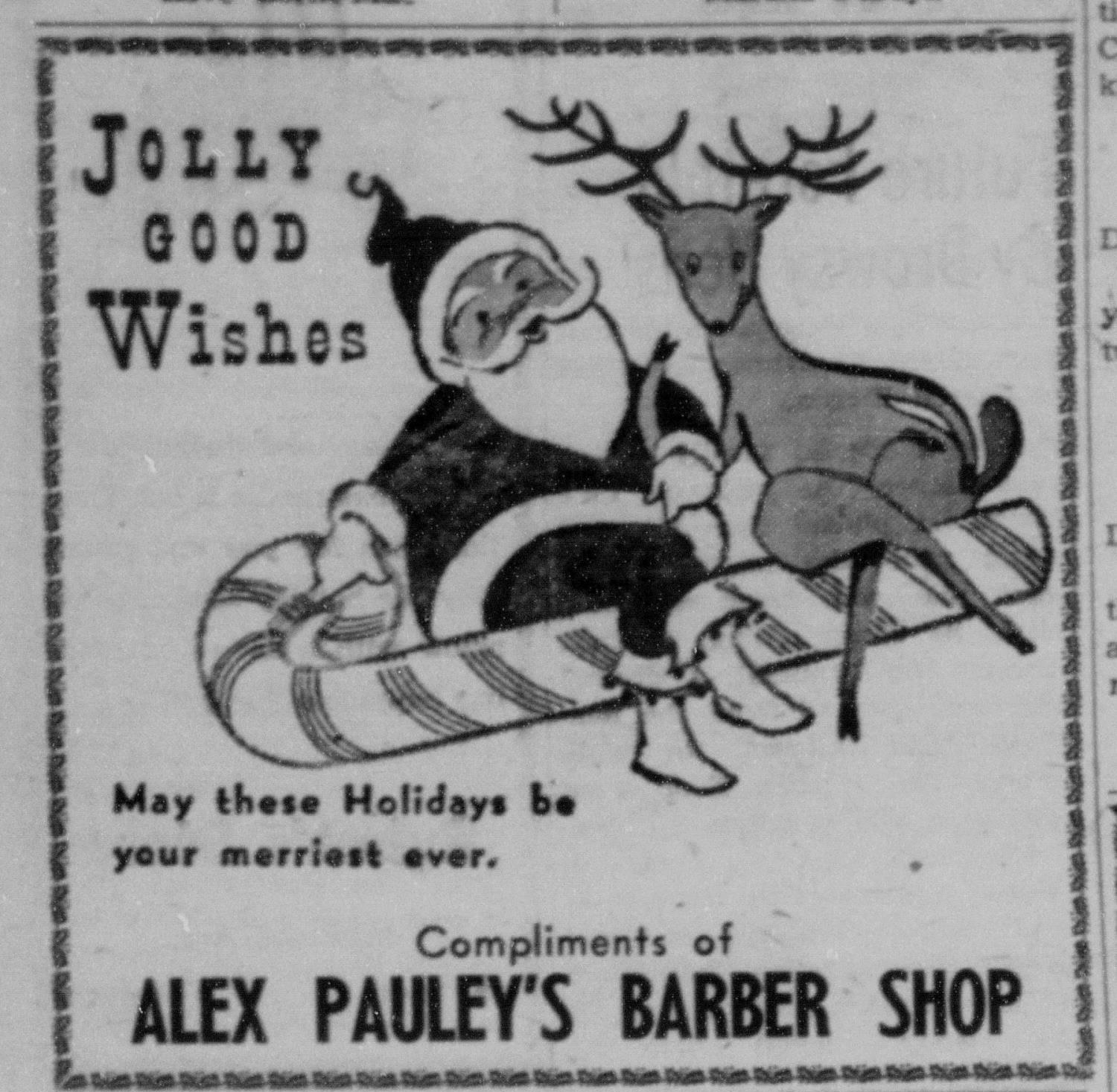
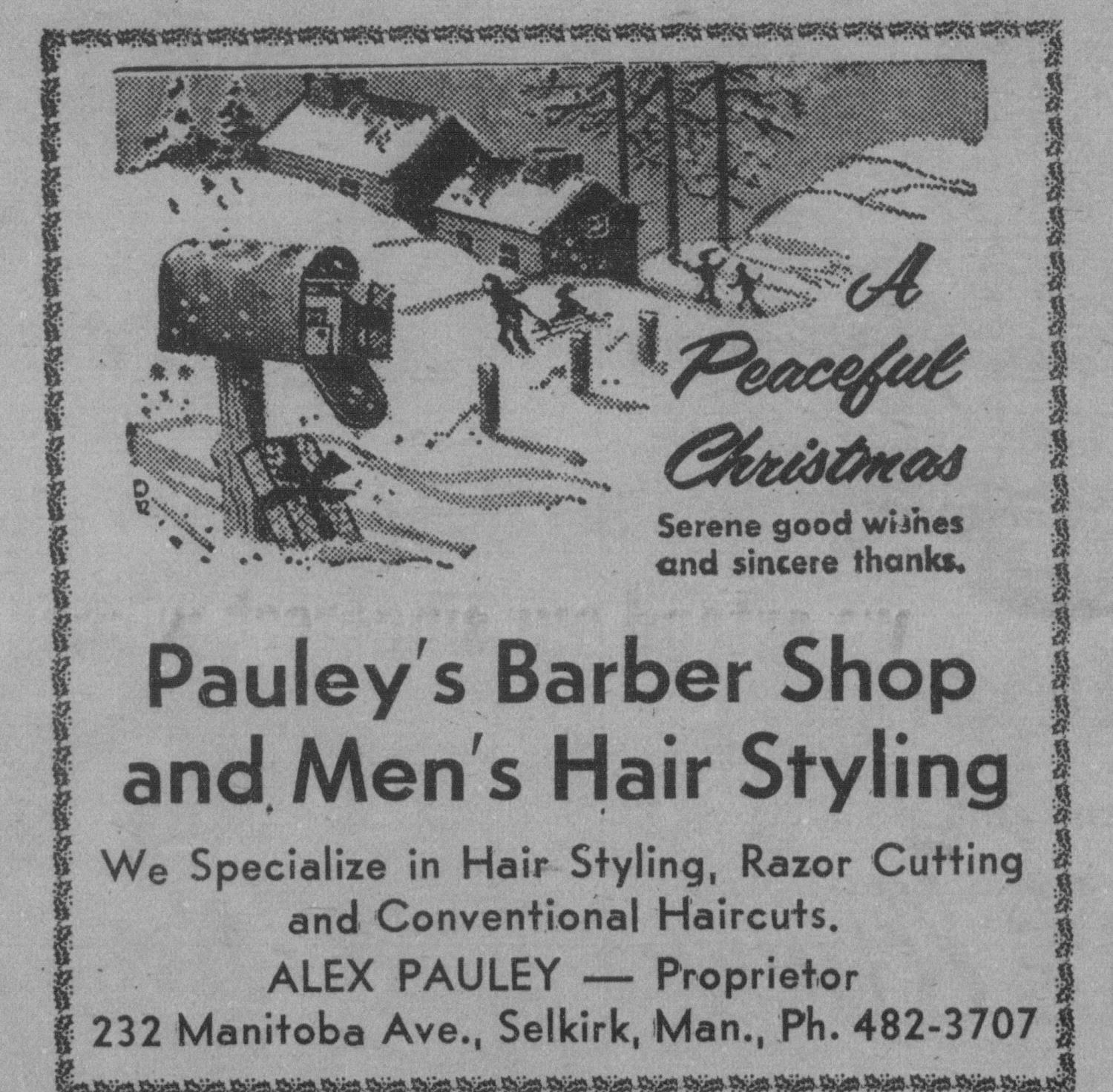
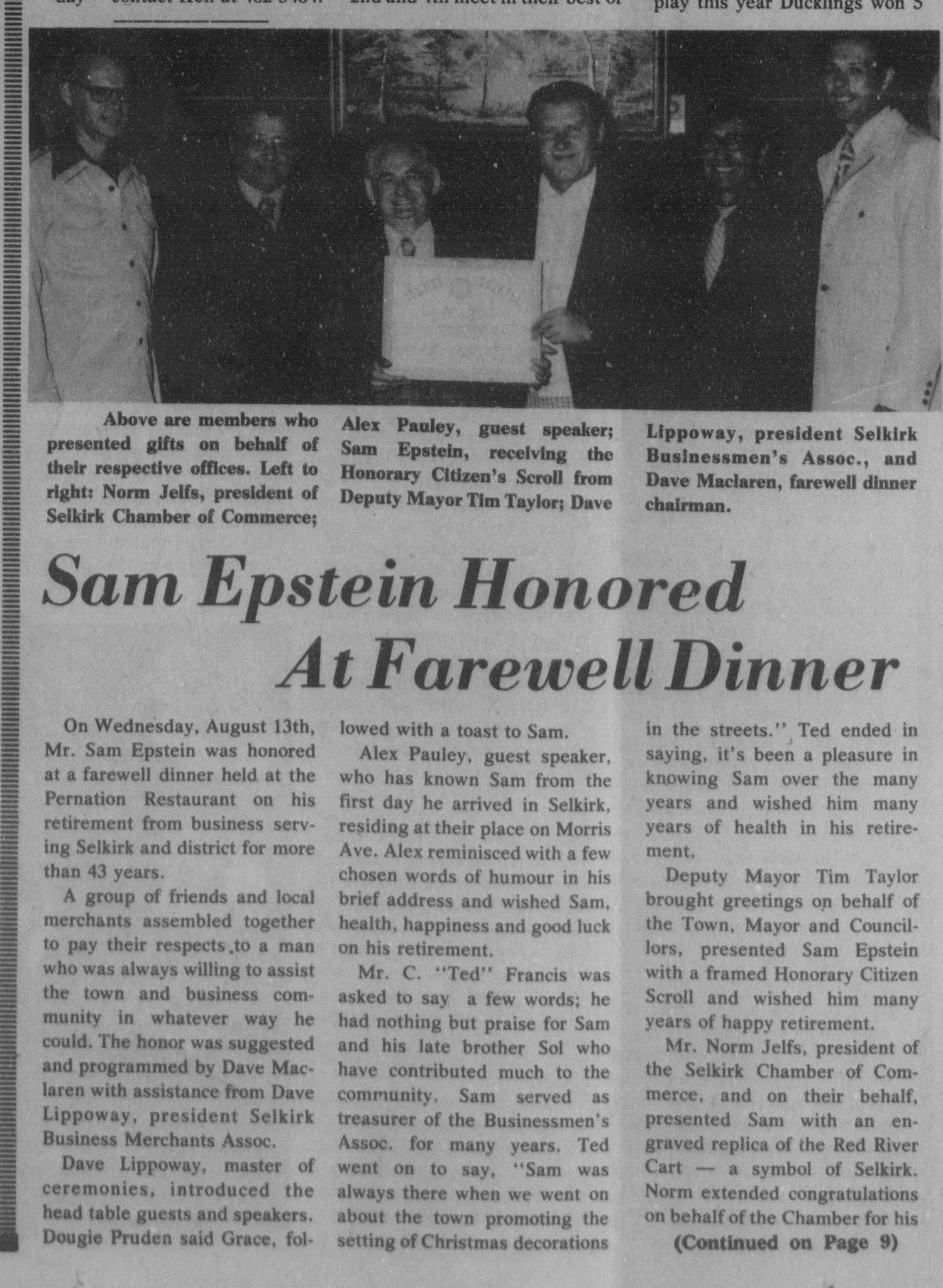
Beyond the chair, Alex supported the community through holiday greetings in the local paper, by donating gift certificates for Roxy Theatre Foto-Nites prize winners and he even paid tribute to Sam Epstein during his farewell dinner.
A Lasting Legacy in Selkirk
Over time, Alex expanded his footprint, purchasing properties from the Wur family and renting out stores and apartments. His success extended beyond barbering into business and community building.
In 1984, he sold his properties to Walter Neskar and entered retirement. It marked the close of a long, hardworking chapter— one that left a lasting impression on Selkirk.
From tending fires as a boy to building a thriving business and community hub, Alex Pauley’s story is one of perseverance, adaptability, and pride in one’s craft.
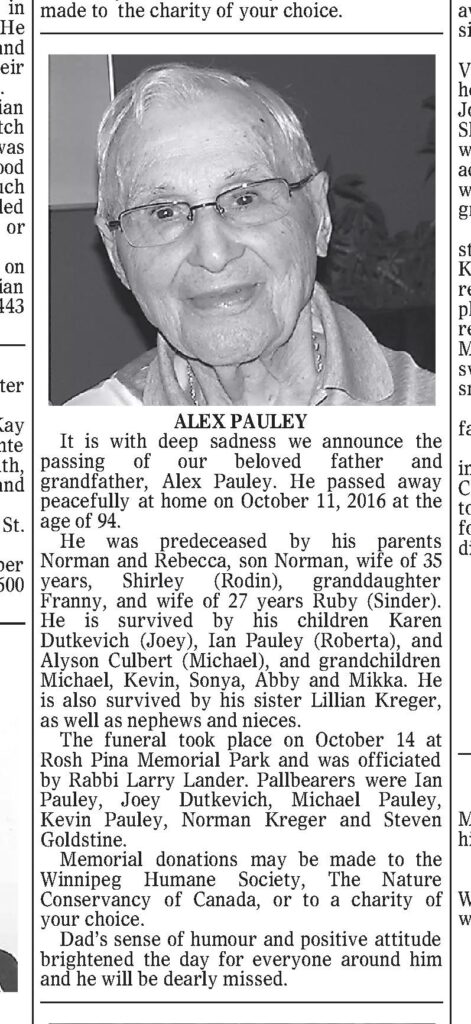
Pauley’s Barbershop Collection
Click on images to enlarge
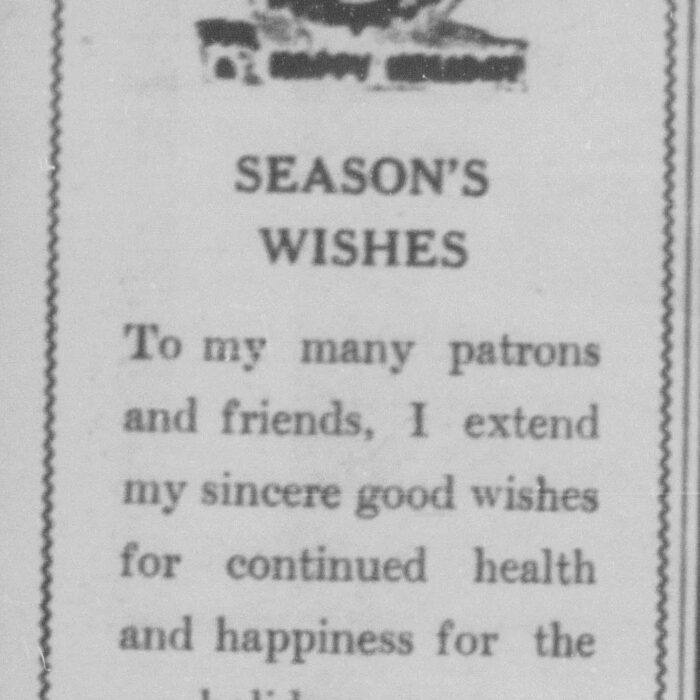 Season's Wishes from Pauley's Barber Shop, 1948, Selkirk Enterprise
Sources
Foto-Nite, Selkirk Museum
Howard, K., Stories of Selkirk’s Pioneers and their Heritage
Winnipeg Free Press, October 2016