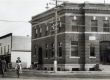

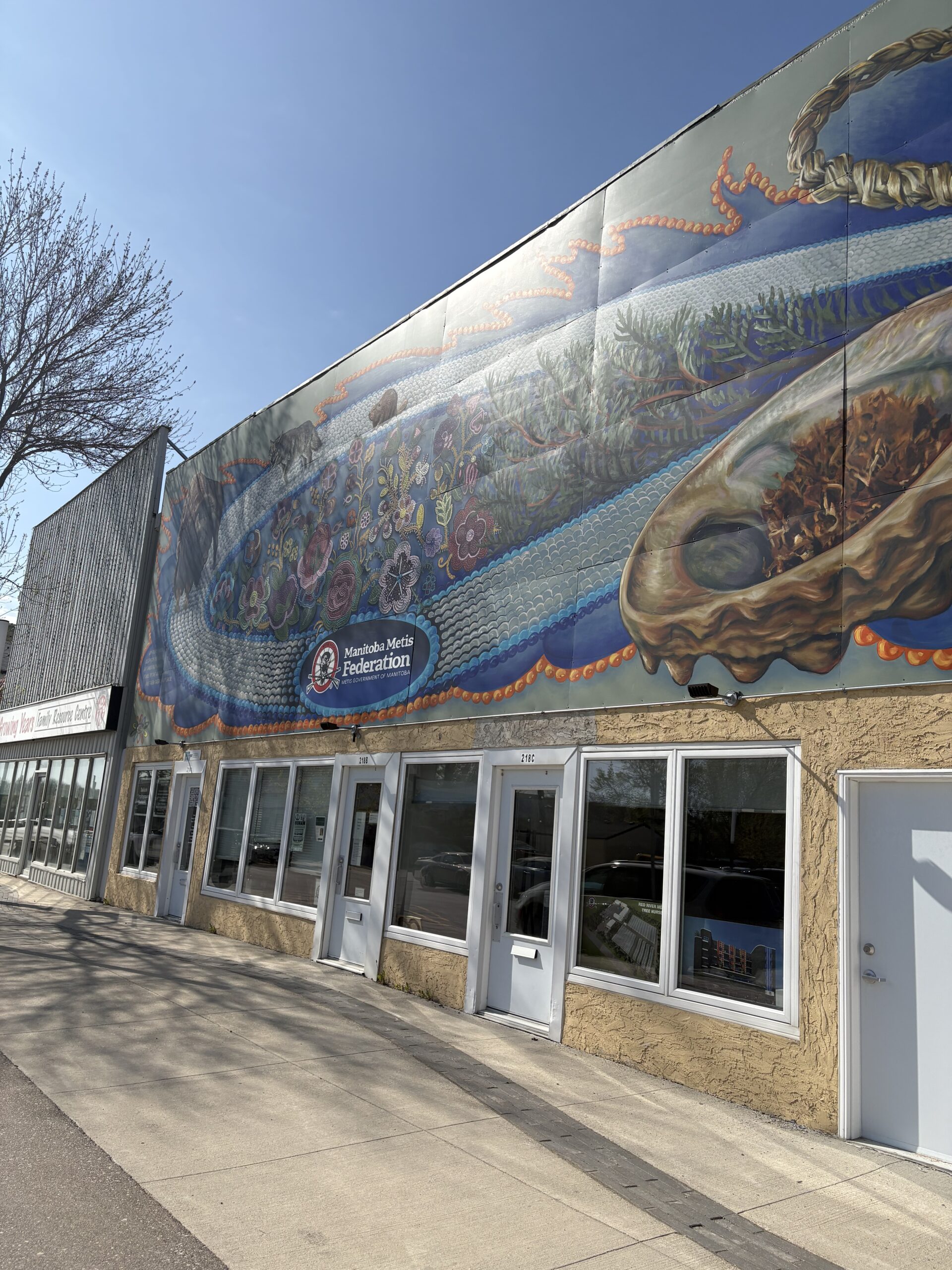
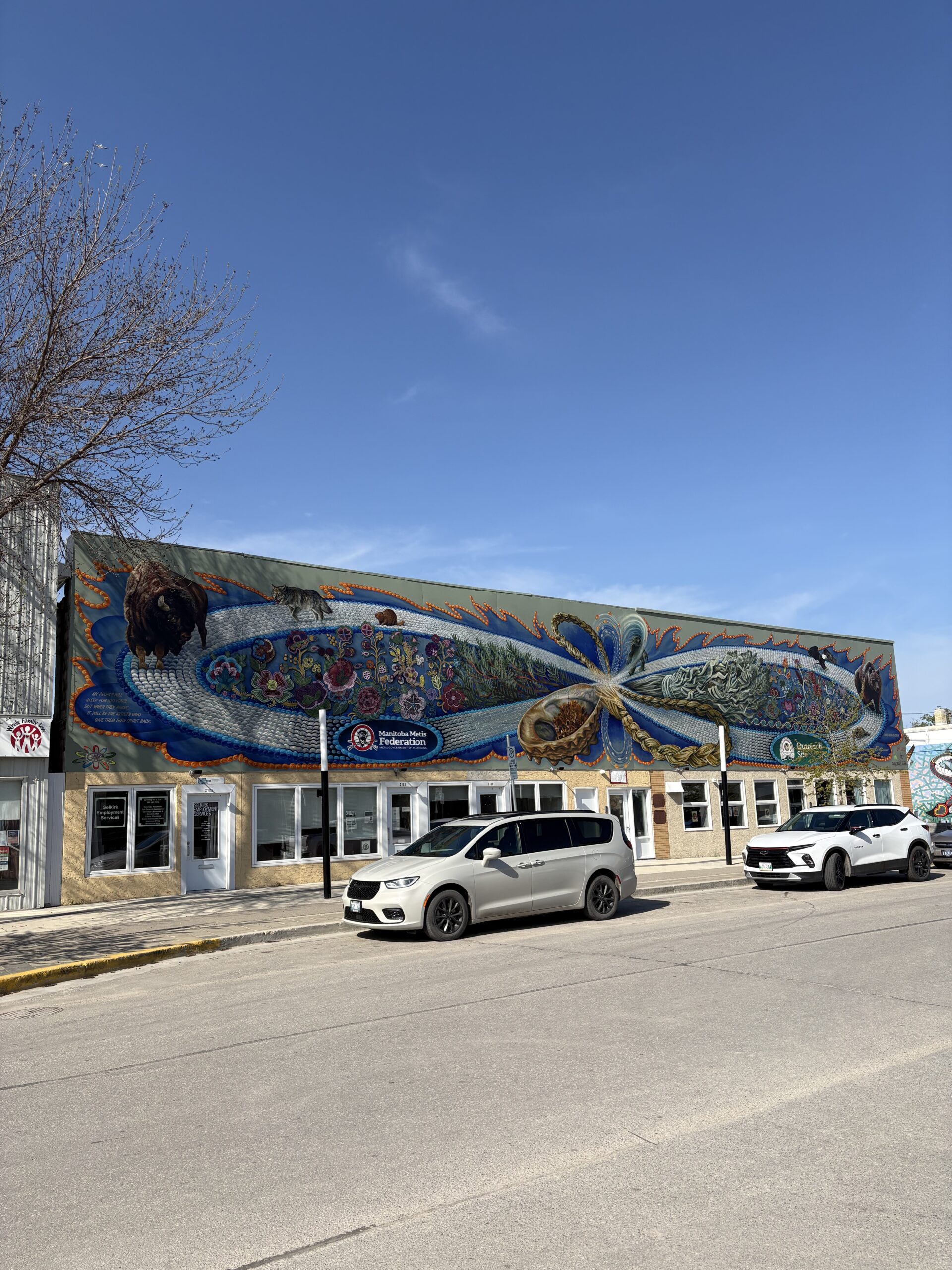
The Kovitz family built a successful retail business in Selkirk after Benjamin Kovitz opened a tailor shop in 1930 at 218 Manitoba Avenue. The business grew into B. Kovitz Dry Goods and Janis Lynn clothing store, known for its modern style and wide selection. The family sold the business in 1965, ending a nearly 40‑year legacy.
218 Manitoba Ave
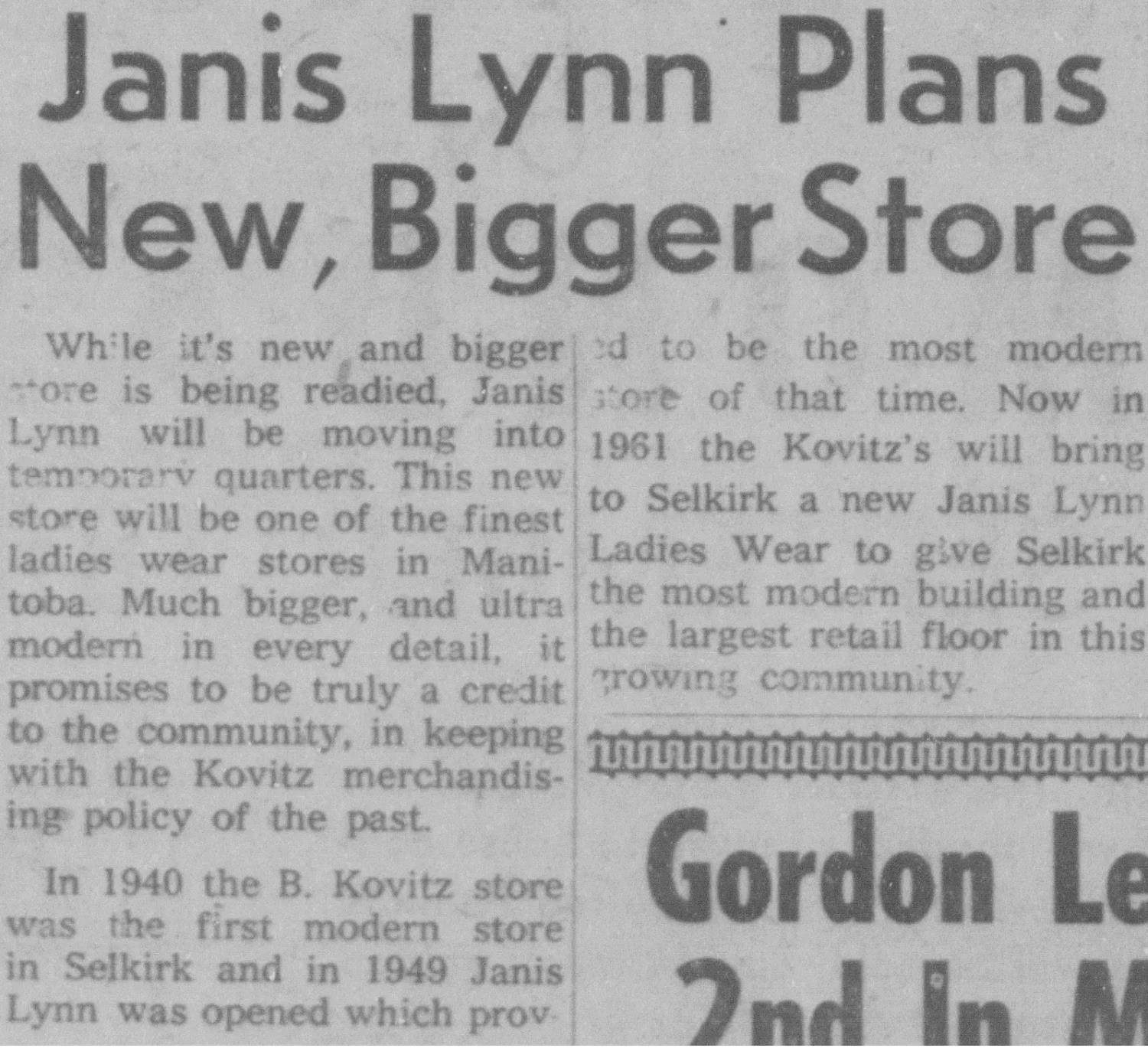
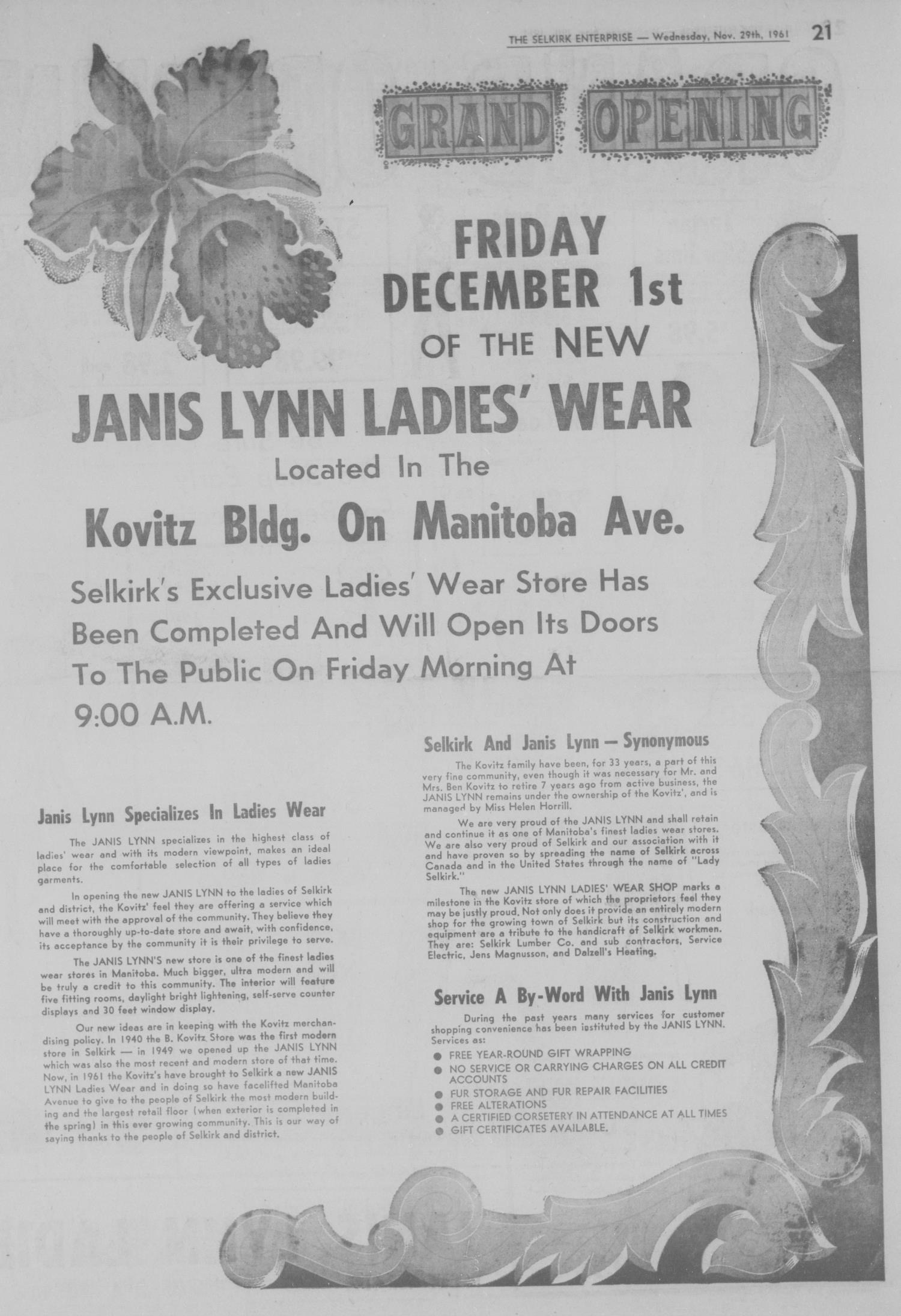
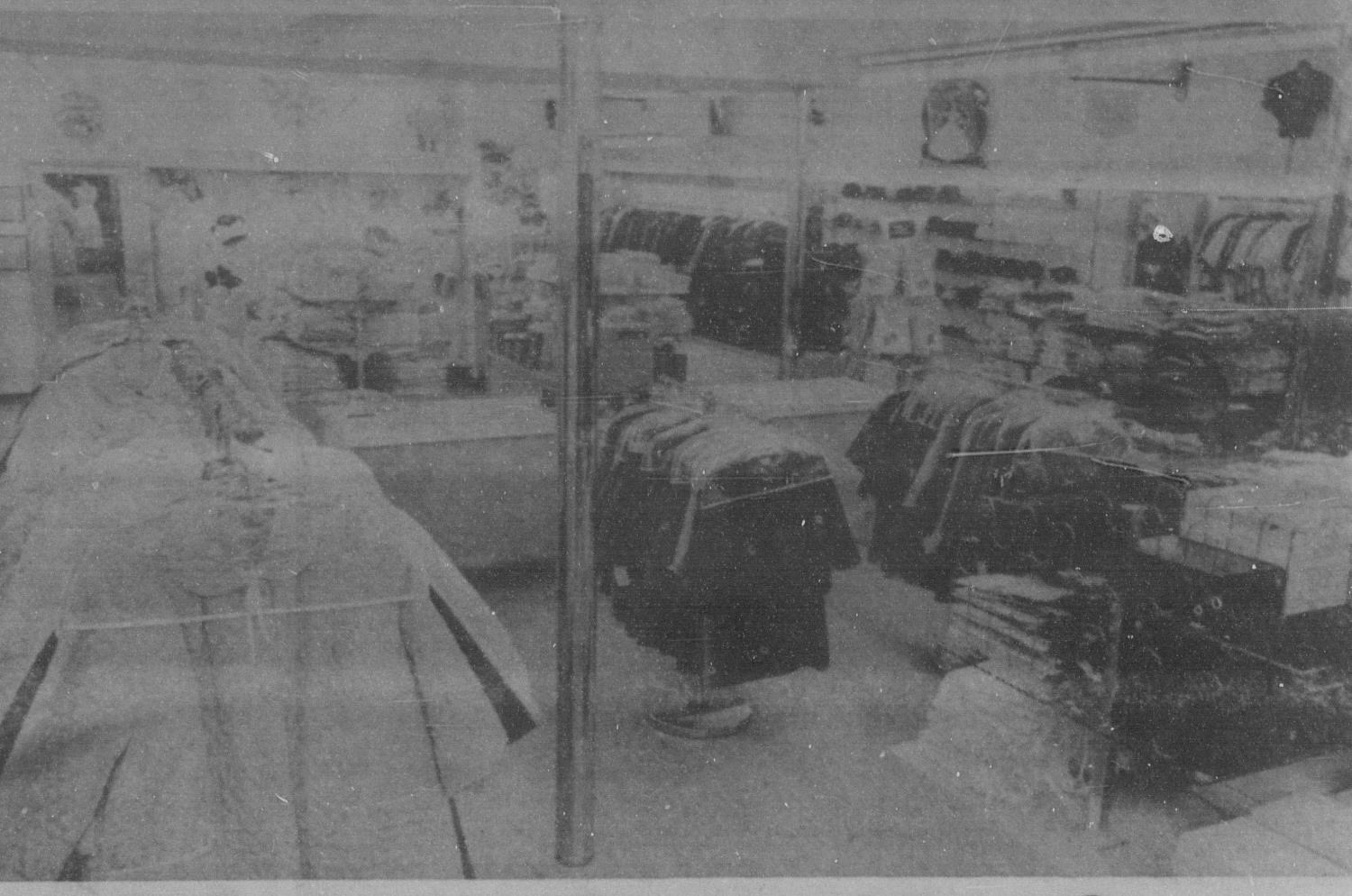
The Kovitz family left a lasting impression on Selkirk’s commercial landscape, building a retail legacy that spanned nearly four decades. At its height, their business was described by a 1961 Selkirk Enterprise reporter as, “The most modern building and the largest retail floor in this growing community,” a distinction that reflected both ambition and community pride.
Sew the Kovitz Story Begins
Their story starts with B. (Benjamin) Kovitz, whose journey to Selkirk was anything but simple. Born in Lithuania, Ben fled Jewish persecution in 1926, seeking stability and opportunity in Canada. He settled first in Winnipeg, where he worked at T. Eaton Co. for five years, carefully saving every dollar. His goal was clear: reunite his family. At the time, it cost $65 each for his wife, Lillian, his son, Dave, and his mother to immigrate to Canada.
As a skilled tailor who spoke seven languages fluently, Ben was eventually able to move his family from Lithuania to Winnipeg. There the family expanded with two more children, Frank and Victoria. In 1930, Ben moved his family to Selkirk and opened a small tailor shop, known initially as Ben Kovitz Clothing. The space was modest, and the Kovitz family lived in the back of the shop, squeezing five people into just two rooms. They also shared the building with the Boresky family, who operated the Boresky Bakery in town. Despite the cramped quarters, the shop quickly became a local fixture.
“From the mixer room, there were back steps leading to an upstairs apartment. They used to stack the flour bags against the staircase, and when just the right height, us kids could run up and down. Loved it. That was in the mixing room, south east corner of the building. The ovens were at the south west corner of the building. There was just enough distance between ovens to play hide and seek. It was rather warm. The room directly behind the front customer portion of the bakery, had a bunch of work tables, and the deep fryer’s for the doughnuts, etc. Every once in a while, they’d let us kids dip the doughnuts or fill the jam busters and between the cake layers.” – Carla (Boresky) Christiansen
The storefront itself served as an early form of advertising. Passersby could often see Ben working with his sewing machine through the back window. This visibility was later described in Stories of Selkirk’s Pioneers and their Heritage as, “an astute promotional strategy,” particularly at a time when electronics were still rare.
Kovitz would work out of this space for two years before wanting a building of his own. After a generous offering of the chance to own the building at 218 Manitoba with no immediate downpayment of $500, the Kovitz franchise began to flourish into nearly 40-year legacy it came to be.
Sprouting Their Own Seeds
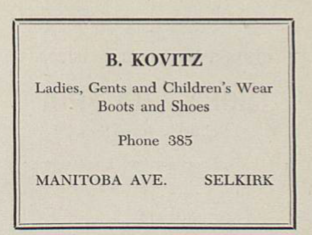
In 1940, B. Kovitz Dry Goods officially opened, specializing in dry goods and men’s clothing. The shop was a success, attracting customers from Selkirk and surrounding communities.
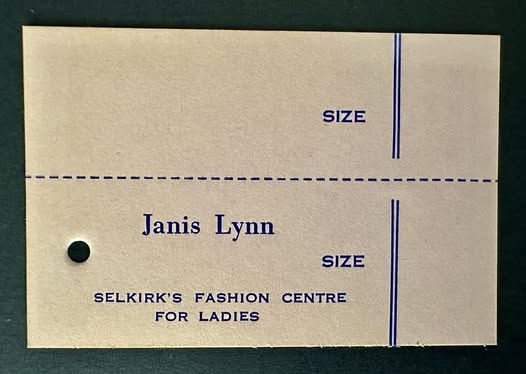
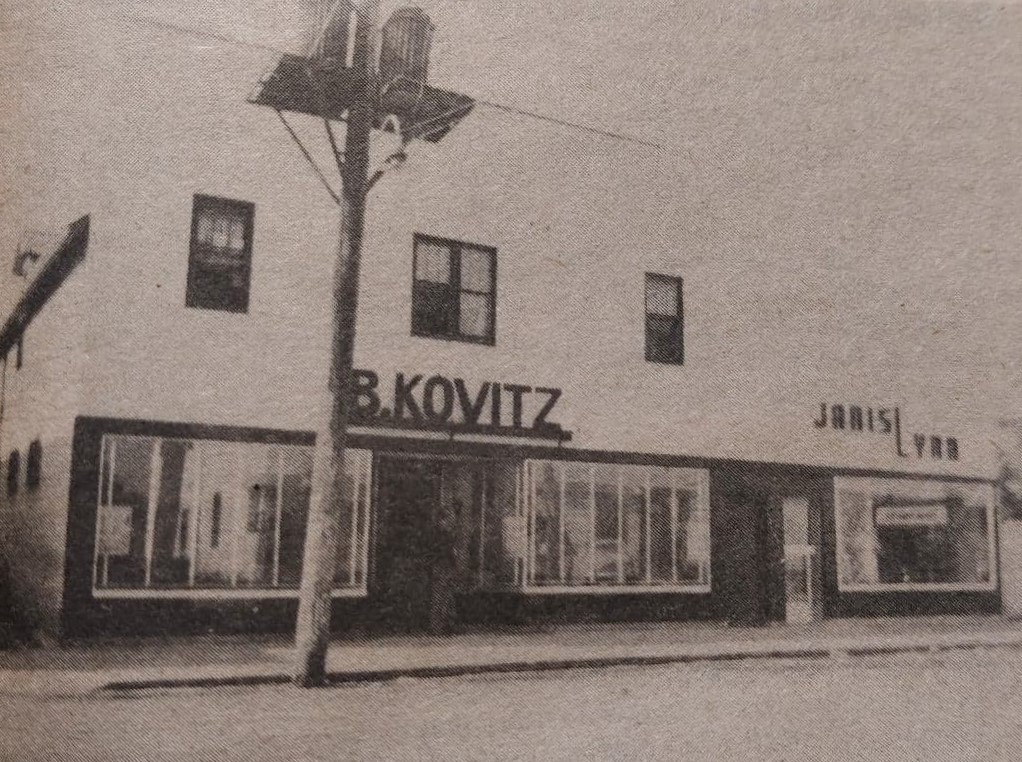
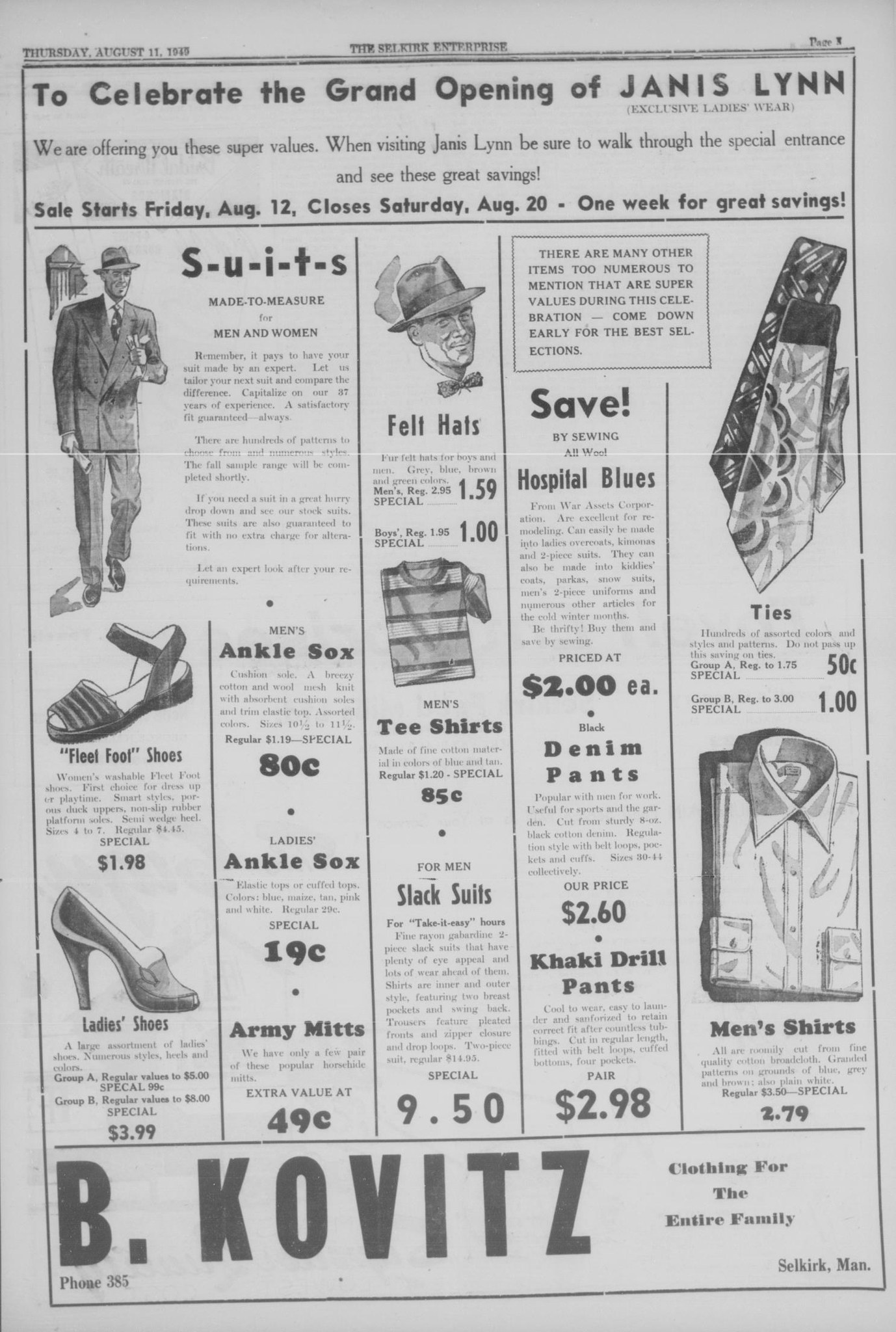
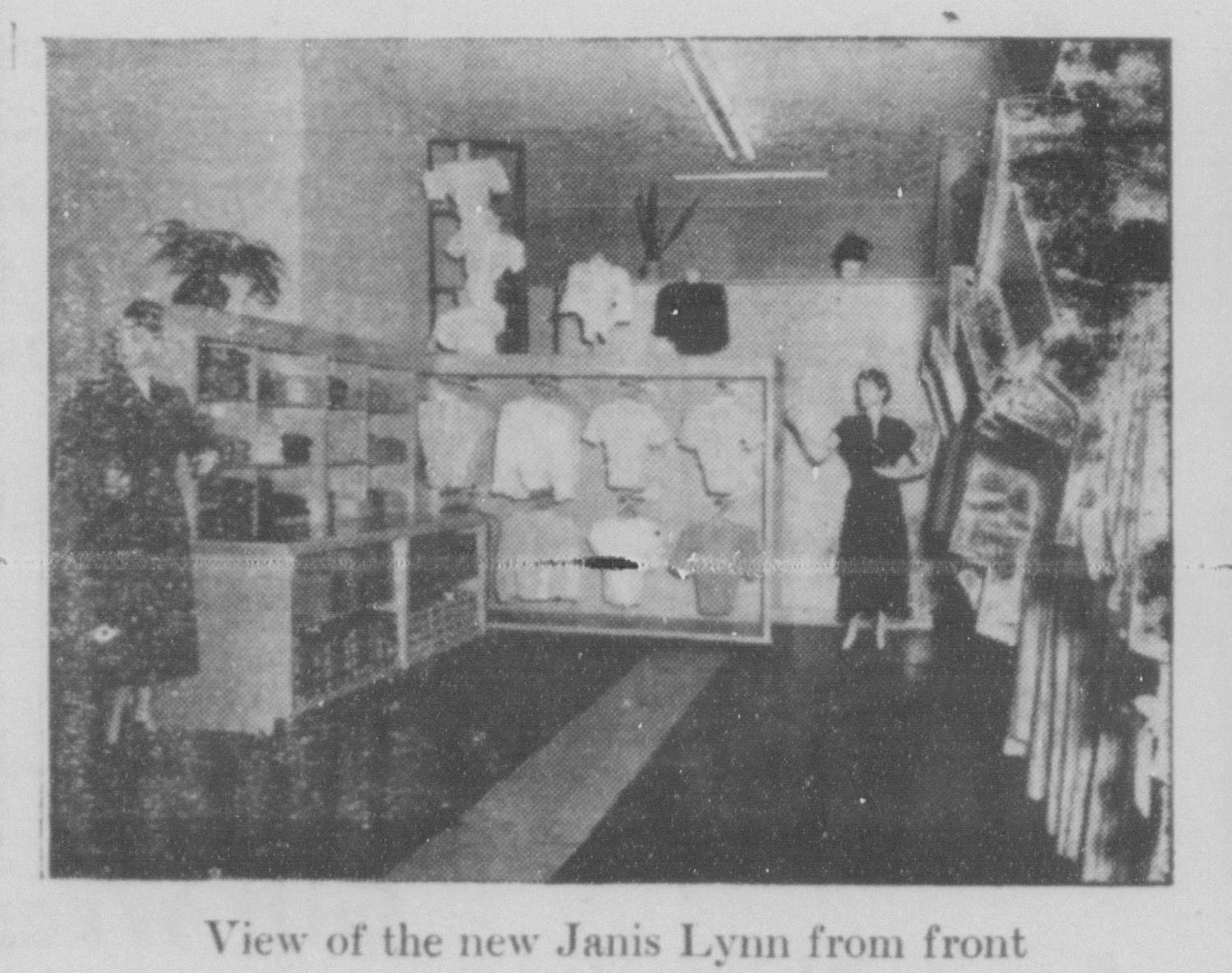
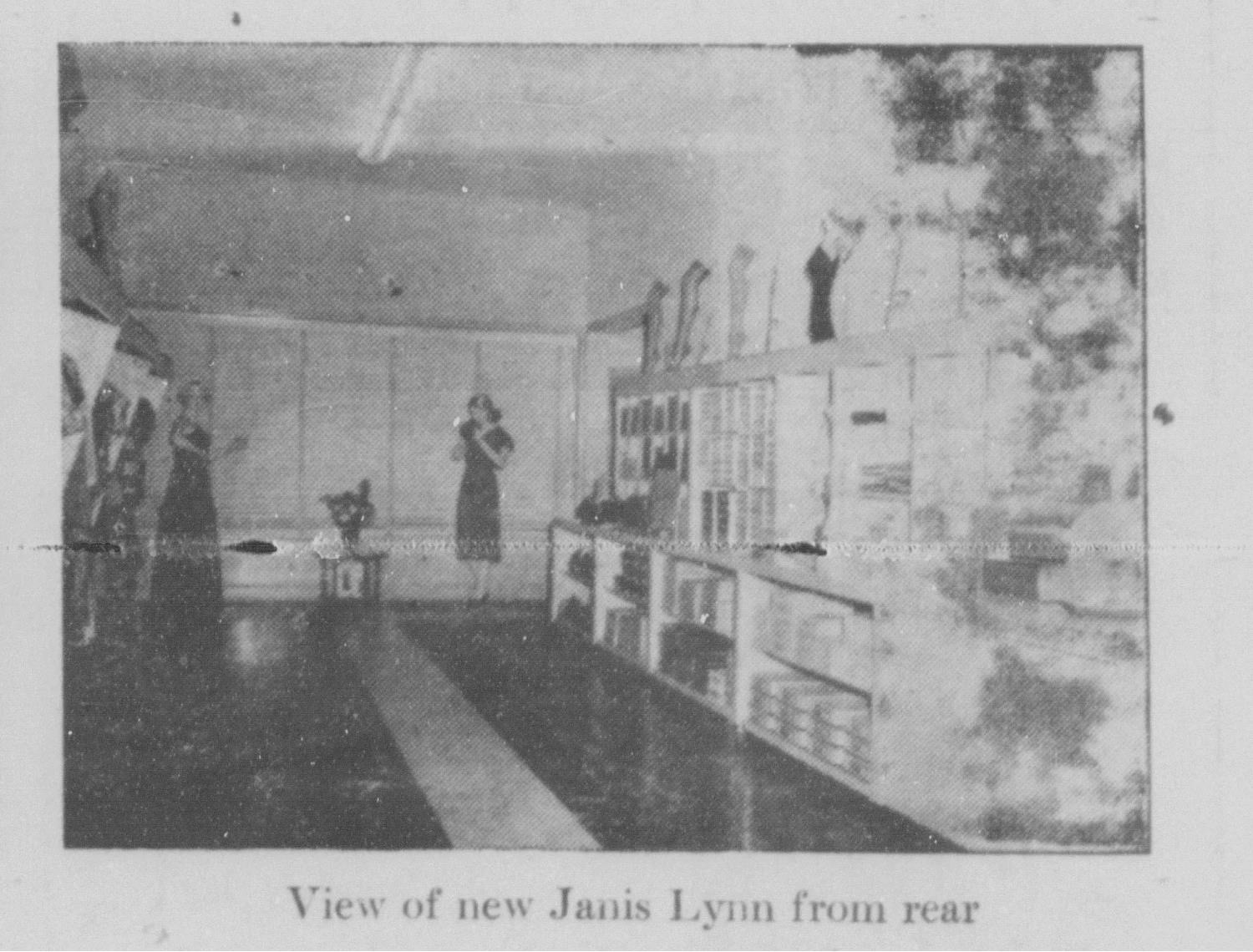
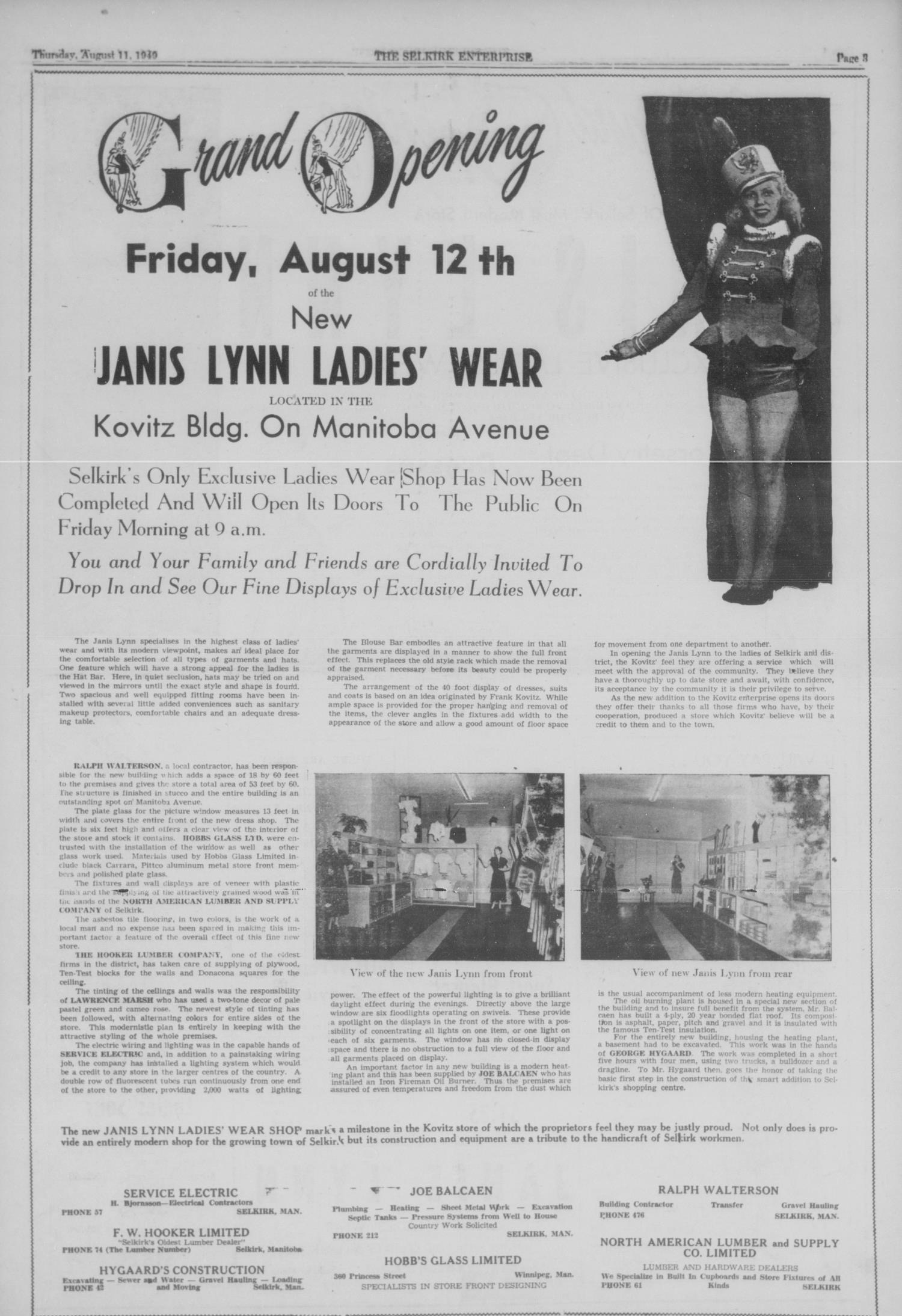
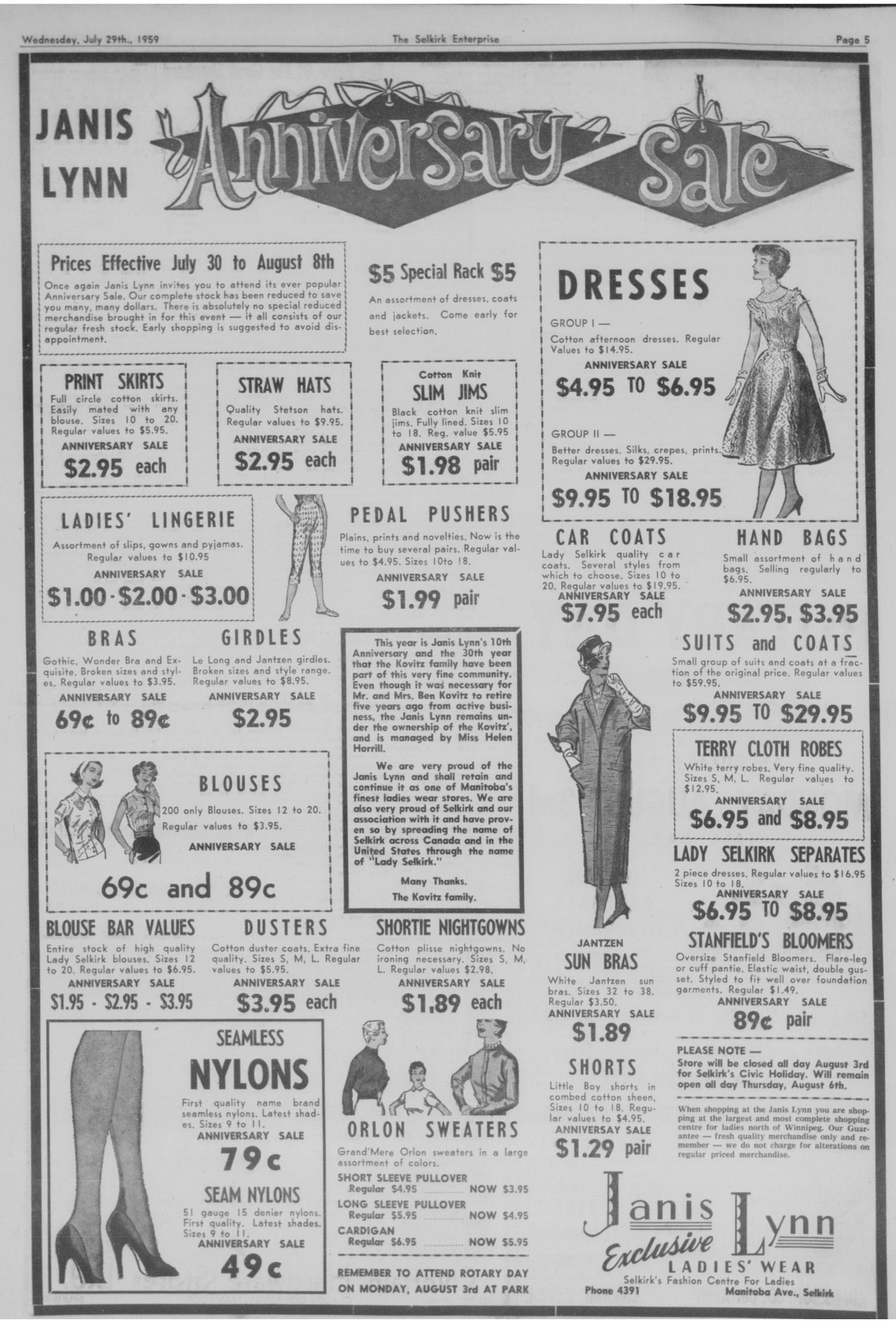
By 1949, the family expanded their vision with the opening of Janis Lynn, a women’s apparel store located on a neighbouring lot along Manitoba Avenue. Ben’s son, Frank was the driving force behind the new shop, having entered the clothing manufacturing business a few years earlier as Frankroy Ltd. with a factory on Princess Street in Winnipeg. His line of ladies’ wear, particularly the Lady Selkirk blouses, were sold to department store chains across North America.
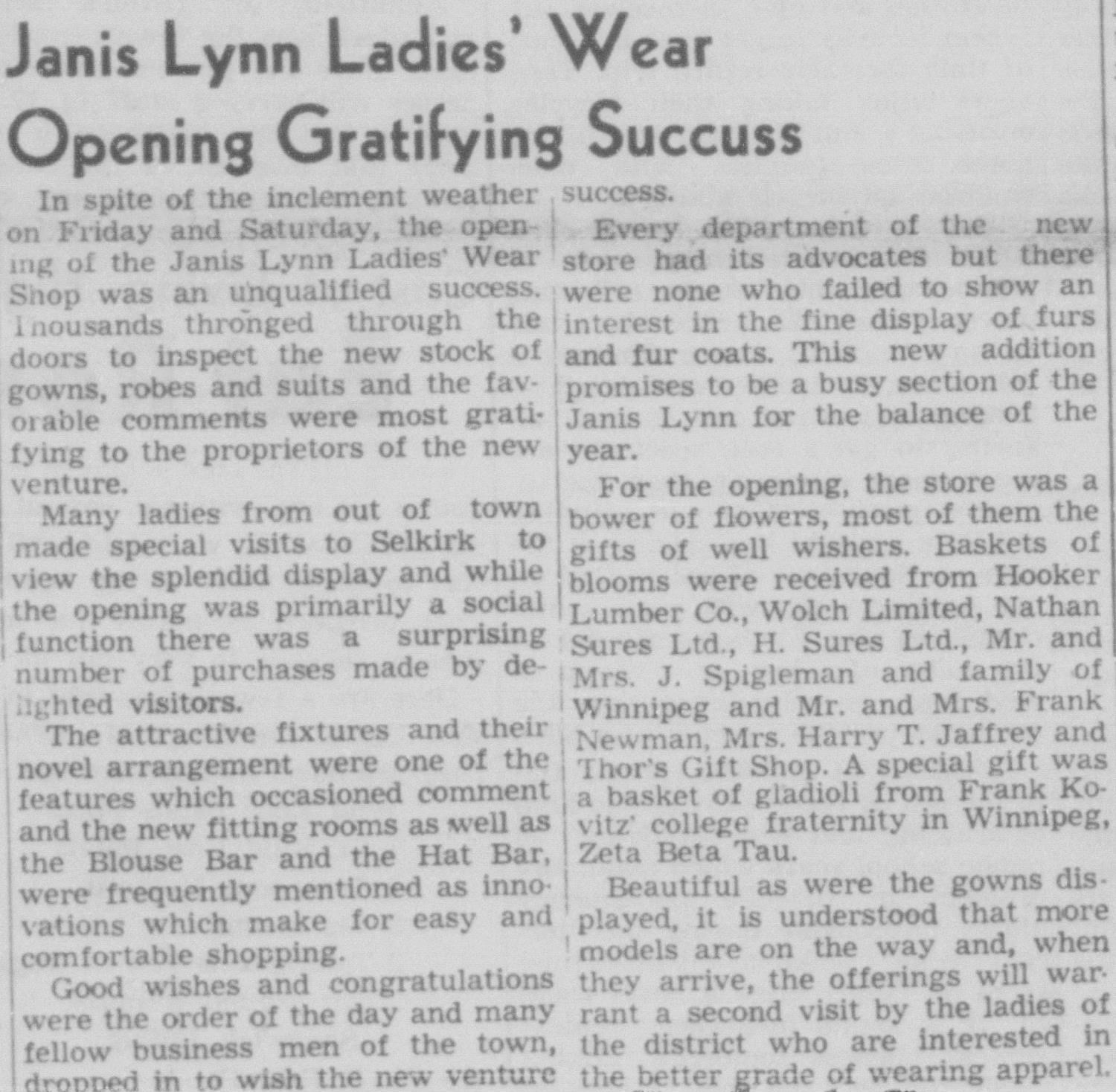
The new shop was an immediate hit. Janis Lynn offered everything a woman’s wardrobe could desire –– gowns, robes, suits, hats, blouses, and more. With an in-house tailor available, it became a true one-stop shop for fashion.
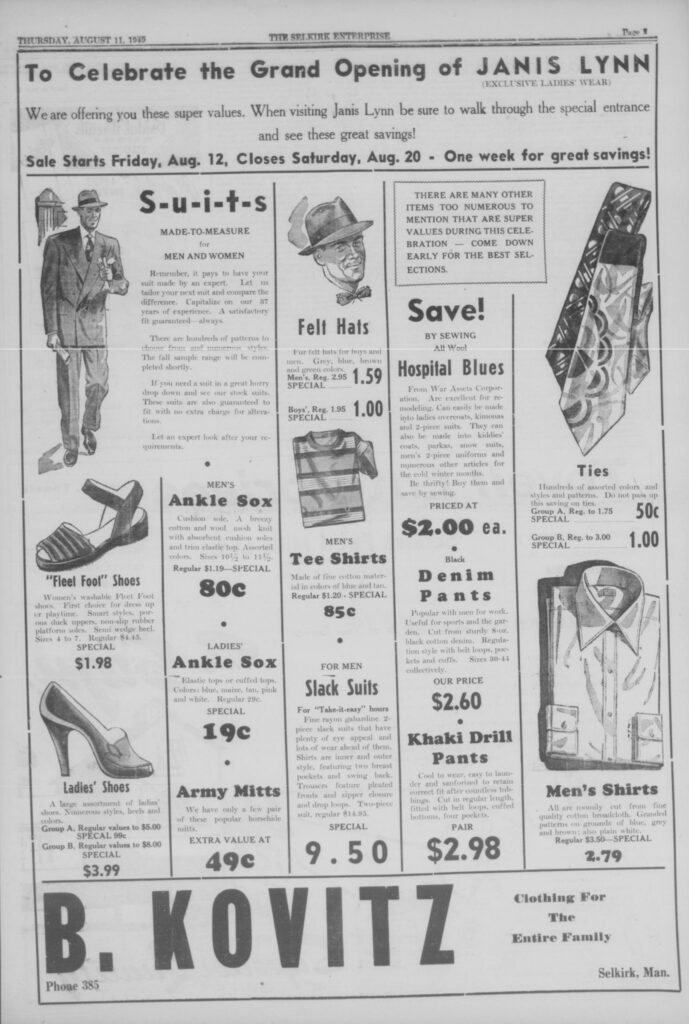
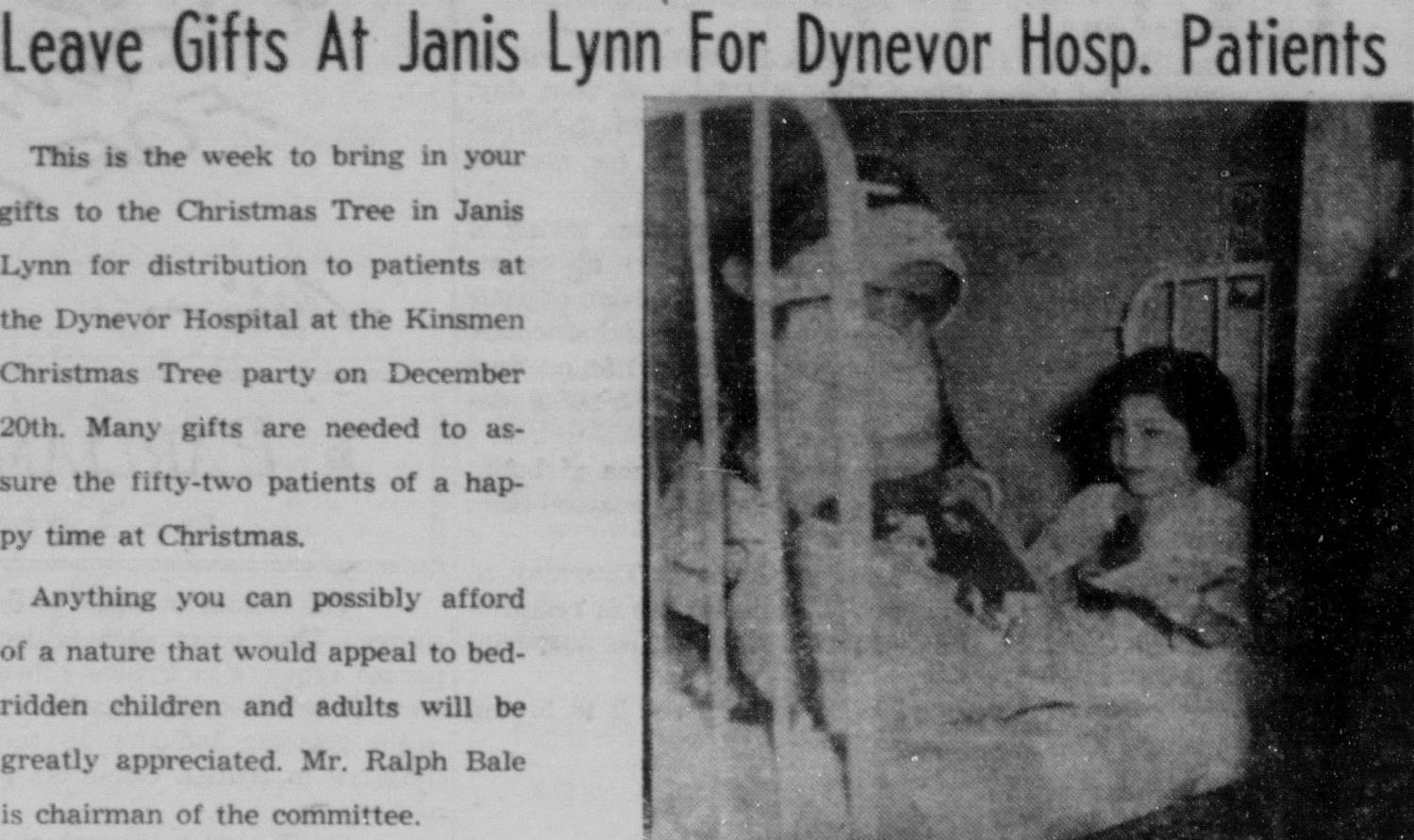
The grand opening of Janis Lynn was nothing short of spectacular. Thousands of customers passed through the doors on opening weekend, including many from out of town. During the holiday season, a Christmas tree was set up inside the store where customers could leave presents beneath its branches. The local Kinsmen later distributed these gifts to Dynevor Indian Hospital patients, reinforcing Janis Lynn’s role as a community-minded business.
Times Change
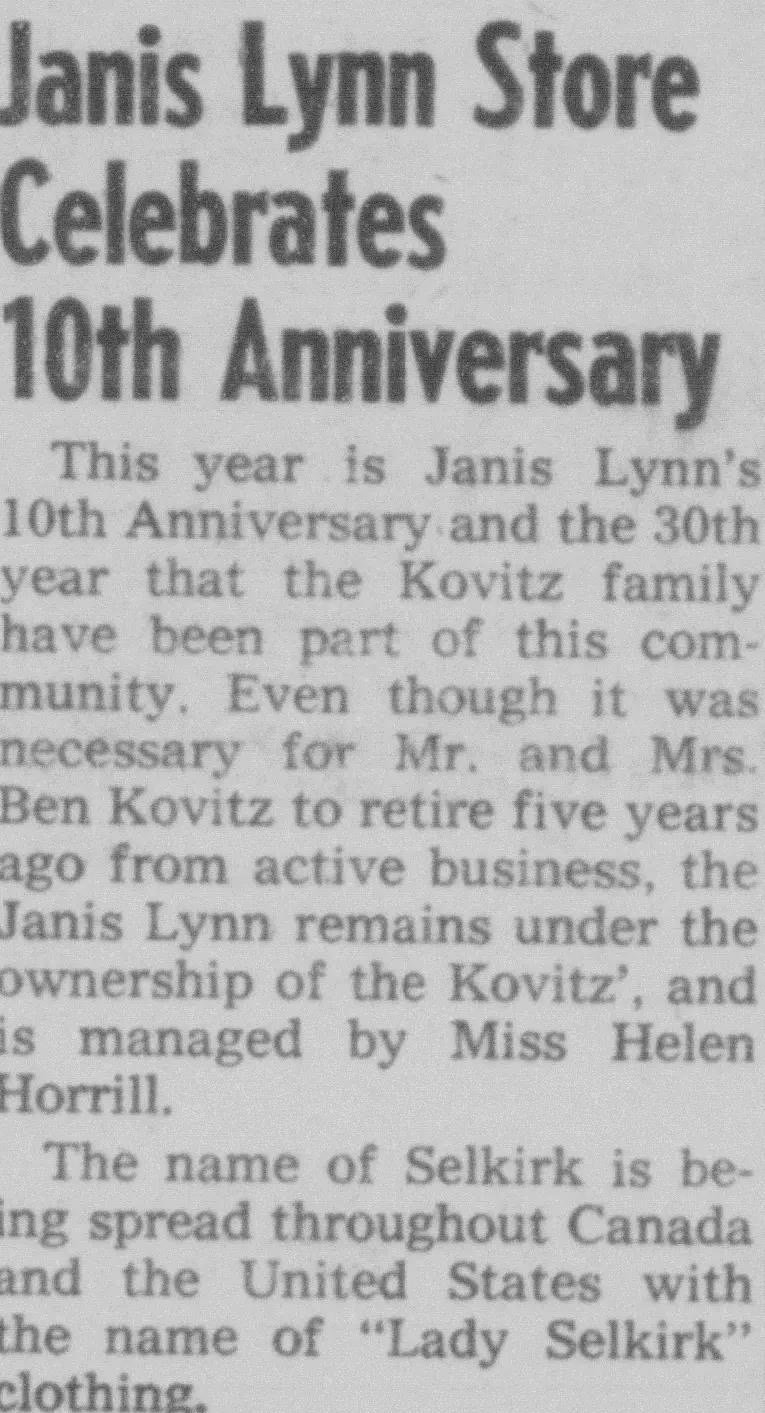
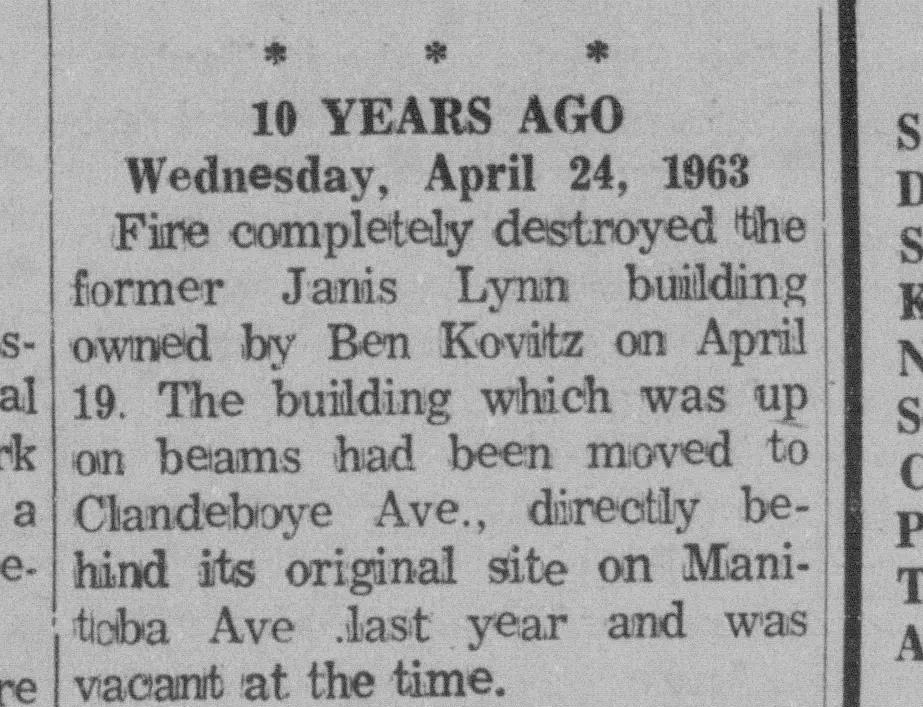
In 1954, Ben Kovitz retired, passing the torch to the next generation. His son Frank took over the family business, while Janis Lynn was managed by Helen Horrill. Under their leadership, the store continued to thrive. In 1961, the business expanded once again, modernizing its operations and moving into a larger building on Clandeboye Avenue, directly behind the original Manitoba Avenue location.
Tragedy struck two years later when, on April 24, 1963, a fire destroyed the former Manitoba Avenue building. Fortunately, the structure was vacant at the time.
In 1965, after years of success, the Kovitz family said farewell to Janis Lynn. Ownership passed to Jim Murray and his family, who continued operating the store until 1972.
Ben Kovitz passed away on February 8th, 1985.
B. Kovitz Collection
Click on images to enlarge
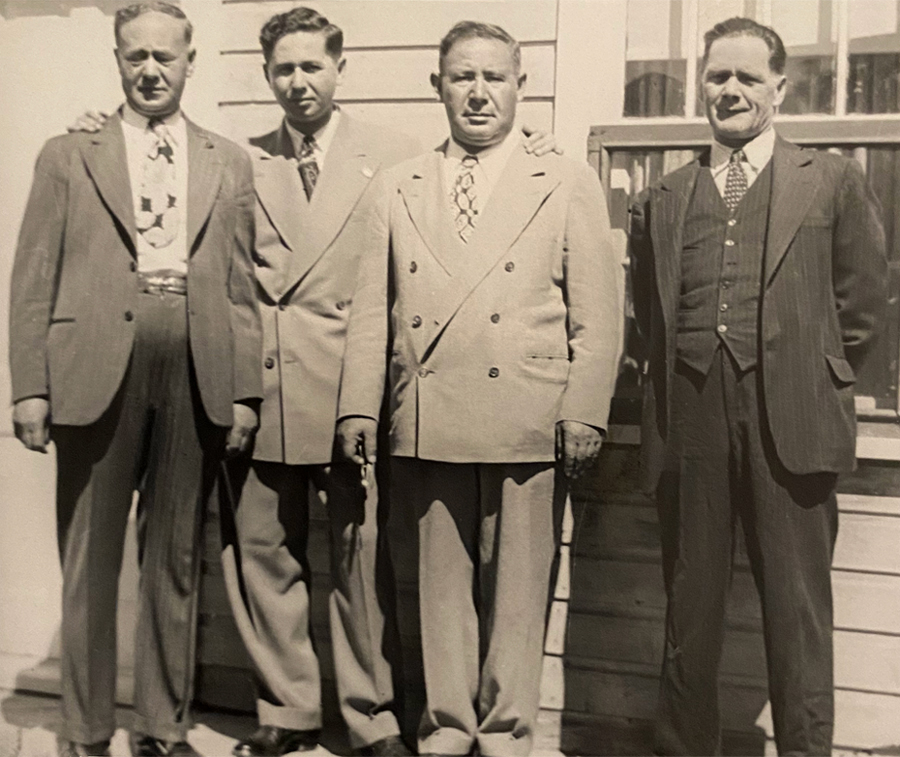
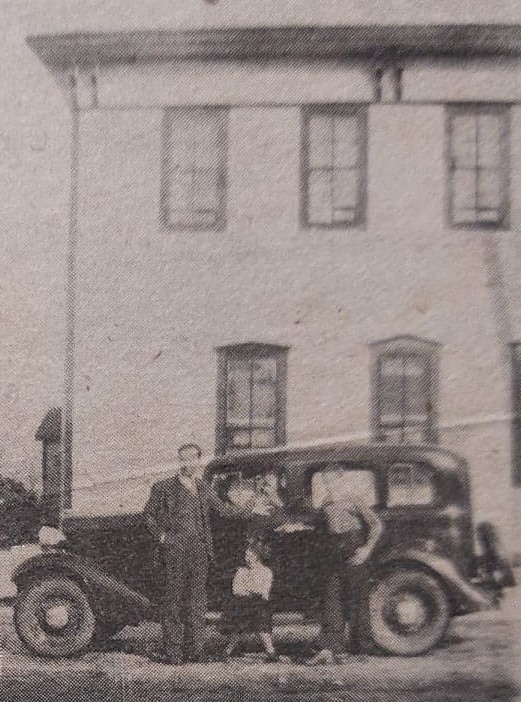
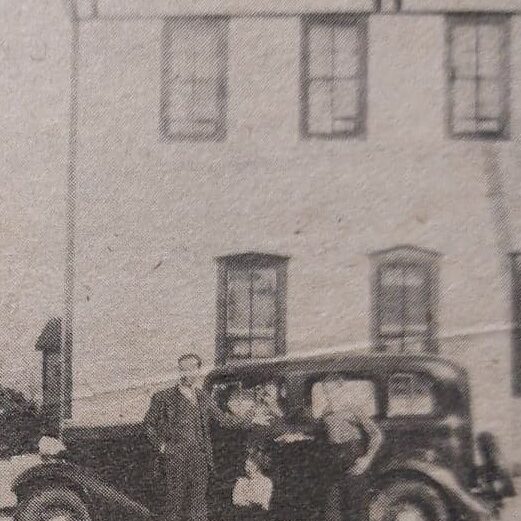 Kovitz Family by Lisgar Hotel before Manitoba Avenue was Paved, 1930, Selkirk Enterprise Centennial
Sources
Newspaper Archive- Selkirk Enterprise, Sept. 17, 1961
Newspaper Archive- Selkirk Enterprise, Dec. 10, 1953
Newspaper Archive- Selkirk Enterprise, April 25, 1973
Newspaper Archive- Selkirk Enterprise, Sept. 13, 1961
Newspaper Archive- Selkirk Enterprise, July 29, 1959
Newspaper Archive- Selkirk Enterprise, Aug. 18, 1949
Facebook- Oliver, J., December 2023
Facebook- Murray, E., July 24, 2024
Howard, K., Stories of Selkirk’s Pioneers and their Heritage