

The Selkirk Community Pool was the result of a strong community effort to create an indoor swimming space for year-round use. Beginning with the “Swim to Beat ’70” initiative, local clubs, schools, and volunteers worked together through fundraising to complete the pool. The pool officially opened in 1975 since then, it has served as an important community hub, providing swimming instruction, recreation, and competitive opportunities for thousands of residents.
Taking the Plunge
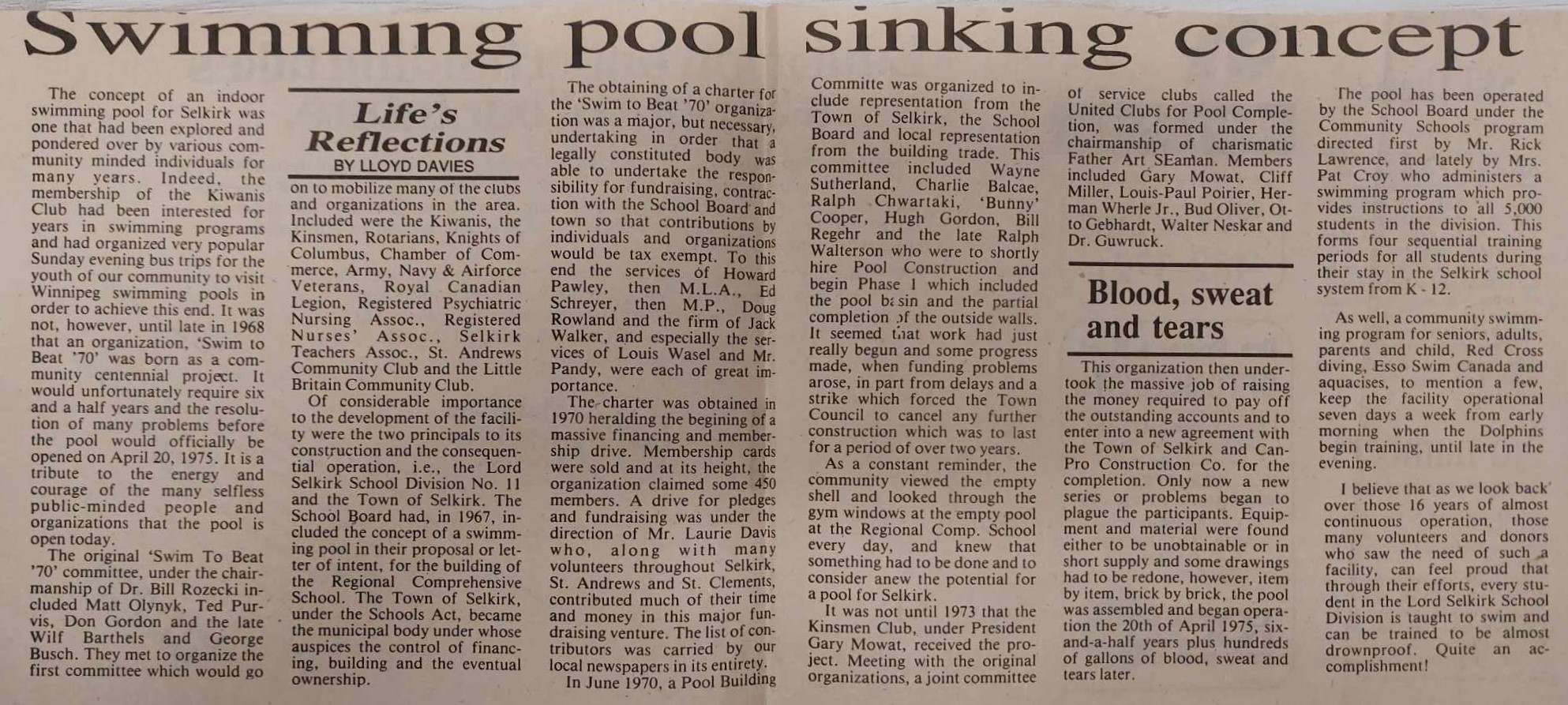
Rotary Lake, built in 1958, provided a space for many people to swim in Selkirk during the summer months. An indoor pool which operated year-round was not available in Selkirk and the need for adults and youth to enjoy a pool in the off-season quickly grew. For years, the Kiwanis Club organized bus trips on Sunday evenings to indoor Winnipeg pools to meet this need, but it wasn’t quite the same as something close to home.
The desire for an indoor pool was reflected in the School Board’s building concept for the Lord Selkirk Regional Comprehensive Secondary School. The plan included an indoor pool attached to the high school.
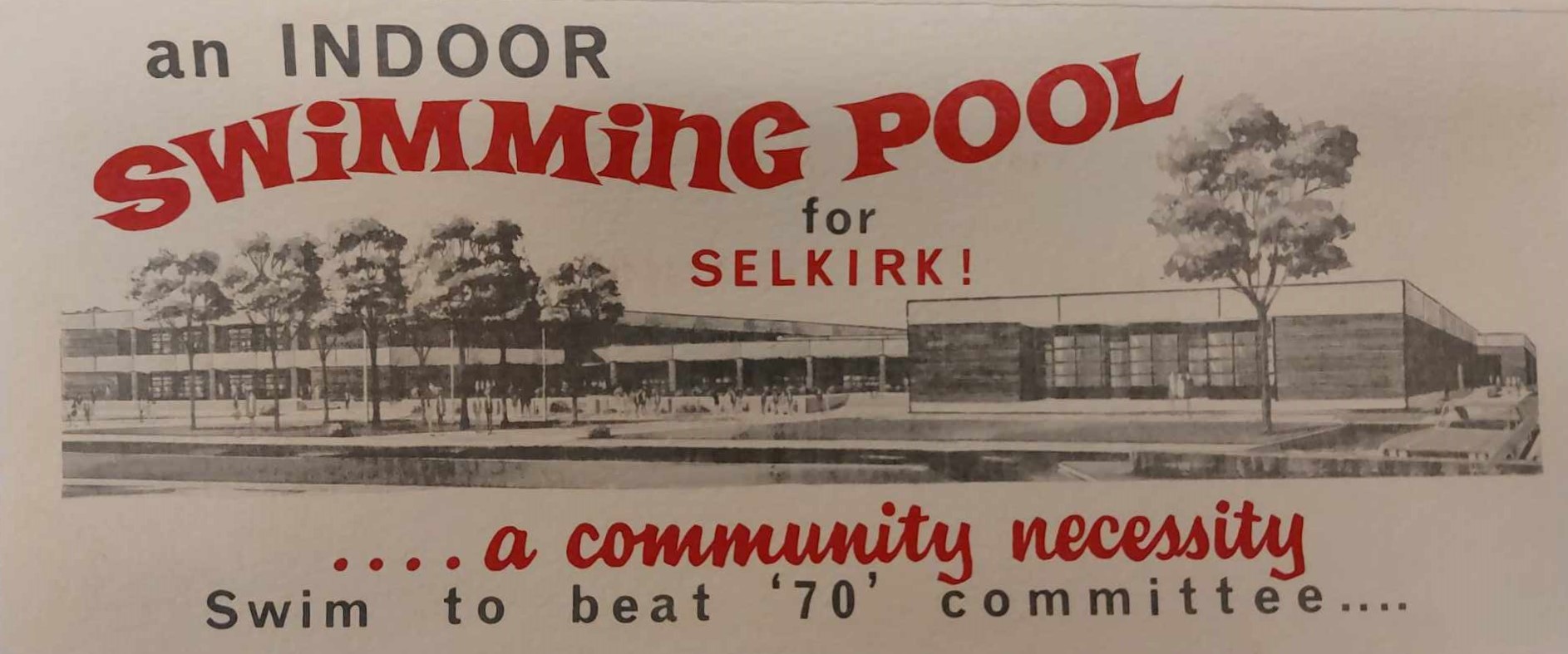
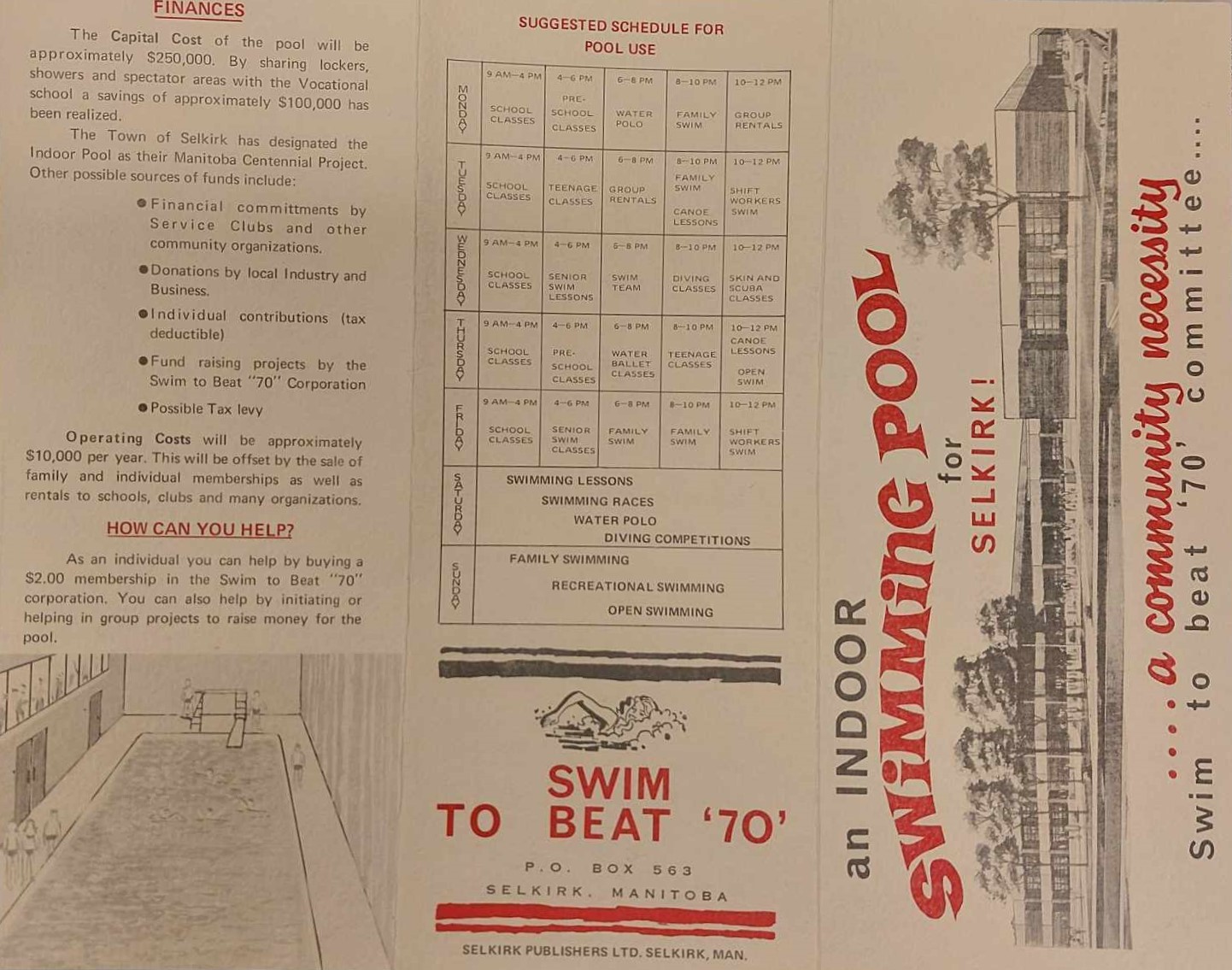
In 1968, the organization, ‘Swim to Beat ‘70’ was established. In time for the provincial centennial, the group took on the project of building an indoor pool and was tasked with mobilizing many of the clubs and organizations in the area. The Selkirk Community Pool would truly be born from hard-work and community pride.
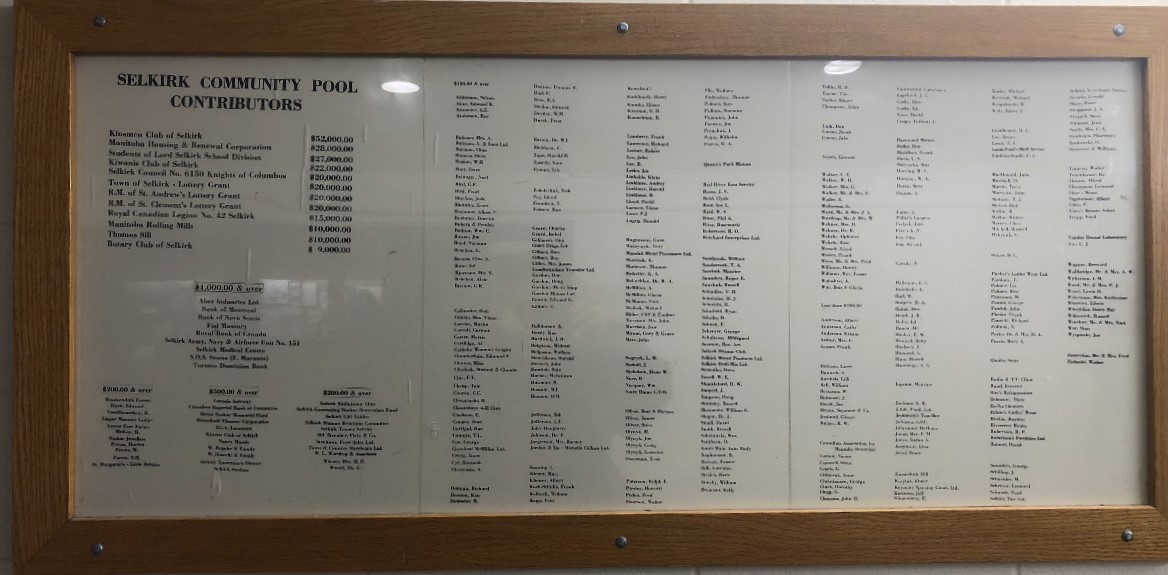
Swim to Beat ’70 was comprised of representatives from service clubs such as the Kiwanis Club, Kinsmen, Rotarians, Knights of Columbus, Chamber of Commerce, Army, Navy & Airforce Veterans, Royal Canadian Legion, urban groups such as the Registered Psychiatric Nursing Association and the Registered Nurses Association, the Lord Selkirk School Division, No. 11, and the Town of Selkirk, and rural groups such as the St. Andrews Community Club, and the Little Britain Community Club.
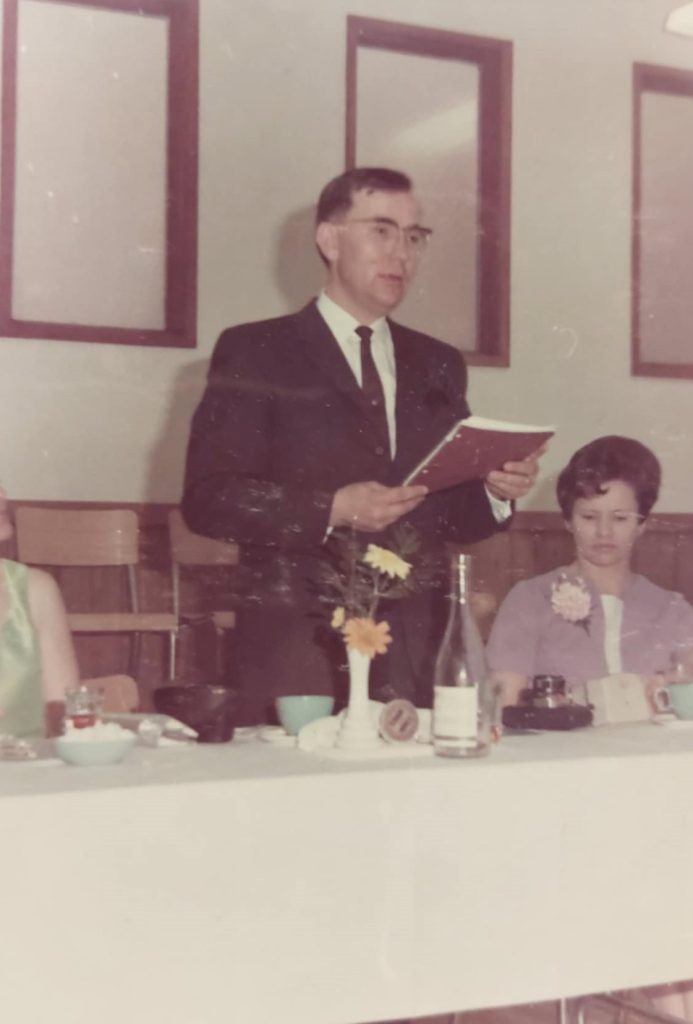
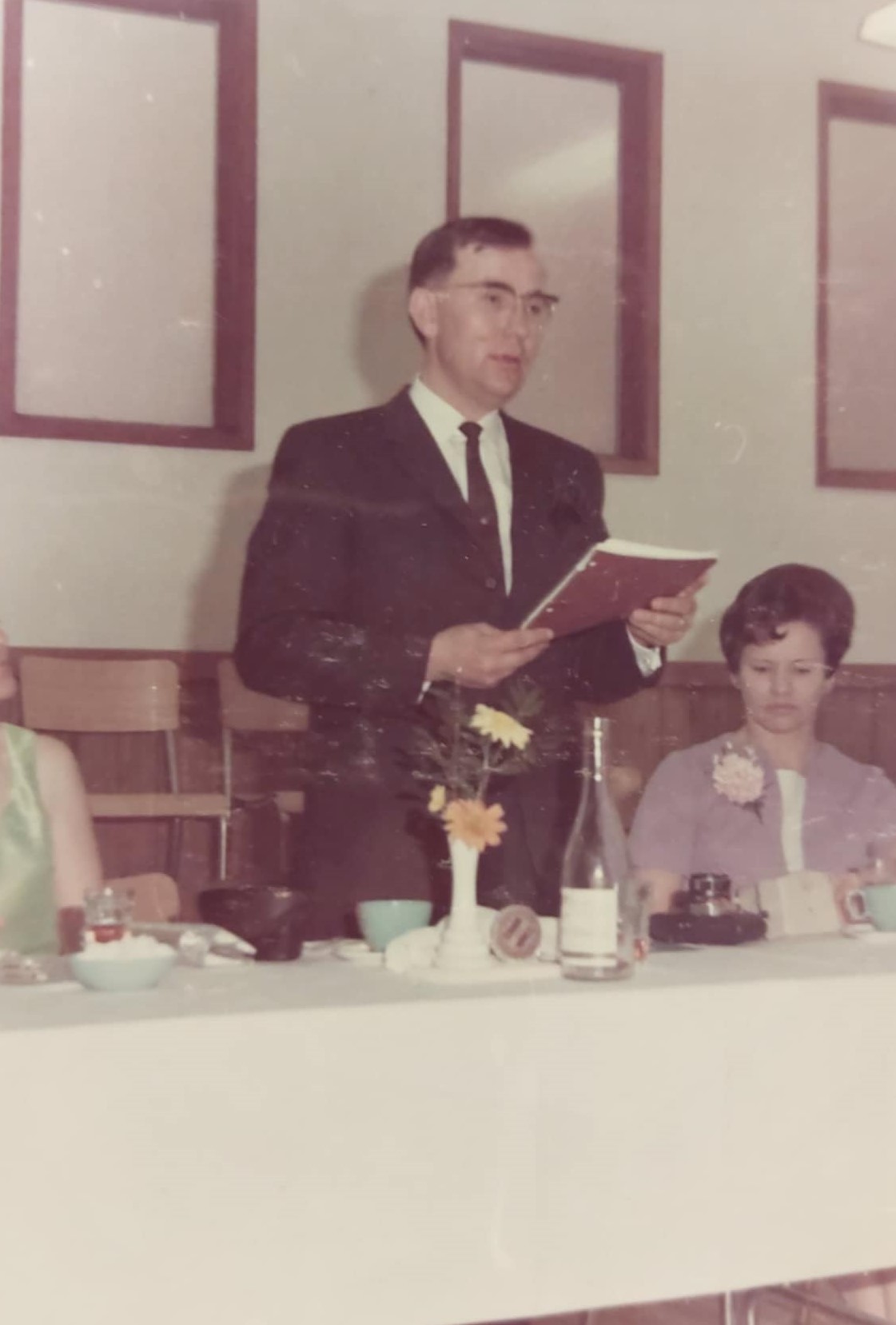
Swim to Beat ’70 was chaired by Dr. Bill Rozecki and members included Matt Olynyk, Ted Purvis, Don Gordon, Wilf Barthels, and George Busch. Soon logistics were settled, and the Town of Selkirk, following the Schools Act, became the municipal body which governed financing, building, and ownership of the soon to be pool. However, one last hurdle was required before the pool build was greenlighted. Swim to Beat ’70 needed a to obtain a charter, which authorized the organization to undertake the responsibility of funding and construction with the School Board and the Town of Selkirk. This also meant that any financial contributions by individuals and organizations would be tax exempt. The charter was obtained in 1970. It was go time!
Fundraising and Volunteerism
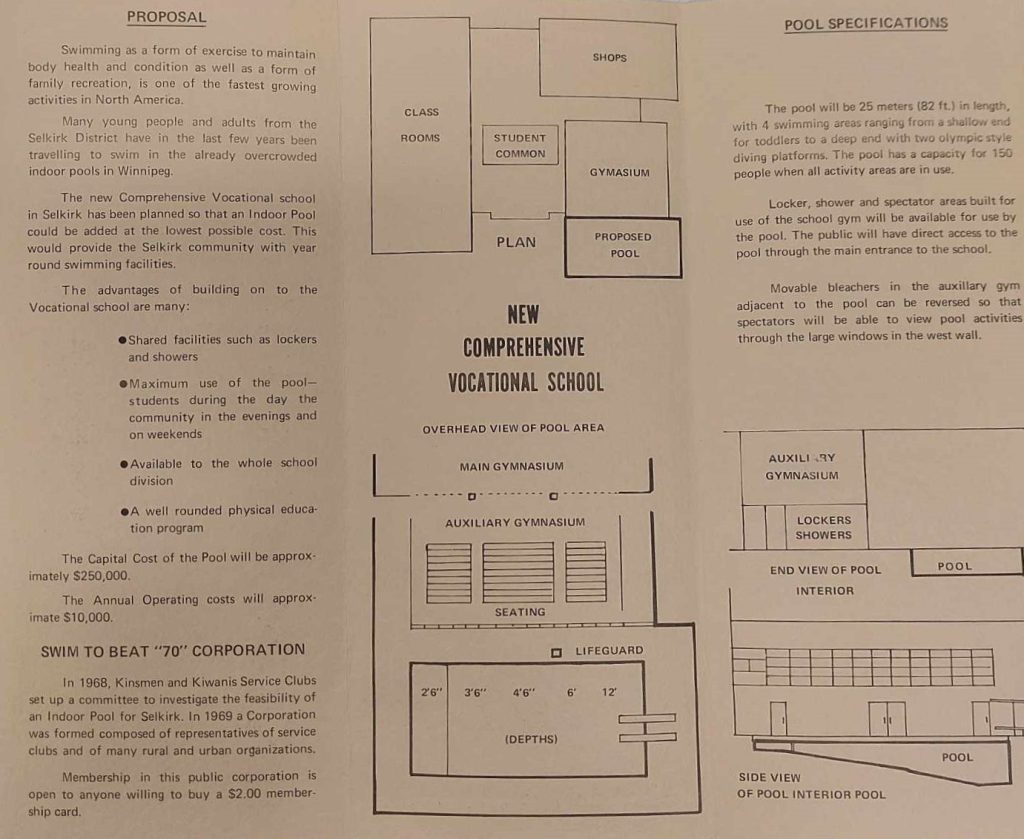
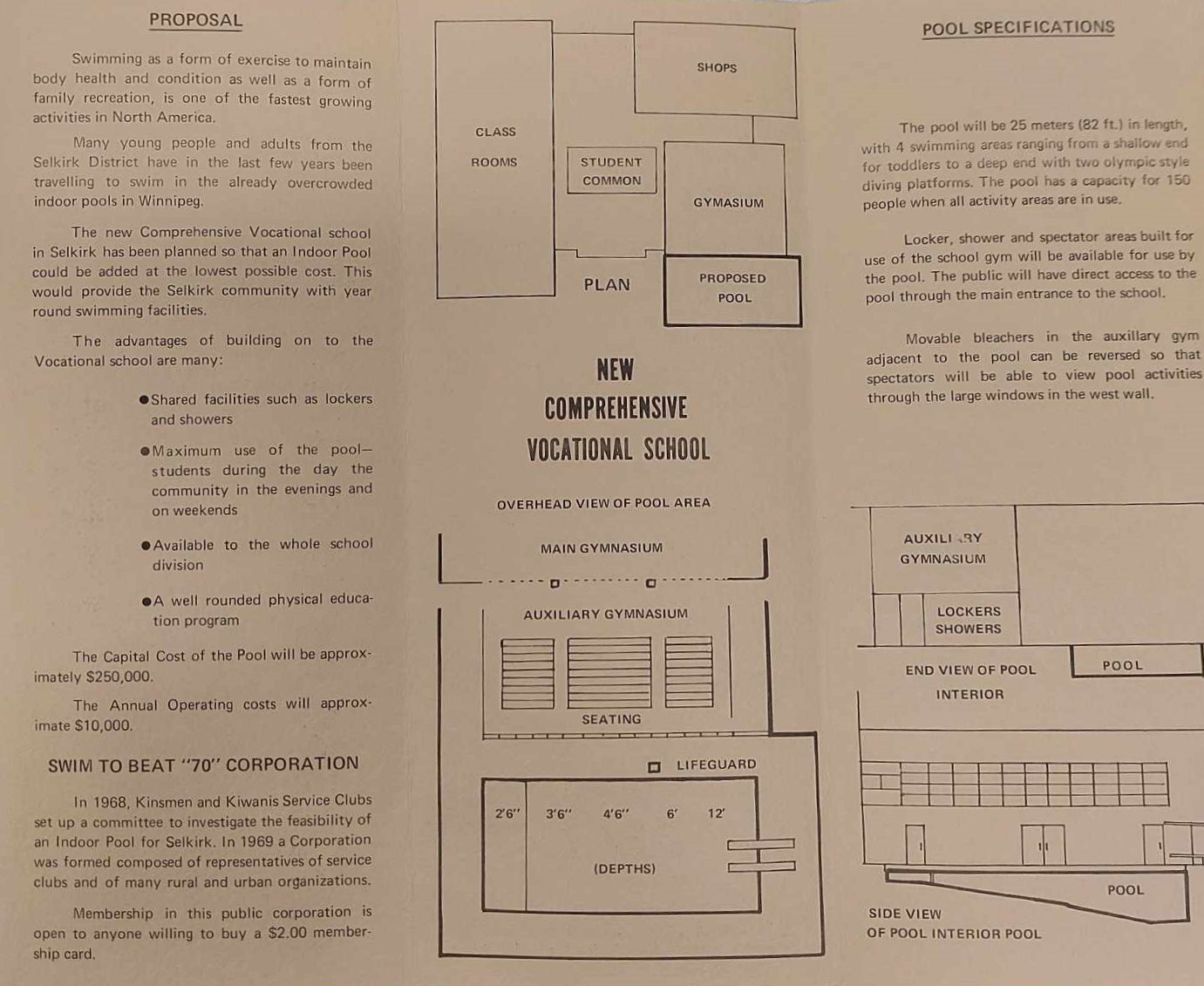
True to the School Board’s plan for the Lord Selkirk Regional Comprehensive Secondary School, the pool was designed to be attached to the high school at one end. The school could be used to maximum capacity by students during the day and the community on evenings and weekends. Facilities such as parking, the ticket booth, spectator areas, lockers, showers, changerooms, boiler, and storage could be shared which greatly reduced costs, however, the remaining funds were yet to be raised.
Getting Started
The Pool Building Committee was organized in 1970, which included representation from the Town, the School Board, and the local building trade. Members of the committee included Wayne Sutherland, Charlie Balcaen, Ralph Chwartaki, ‘Bunny’ Cooper, Hugh Gordon, Bill Regehr, and Ralph Walterson.
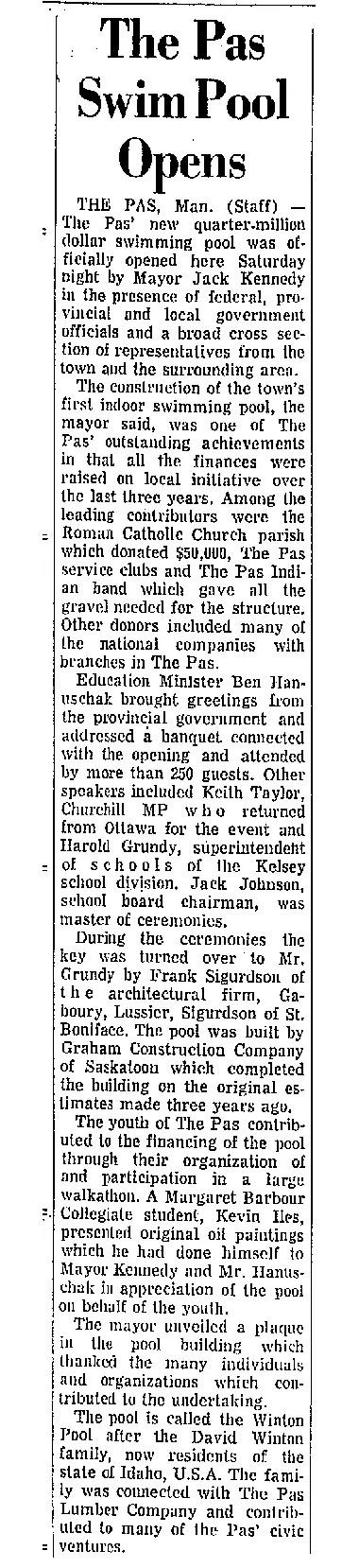
The committee visited several choice locations to view similar indoor pools to learn the best way to design the project. The committee visited pools in Winnipeg such as at the University of Manitoba, the YWCA, Bernie Wolfe School, and others. The Pas-Winton Pool was another location which inspired the design of the Selkirk Community Pool.
In Deep Waters
As quickly as the build began, the build stalled. Construction material delays and an ill-timed strike forced town council to cancel further construction. The pool, stuck at phase one, remained an empty shell for over two years. The half-completed project would sit as a constant reminder to the community that their efforts deserved the satisfaction of completion.
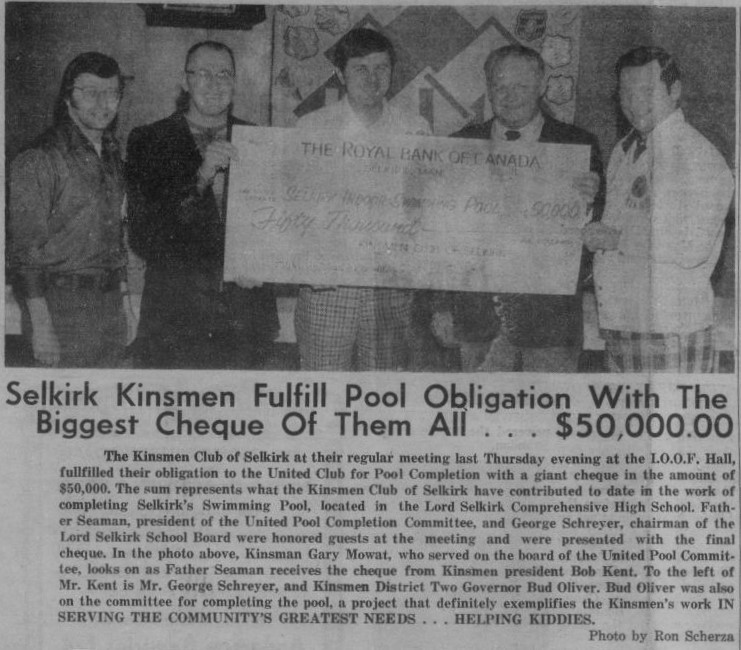
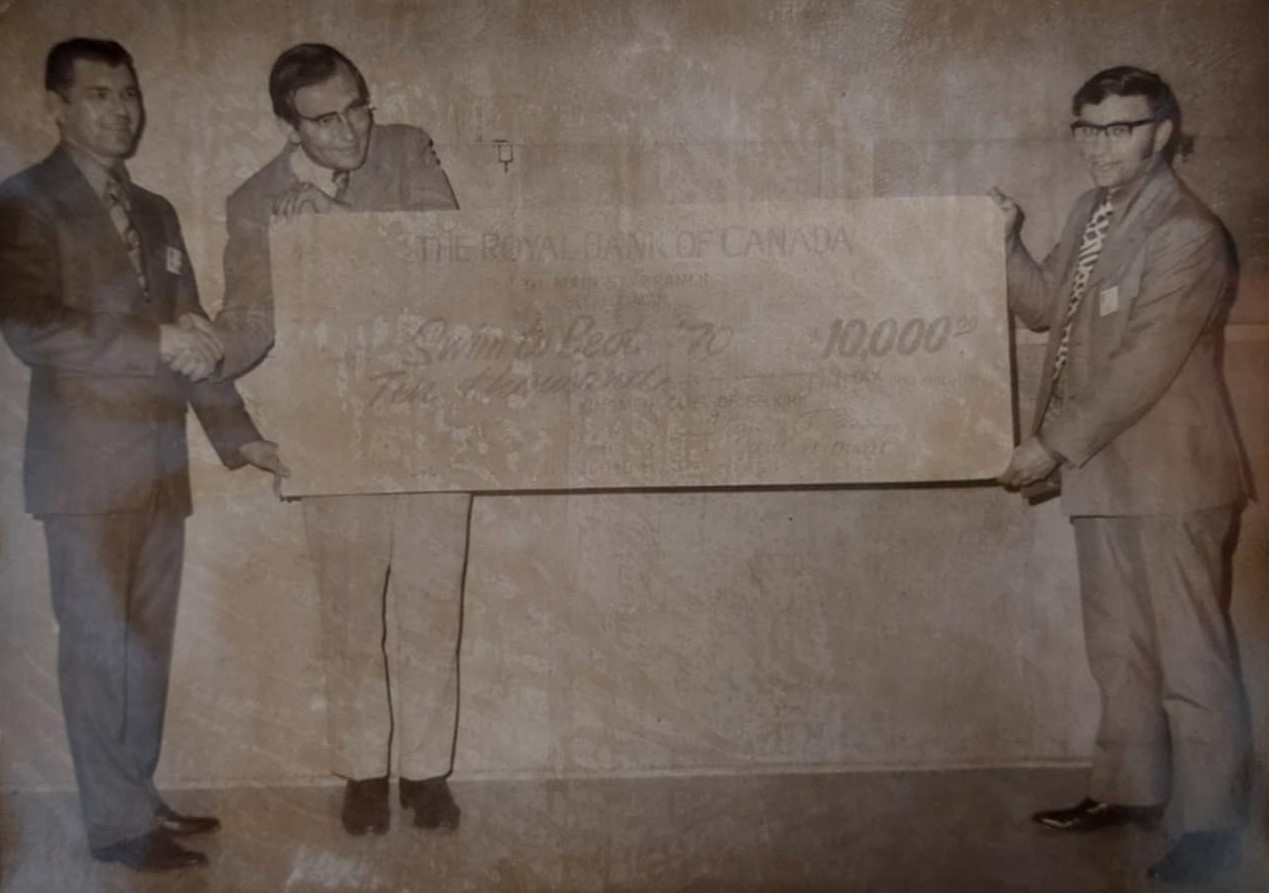
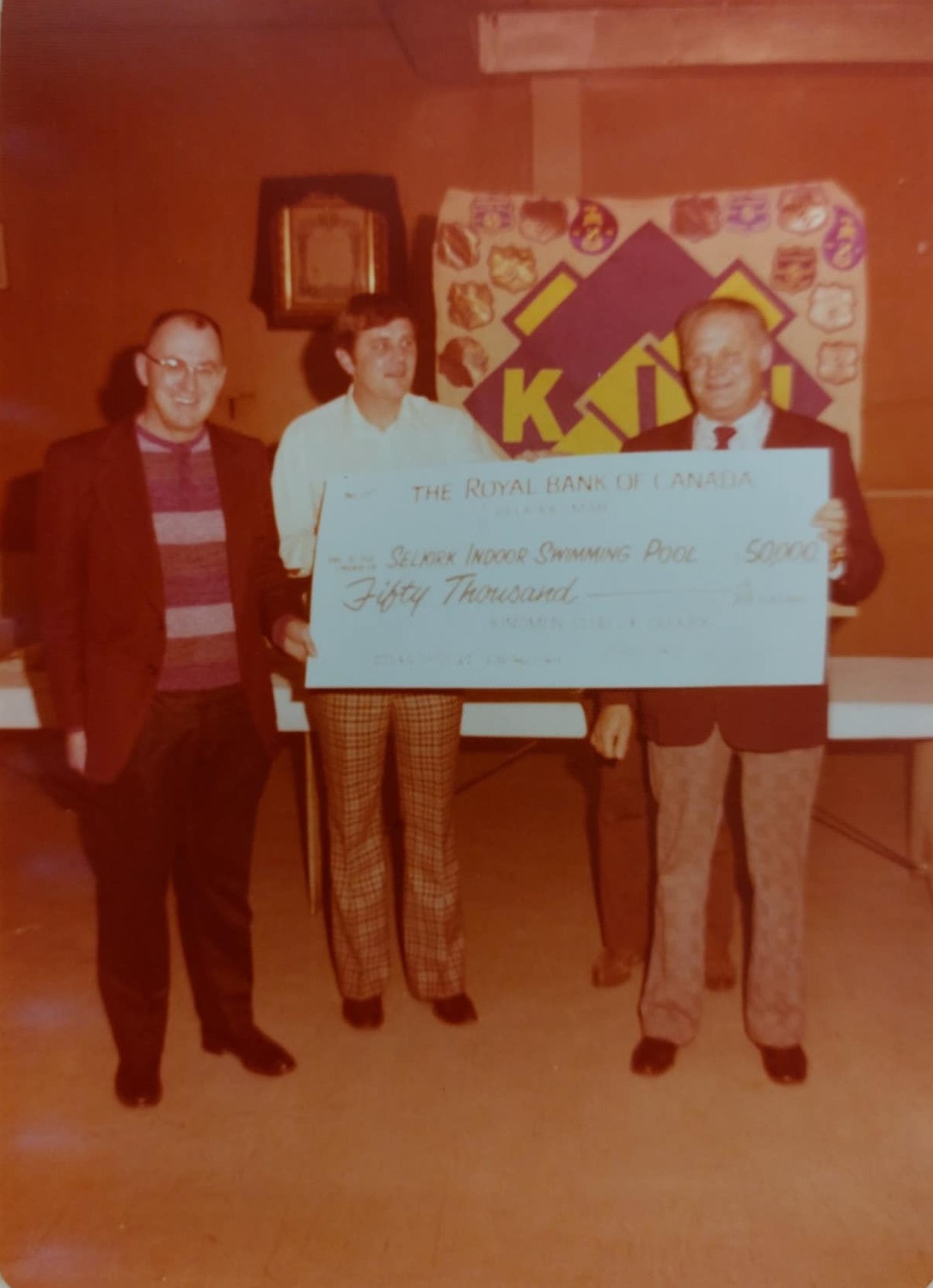
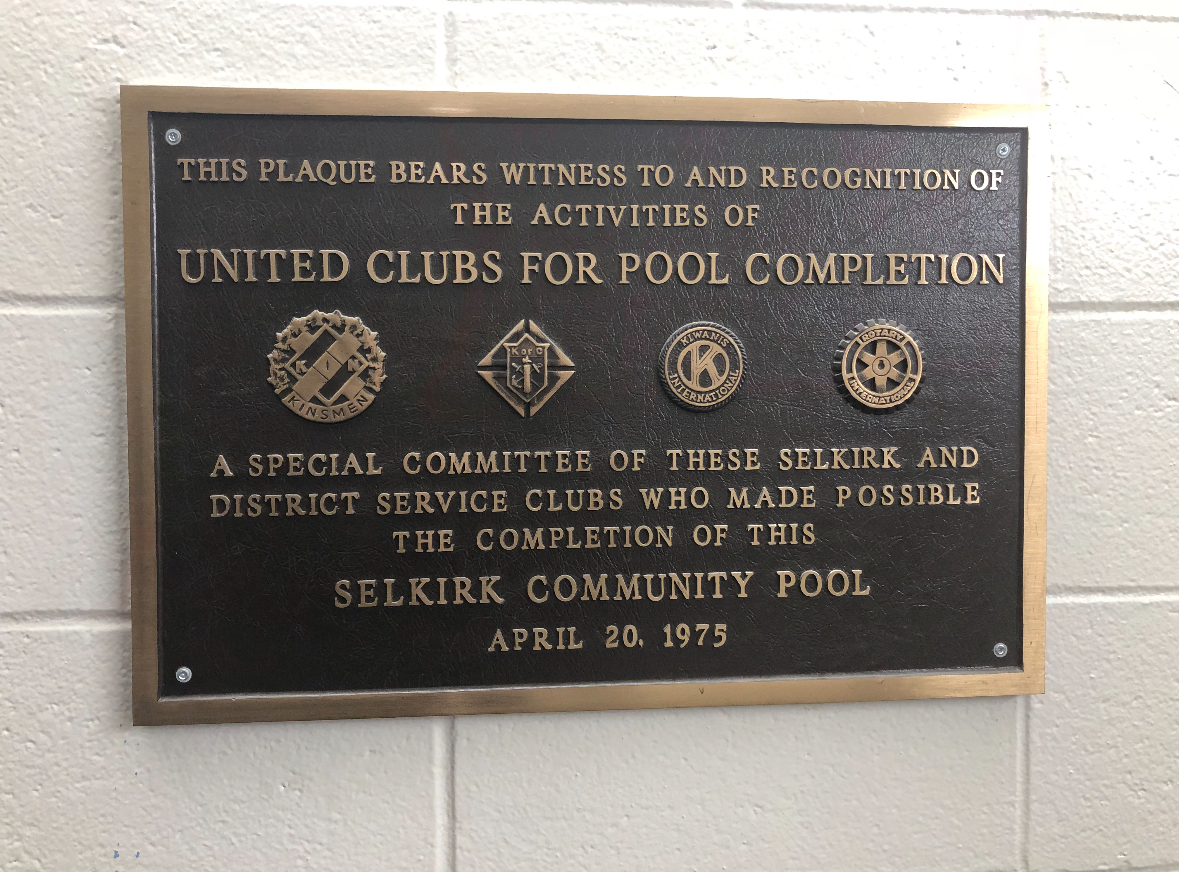
By 1973, Gary Mowat, President of the Kinsmen Club took on the project. The Kinsmen met with the original organizations that began the pool and created a joint committee. This committee was named the United Clubs for Pool Completion. Members included Chairman, Father Art Seaman, Gary Mowat, Cliff Miler, Louis-Paul Poirier, Herman Wherle Jr., Bud Oliver, Otto Gebhardt, Walter Neskar, and Dr. Gus Wruck. The committee undertook the massive task of raising the remaining funds required to pay off outstanding accounts from previous years.
United Clubs for Pool Completion awarded contractors Poole Construction and CanPro Construction Co. the building contract and construction began once more.
Back Afloat
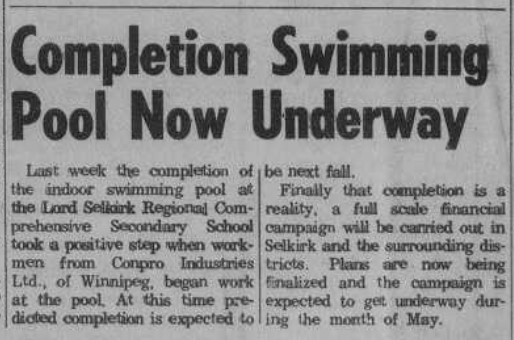
By late 1974, pool construction was well on its way. The concrete shell was ready to be checked for leaks and tiling could soon be installed. The water pump and other mechanical equipment was scheduled for delivery with the opening of the pool anticipated shortly afterwards. Rapid progress was finally being made.
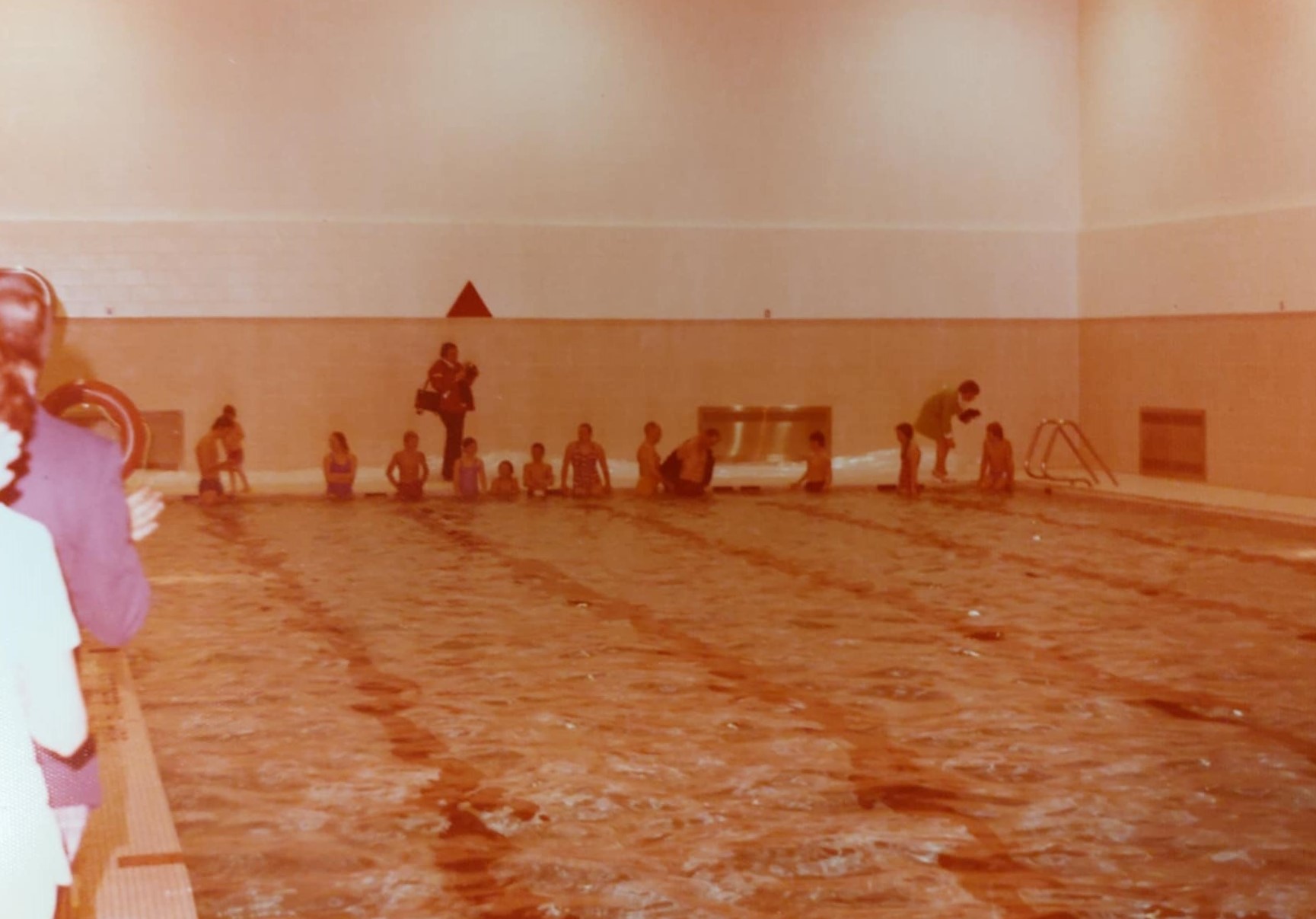
The pool, built at 95ft x 37ft included five lanes, a training and center areas, and two Olympic style diving boards at 1 and 3 meters. The pool deck was 4200 square feet, and a glass pool office was cantilevered over the deep end. On March 24th, 1975, the pool was filled for the first time, after days of filling and heating. At long last, by April 9, the pool was ready for use!
Opening in Style
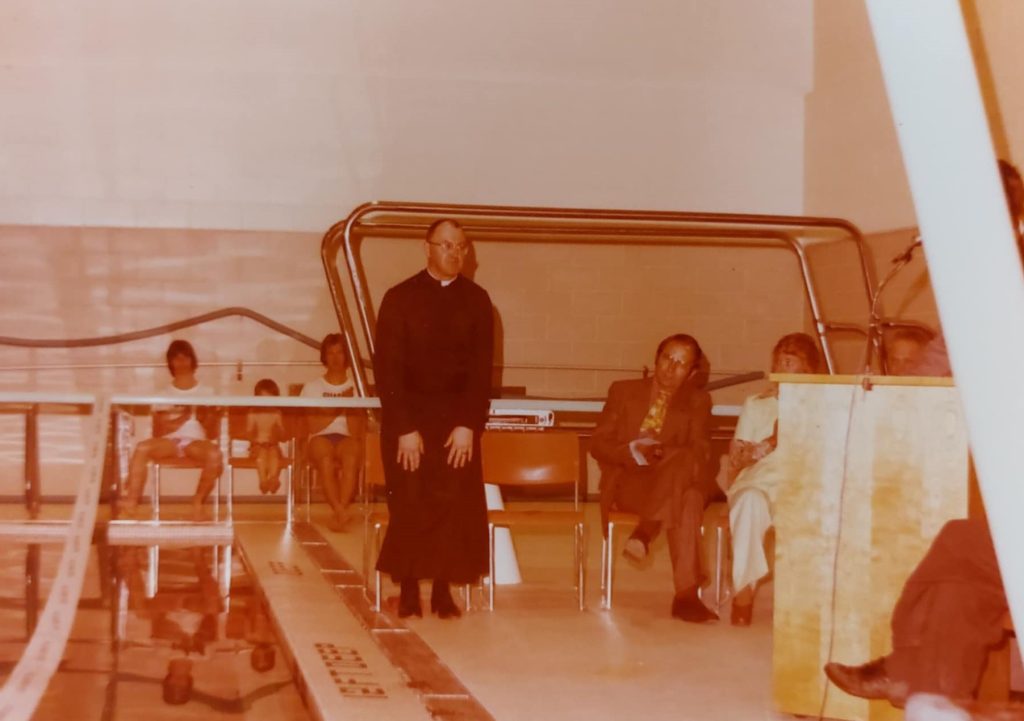
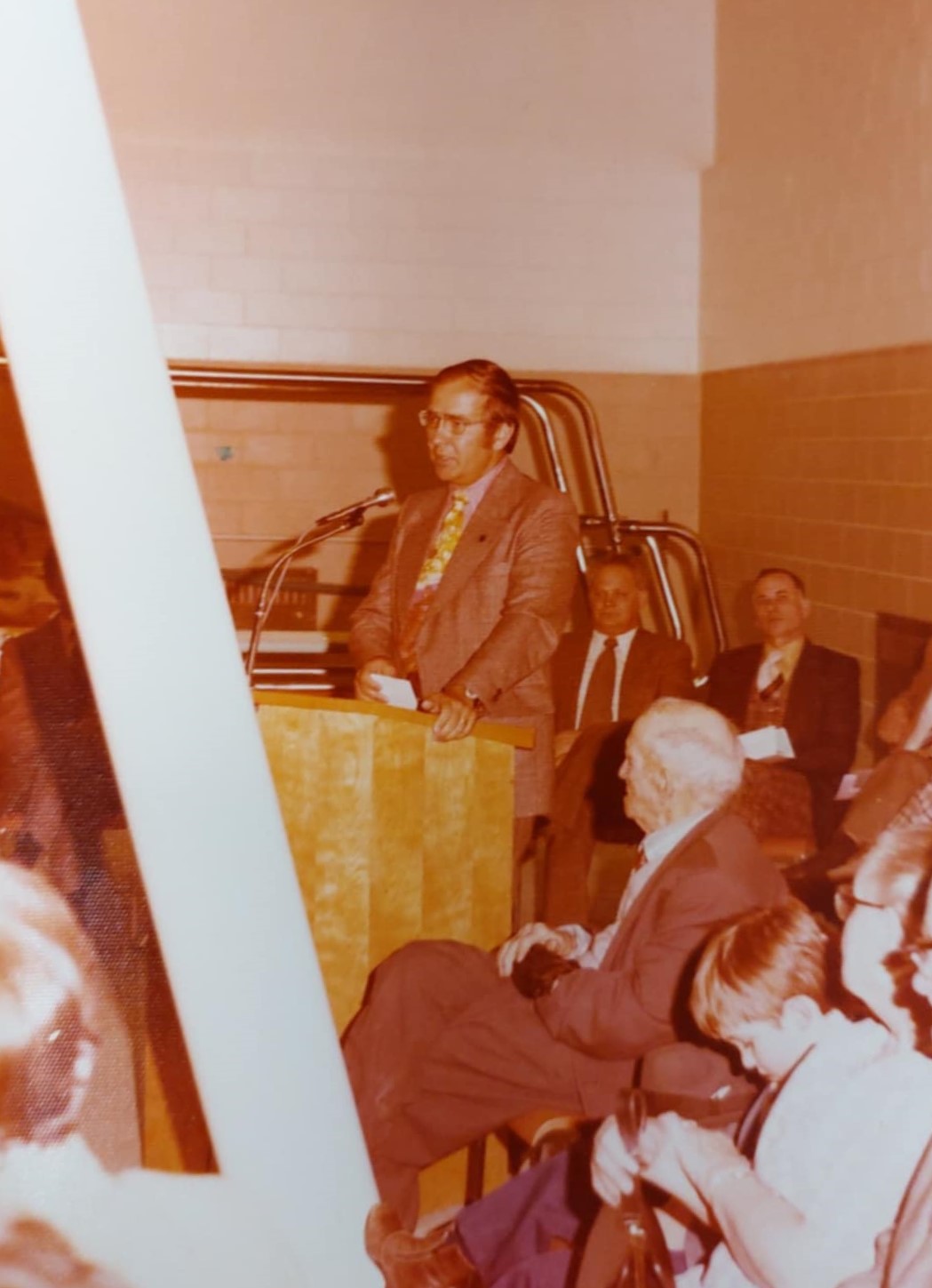
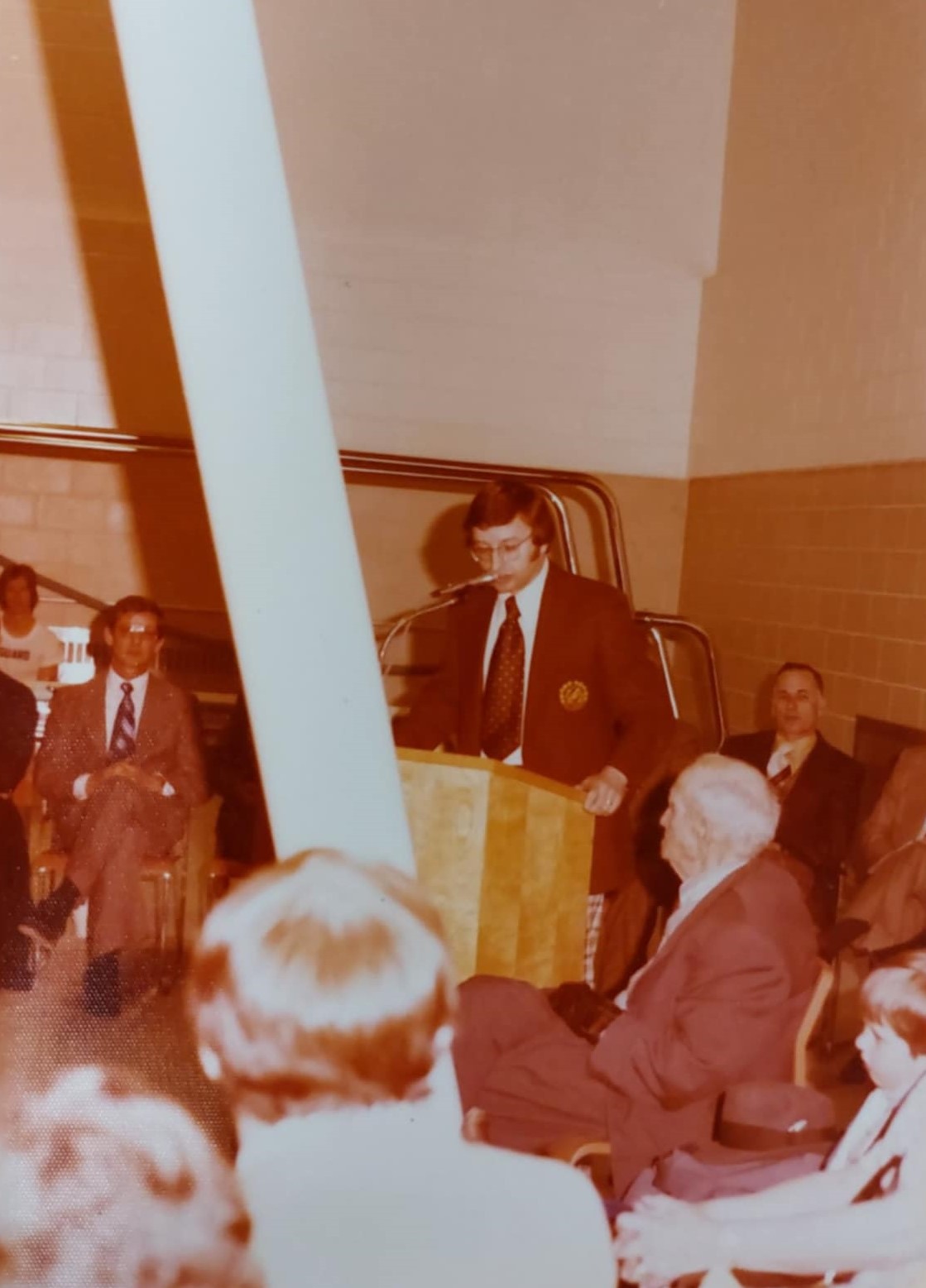
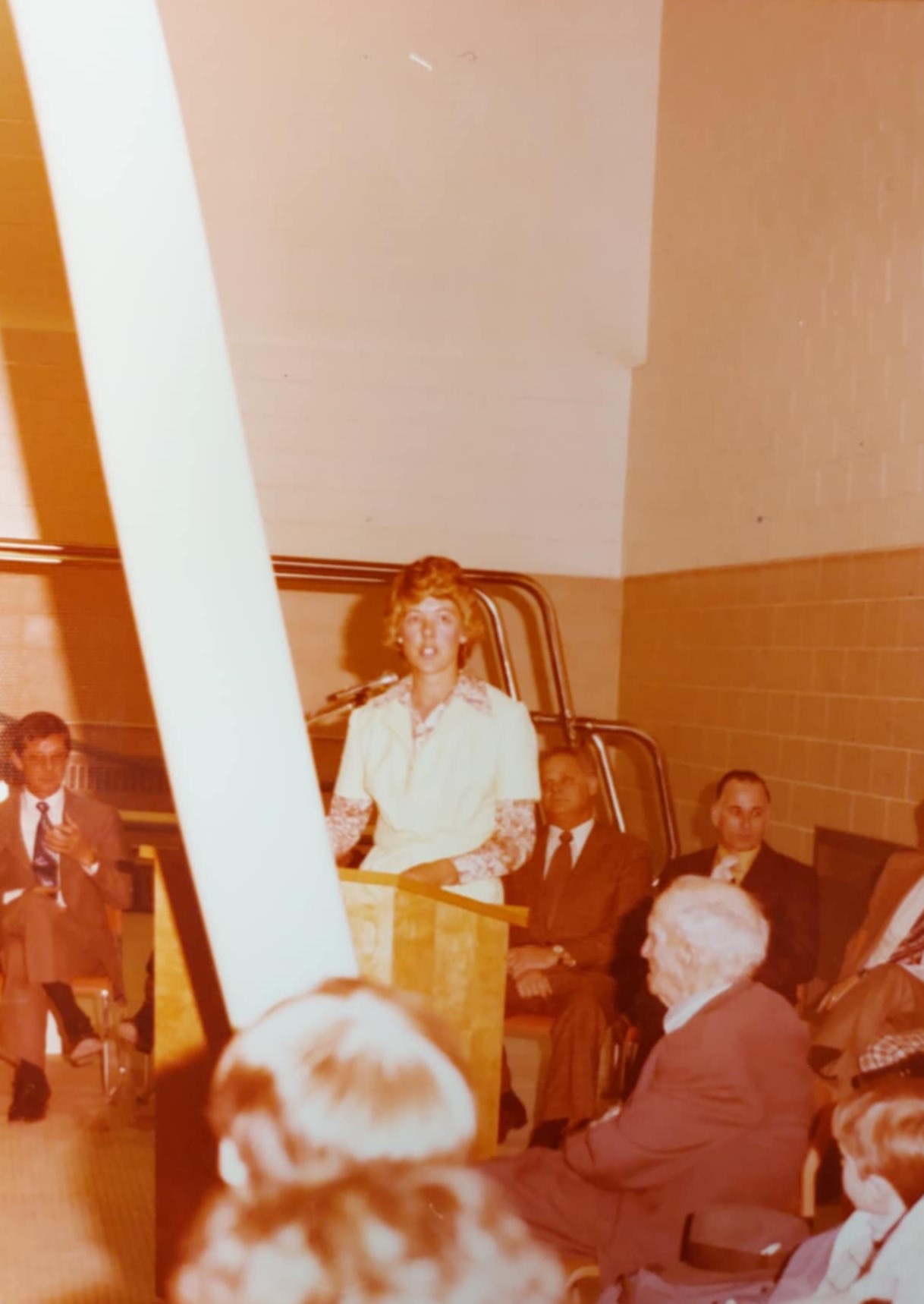
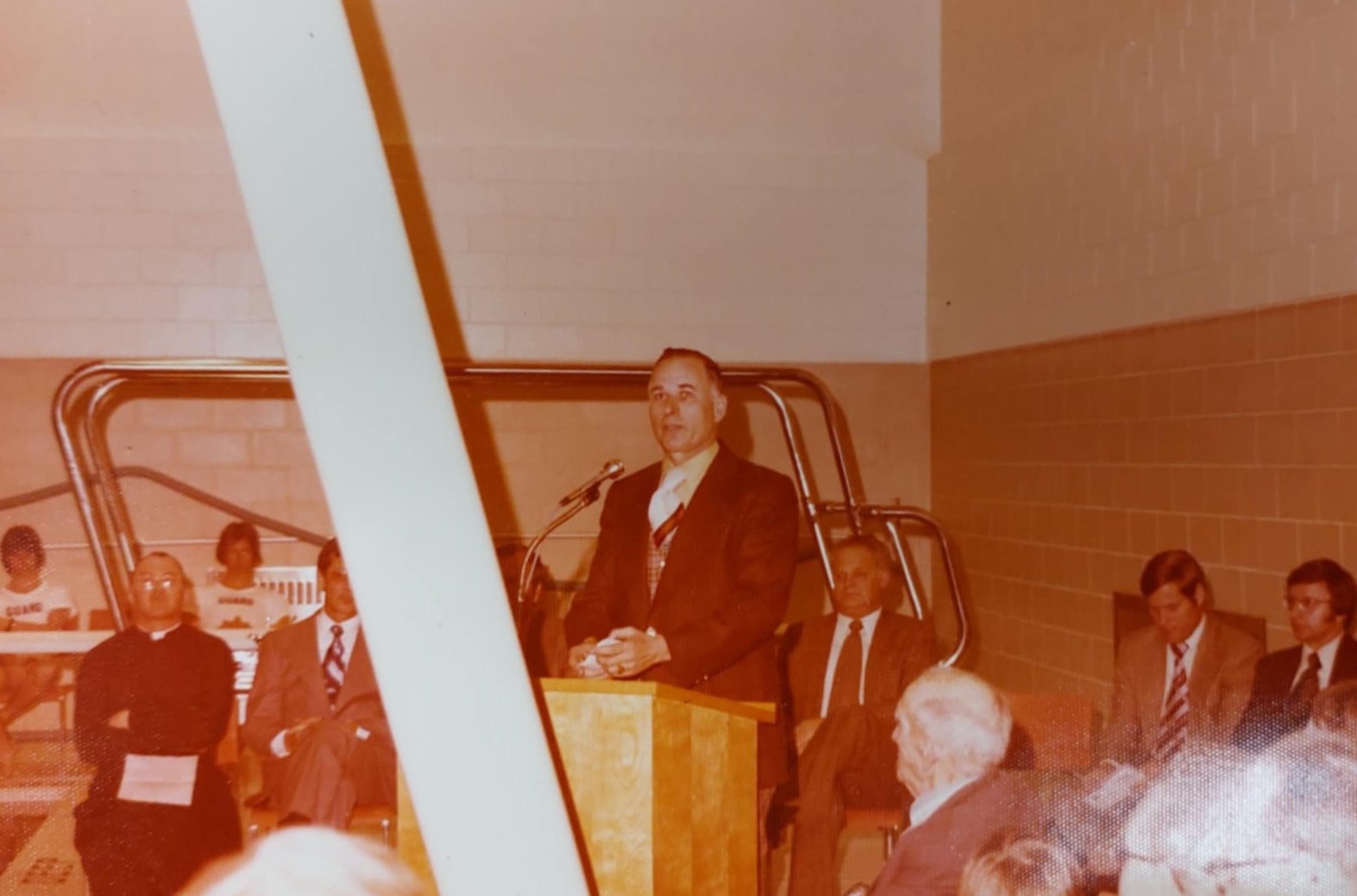
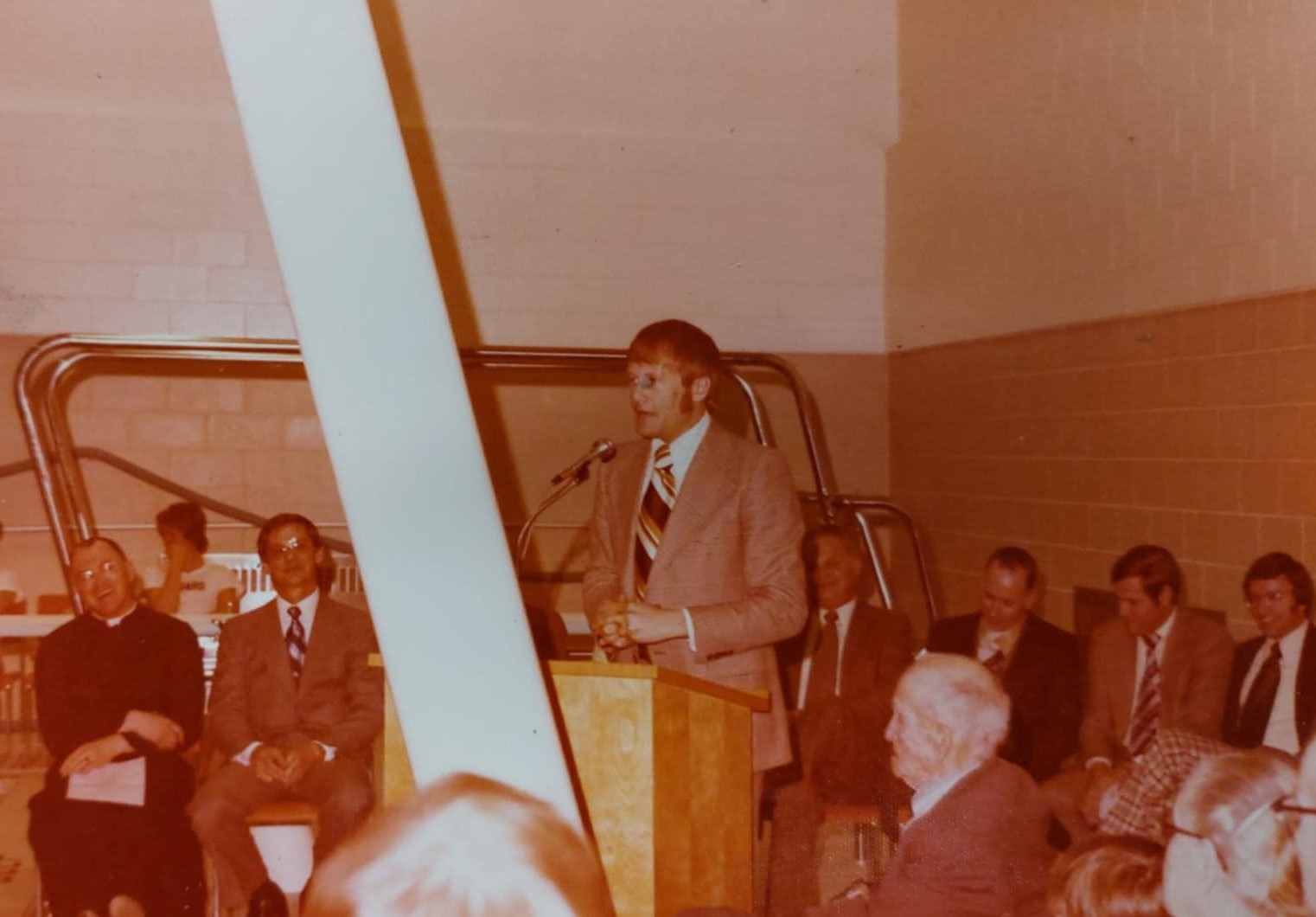
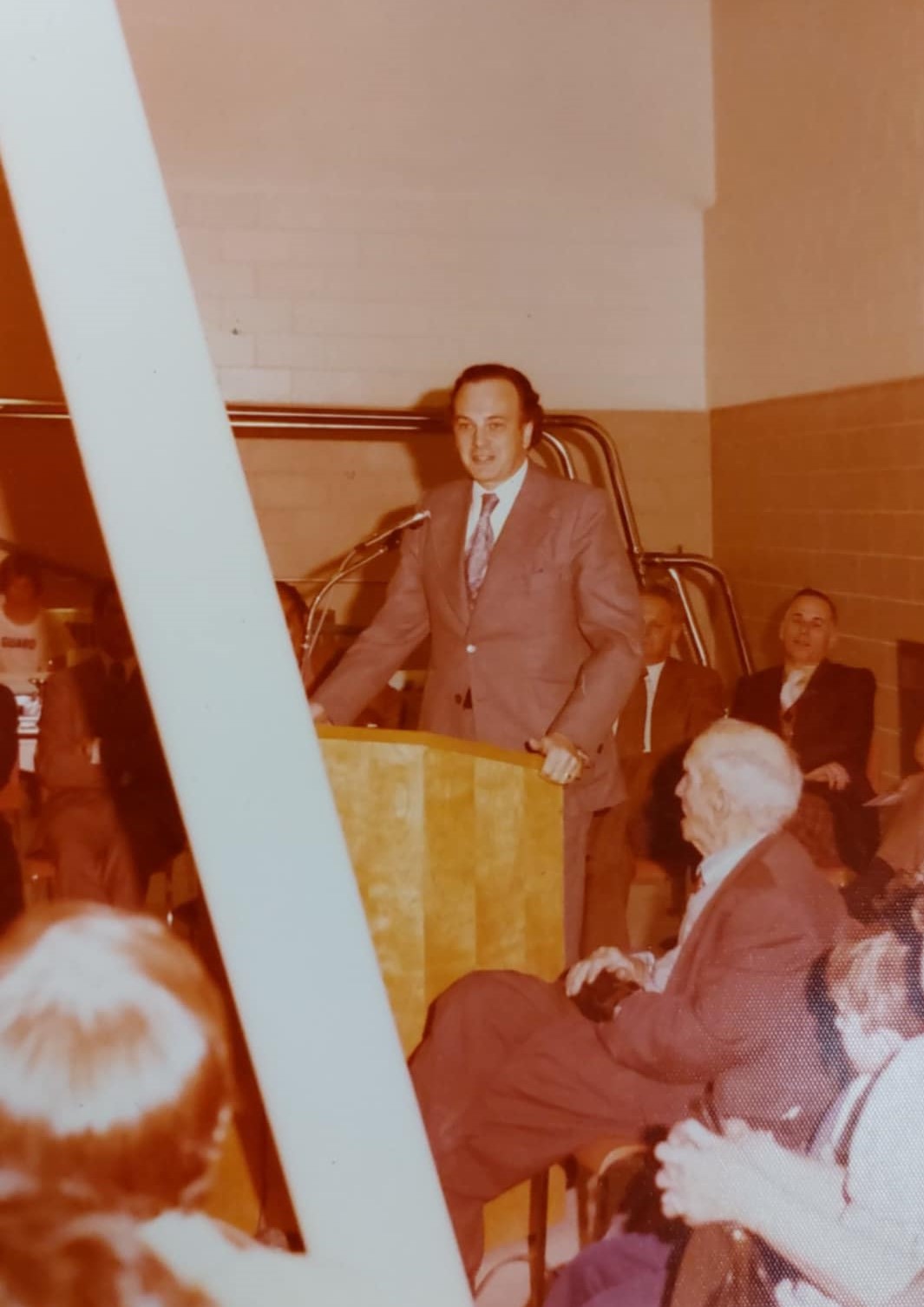
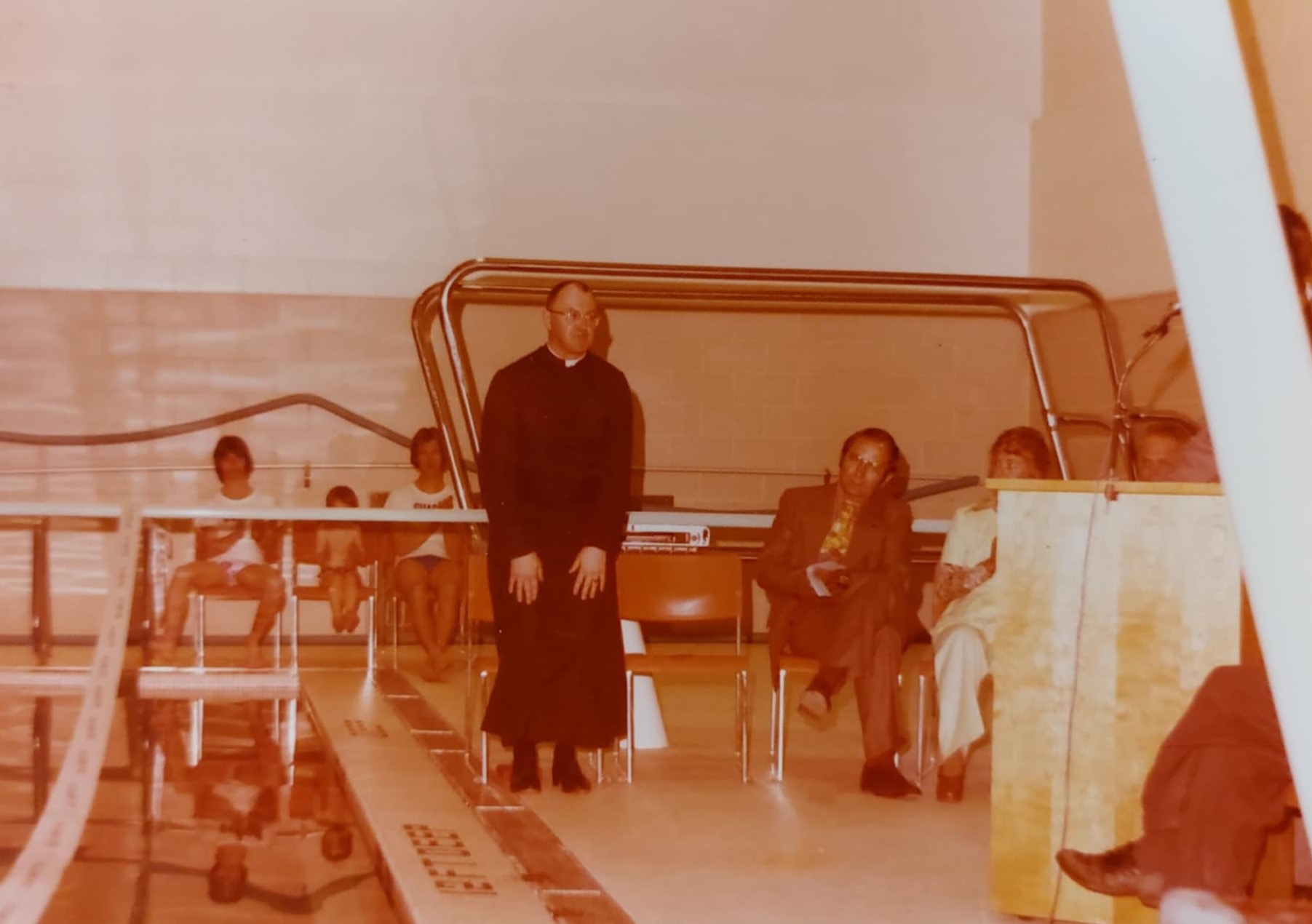
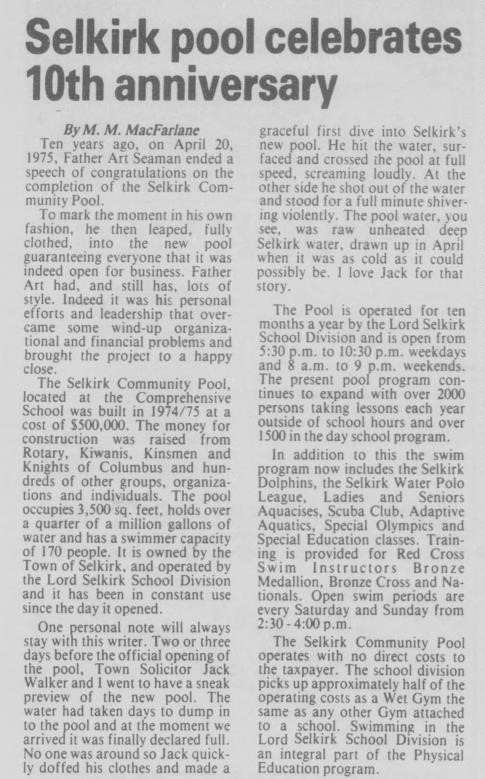
The opening ceremony was held on April 20th at 2pm. Father Art Seaman performed an opening prayer and gave a speech of congratulations. Matt Olynuk, Gary Mowat, Mrs. F. Stewart and Bill Rozecki represented Swim to Beat ‘70, the United Club for Pool Completion Committee, and the Pool Advisory Committee. George Schreyer spoke on behalf of the Lord Selkirk School Division and Mayor Lloyd Wersch offered greetings from the Town of Selkirk.
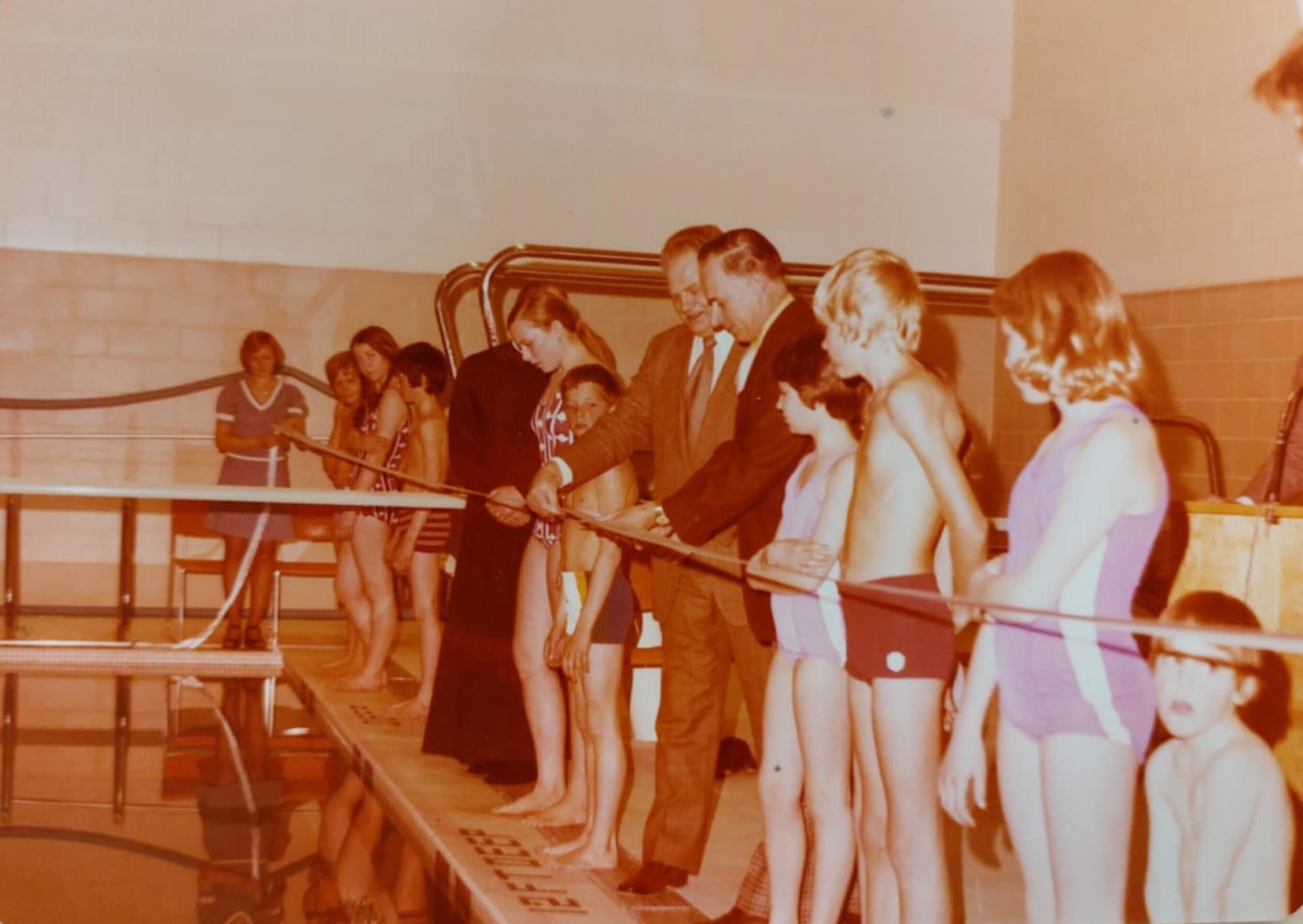
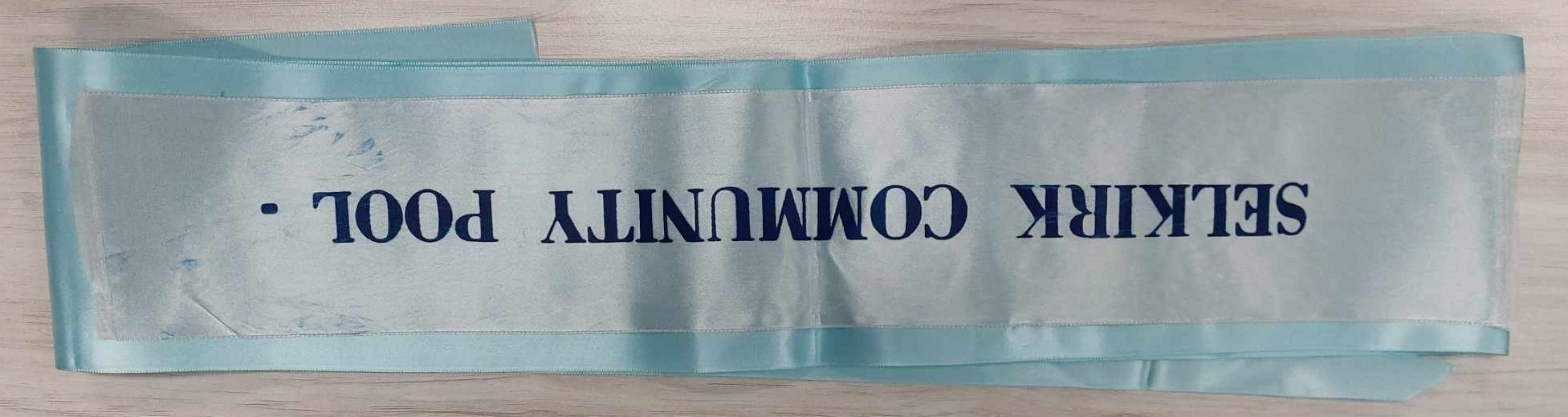
After speeches were complete, George Schreyer and Mayor Wersch cut the ribbon and the Contractor ceremoniously passed the key to the School Board Principal, W. Regehr.
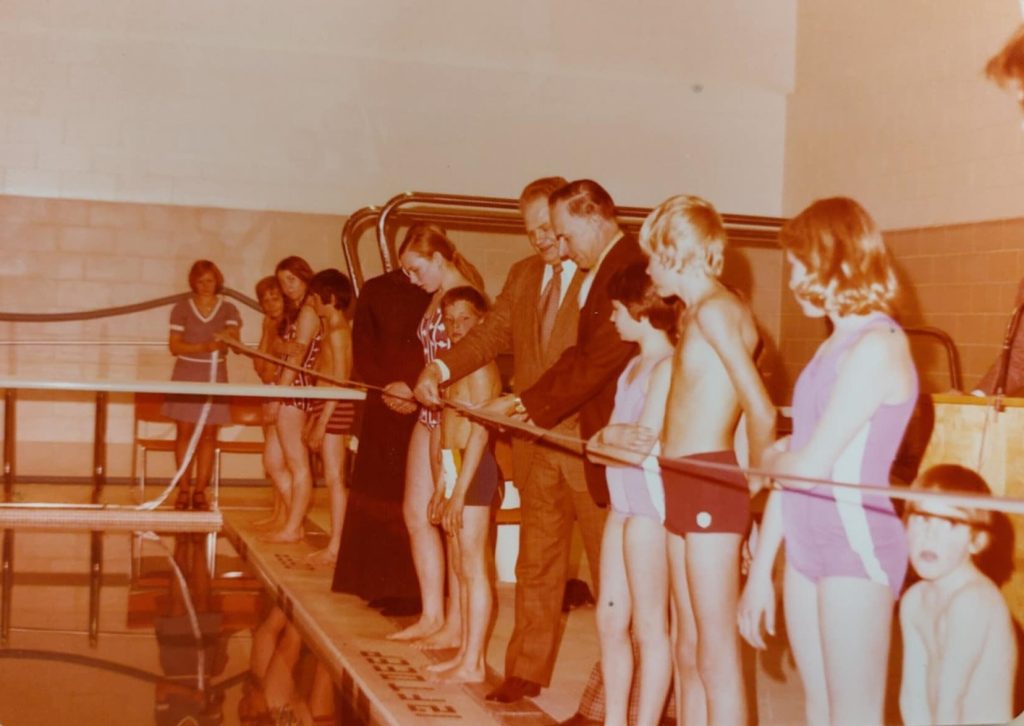
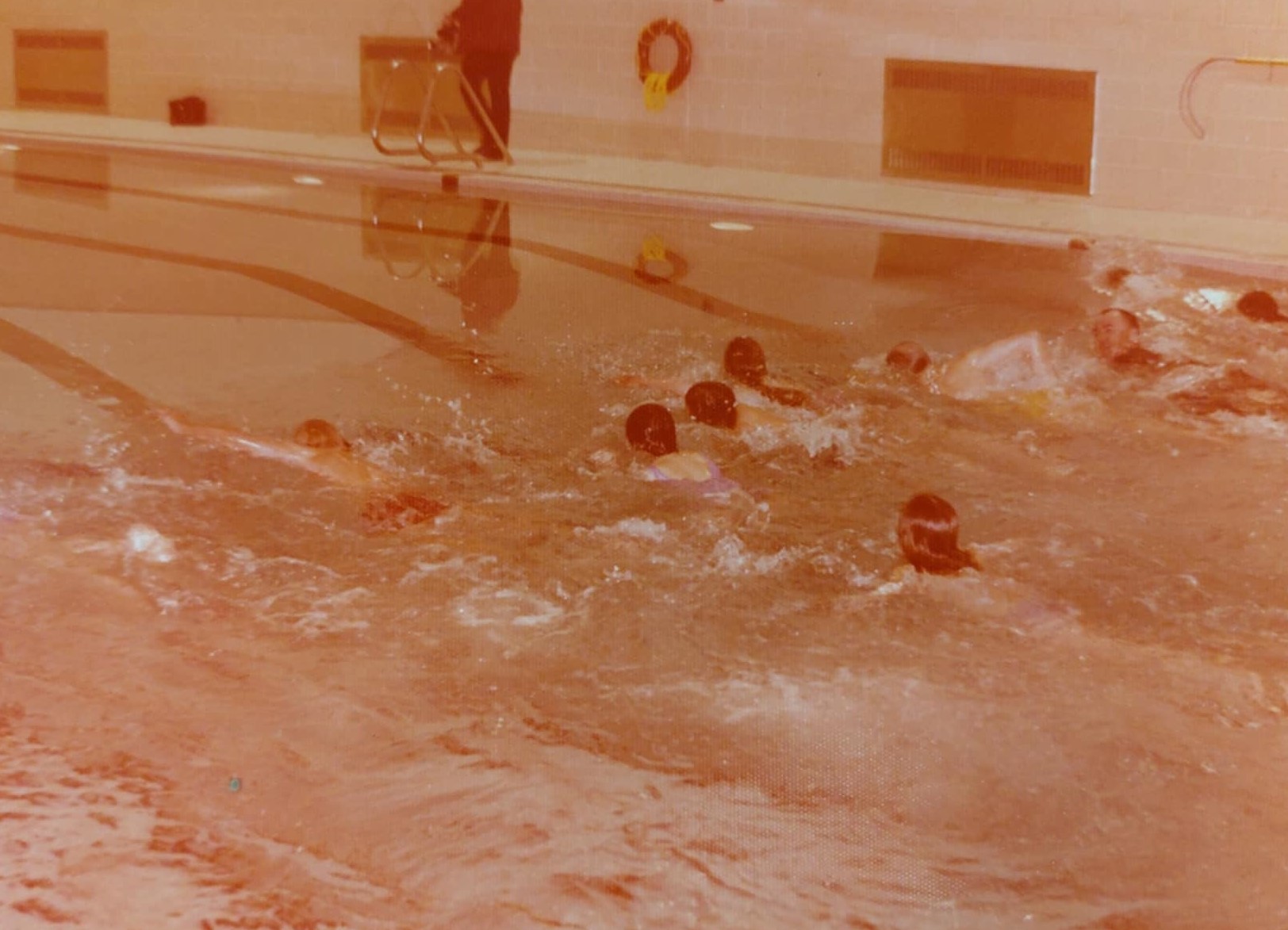
Several school aged children who could swim were invited to line the edges of the pool deck and jump in immediately after the ceremony, but it was Father Art Seaman who unexpectedly kicked off the occasion.
“He leaped, fully clothed, into the new pool guaranteeing everyone that it was indeed open for business”, Selkirk Journal, 1985. It was a fitting spur-of-the-moment decision, given that “it was his personal efforts and leadership that overcame some wind-up organizational and financial problems and brought the project to a happy close.”
Programming and Operation
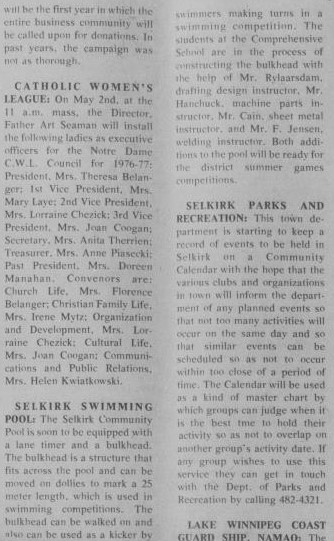
In 1975, the Swimming Pool Advisory Steering Committee was created and tasked with ensuring pool operation and programming met the needs of the public and stayed within the budget. The committee consisted of two representatives from the Town of Selkirk, two from the United Committee for Pool Completion, two from the Lord Selkirk School Board, and four members of the public.
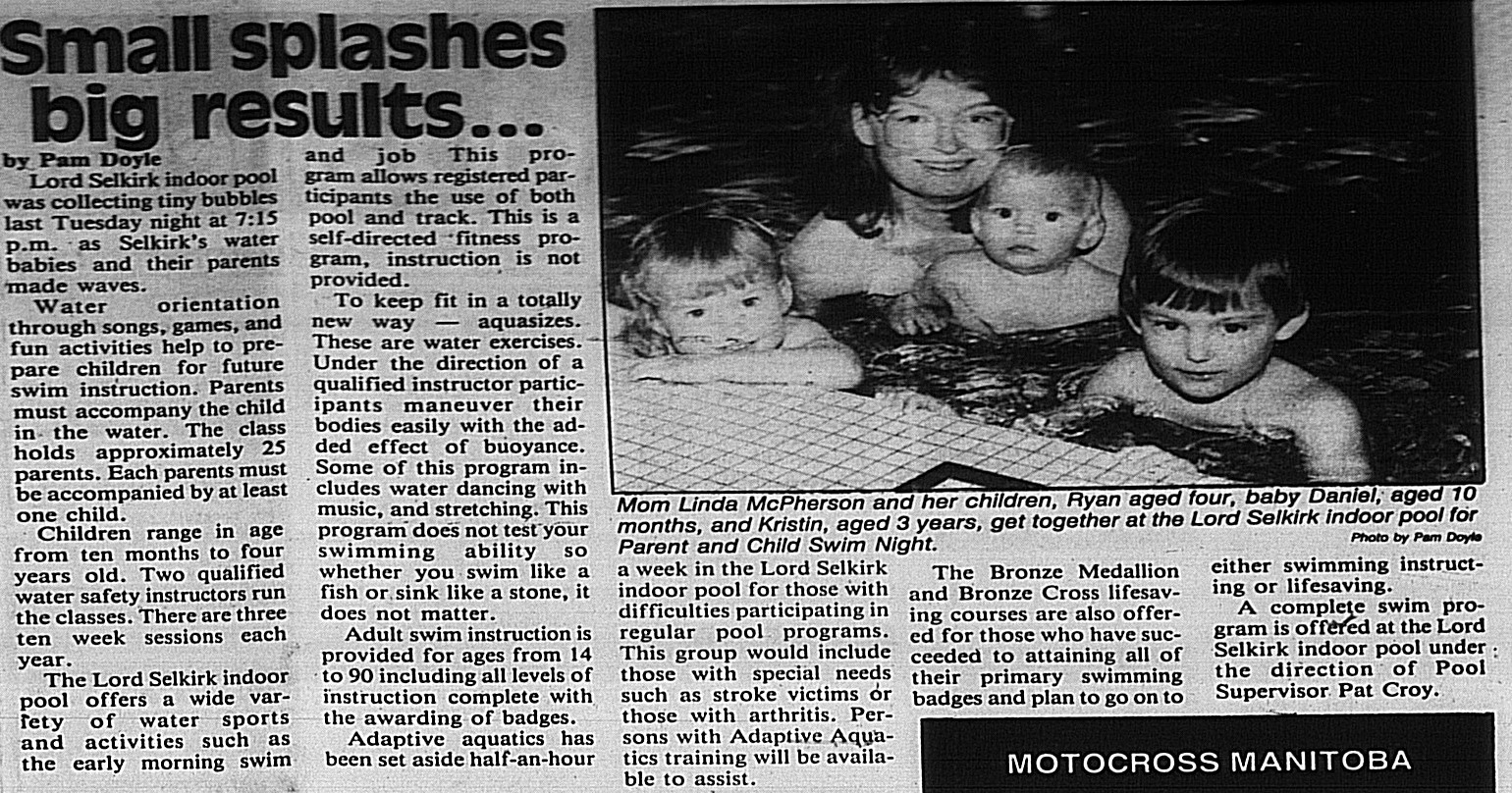
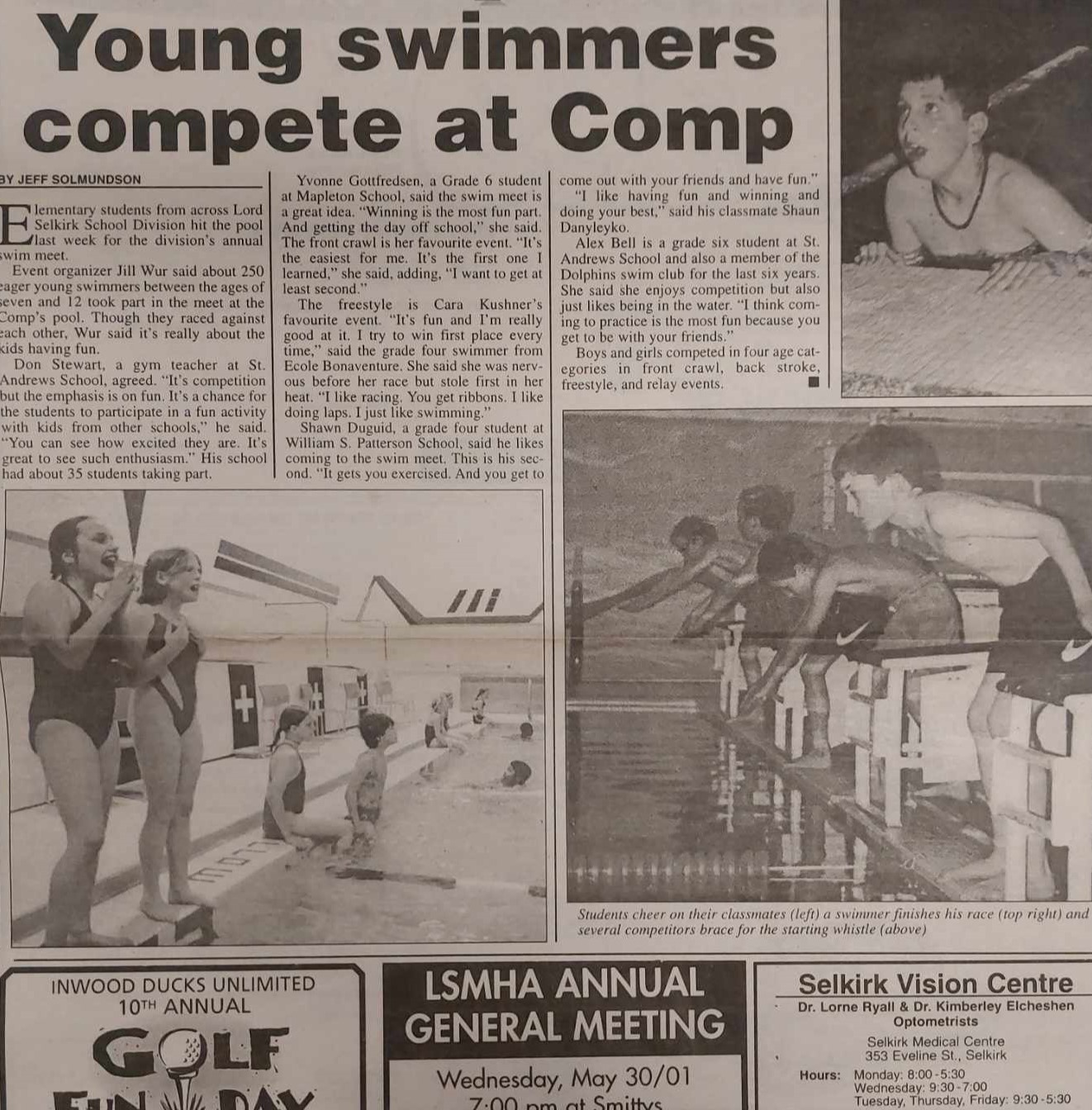
The pool was open seven days a week from the early morning until nearly midnight. Students in grades 3, 6, 8, and 10 from across the Lord Selkirk School Division received 10 periods of Red Cross swimming instruction during school hours. Additional activities included recreational swimming, swimming lessons, competitive swimming, synchronized swimming, diving, and water polo.

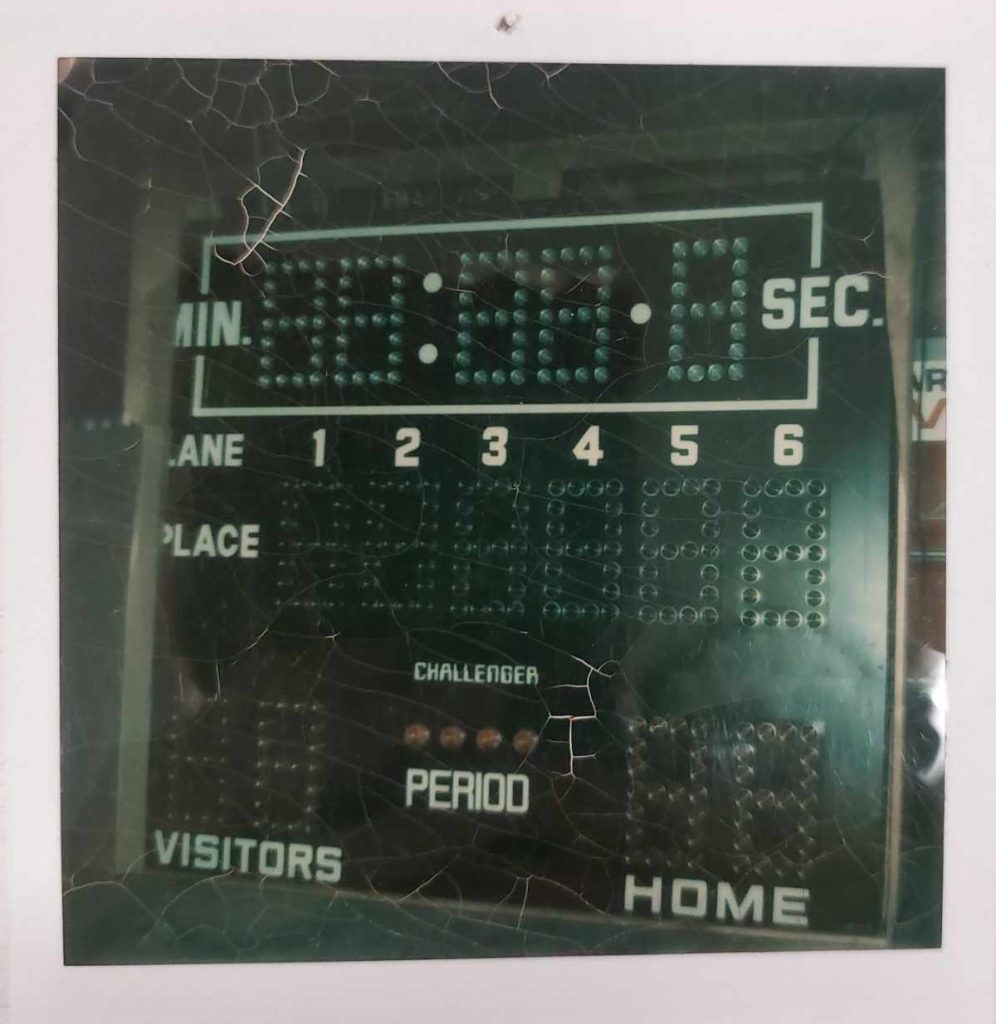
For the public, provision was made for senior citizens, mothers, and preschoolers during school hours. Early mornings, evenings, and weekends were available and included all levels of Red Cross swim instruction for all ages, a family swim, scuba diving, canoe lessons, and group rentals. Selkirk Parks and Recreation planned and directed programming over the summer holidays. Soon, a time clock, two canoes, a starting block, water polo nets, and float lines were added to assist with programming.
Swimming Instruction
In 1975, Pat Croy was hired by the School Division to instruct swimming lessons. Pat was the Divisional Interlake Red Cross Chairperson as well as a Canadian Red Cross Instructor and had spent many years in and around water. She was passionate about children, swimming, and teaching water safety. She was an obvious choice for the job and would continue to work at the pool for over 30 years.
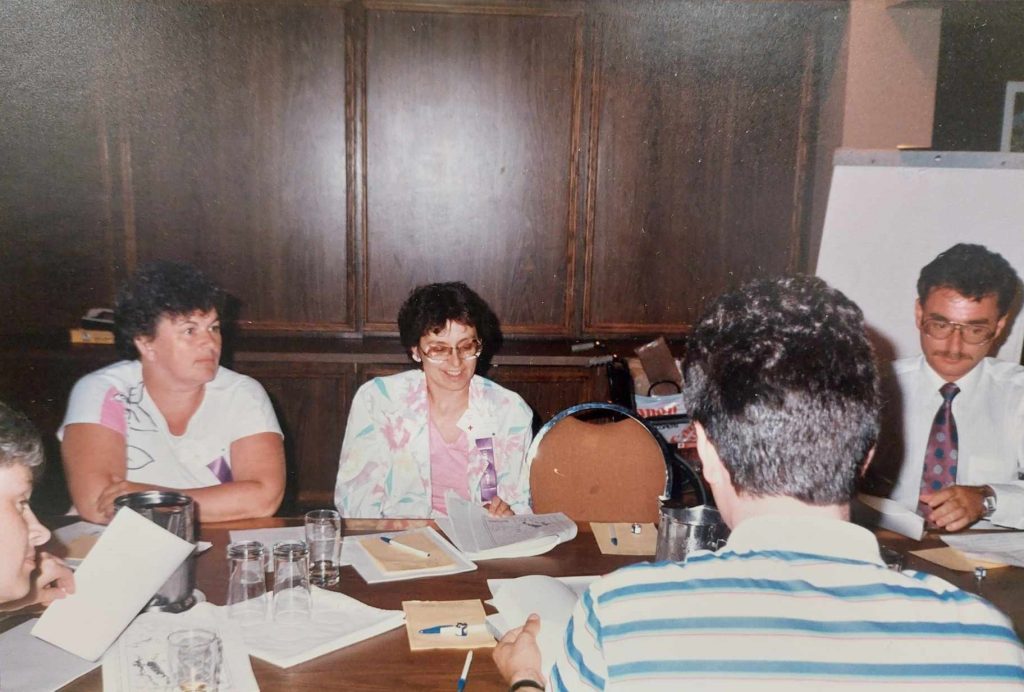
Many teachers obtained the Red Cross Instructors course and were soon required to take the Bronze Medallion Life Saving Course and obtain Bronze Cross credentials. These courses were offered at the pool and many of the teachers were quickly qualified. Class sizes were around 25 students, but over time the regulations changed, and class sizes were restricted to 8 students. Over the years, the efforts of instructors such as Pat Croy, Lori Weatherby, Denise Campbell, and many more, enabled thousands of students to learn to swim at the Selkirk Community Pool.
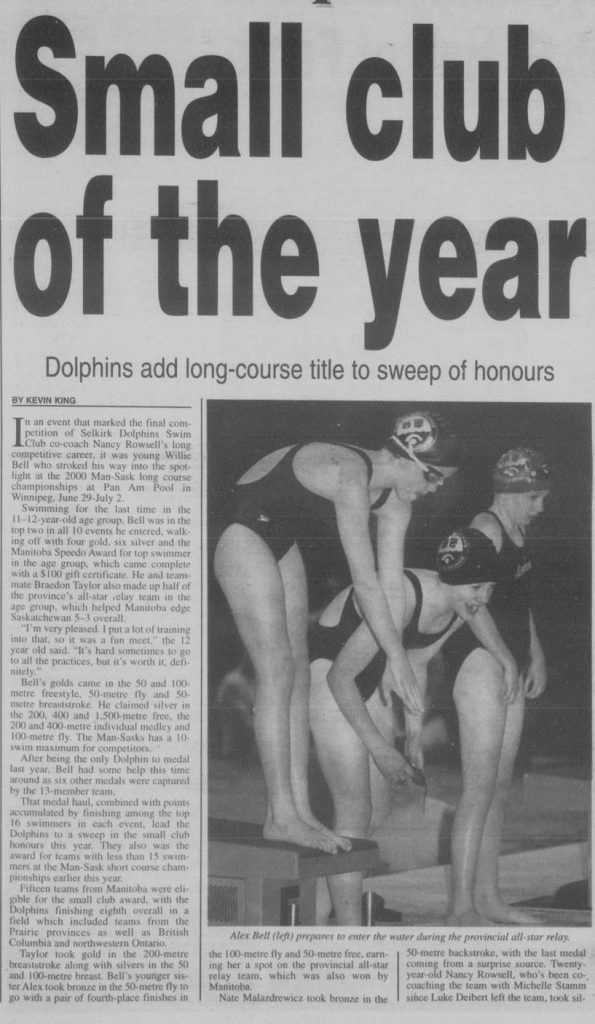
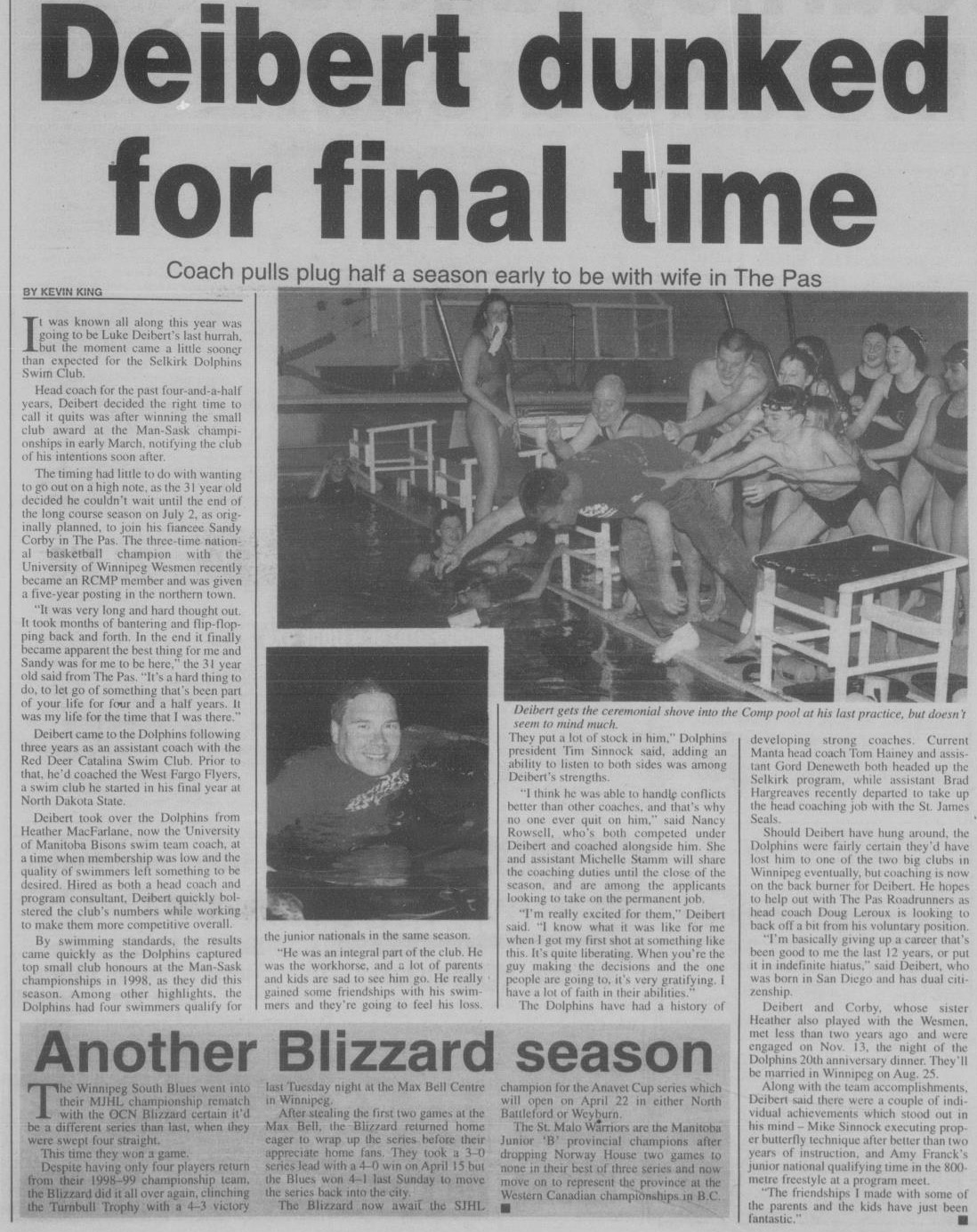
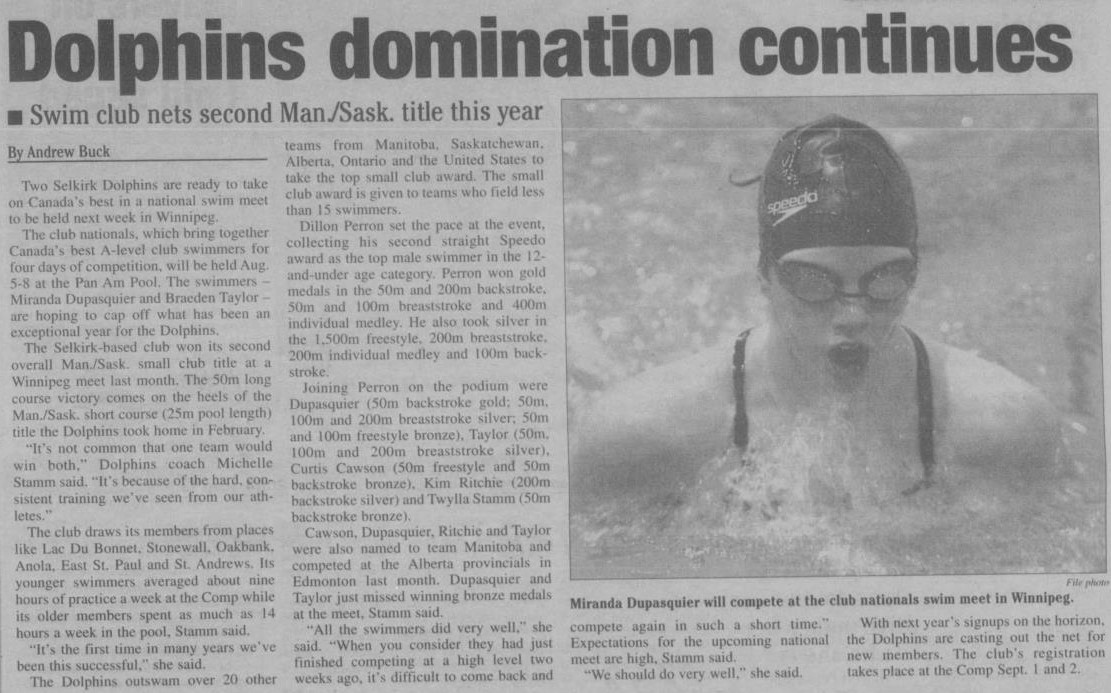
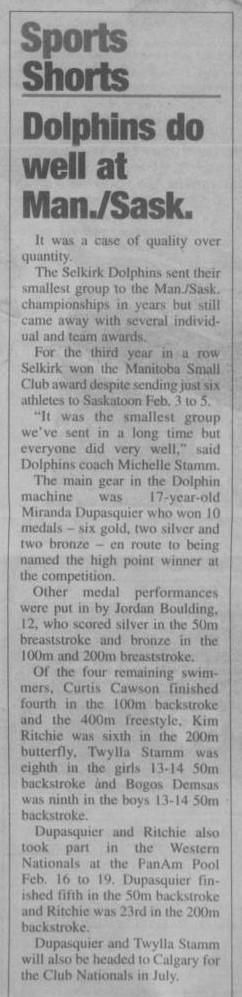
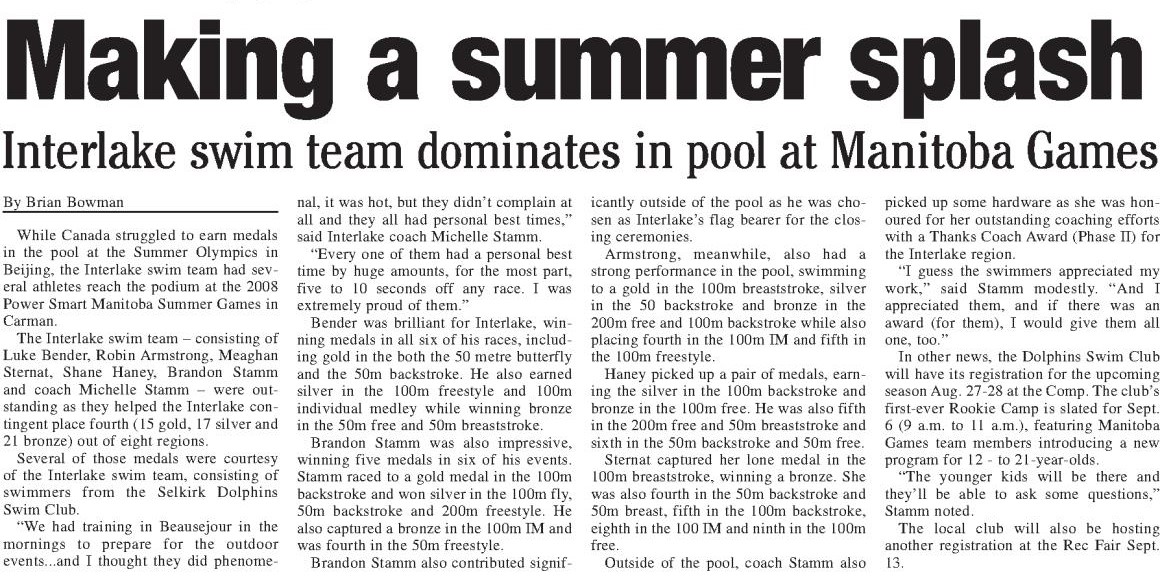
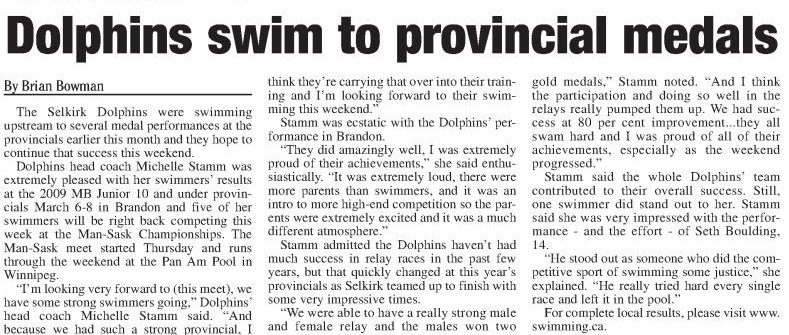
Selkirk Dolphins
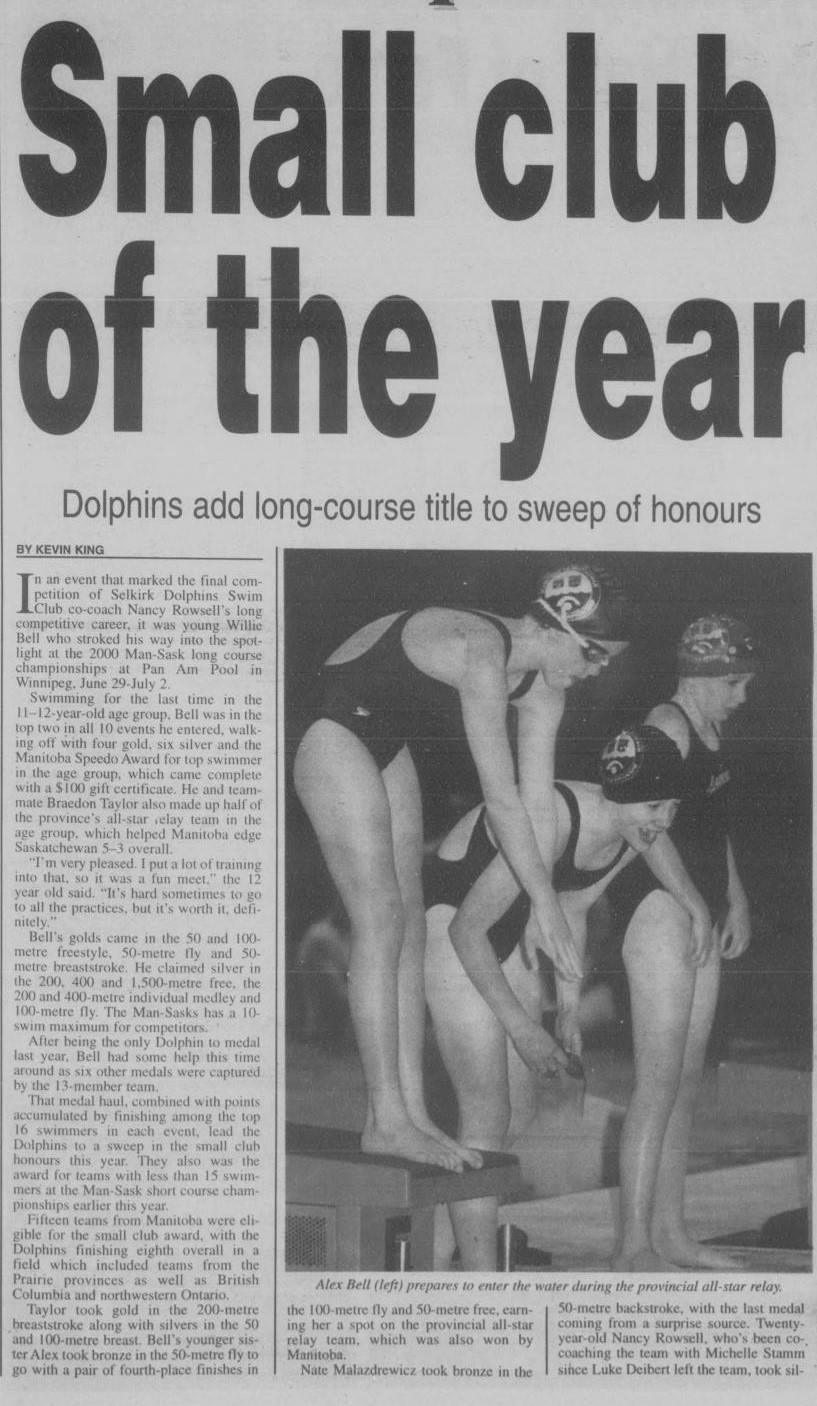
In 1979, a satellite team of the Winnipeg Dolphins began in Selkirk. The group was a speed swimming club which provided another way for students to become proficient at swimming and participate in the community.
At its beginning, the club was very large with nearly 100 students on the team. Swimmers became skilled very quickly and shortly after beginning in Selkirk the Dolphins were already competing nationally and internationally.
Olympic Torch
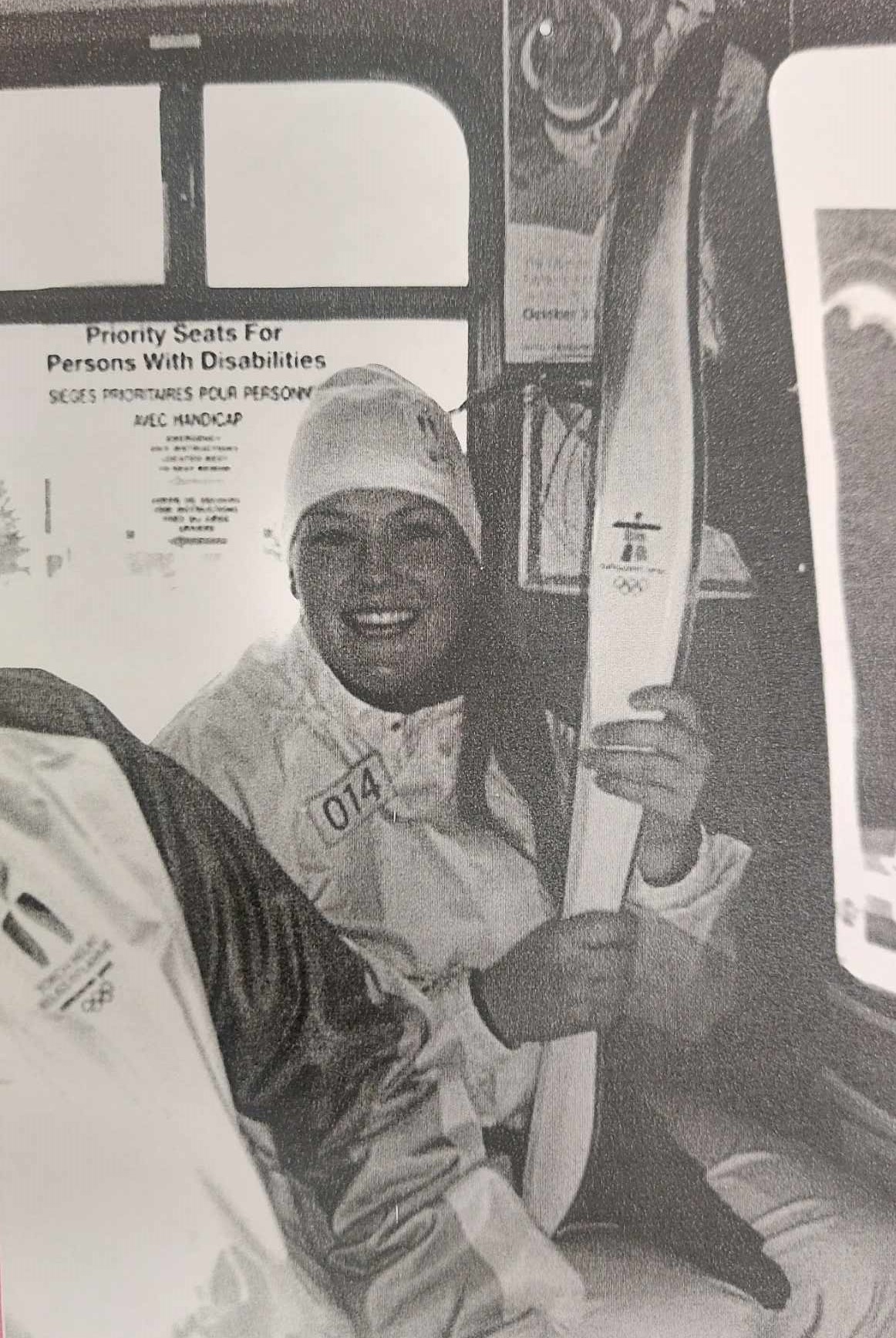
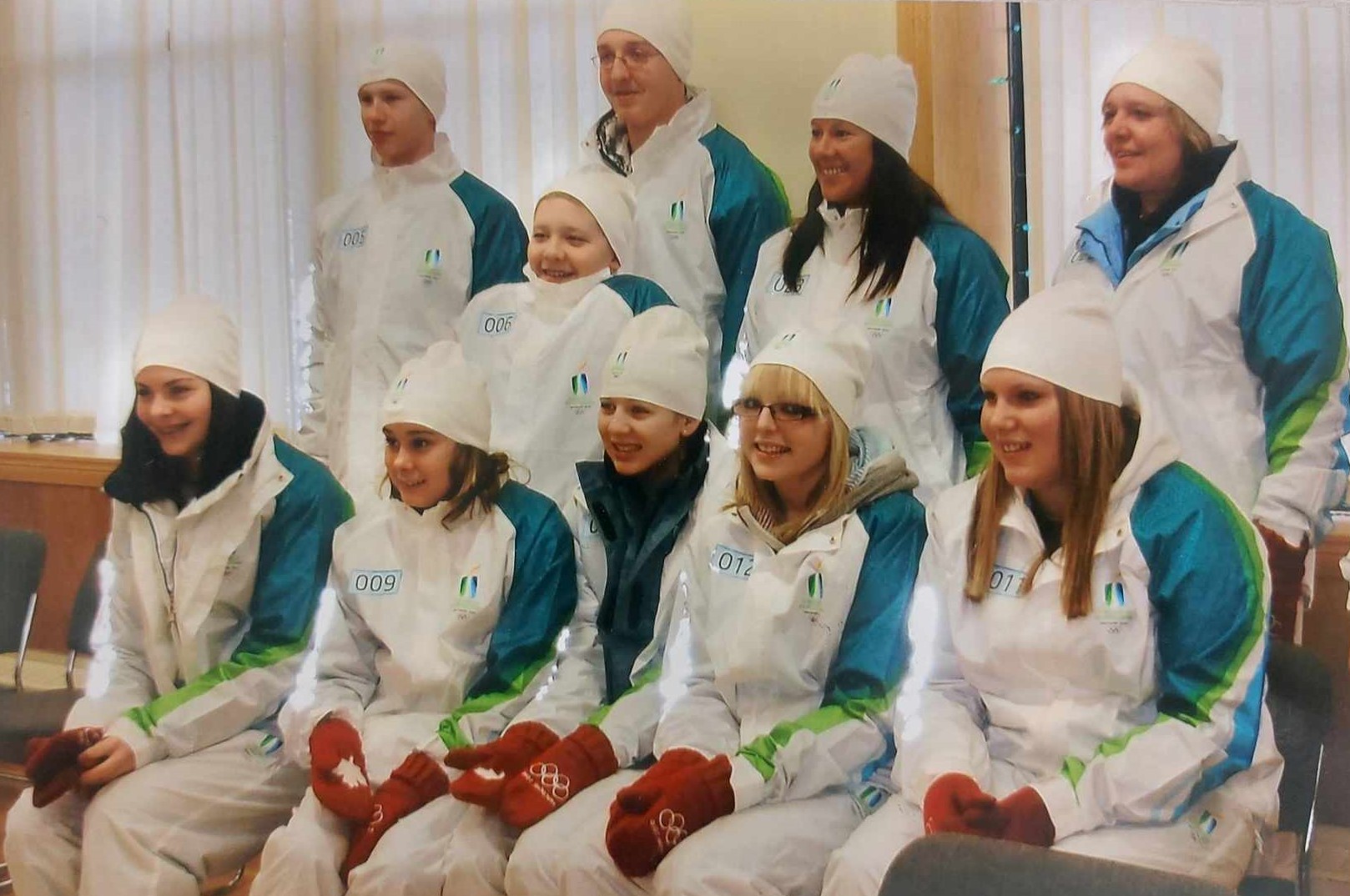
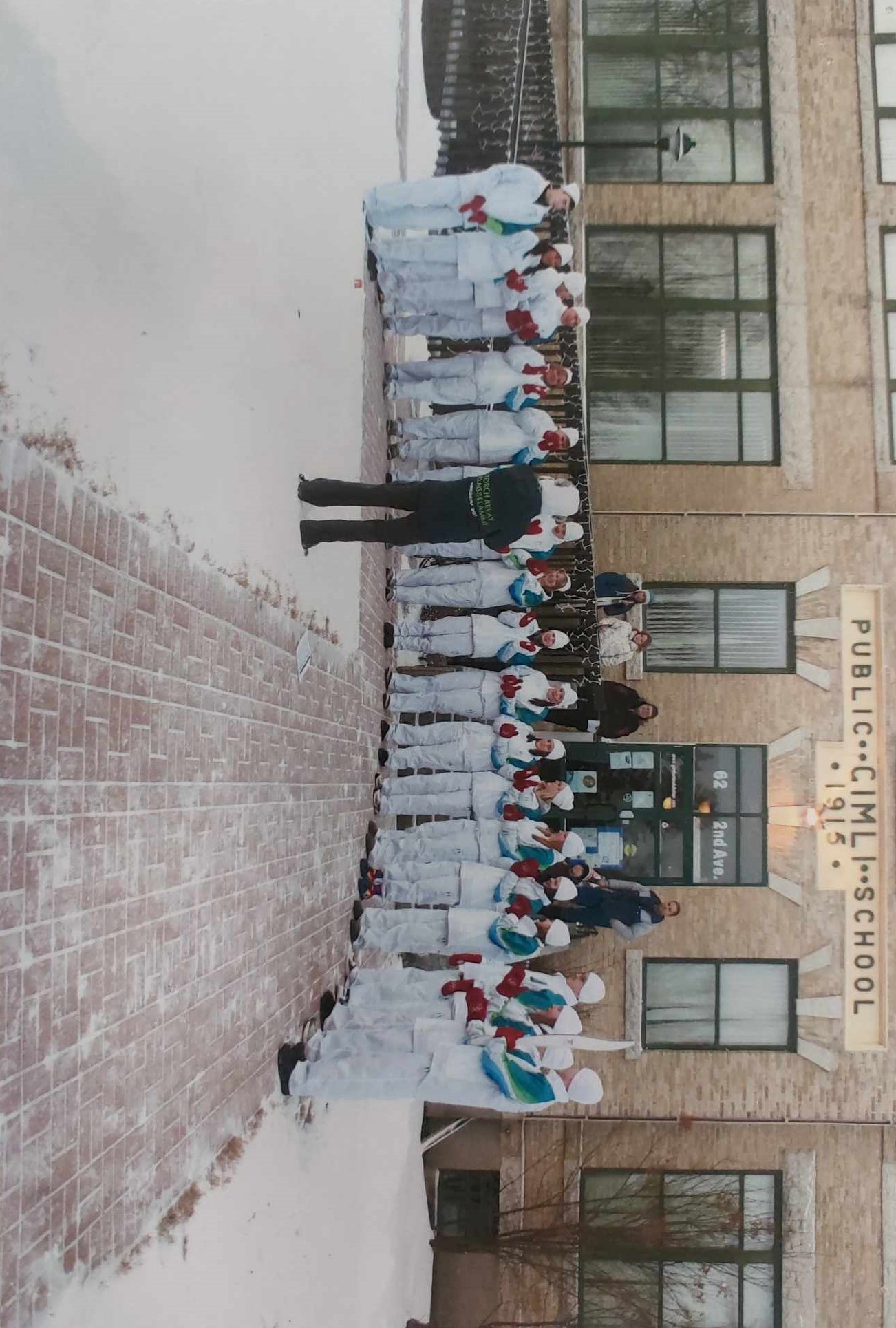
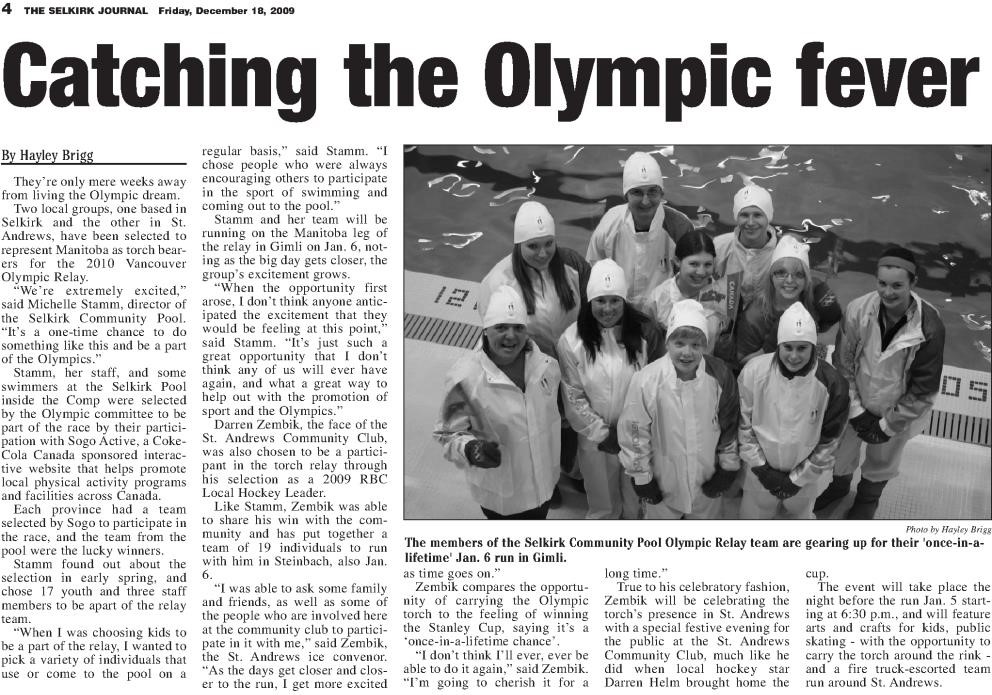
In 2009, Michelle Stamm, Pool Manager and Selkirk Dolphins Swim Coach, applied to SOGO Active, an initiative of Participaction Canada for the Selkirk Community Pool to carry the torch in the 2010 Olympic Torch Relay. A few months after sending in the application, Michelle received the news that they were selected as a host! Seventeen participants from the Selkirk Community Pool would carry the torch for 50 meters each out of the 1-mile leg down Central Street in Gimli, singing ‘O Canada’ as they went.

Renovations
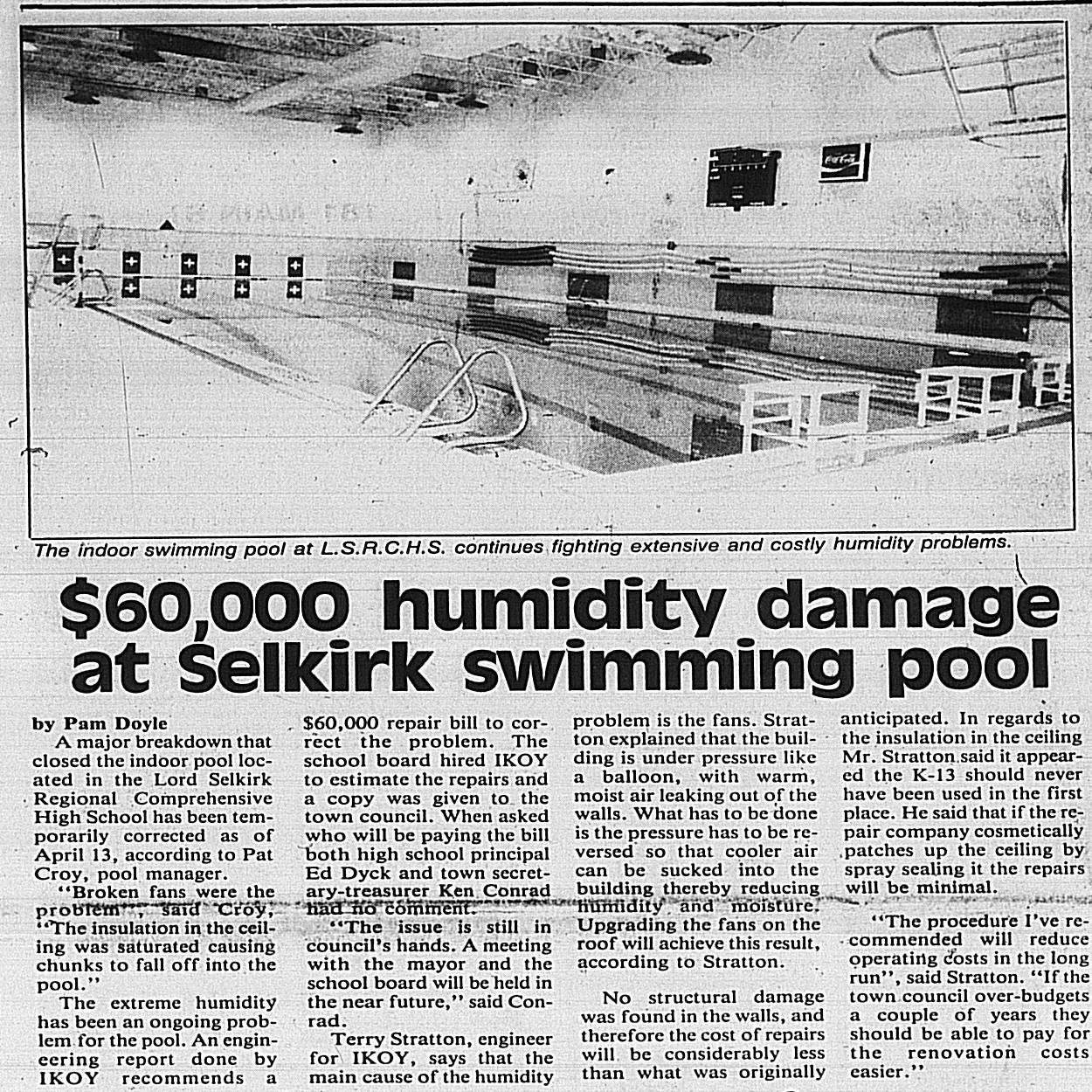
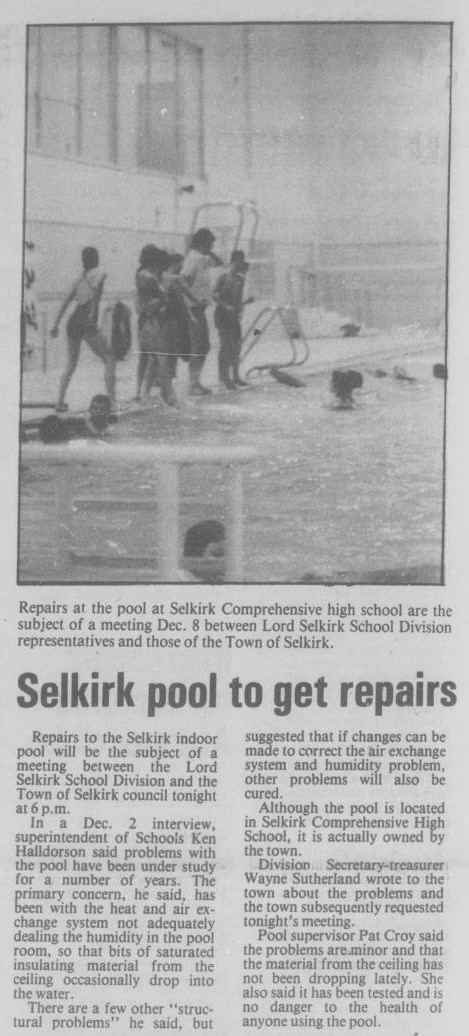
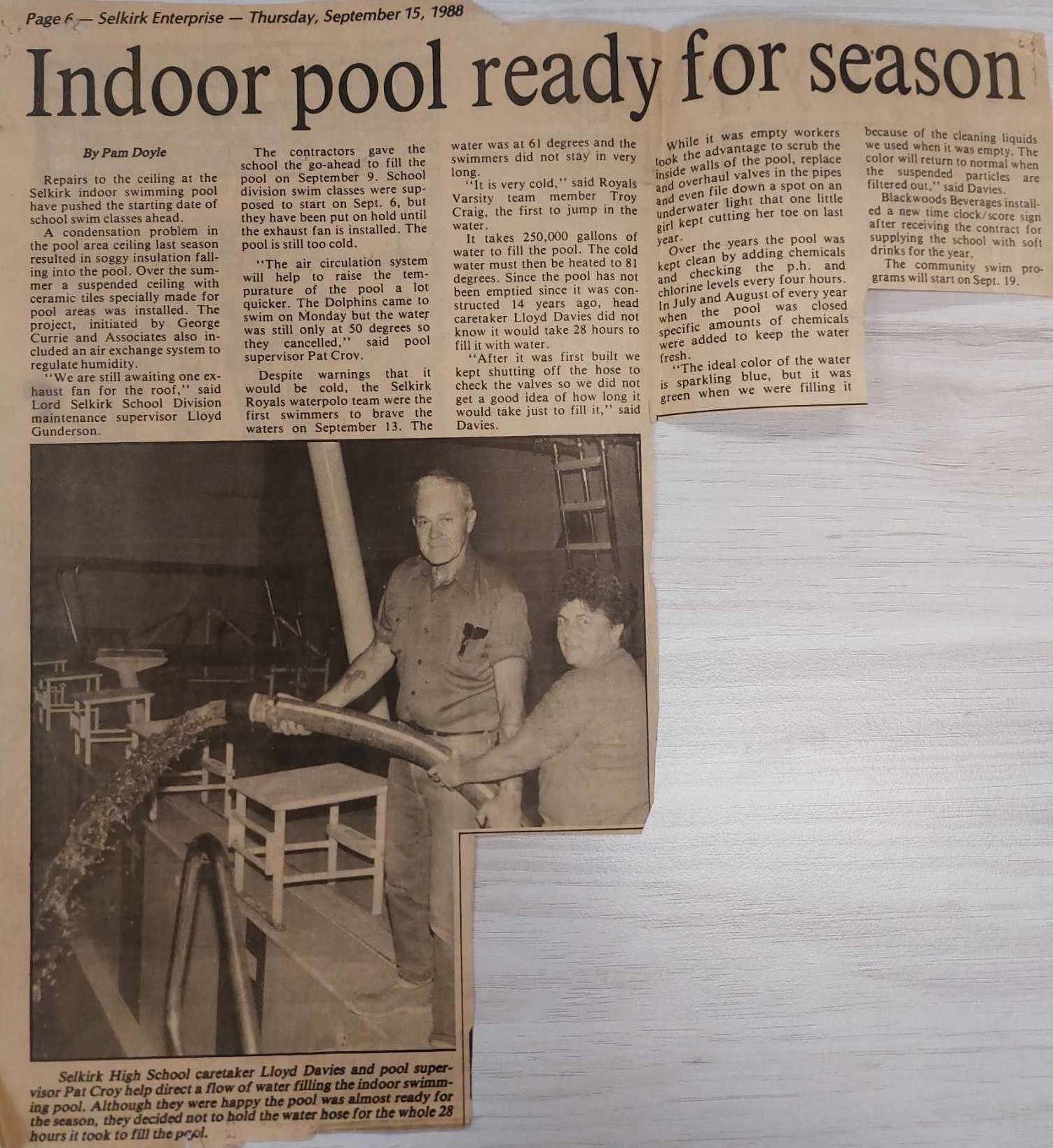
When the pool was first built, blown-in insulation was installed on the ceiling. However, due to the humidity the pool created, small particles of insulation quickly became saturated and began to float down into the pool. In 1987, the circulation fans broke, which only made the problem worse. The ceiling was replaced with specially made suspended ceramic tiles, the fans were upgraded, and an air exchange system was installed to better regulate humidity.

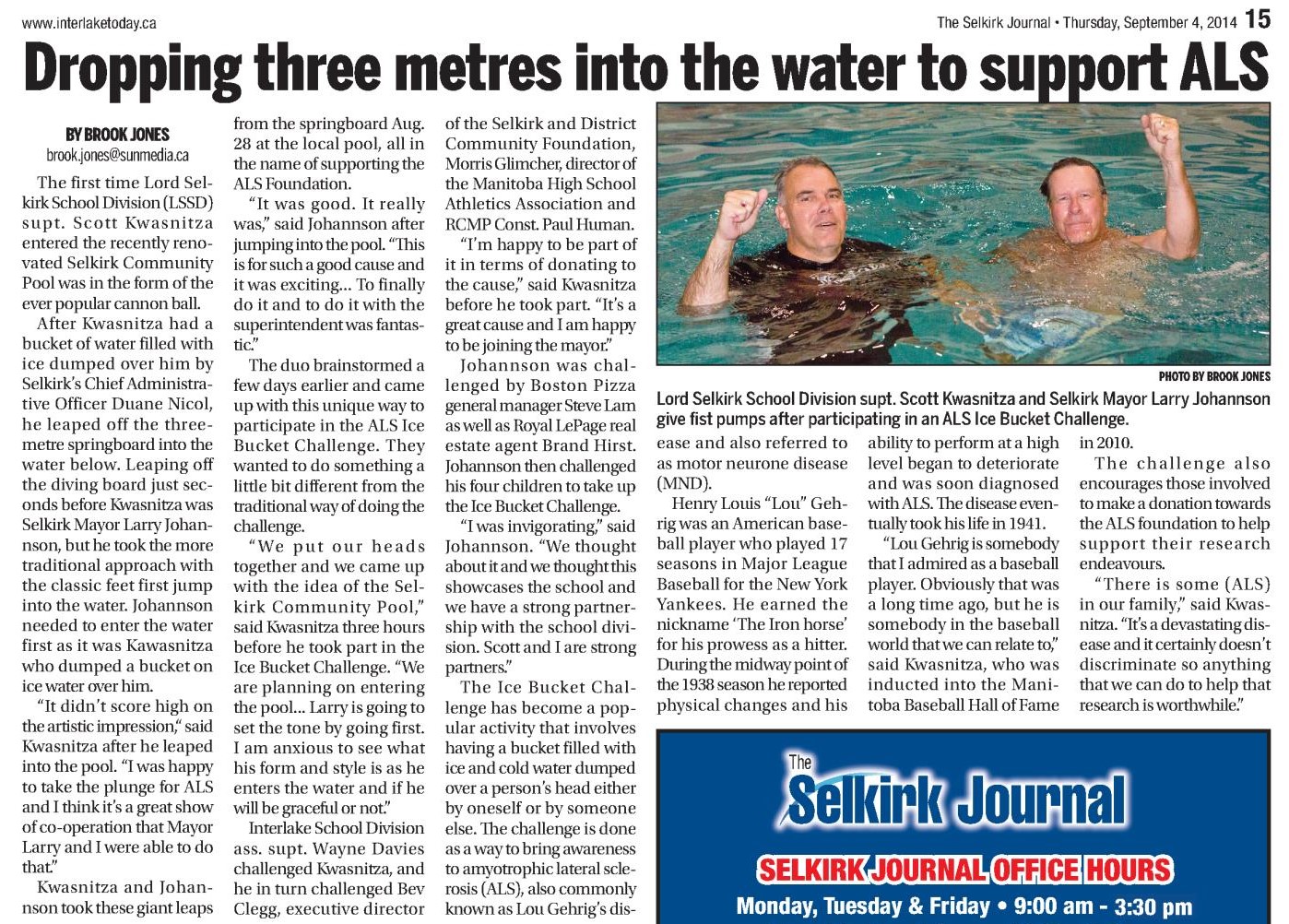
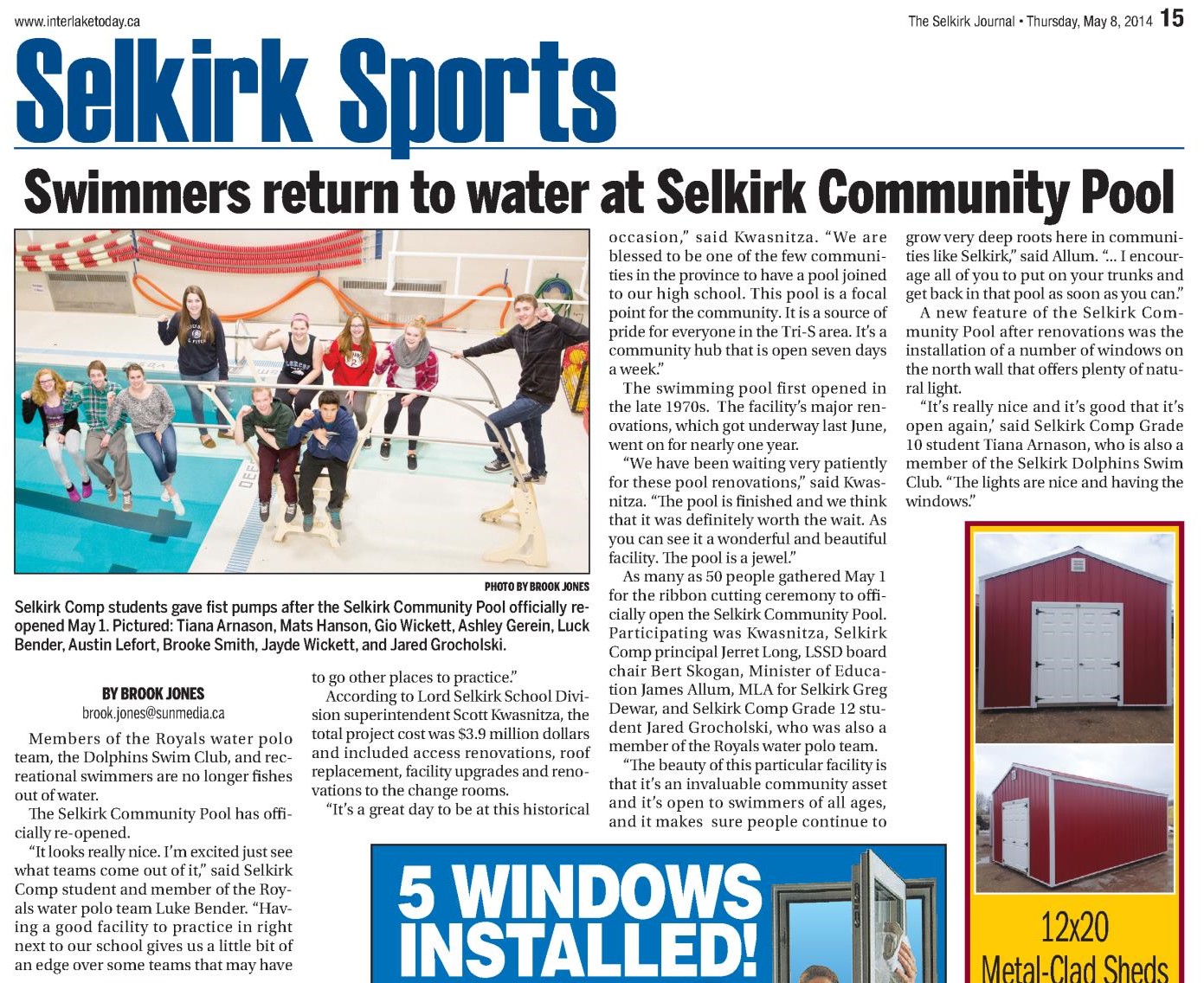
Despite these upgrades, the ceramic tiles continued to retain excess moisture and began to disintegrate. In 2014, the Lord Selkirk Comprehensive Secondary School underwent extensive renovations. The Selkirk Community Pool was a part of the much-needed repairs and upgrades. The persistent humidity issue and improved accessibility to the pool were priorities. The renovations designed by MCM Architects and overseen by Red Lake Construction would include upgraded changerooms, including wheelchair access in changerooms and to the pool, a complete roof replacement, and other facilities upgrades.
The Selkirk Community Pool had its Grand Reopening on Apr 28, 2014, nearly 40 years after its initial opening.

Now, celebrating 50 years of operation, the Selkirk Community Pool has seen thousands of students and community members learn and love to swim.
Selkirk Community Pool Collection
Click on images to enlarge
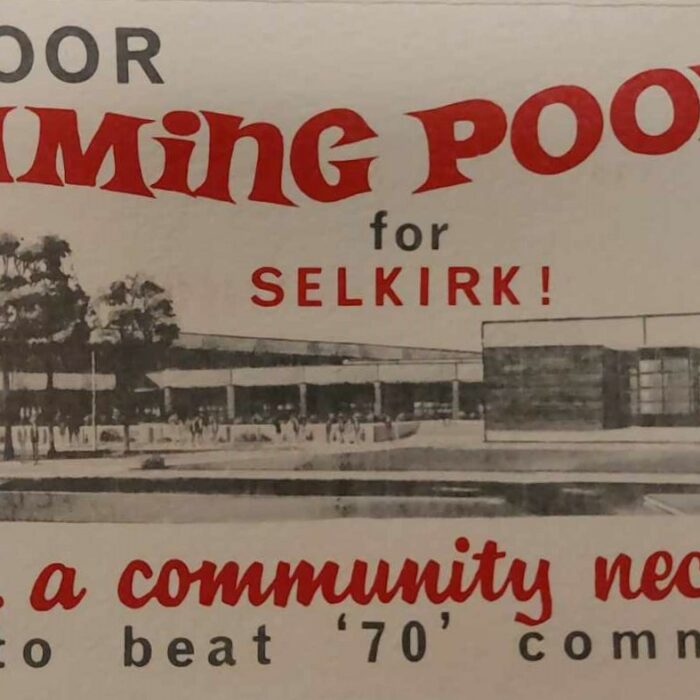 An Indoor Swimming Pool for Selkirk, Swim to Beat '70 Pamphlet, 1970s, Michelle Stamm








Sources
Oral History Interview with Michelle Stam
Oral History Interview with Pat Croy
Lord Selkirk School Division
Winnipeg Free Press, 1973, 2010
Selkirk Enterprise, 1974, 1976, 1987, 1988, 1991
Selkirk Journal, 1985, 1987, 2000, 2001, 2004, 2005, 2006, 2008, 2009, 2014, 2015
The Interlake Spectator, 2010