
605 Mercy St
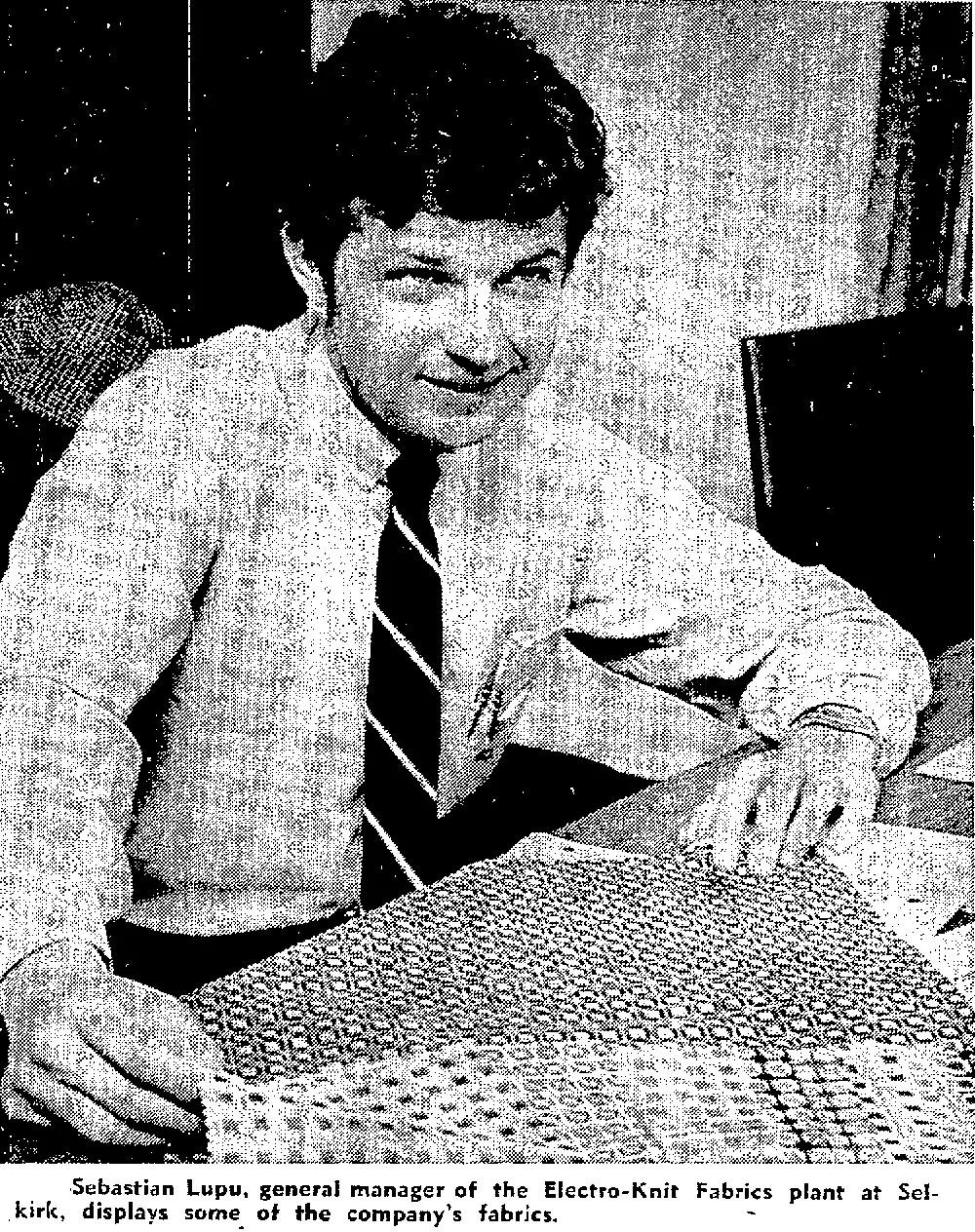
In 1968, Electro-Knit Fabrics (Canada) Limited announced plans to build a textile plant in Selkirk’s newly developed industrial park. The textile plant was the first of its kind in Western Canada. Operating for over a decade, the company brought jobs, training, and a new industry to the Manitoba Interlake region before closing its doors in 1979.
Selkirk’s Industrial Park and a New Beginning
In 1967, Selkirk established an industrial park with a clear purpose. The idea was to give people living in the Interlake a range of options for employment in their local area. Consolidated Plastics was the first company to announce their plans to build a plant at the industrial park, but soon other companies followed. In 1968, Electro-Knit Fabrics (Canada) Limited, a Quebec-based company, became the second company to announce plans for the park, and the first to actually break ground. From there numerous other companies built plants over the years, such as Union Carbide and the pharmaceutical company, Noco Drugs.
Electro-Knit’s arrival in Selkirk was significant. The company planned a $2 million facility to produce and finish knit fabrics for the apparel industry. This type of textile mill was a first in Western Canada.
Why Selkirk?
Electro-Knit’s decision to build in Selkirk was strategic. As a Quebec-based company looking to serve both Eastern and Western Canada, the company wanted a centrally located facility, and Selkirk, sitting close to the middle of Canada, fit the bill.
Additionally, there was federal assistance offered to companies that built in Selkirk’s industrial park, which made the location even more attractive.
Construction
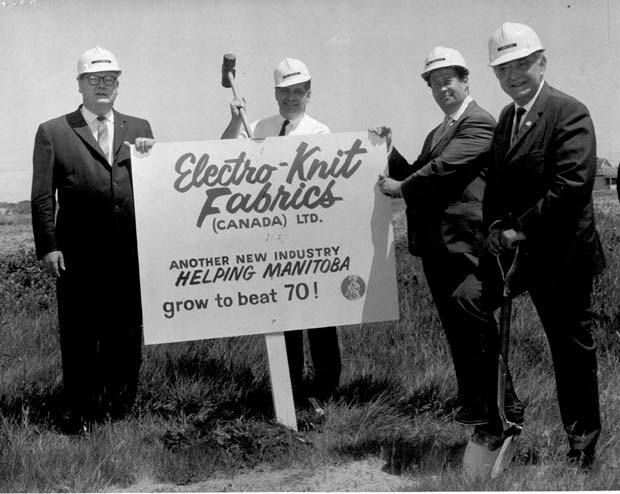
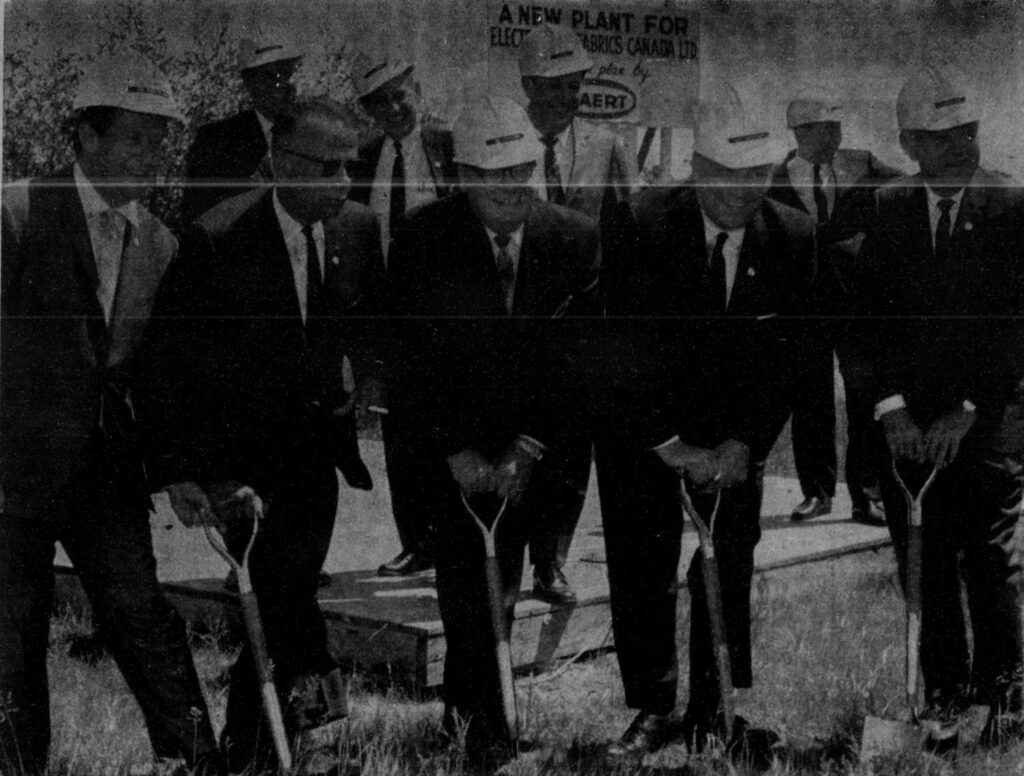
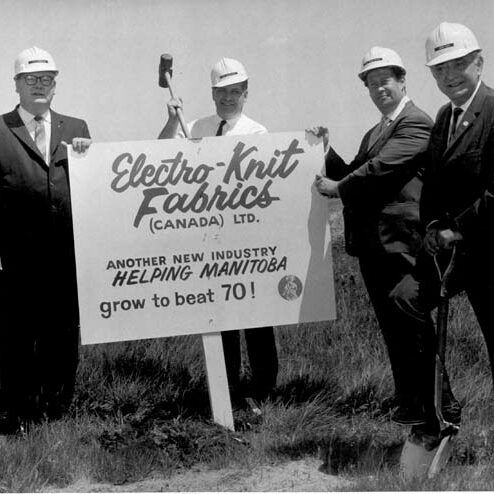
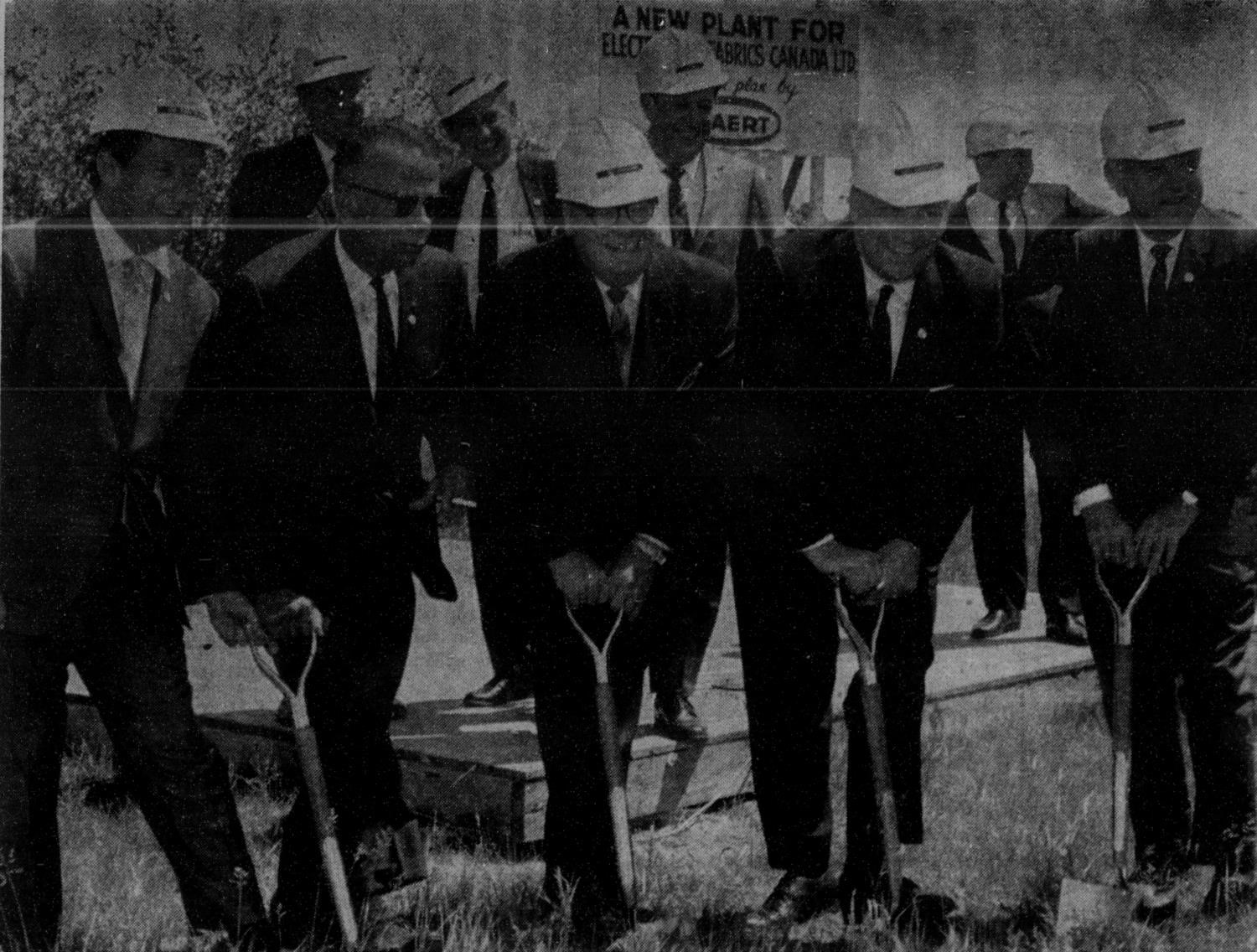
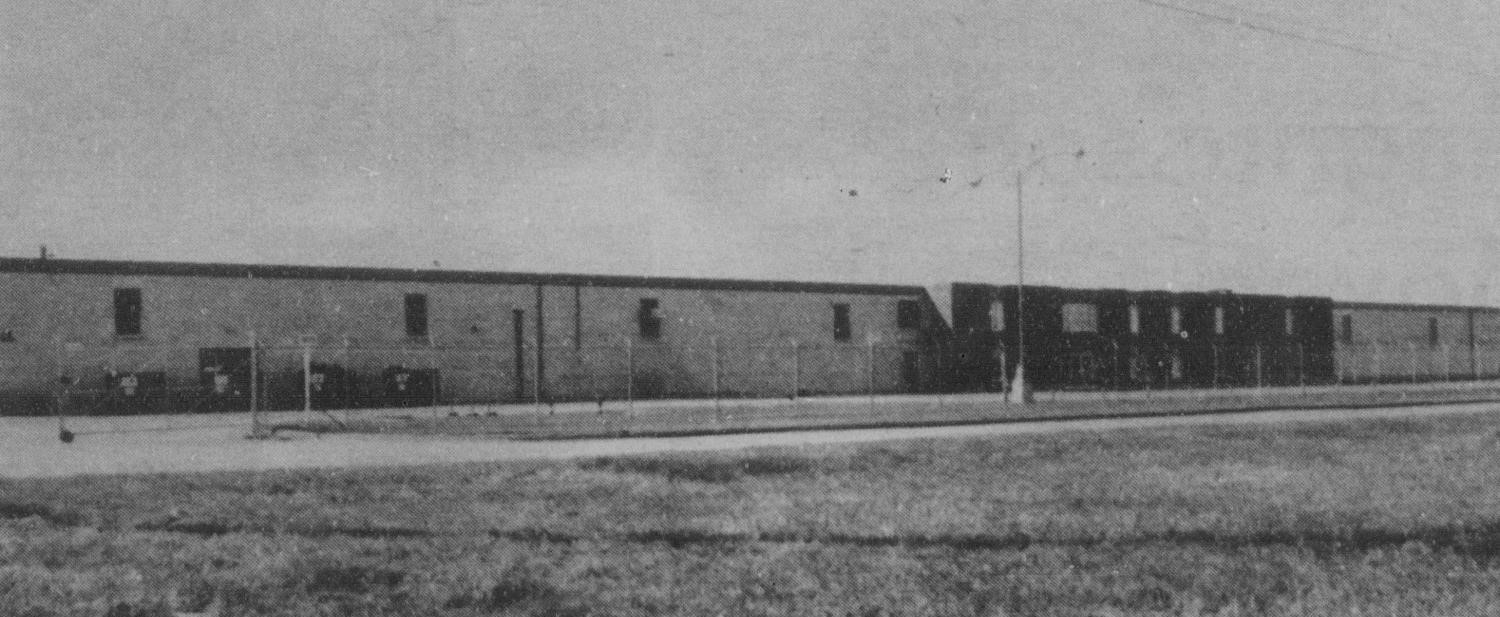
A sod turning ceremony was held on June 21, 1968, marking the official start of construction. The plant was built by Baert Construction of Saint-Boniface and sat on an 8.8-acre site. The 80,000-square-foot facility ultimately cost $2.5 million to build and started production in March 1969.
What the Plant Produced
To understand what Electro-Knit made, it helps to think about how clothing is actually produced. Before a shirt or pair of pants can be sewn, someone has to make the fabric. That was Electro-Knit’s role. The mill did not produce finished garments — no shirts, no jackets, or finished pieces of clothing. Instead, it produced the knit fabric that clothing manufacturers would then buy and use to make those clothing pieces.
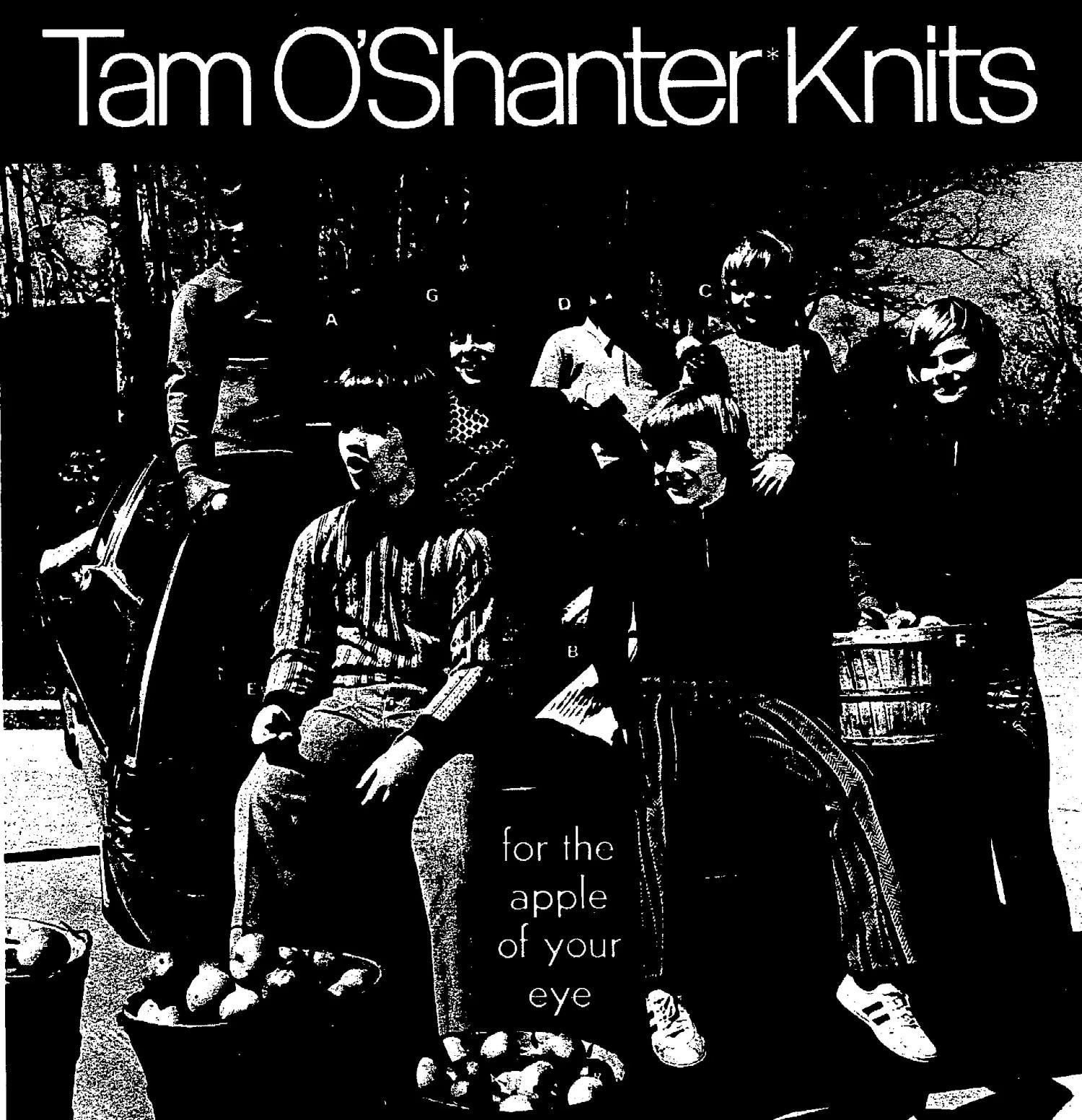
Rather than competing with the clothing manufacturers already operating in the province, Electro-Knit complemented them. Electro-Knit supplied the raw fabric in a wide range of varieties and colours.
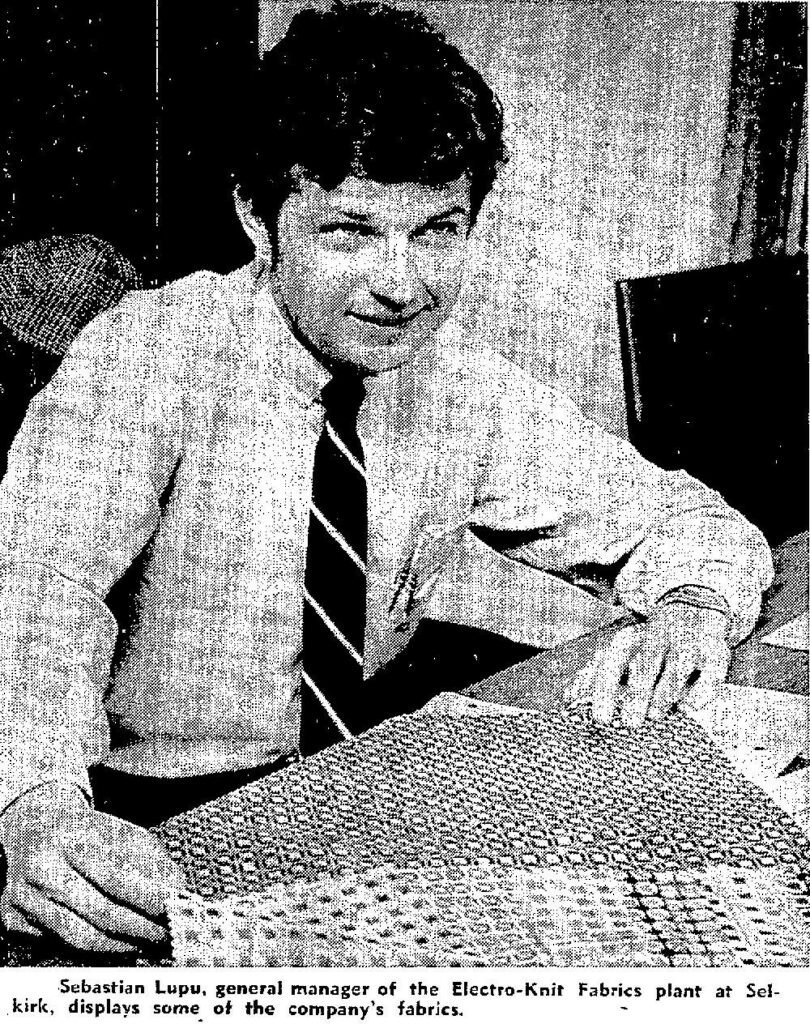
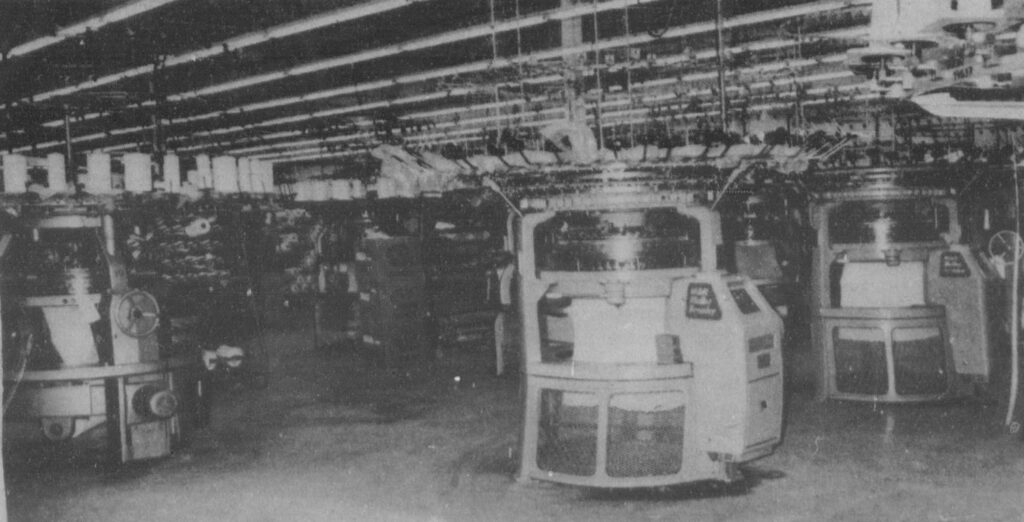
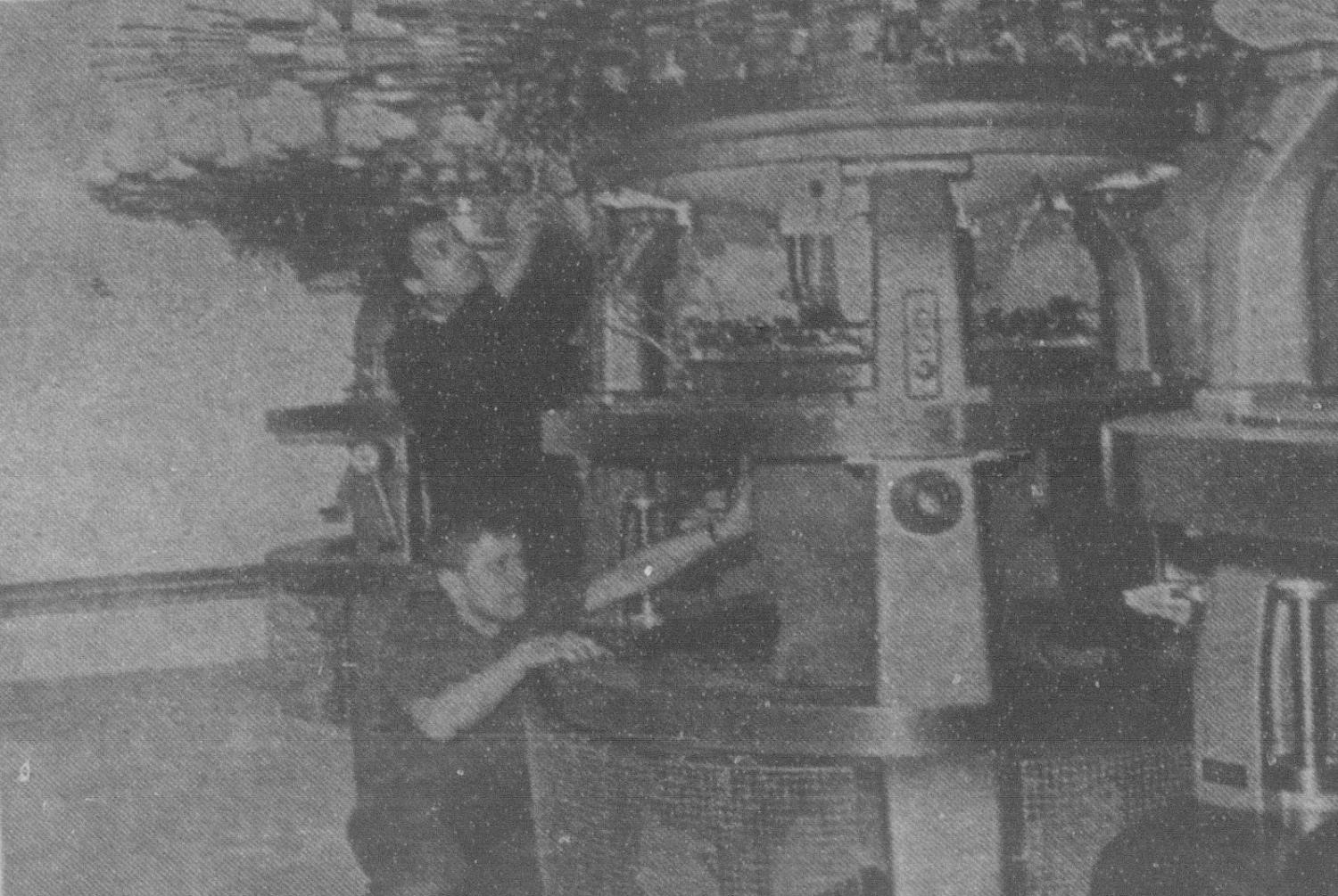
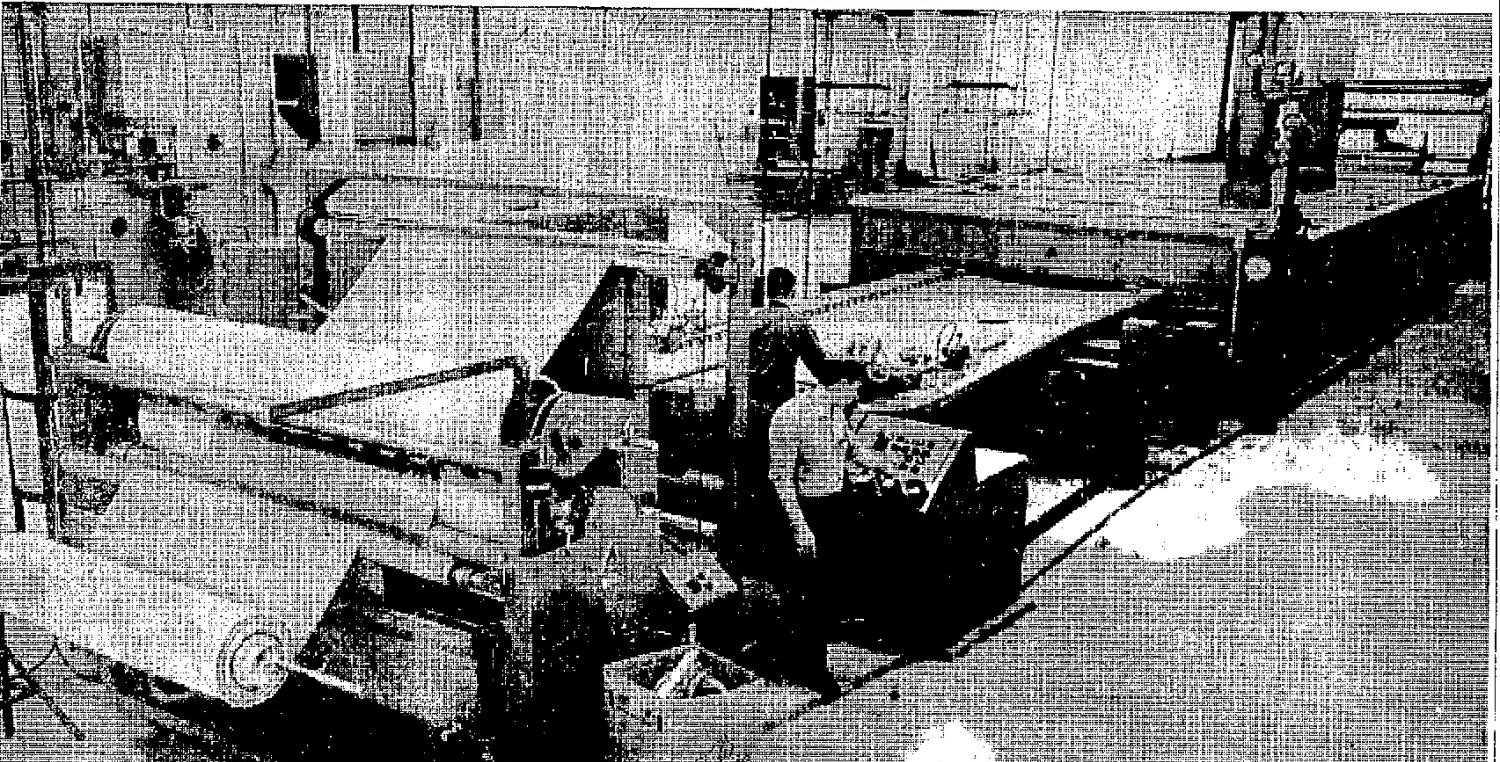
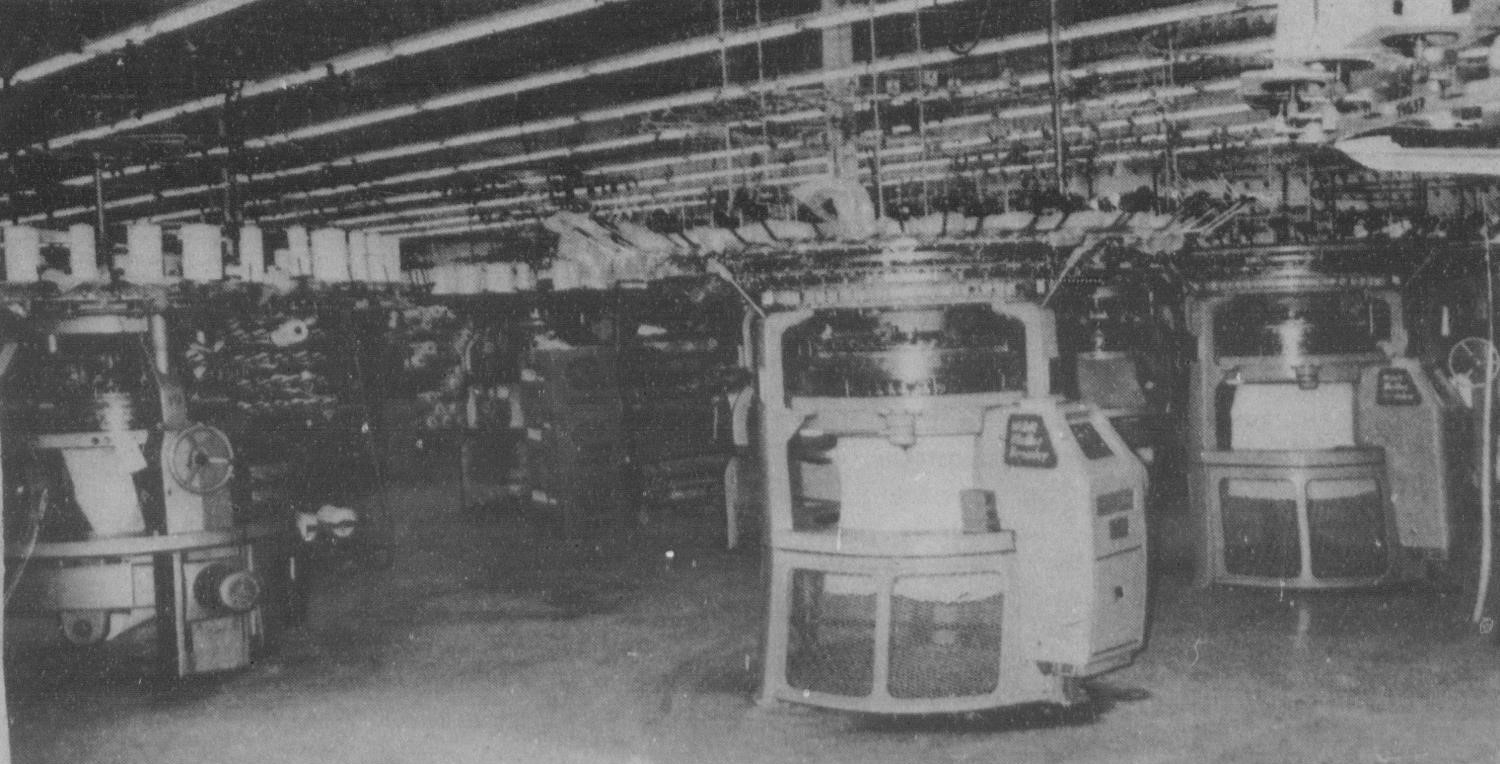
The plant’s operations were fully integrated, meaning the entire production process happened under one roof. Raw fibers, primarily acrylic and cotton, but not wool, were knitted into fabric using 50 state-of-the-art knitting machines. The machines could produce both single-knit and double-knit styles, each with different weights and uses. The mill could also dye fabrics in solid colors, while plants in Eastern Canada produced fabrics with multiple colours. By the end of the process, the plant delivered a finished, ready-to-use fabric — knitted, dyed, and finished, all in Selkirk.
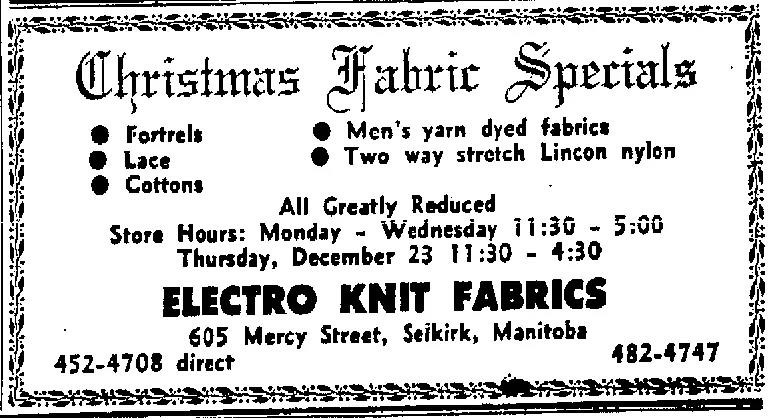
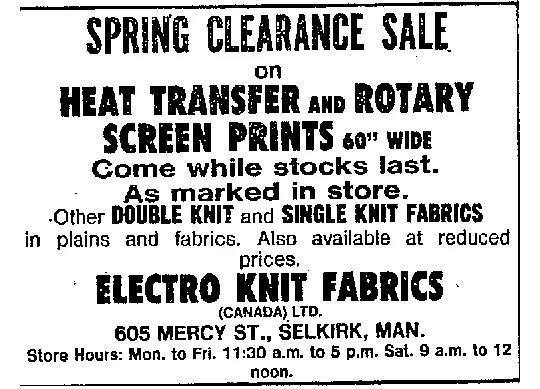
When it opened, the plant was projected to produce enough fabric to add around $10,000 per week to Selkirk’s economy, with plans to grow steadily from there. Electro-Knit also operated an in-person retail store in Selkirk, making its fabrics available directly to local customers.
Jobs and Training
When the plant opened in March 1969, it had 25 employees, who had all been brought from Electro-Knit’s existing factories in Eastern Canada. Their role was not simply to staff the mill, but to train local workers who would eventually take over those roles. That training process took roughly eight weeks per person, and it was through this program that the company began building a local workforce from the ground up.
From the start, the plant was expected to grow well beyond its initial 25 employees, with projections of reaching 100 workers soon after in opened, and eventually a workforce of 300.
The plant’s workforce was mixed, made up of roughly 70% men and 30% women. For many of these local workers, Electro-Knit offered something new, a skilled trade in their own community, without having to leave the Interlake region for work. The company also ran formal training programs for young people such as design, knitting arts, and dyeing and finishing.
A Legacy Cut Short
Success continued for several years. In 1974, the plant employed 250 people across two or three shifts a day, and that same year added a new 35,000 square foot addition to the building. Managers from the Montreal headquarters were pleased with their decision to build the mill in Selkirk.
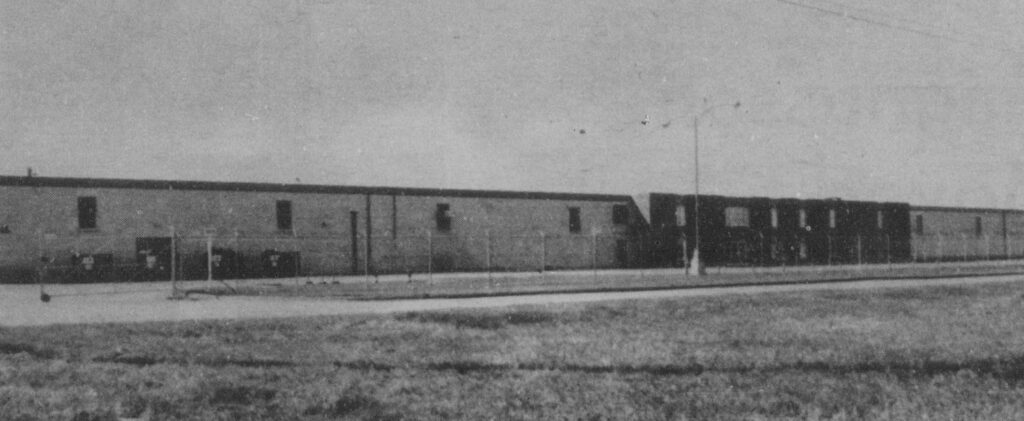
Financial losses began in 1975 during an industry-wide slump. Sourcing fabric from outside North America became more affordable, and clothing manufacturers often favoured those lower costs. The Electro-Knit plant in Selkirk was hit particularly hard, as fashion trends moved away from the double-knit fabric the plant produced.
In 1978, Electro-Knit reorganized its operations across the country, relocating certain functions, such as polyester dyeing from Selkirk to Montreal.
Significant layoffs followed in 1978 and 1979. The mill went up for sale in the spring of 1979, with the remaining 40 employees facing layoff and closure if no buyer came forward.
Unfortunately, no buyer was found, and the plant closed in the summer of 1979.
Electro-Knit Fabrics operated in Selkirk for roughly eleven years. In that time, it served as a landmark employer in the region and helped establish Selkirk’s industrial park as a serious hub for manufacturing. Its story reflects both the optimism that surrounded the plant’s creation and the economic realities that many Canadian textile manufacturers faced in the years that followed.
Electro-Knit Collection
 Electro-Knit, 1968-1979, Winnipeg Tribune
Sources
“New Textile Mill Slated for Selkirk,” Manitoba Government
“First Sod Turned for Textile Mill,” Manitoba Government
Selkirk the First Hundred Years, Barry Potyondi
Land Sales, Selkirk Museum Collection
Winnipeg Free Press 1968, 1969, 1974, 1975, 1979
Selkirk Enterprise, 1974