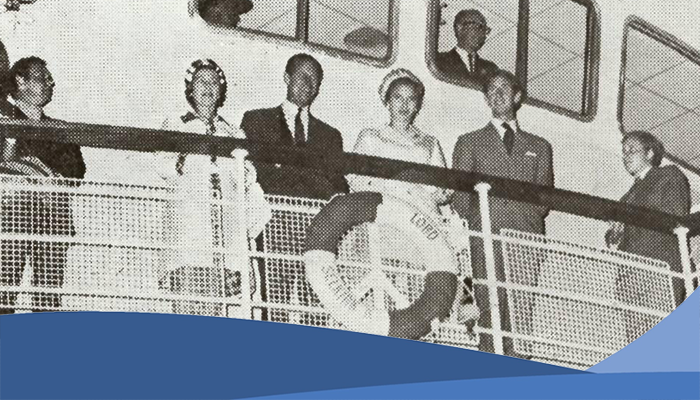
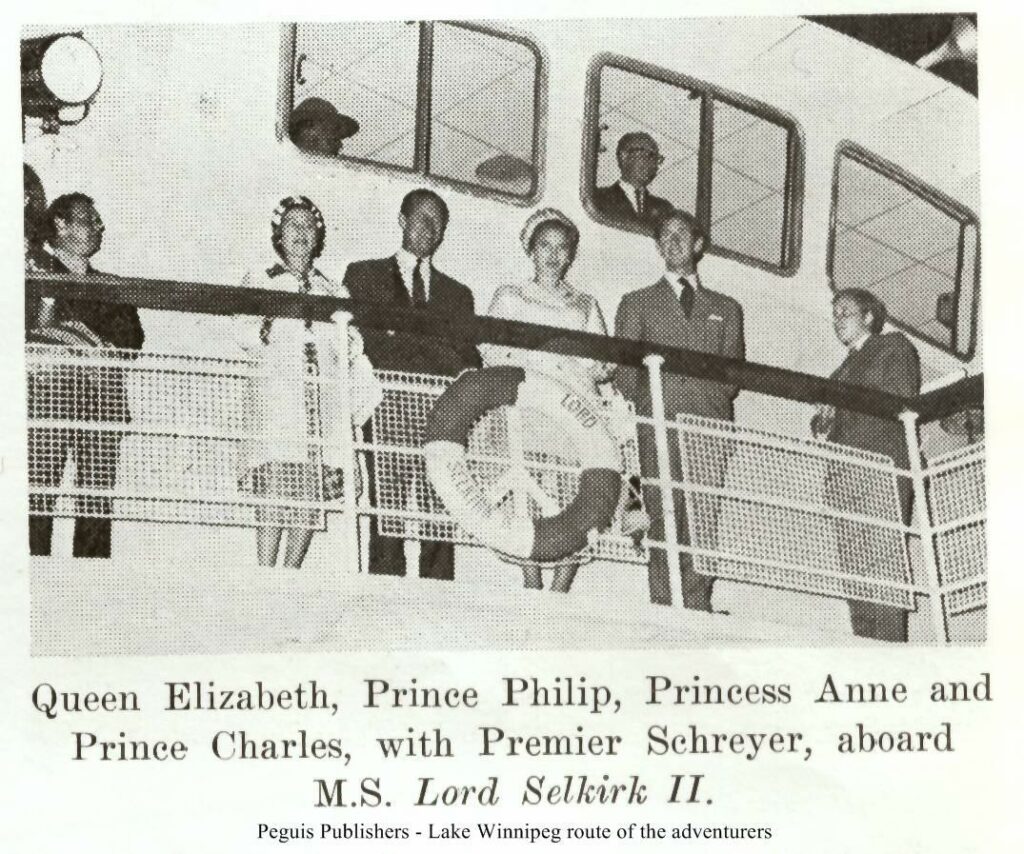
On July 14, 1970, hundreds gathered along the docks of Selkirk to catch a glimpse of royalty. As part of The Visit of the Royal Family to Manitoba, Queen Elizabeth II and other members of the Royal Family sailed down the Red River aboard the M.S. Lord Selkirk II.
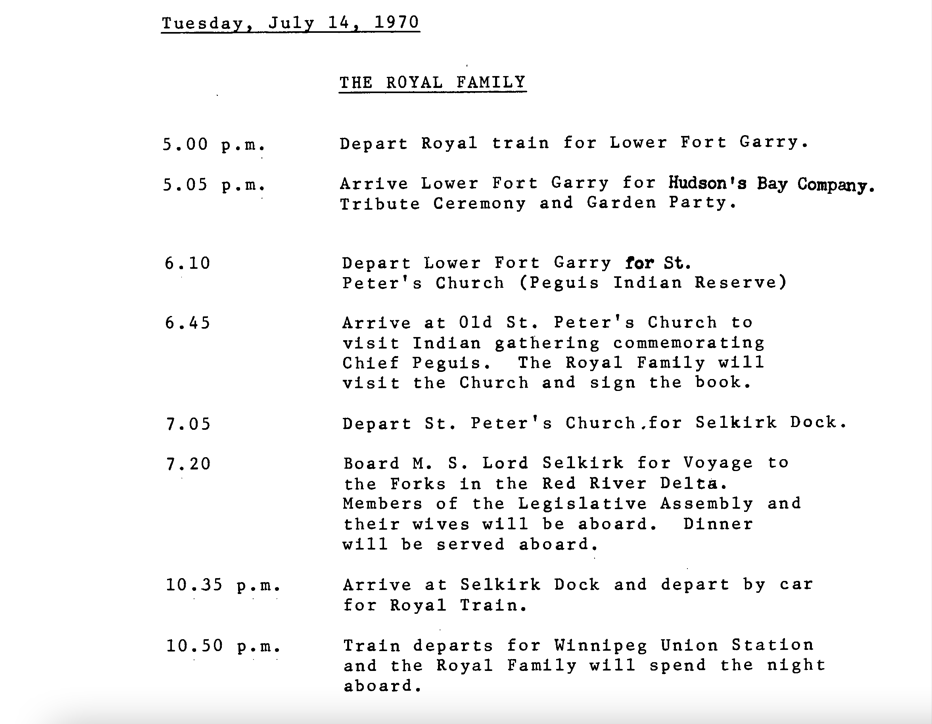
According to the official tour program, the Royal Family boarded the M.S. Lord Selkirk at 7:20 p.m., following a visit to Lower Fort Garry for the Hudson’s Bay Company Tribute Ceremony and Garden Party, as well as a stop at Old St. Peter’s Church to attend an Indigenous or, at that time, Indian, gathering commemorating Chief Peguis.
From Selkirk, the Royal Family sailed to The Forks in the Red River Delta, where they met with members of the Legislative Assembly and their wives for a dinner served aboard the ship. The schedule called for their return to Selkirk at 10:35 p.m., after which they continued back to Winnipeg to spend the final two days of their tour.
While local media coverage of the Royal Family’s Selkirk excursion is scarce, the visit left a lasting impression on those who witnessed it. Former Selkirk MLA Greg Dewar recalled the event fondly in a 2015 interview with the Selkirk Journal.
“In 1970, when I was just a wee boy, the Royal Family came to Selkirk and I was there. We all came to Selkirk to greet Queen Elizabeth II, Prince Philip, Prince Charles, and Princess Anne. We met them at the Waterfront. I remember waving at them as they left,” Dewar said.
Royalty Roams throughout the Province
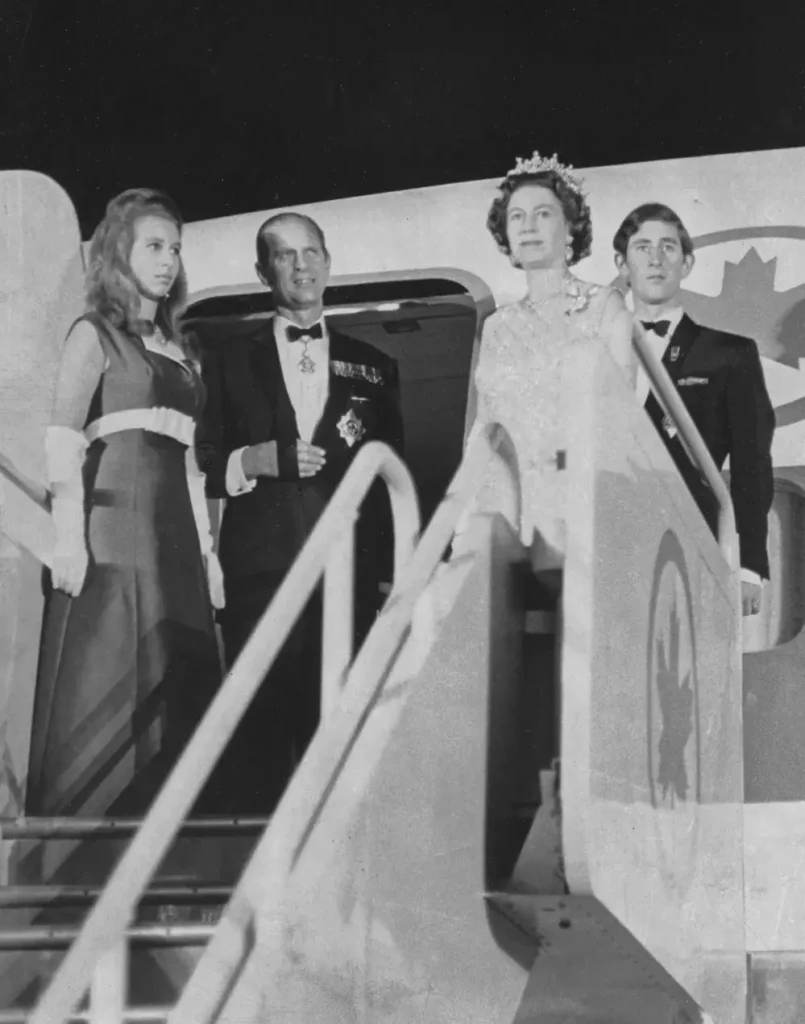
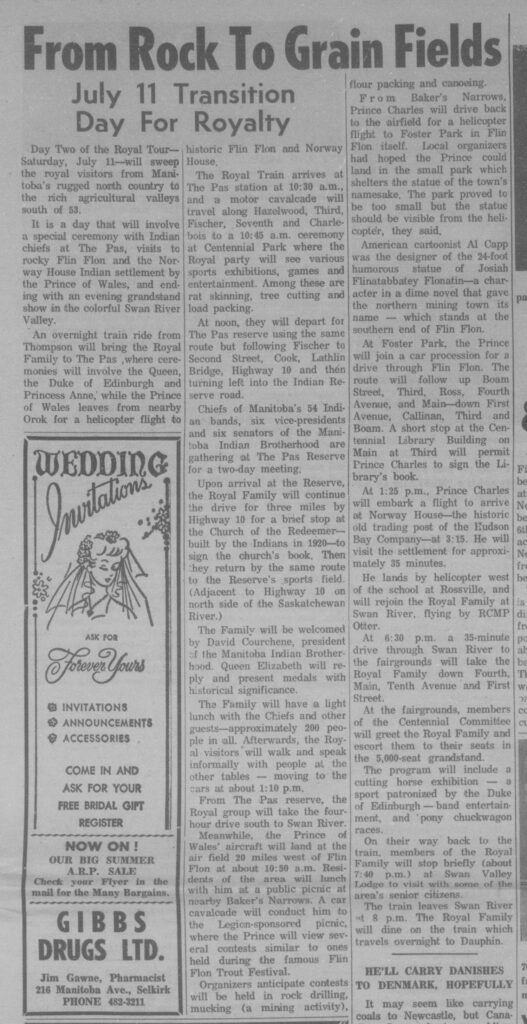
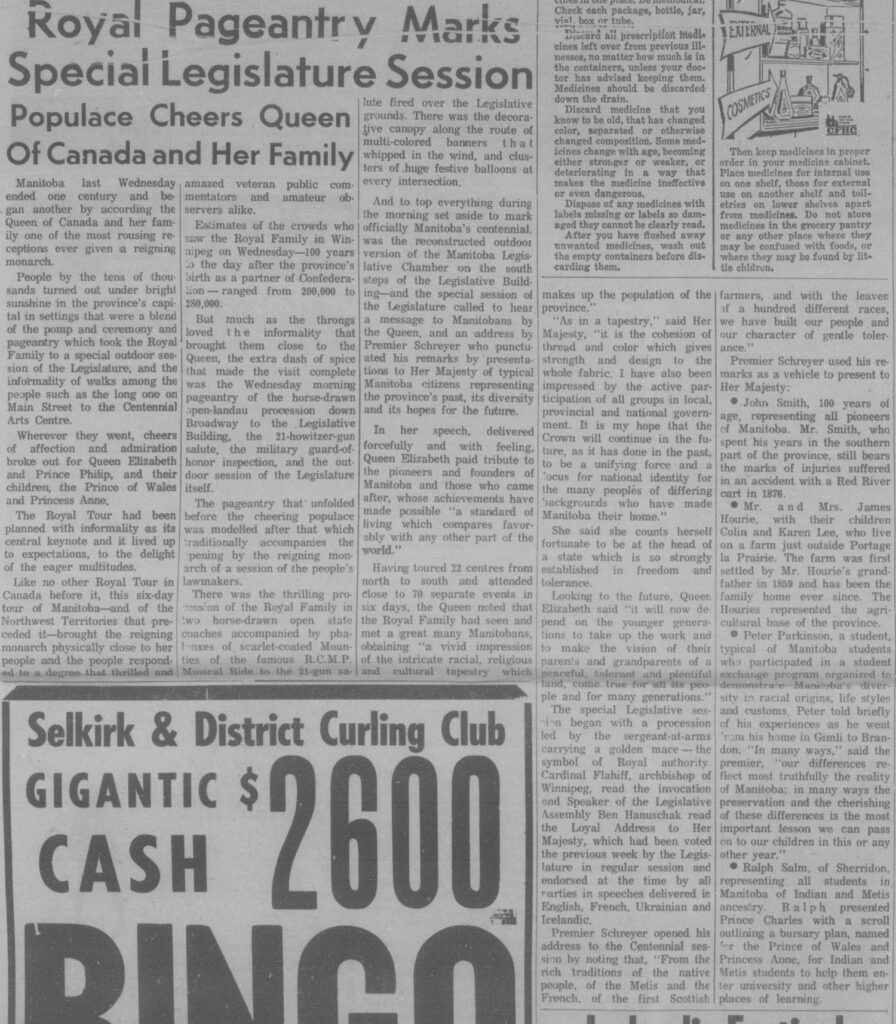
The Selkirk stop was just one leg of the Royal Family’s extensive 10-day tour across Manitoba and the Northwest Territories, held in honour of the 100th anniversary of Manitoba’s entry into Confederation. Other communities that welcomed the Queen included Winnipeg, Carman, Brandon, Beausejour, and several northern locations. Travelling by royal train, aircraft, and boat, Queen Elizabeth II, Prince Philip, Prince Charles, and Princess Anne took part in centennial celebrations and ceremonies across 22 communities, commemorating the province’s past and celebrating its future.
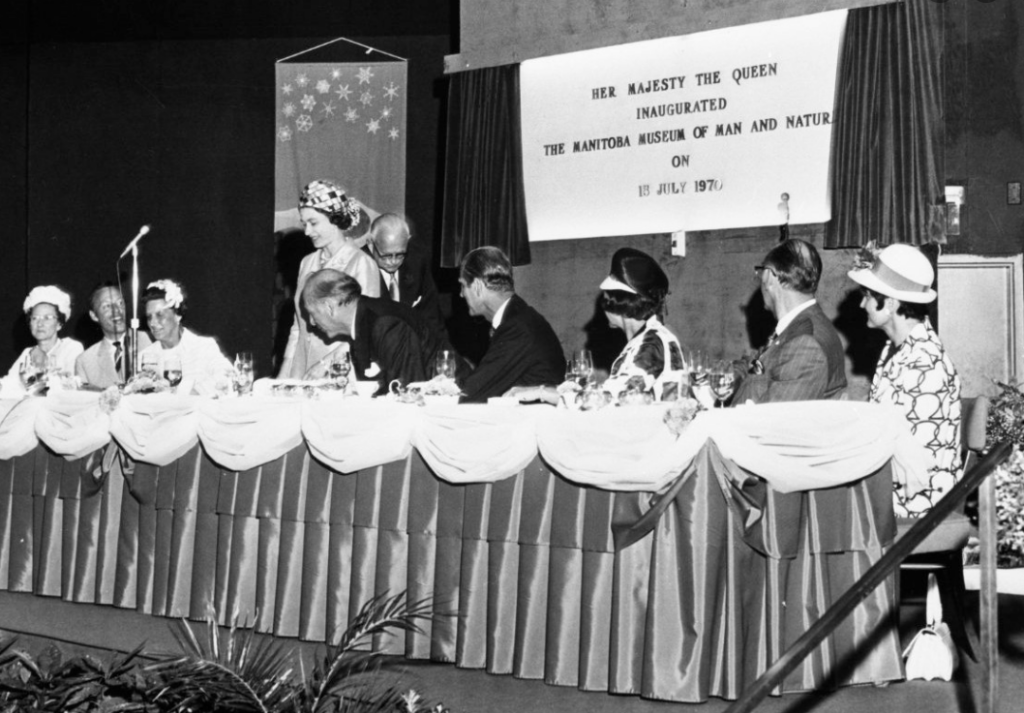
Beyond Selkirk, notable highlights of the tour included the opening of the Manitoba Museum of Man and Nature – now known as the Manitoba Museum – and several speeches in which the Queen reflected on northern and Indigenous communities.
“Ever since Europeans have begun to penetrate central and western Canada, it has been a story of turbulence and change. Changes over the last century have affected people all over the world, but here in Canada they have been felt most acutely by the Indian people. It is my hope as Manitoba enters its second hundred years all its people will play a full and responsible part in the administration of the province, and in its future development for the benefit of all Canadians whose home this is,” the Queen said in The Pas, Man., during a call to honour the treaties.
At a later event, she added,
“I am particularly conscious of the special relationship which has existed for so long between The Crown and the Indian people, the original inhabitants of this land. I am fully confident that they will always remain an integral and vital element in the life of the province.”
Queen Elizabeth Celebrates Manitoba’s Past, Present, and Future
During the grand opening of the Manitoba Museum, the Queen spoke about the province’s growth and success over the previous century.
“Confederation and the foundation of the new Province of Manitoba took place during the reign of my great great grandmother and so it is a very particular pleasure for me, as your Queen, to be here in Winnipeg for these centennial celebrations and to take part with you in paying tribute to the pioneers and founders of this province,” she shared on July 15, 1970. “One hundred years ago this vast territory was inhabited by a few thousand Indians and Métis and by a handful of French and Scottish fur traders and their families in the little settlement of Red River. Today, Manitoba is the home of one million people enjoying a standard of living which compares favourably with any other part of the world… This experience has given us all a most vivid impression of the intricate racial, religious and cultural tapestry which makes up the population of the province. As in a tapestry, it is the cohesion of thread and colour which gives strength and design to the whole fabric.”
All in all, The Visit of the Royal Family to Manitoba was a momentous occasion for many, and for Selkirk, it marked a rare moment in which the community stood at the centre of a province-wide celebration, reflecting both its local pride and its place within Manitoba’s centennial story.
Sources
Friesen, F., Reminiscing Queen Elizabeth II with trip to Winnipeg in 1970, Winnipeg’s Classic 107
Grace, M., HRM Queen Elizabeth sails aboard the MS Lord Selkirk II in 1970, Cruise Line History
How Indigenous people welcomed the Queen to Canada in 1970, CBC Archives
Rollason, K., Royal contingent spent six glorious days here in 1970, Winnipeg Free Press
Wide Range of Events in Royal Tour Program, Manitoba Government Information Services Branch-Royal Tour Accreditation Officer
Selkirk Journal, 2015