
The Selkirk Kinsmen Club was founded in 1944 the club supported major projects such as parks, recreation facilities, blood donor clinics, and the Selkirk Arena through volunteerism and fundraising. Although membership declined by 2012, Kinsmen played a vital role in local history and helped to build this community.
From the waning days of the Second World War into the second millennium, the town of Selkirk grew under the watchful eye of its citizens who built a community through their work on elected councils, churches, fraternal orders, service clubs and ad hoc committees. The Kinsmen Club of Selkirk became one of the most active service clubs. The volunteer efforts of the men and women of the Kinsmen left a legacy of family-friendly facilities, memories of social events that magnetically pulled residents together, and a dedication to finding solutions to problems faced by the community, and to individuals in need of help.
Kin Canada’s motto, “Serving the Community’s Greatest Needs” commits each club to identifying and addressing specific needs in their local area and finding solutions through volunteerism and fundraising. The Kinsmen trained its members, men between 21 and 40 years of age, in modern business and professional methods, ethics and public speaking, as to benefit their working life and help to build their community. Their work as Kinsmen would result in making new friends, have some fun and develop an attachment to the community they served. In time the membership would expand to include ladies, the Kinettes, and the K-40, for members at 40+ years of age.
The Good Work of the Selkirk Kinsmen, Kinettes and K-40 members
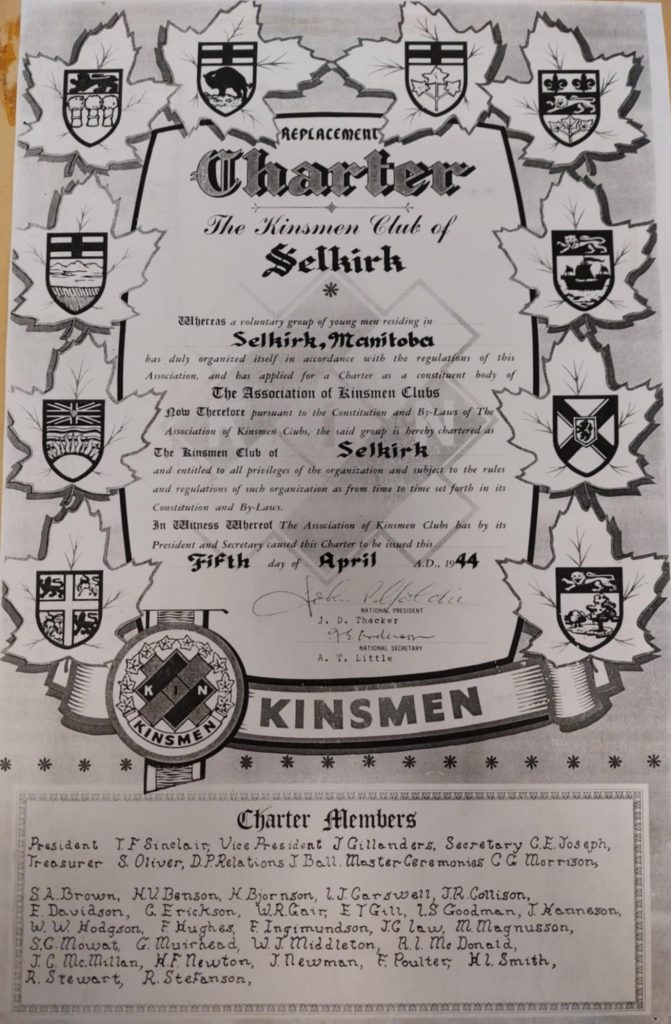
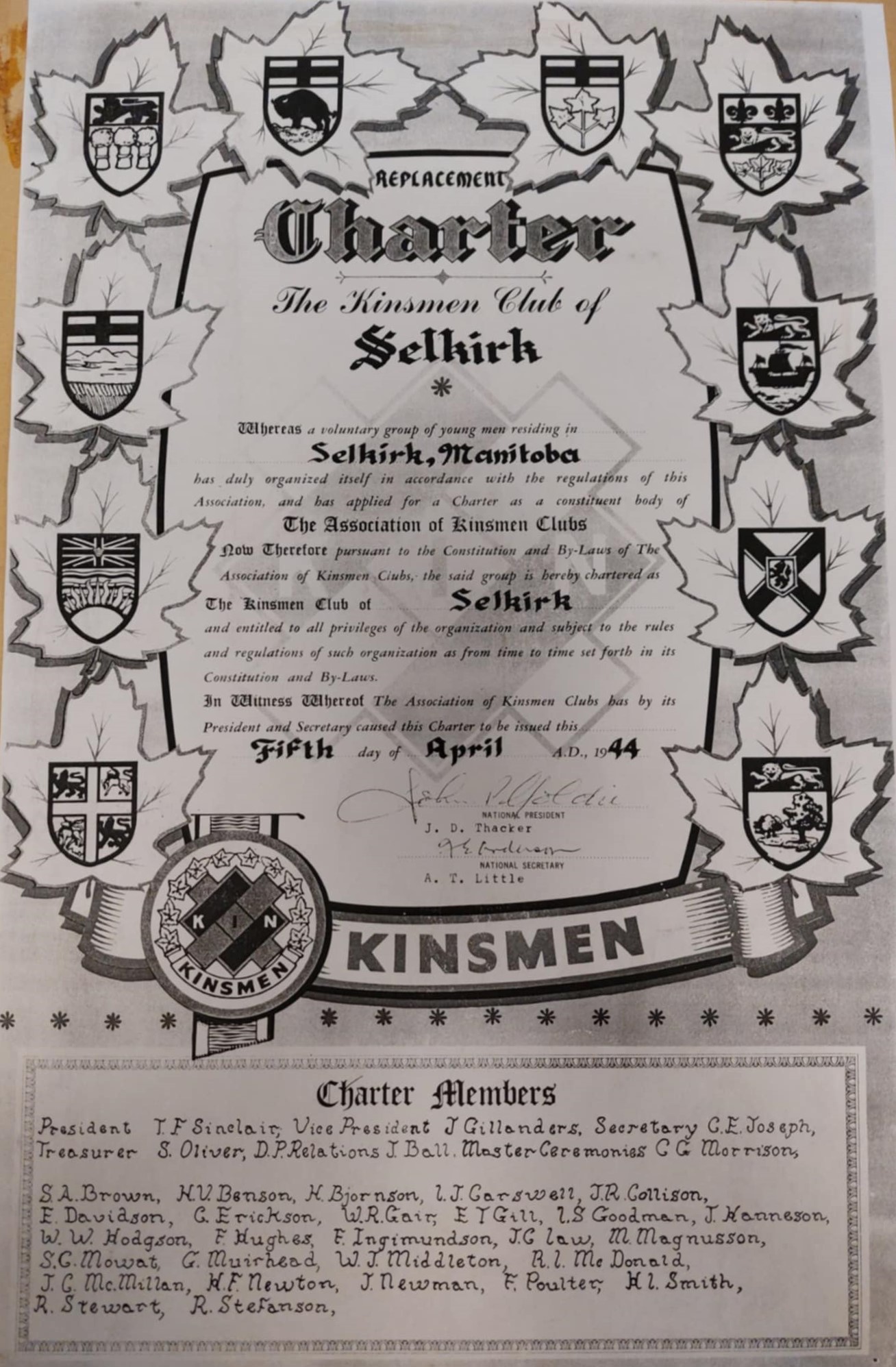
The Selkirk Kinsmen Club was formed in 1944 under the sponsorship of the Kinsmen Club of Winnipeg. Charter member Mr. Steve Oliver stated,
“The Association, its ideals and understandings between all nations are priorities and objects of Kinsmenship known throughout the world.”
The first officers elected were: Eric Sinclair, President; Joe Gilanders, Vice-President; Connie Joseph, Secretary; Steve Oliver, Treasurer; and Jack Ball, Public Relations. The club met every two weeks and used a committee structure to achieve their objectives. The club required regular attendance, and would involve its members in inter-club meetings, as well as district and national conventions. Their good work aimed to improve the quality of life for people in the Selkirk area, as well as support national initiatives.
Wherever there were Kinsmen doing volunteer work their wives or girlfriends were there lending a helping hand too. The Kinettes were chartered in 1968 as an auxiliary to the Kinsmen, because at that time the Kinsmen was for men only. However, the Kinettes were made full partners in the Association in 1983. The first Kinette president was Helen Thompson. The men and women worked co-operatively to achieve goals. If the Kinsmen were hosting bingo, then the concession was run by the Kinettes. If the Kinettes were hosting the local fashion show, the Kinsmen were the chauffeurs. The Kinettes were active fundraisers and would regularly present money to the Kinsmen for their various projects. Depending on the event, often the members’ children were underfoot as well. The Kinsmen modelled community engagement and the importance of having an active family life. Kinsmen Dave Bjornson stated,
“The Kinsmen members became our lifelong family.”
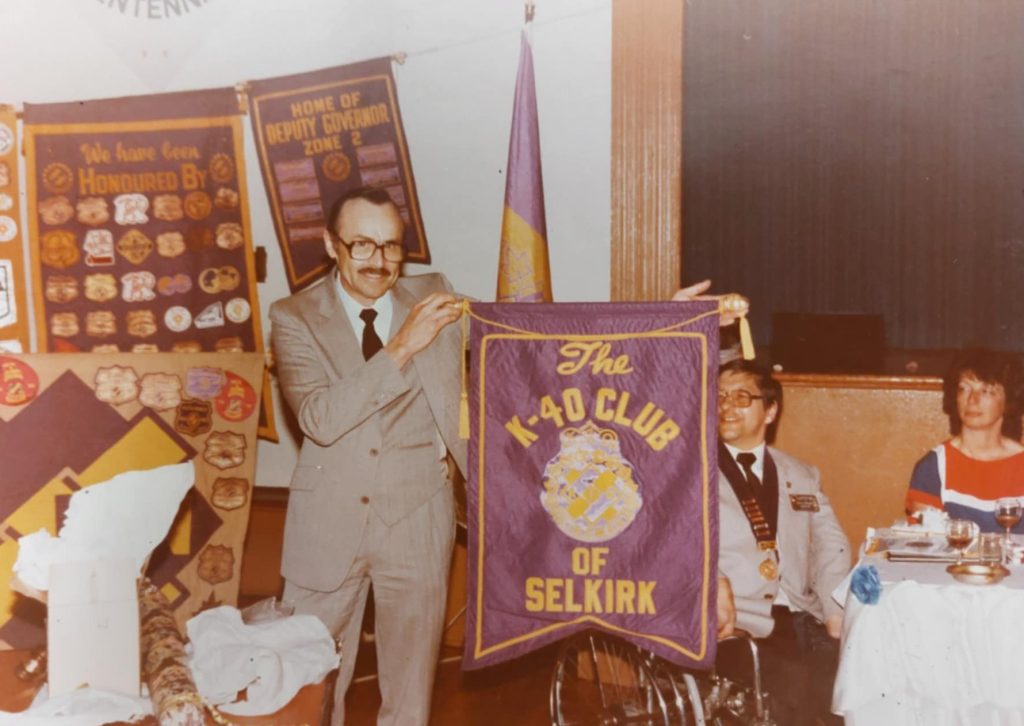
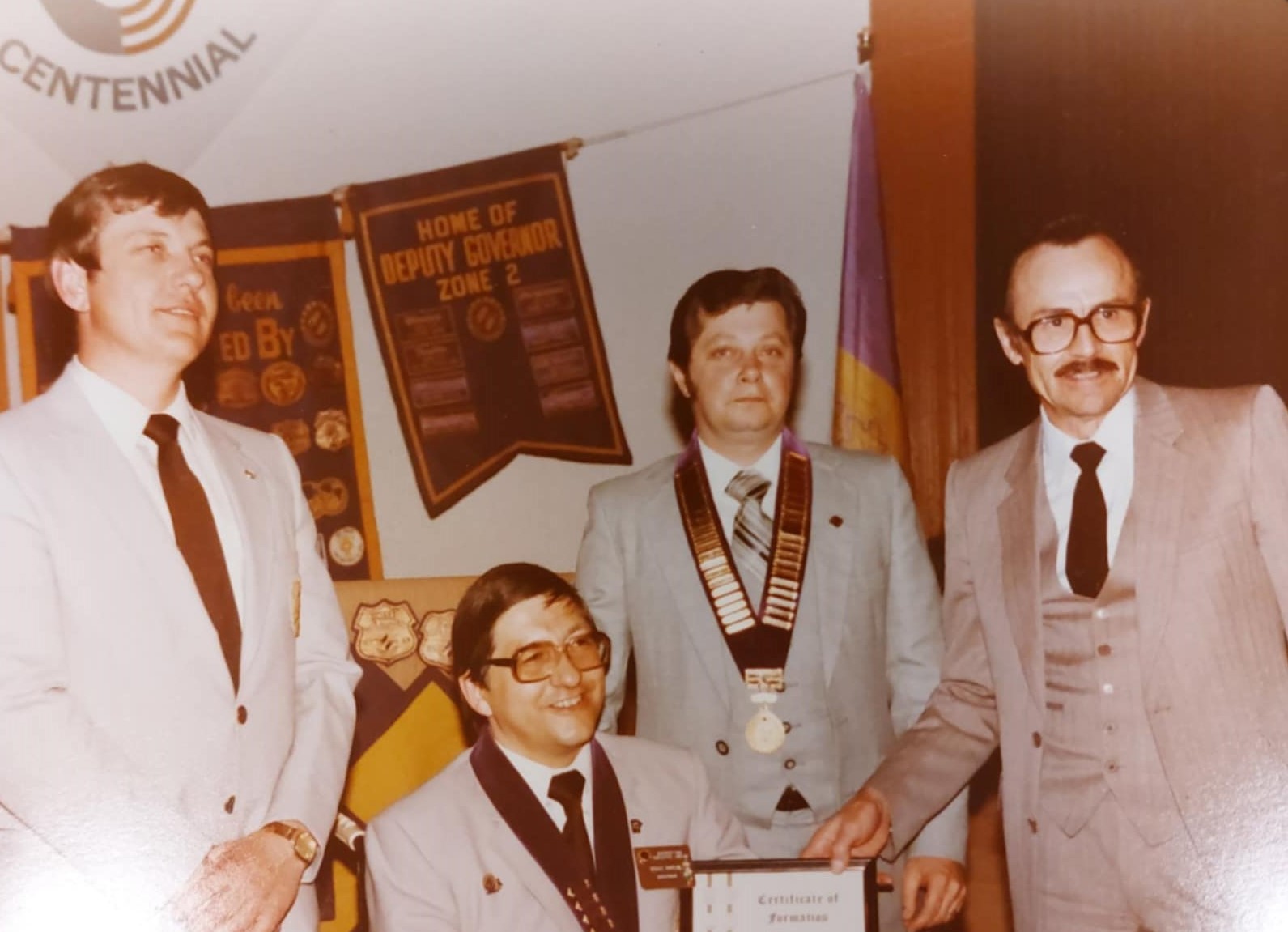
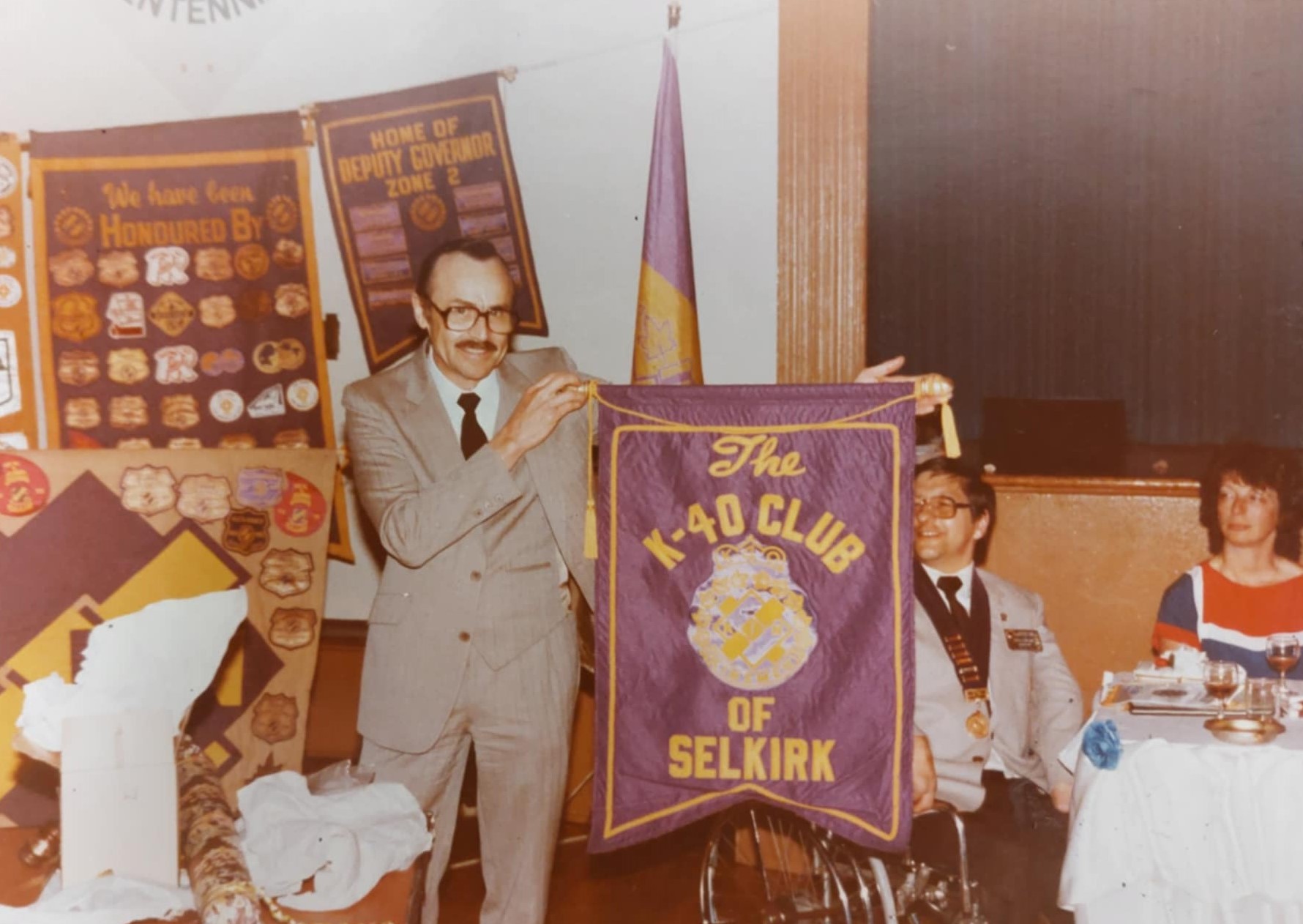
A Kinsman could hold elected office from the age 21-40, after which time that member could continue to be a Kinsmen in all respects, except hold elected office. As a result, the K-40 club was created to allow members to continue to participate past the age of 40.
In the years that followed the first meeting in 1944, it would soon be difficult to read the front page of the local newspaper and not see a photo and print coverage of one or more Kinsmen projects. The commitments were daunting, but somehow achievable even though the members had full time jobs, or ran a business, and may have also had a family to raise. They were highly visible, and their lasting impact was immeasurable.
Frequent Fun Raisers
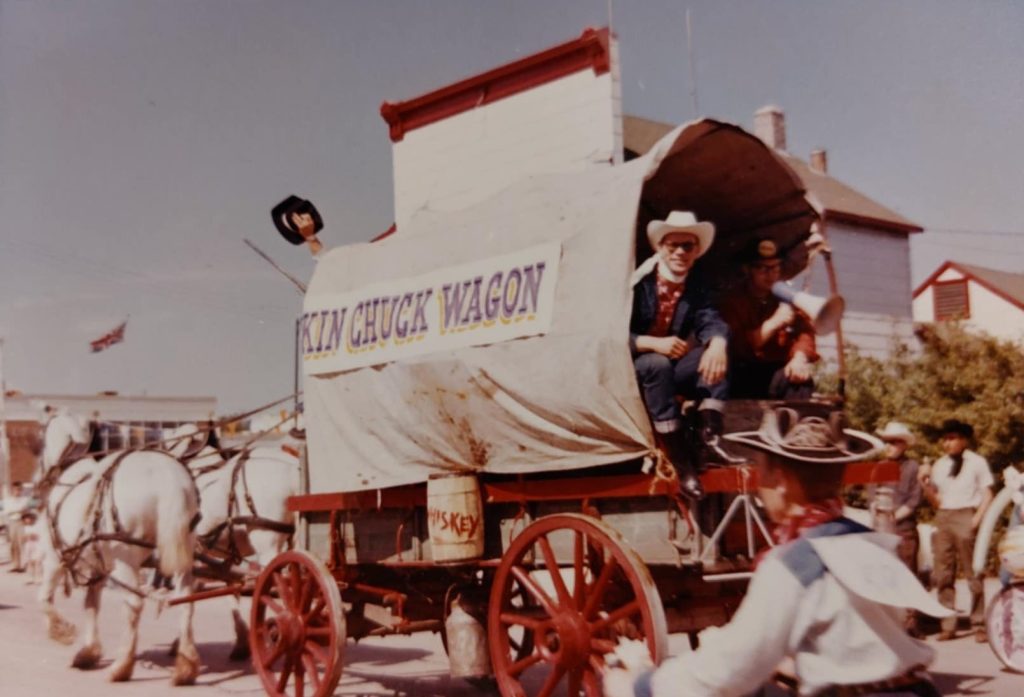
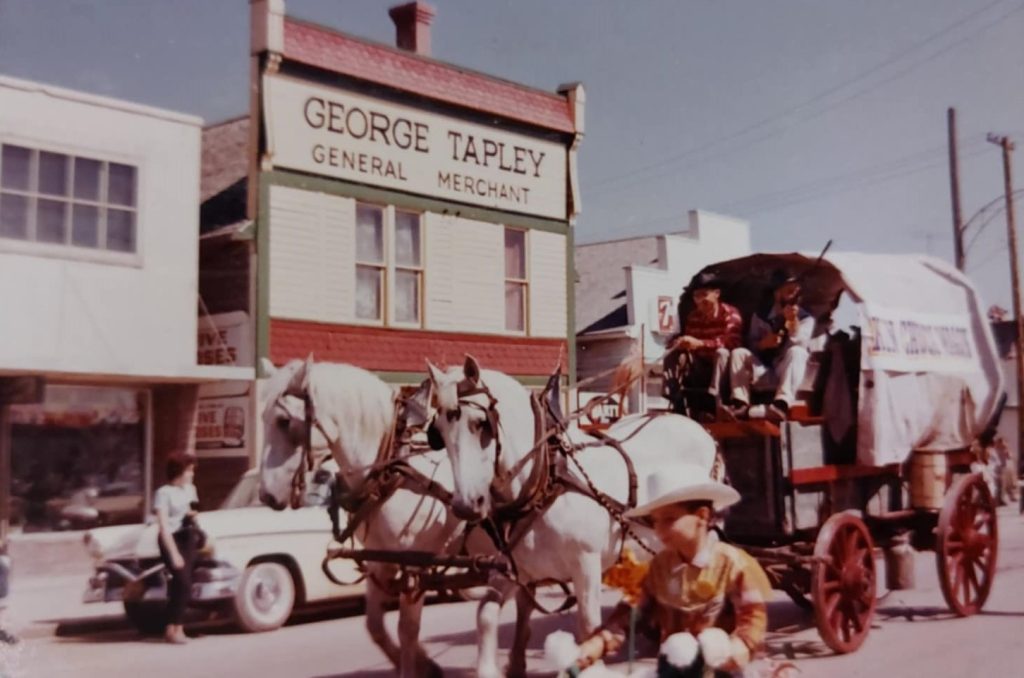
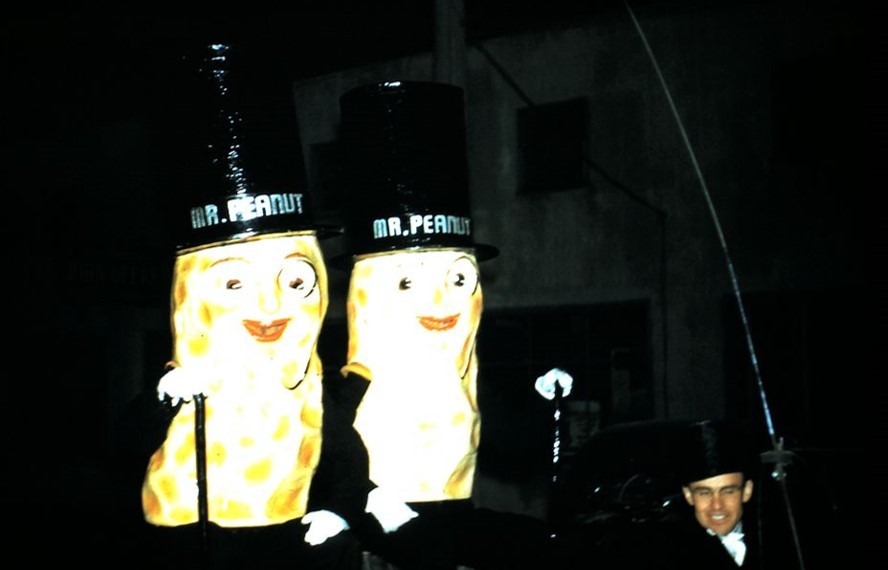
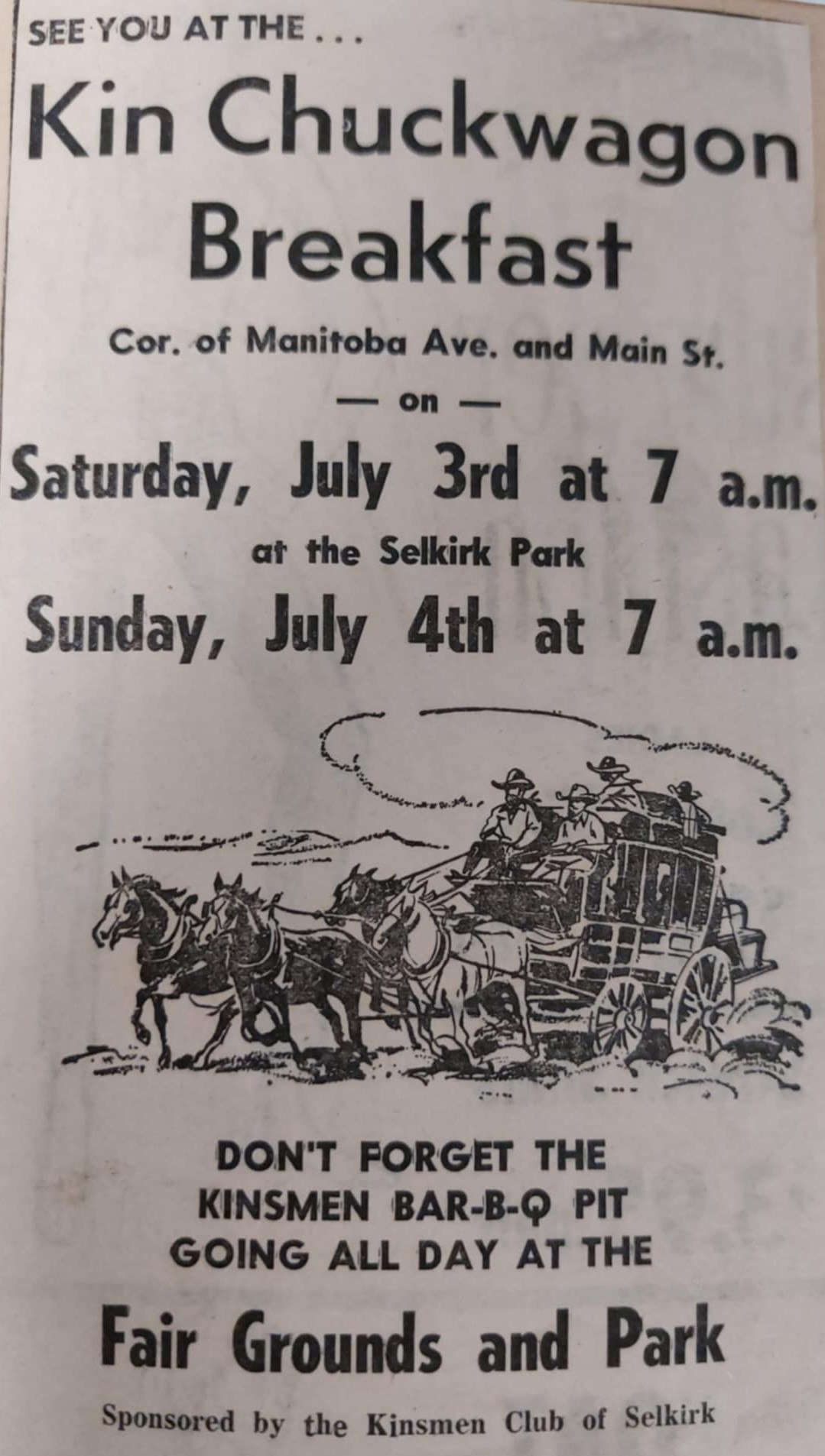
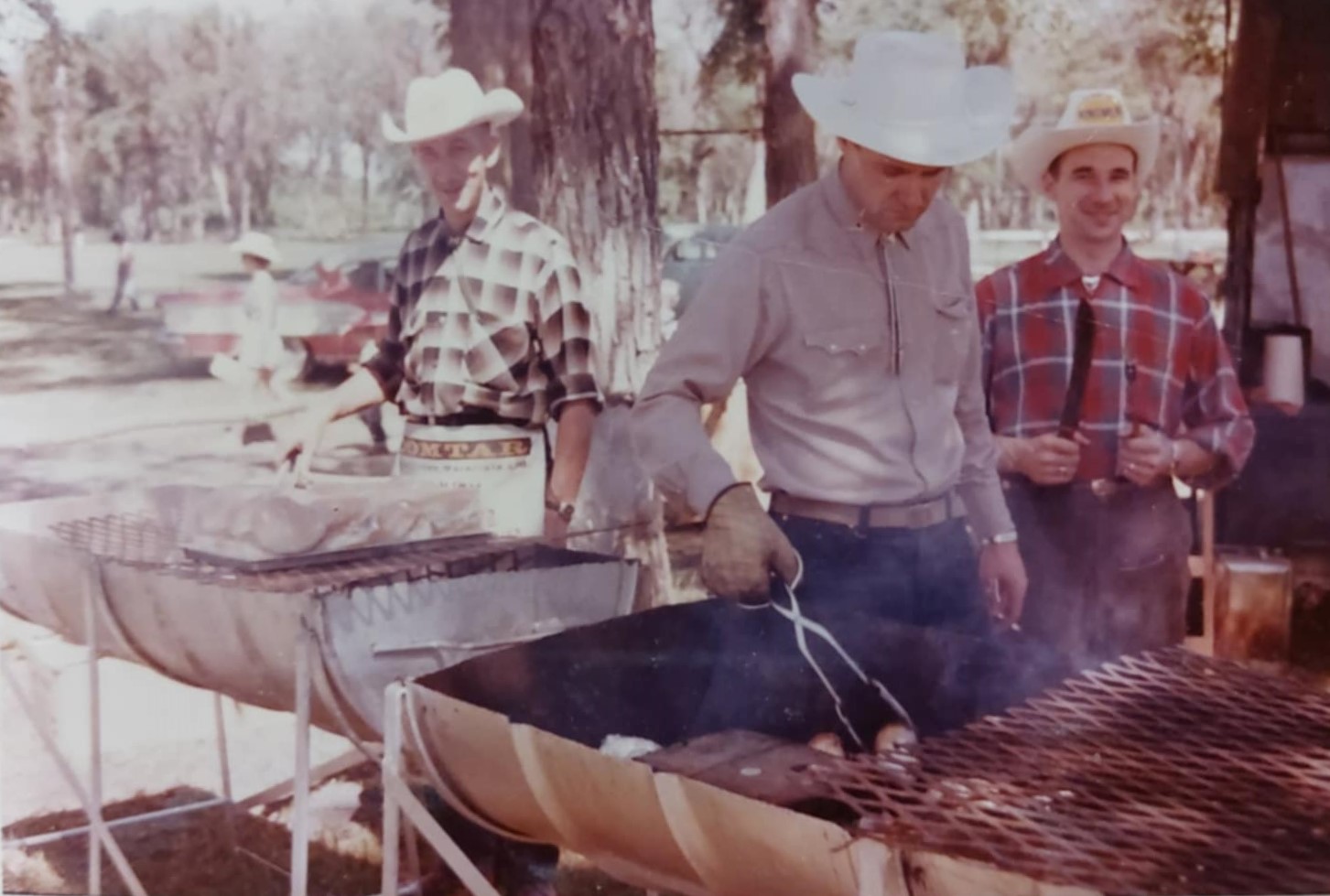
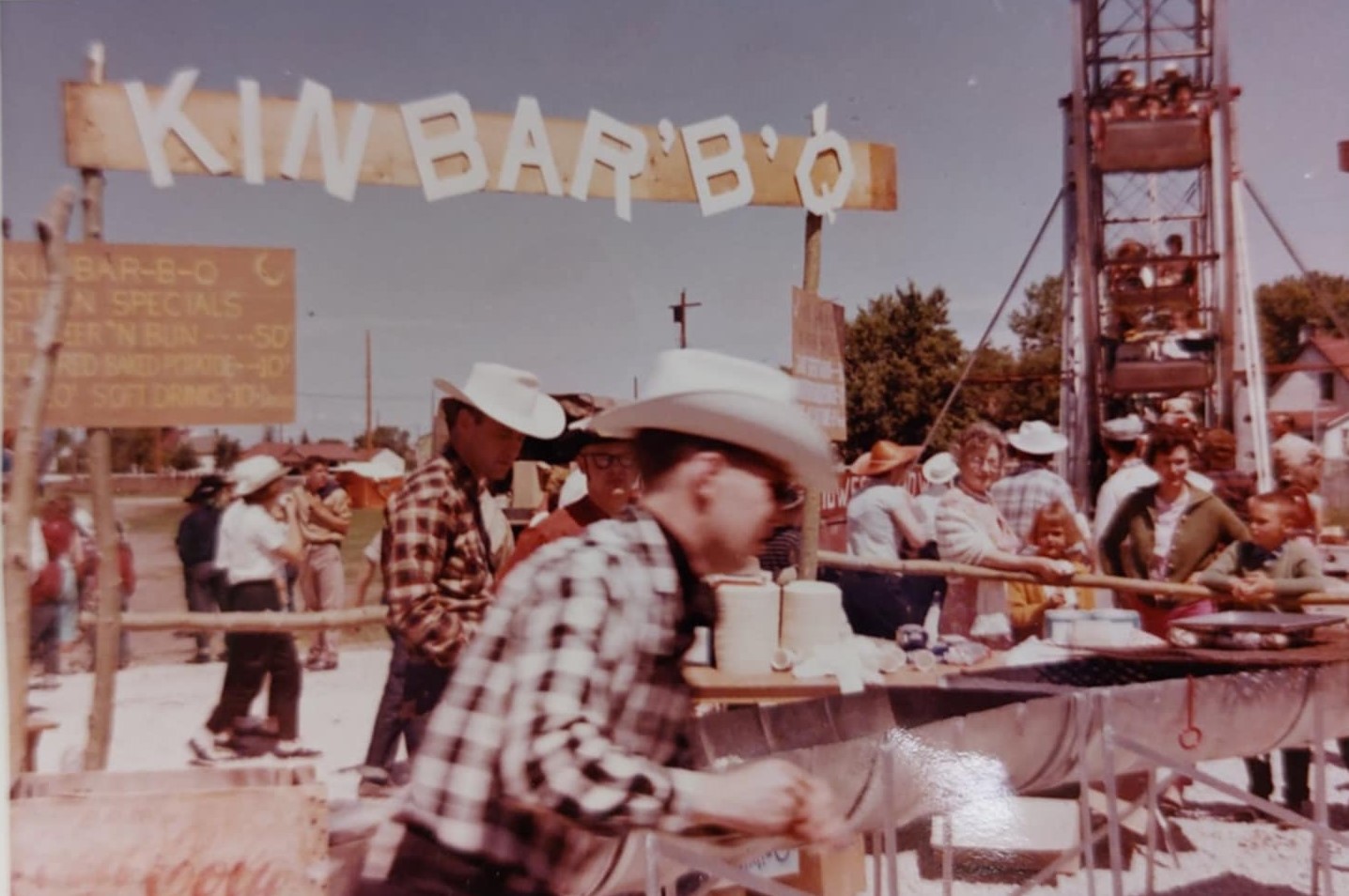
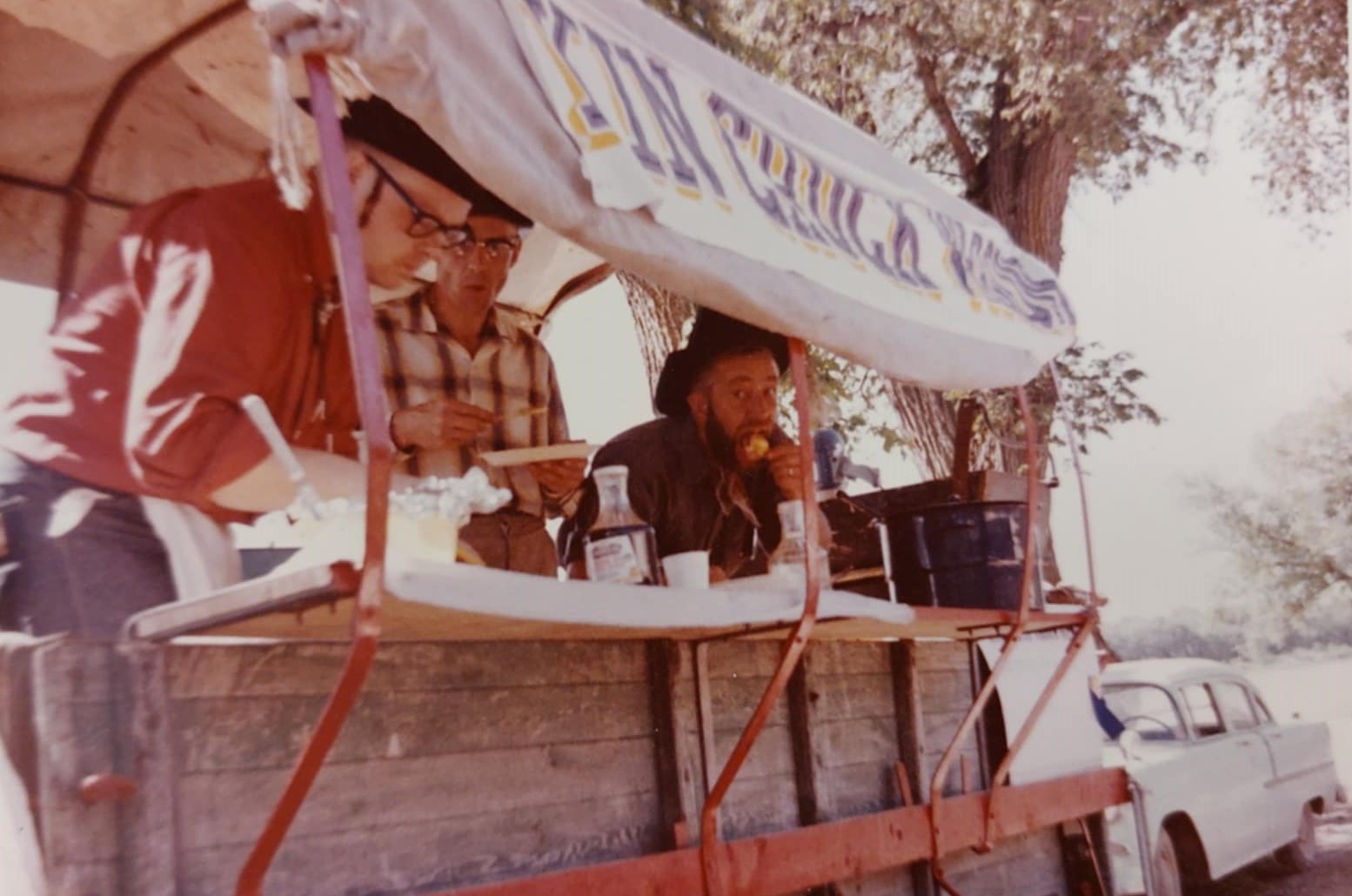
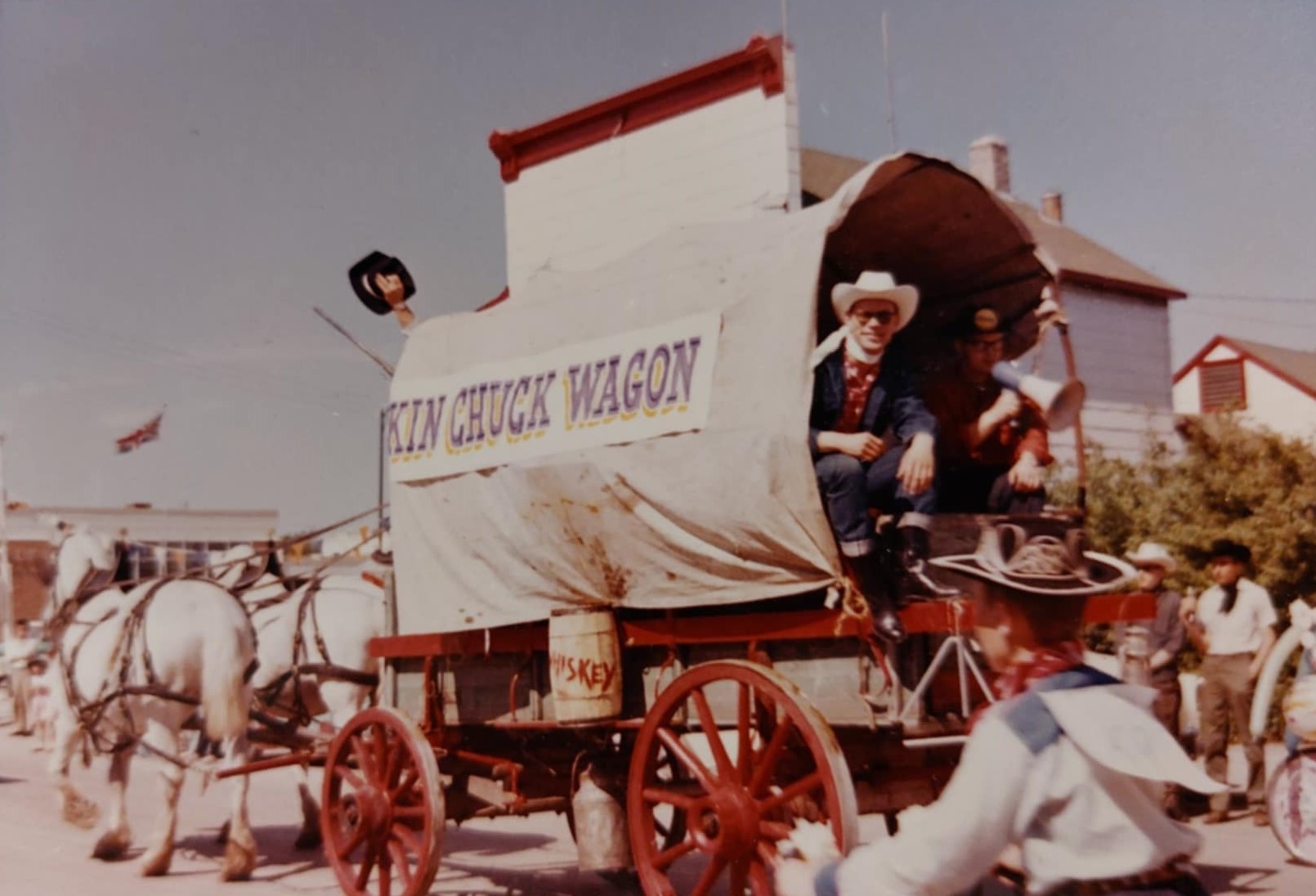
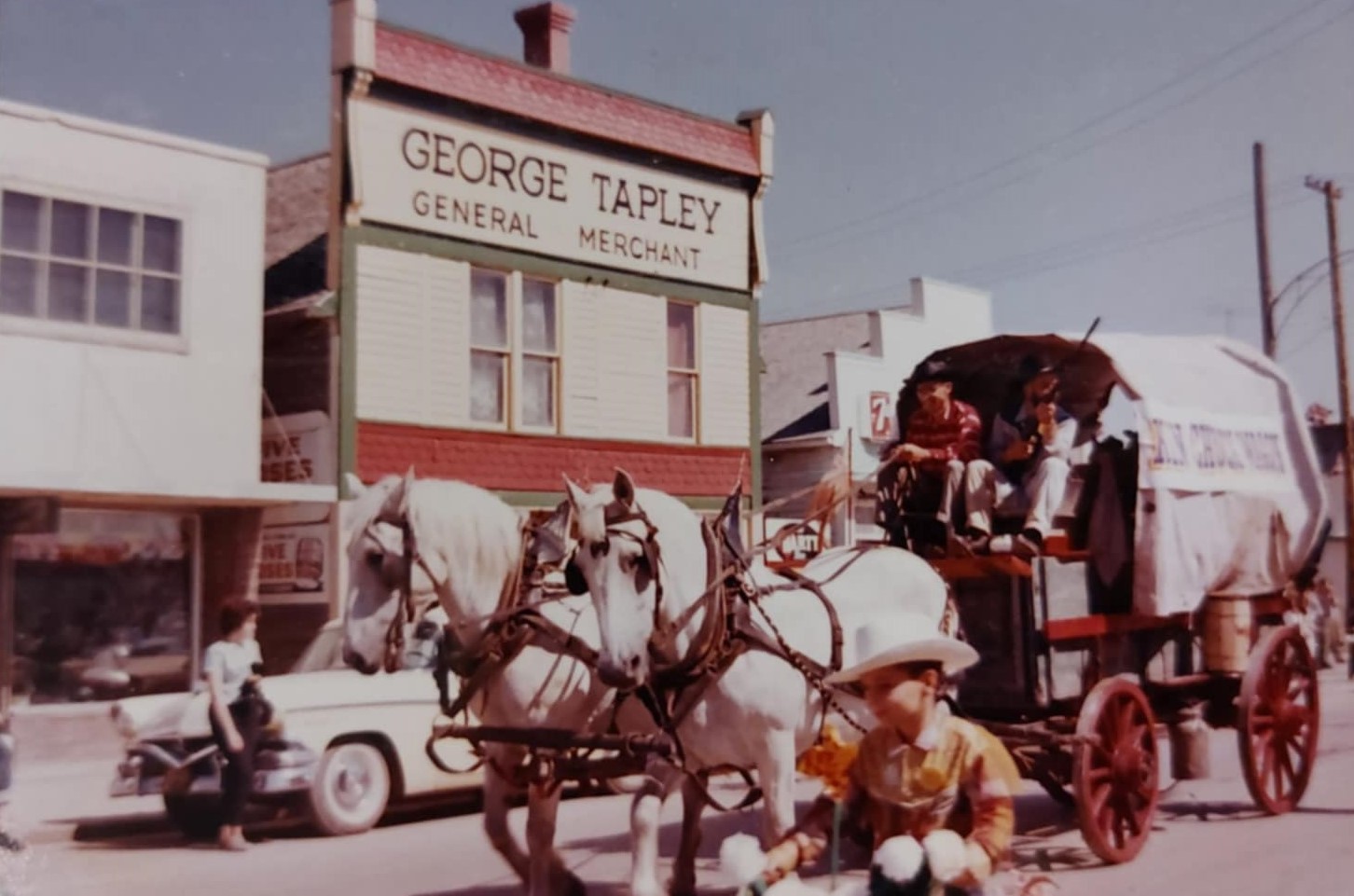
Local residents will recall endless fundraisers through the selling of assorted raffle tickets throughout the year, cases of oranges at Christmas, peanut sales, and even once, a ‘cottage’ draw. Both clubs hosted annual events for Selkirk’s seniors that included a Christmas dinner and a summer picnic in the park. The Kin Chuck Wagon kitchen was often used. Former President and Life Member, Bert Sandercock’s son Garth described,
“I remember the Kinsmen Chuck Wagon. They used to store it at the Mental Hospital barns along with two white horses to pull it. They’d drag it out for pancake breakfasts, park it on Manitoba Avenue in front of the Bank of Montreal, roll up one side of the canvas to expose the grill and let the batter fly. Free pancakes were like a dream come true for a kid.”
Support for Building Projects
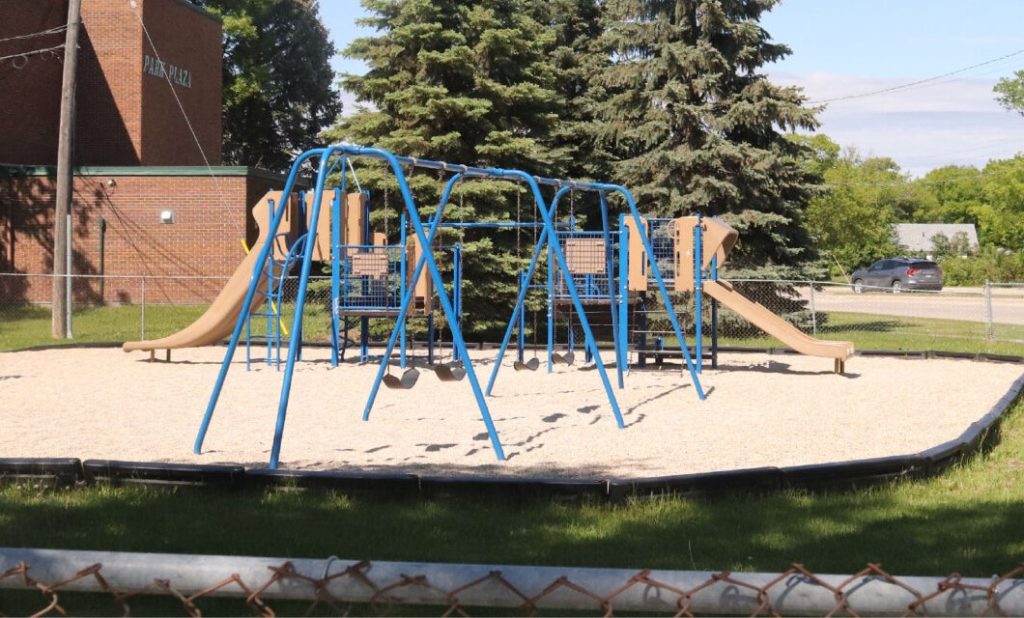
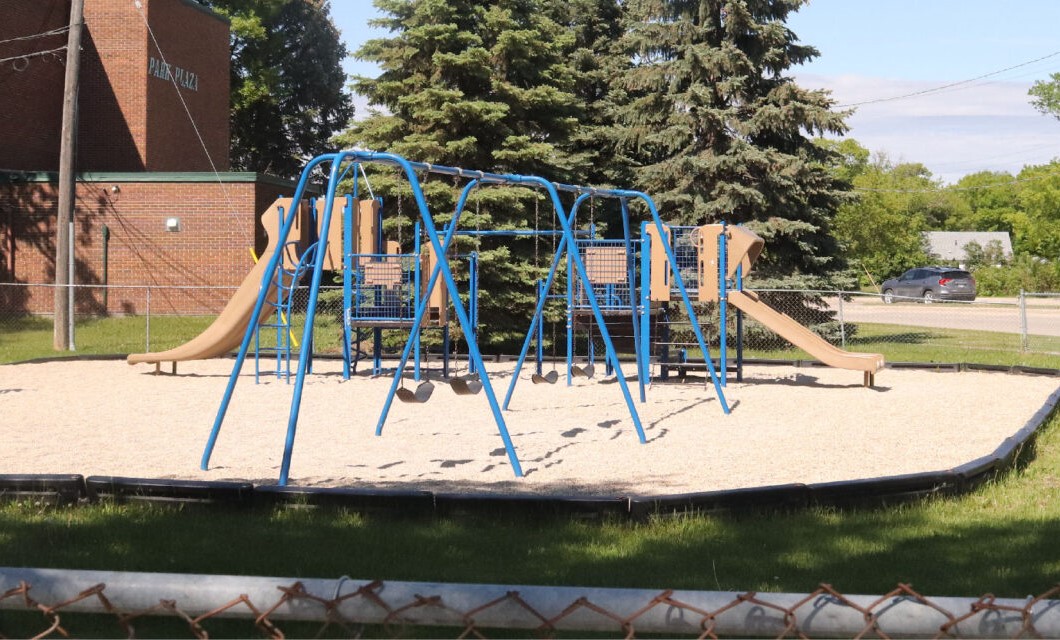
On May 3, 1969, the Kinsmen Club of Selkirk celebrated its 25th anniversary. In the space of twenty-five years, they supported over a dozen major projects that affected almost every part of local society. Some of these building projects were in support of the new Selkirk Arena (1948), purchasing the ice making machine, donating funds to build the Memorial Hall, and building three children’s playgrounds such as Kinsmen Park, now named Murray Sinclair Park, purchasing a bus to transport children with intellectual challenges, and the list goes on and on.
In Selkirk, Community Living Selkirk & District Branch Inc. and the expansion of ARC Industries were both supported by the local Kinsmen and serve as examples of organizations that provide a wide range of services and programs with the goal of improving the overall quality of life for individuals with developmental disabilities. In 1968, the local club was recognized by the national organization for their dynamic leadership and exceptional service to their community in this regard.
Blood Donor Clinics
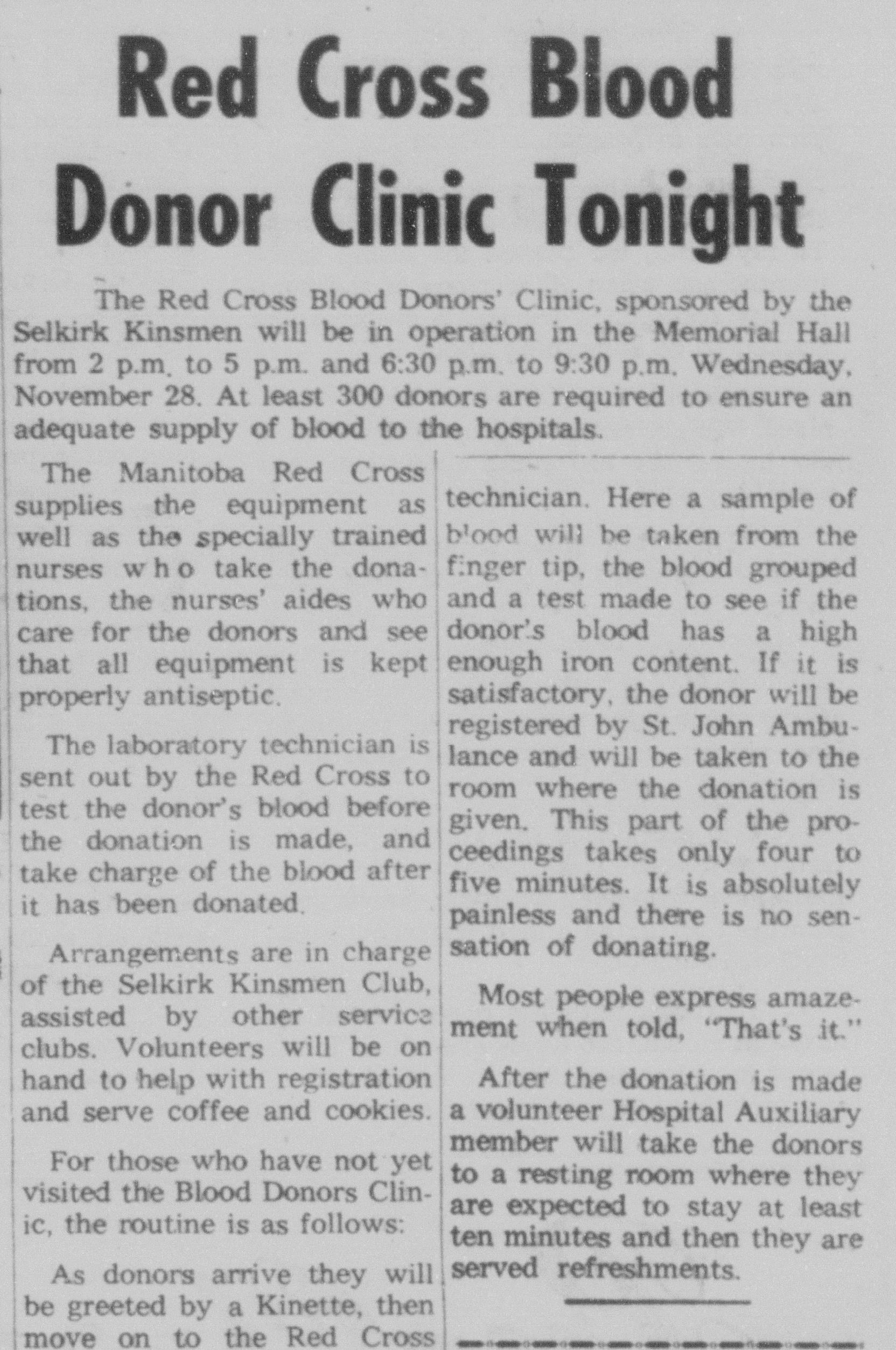
The Canadian Red Cross Society blood program was developed after the Second World War. Civilian blood was transfused to perform life-saving procedures overseas. After the war the collection of civilian blood donations throughout Canada was managed by the Red Cross.
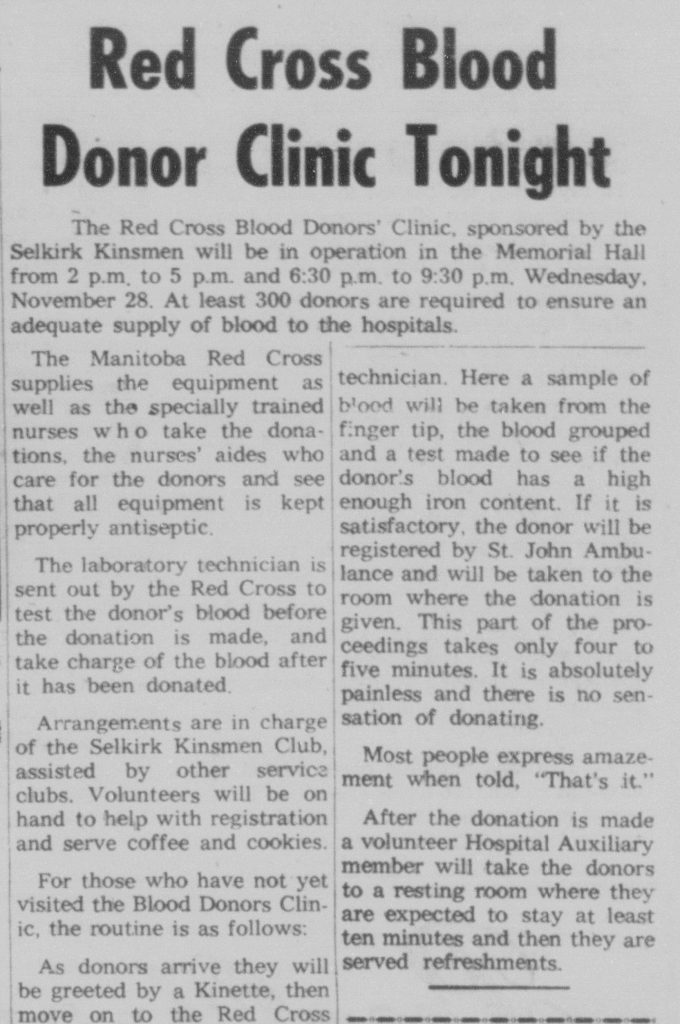
In the late 1940’s a fire in East Selkirk resulted in one man getting severely burned. He was transferred to the Winnipeg General Hospital where he received many blood transfusions. Since this was a time before free nationalized health care, he was charged for each pint of blood and this proved to be a financial burden. He also relied on family and friends to donate blood and that wasn’t enough. The hospital indicated that if double the amount of blood required could be provided, there would be no charge for his transfusions. The Kinsmen Club of Selkirk lined up donors and successfully filled the quota. The membership then decided to provide the service free of charge to patients from Selkirk and area. They also organized blood donor clinics and purchased a special fridge for the Selkirk General Hospital so that blood could be stored locally.
Canadian Blood Services (CBS) assumed responsibility for the blood program from the Red Cross in 1997-98. Kin Canada still sponsors blood donor clinics, supplies volunteers for the clinics, and fund raises to support CBS.
Selkirk Community Pool
Former Kinsmen and District 2 Governor, Bud Oliver, recalled the details of this difficult construction project undertaken by the community and finally completed thanks to the co-operation of several organizations:
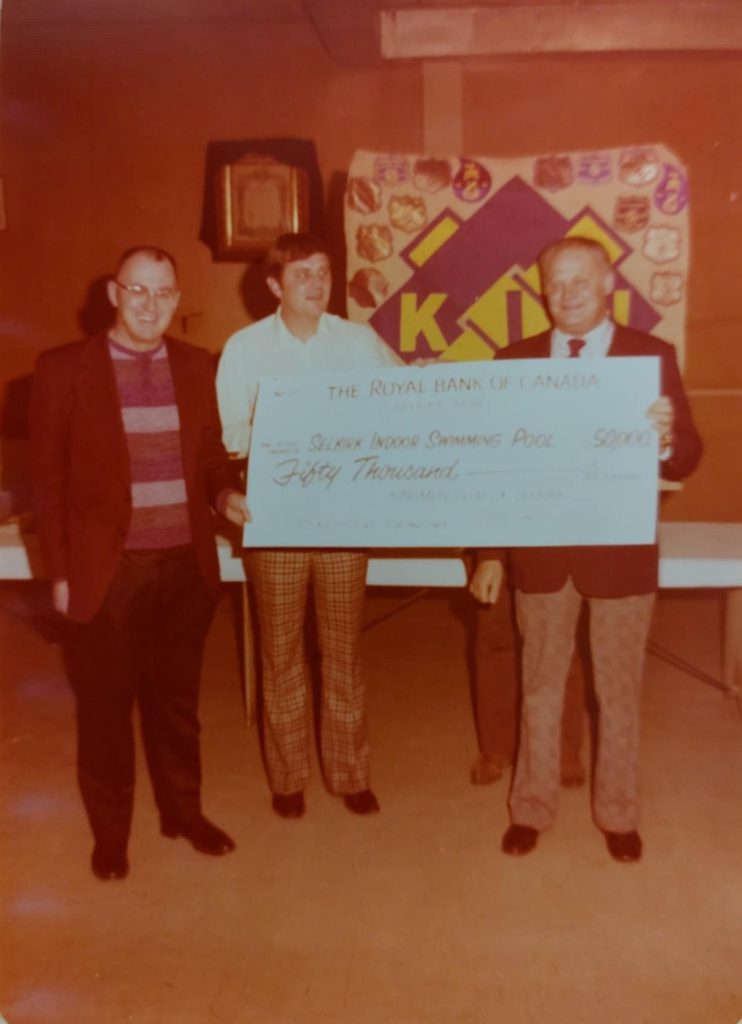
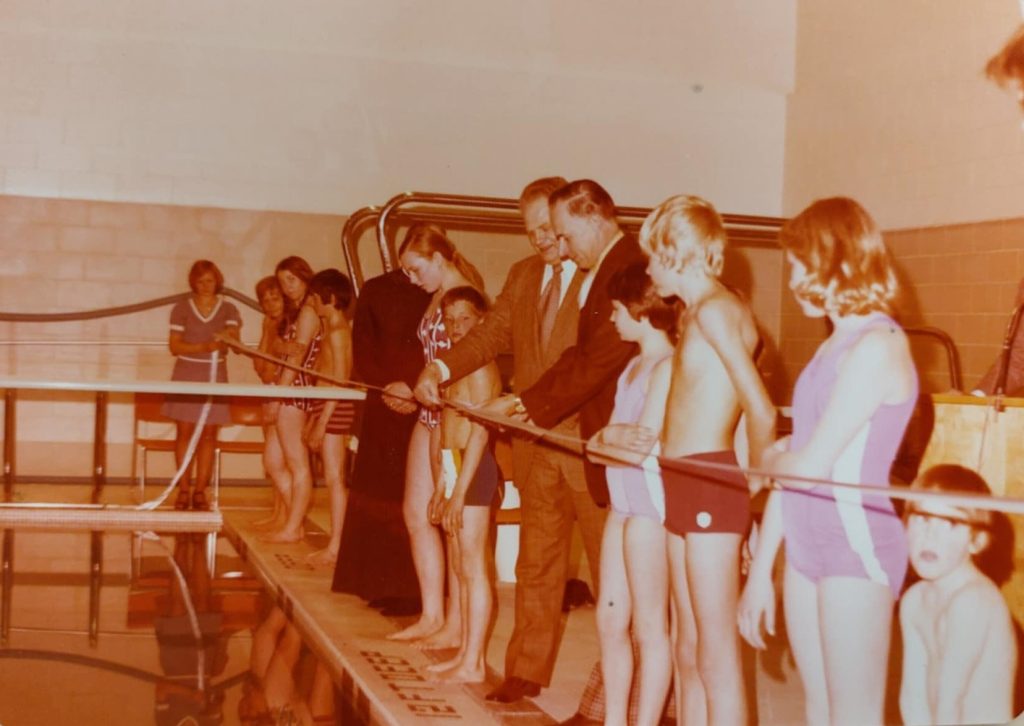
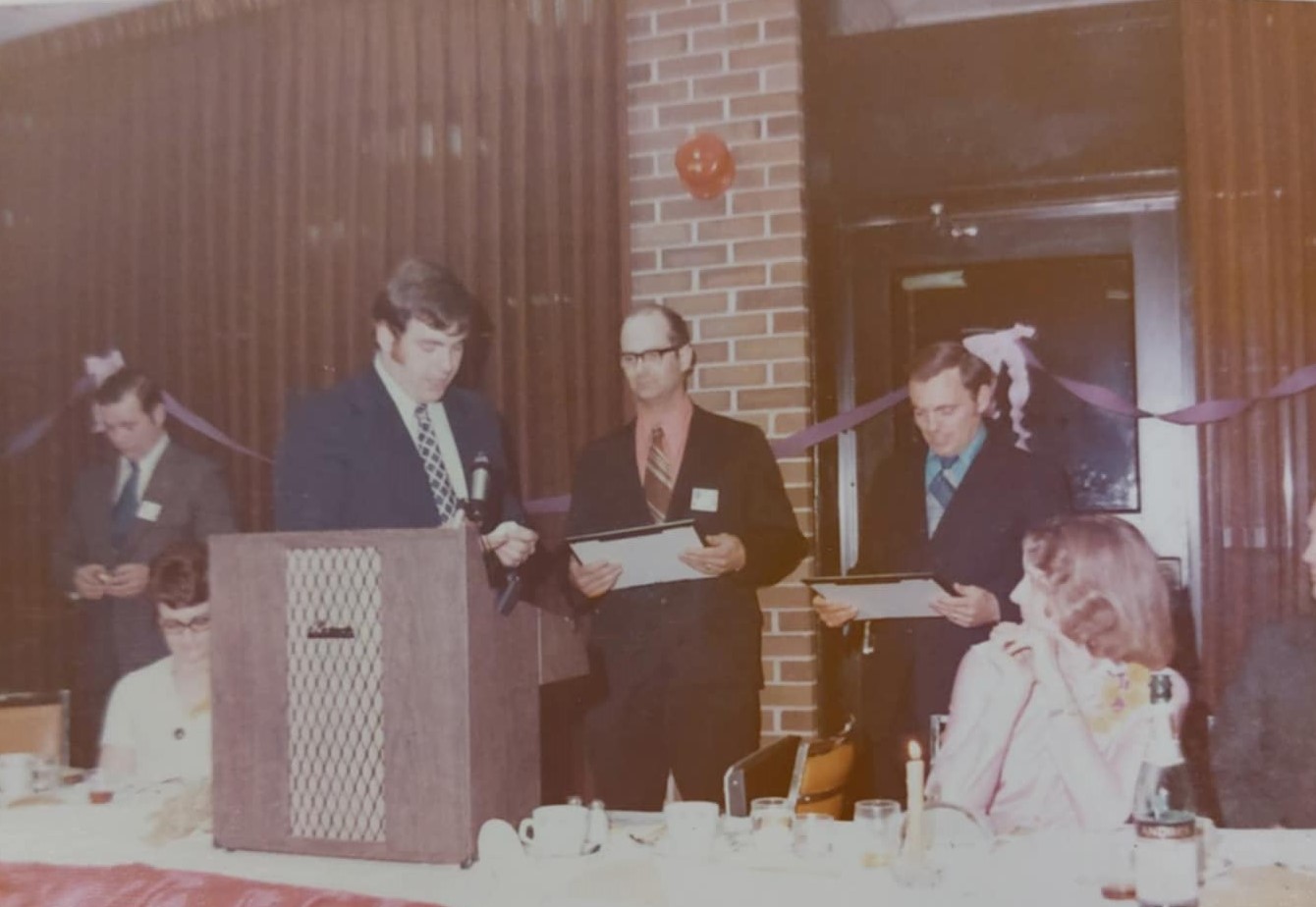
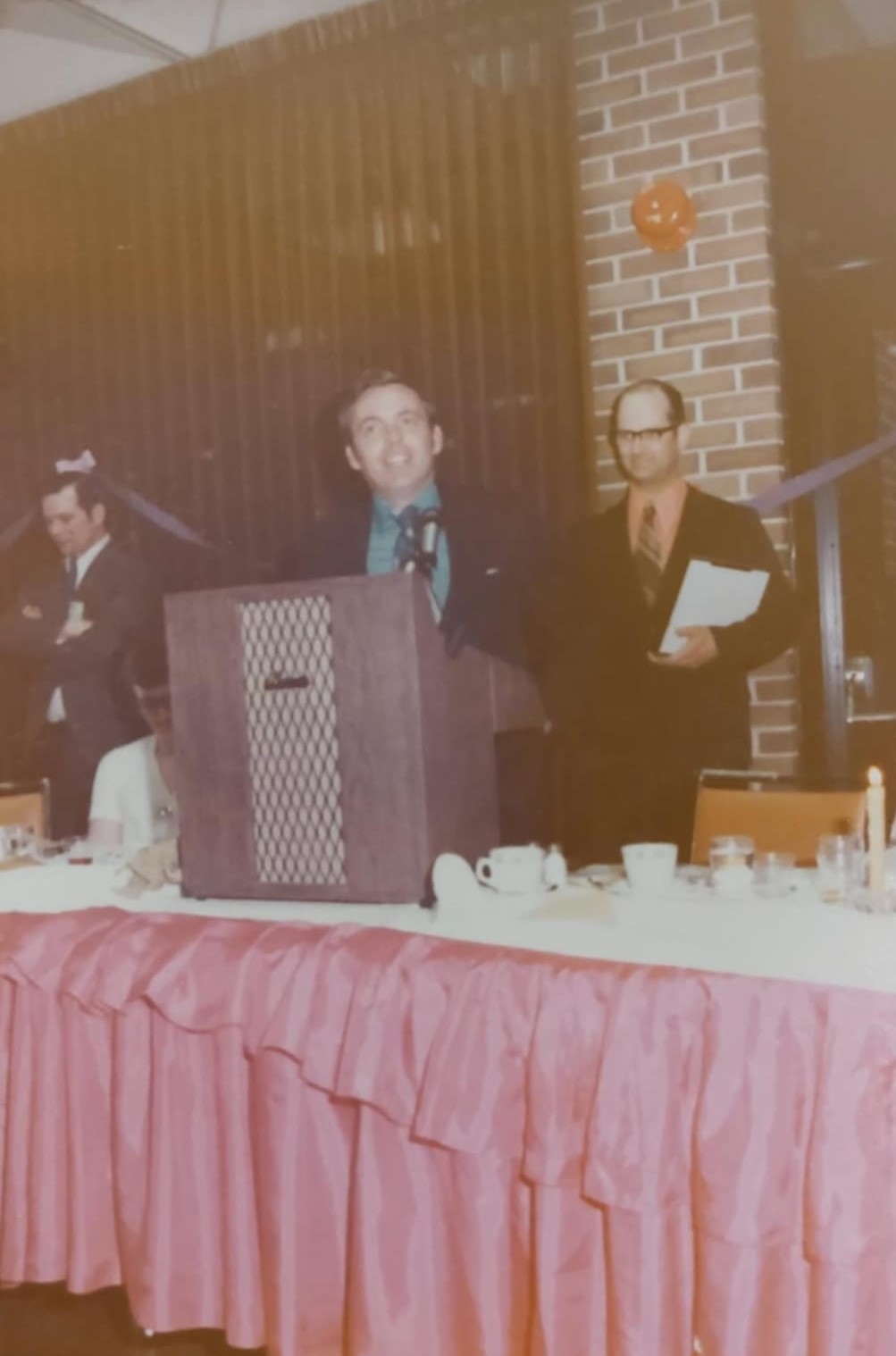
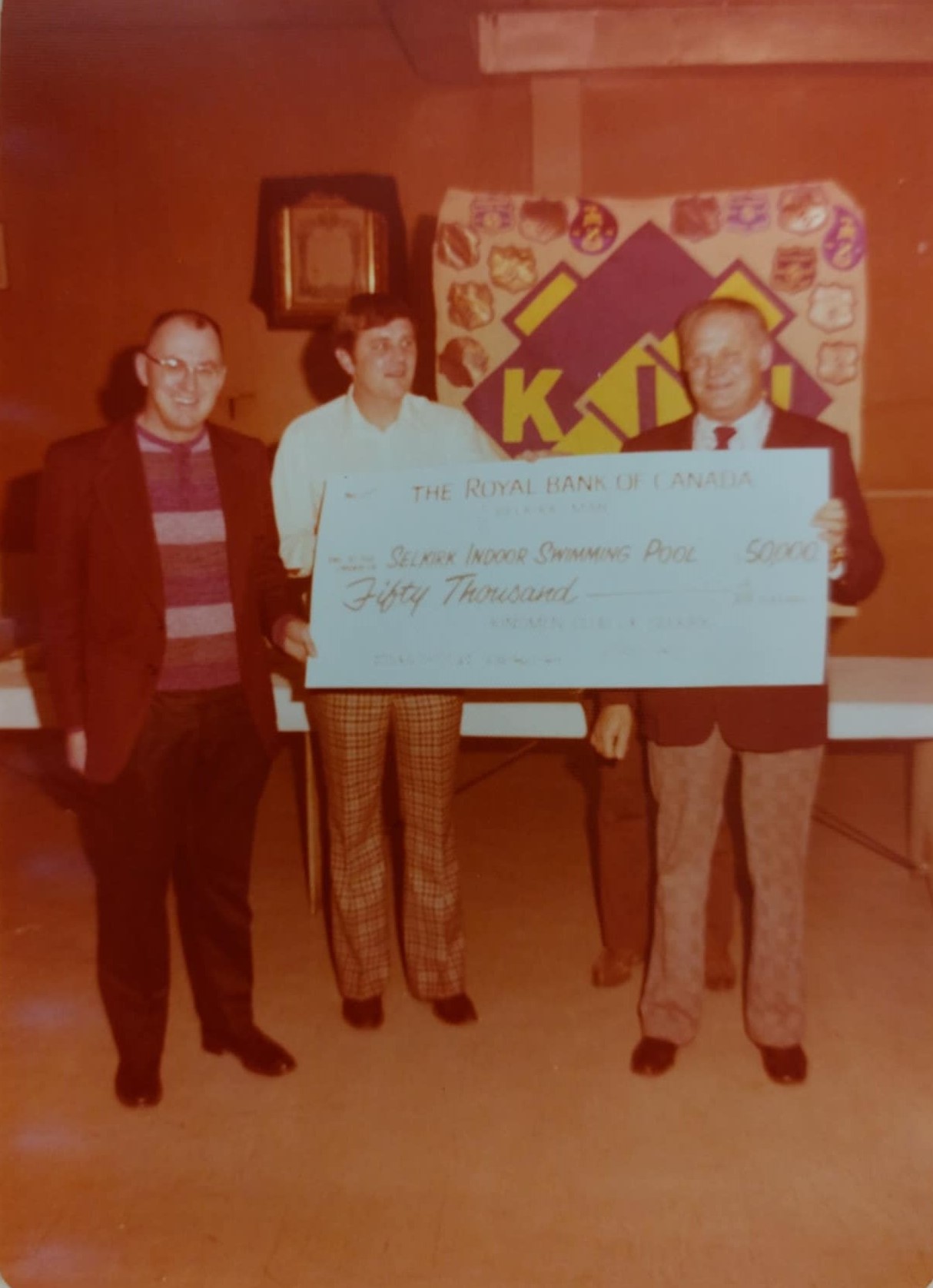
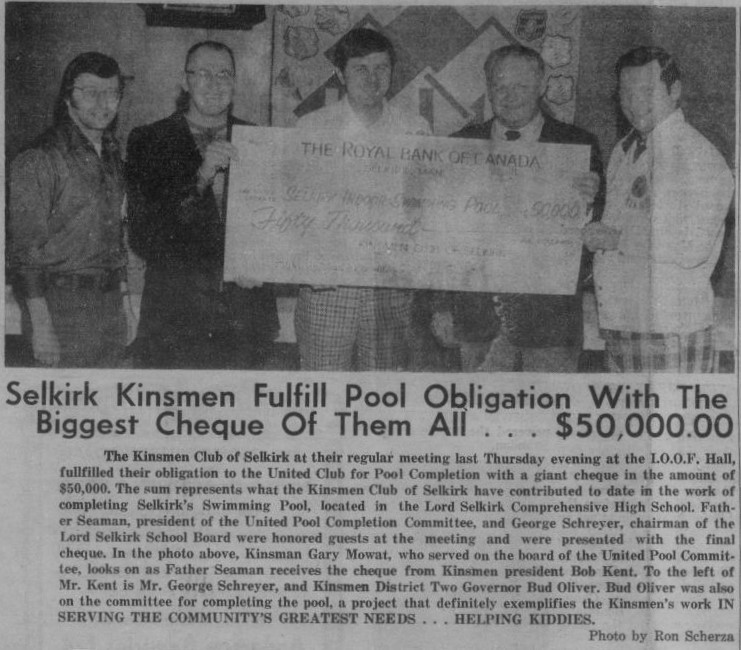
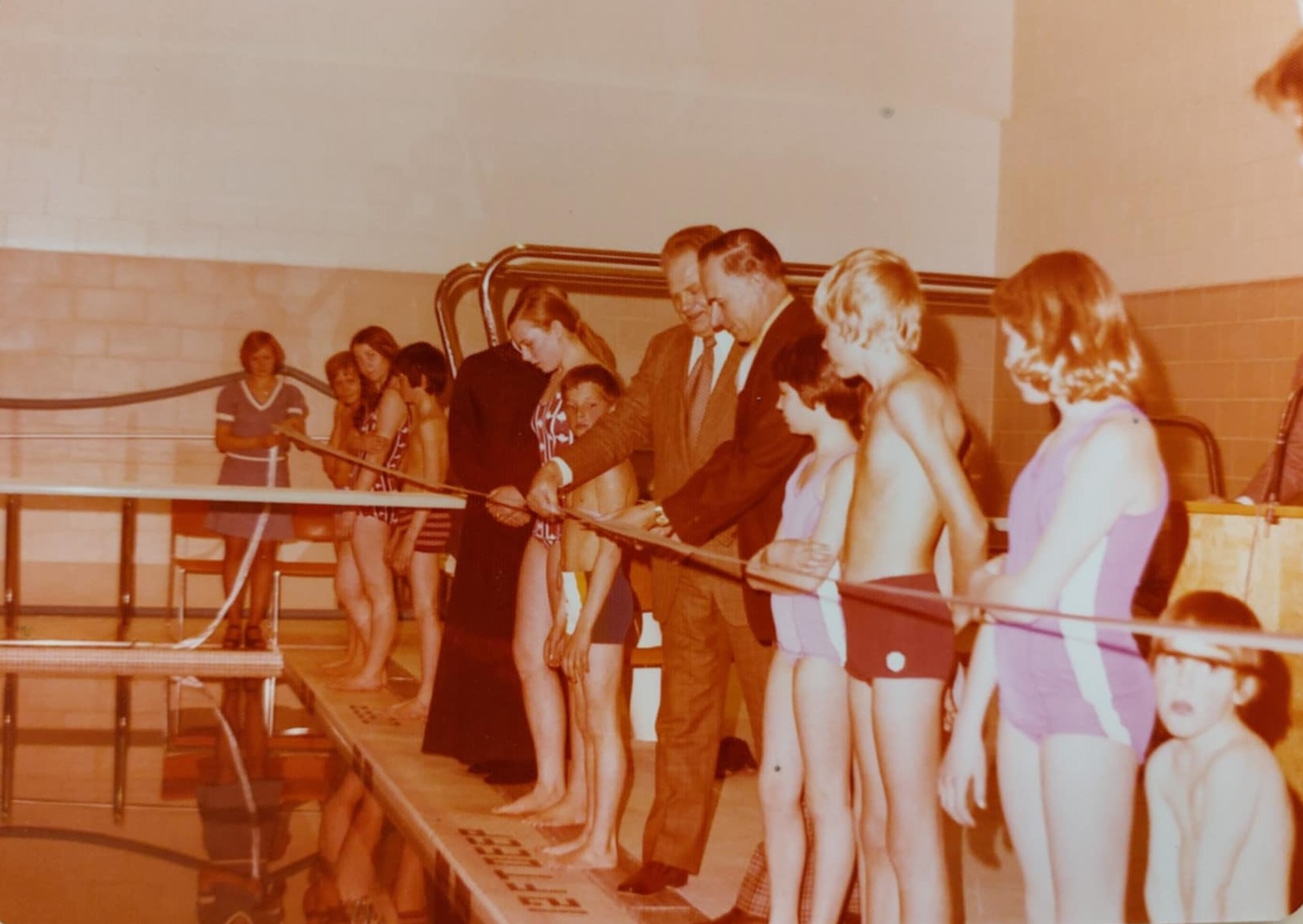
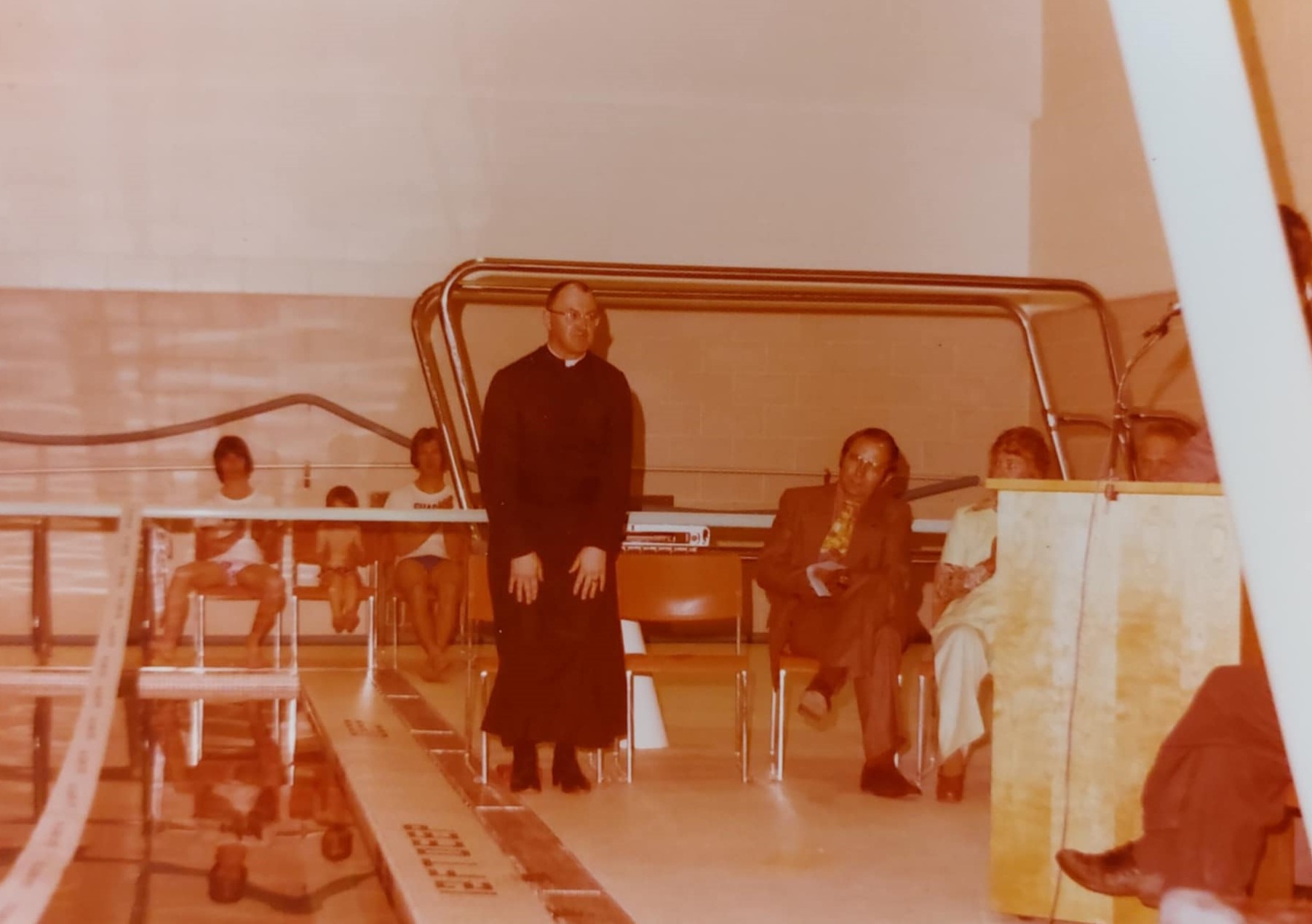
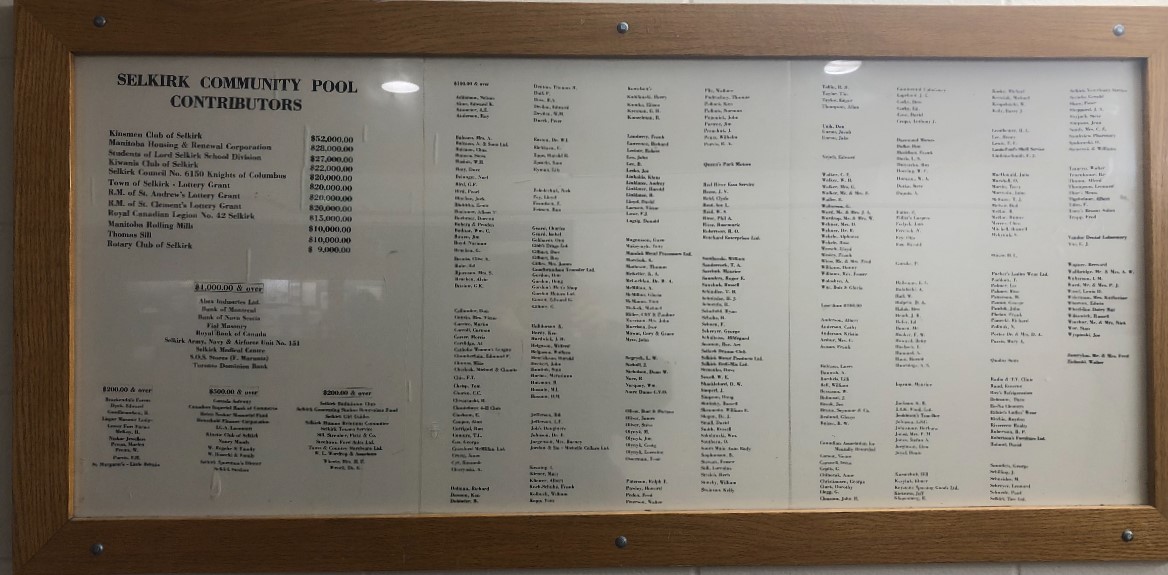
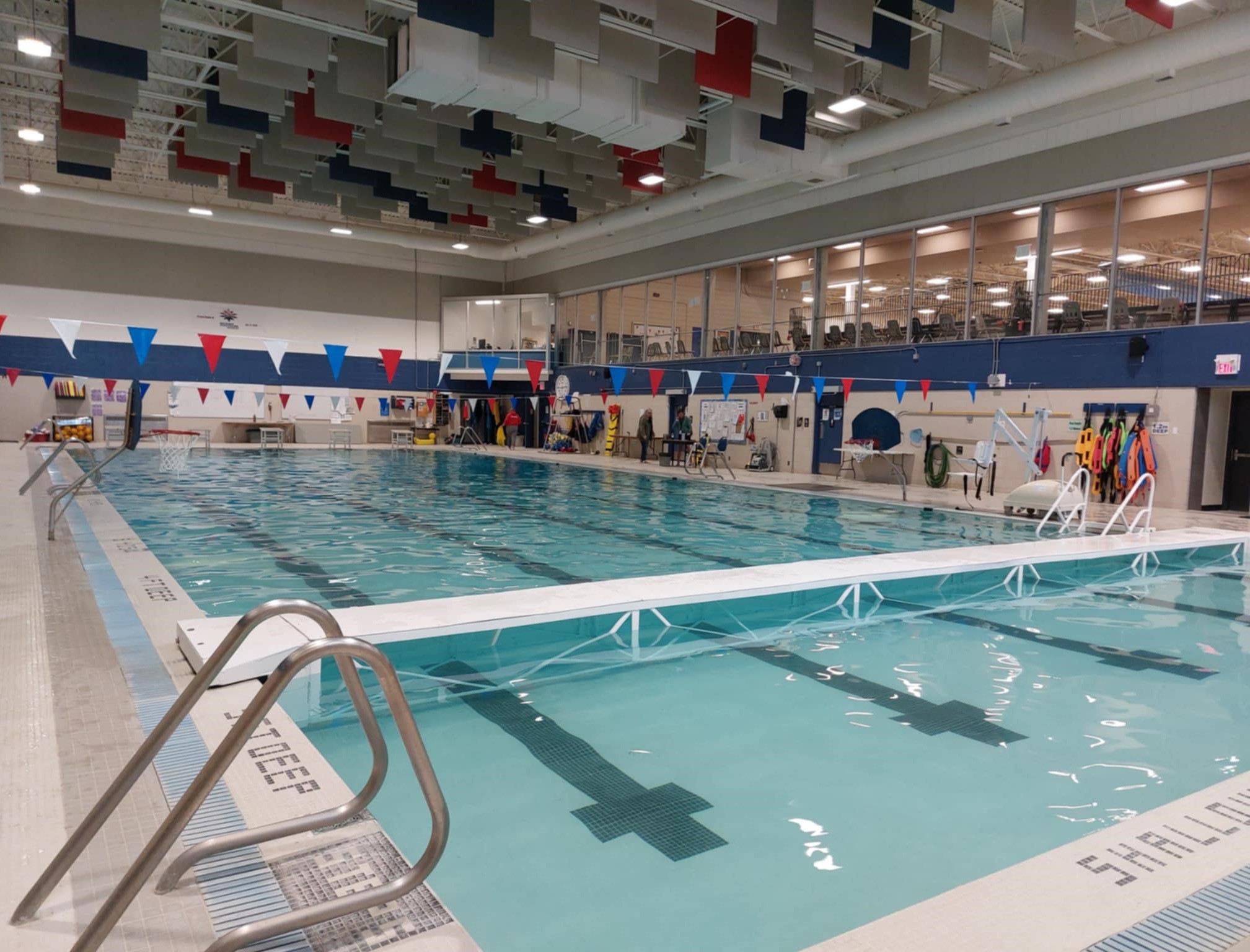
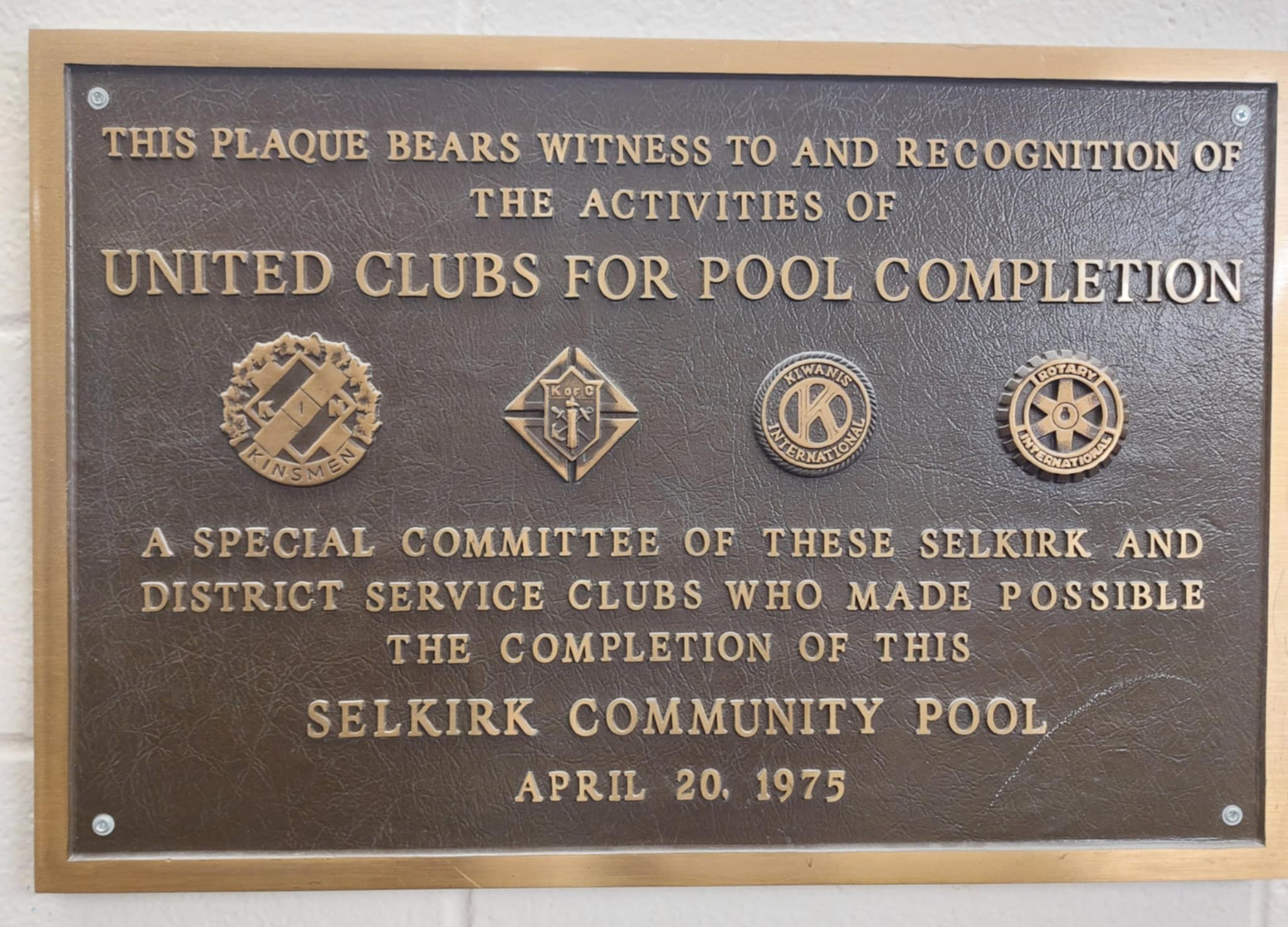
When the Lord Selkirk Regional Comprehensive School was being planned, Kinsmen Dr. Bill Rozecki was on the school board and suggested that an indoor swimming pool should be added to the plan to commemorate Manitoba’s Centennial in 1970. He was told that the money for a pool could not come from the provincial education budget, and would have to be raised separately. So, “The Citizens’ Committee to Build on a Swimming Pool” was formed to fundraise. The estimated cost was $300,000. Before the pool was completed the committee ran out of money and still owed about $60,000 for work already done. All work ground to a halt. An incomplete dusty hole sat attached to the shiny new high school for almost two years. Then, Kinsmen Bill Bodman invited the Kiwanis, Rotary and Knights of Columbus clubs to join the Kinsmen to form a new committee, “United Clubs for Pool Completion.” The much-admired pastor from Notre Dame Parish, Father Art Seaman was appointed chair of the committee. They had to raise $60,000 for the work previously done plus an additional $200,000 because costs had increased over the time the construction sat idle. Fund raising began in earnest. Every organization in the area and many individuals donated. The Kinsmen fulfilled their $50,000 commitment. The indoor pool was completed in 1975. For the grand opening, Father Seaman arrived looking official in his long, black cassock robe. After the blessing he surprised everyone by jumping into the water and taking a swim, fully dressed! For its first year the Town of Selkirk assumed all responsibility for the pool. In its second year the pool became an integral part of the provincial school program with swimming lessons given to area children every 3 years. As Kinsmen Bill Bodman explained, “It effectively drown-proofed the kids in this area.”
The Selkirk Arena and Selkirk Recreation Complex
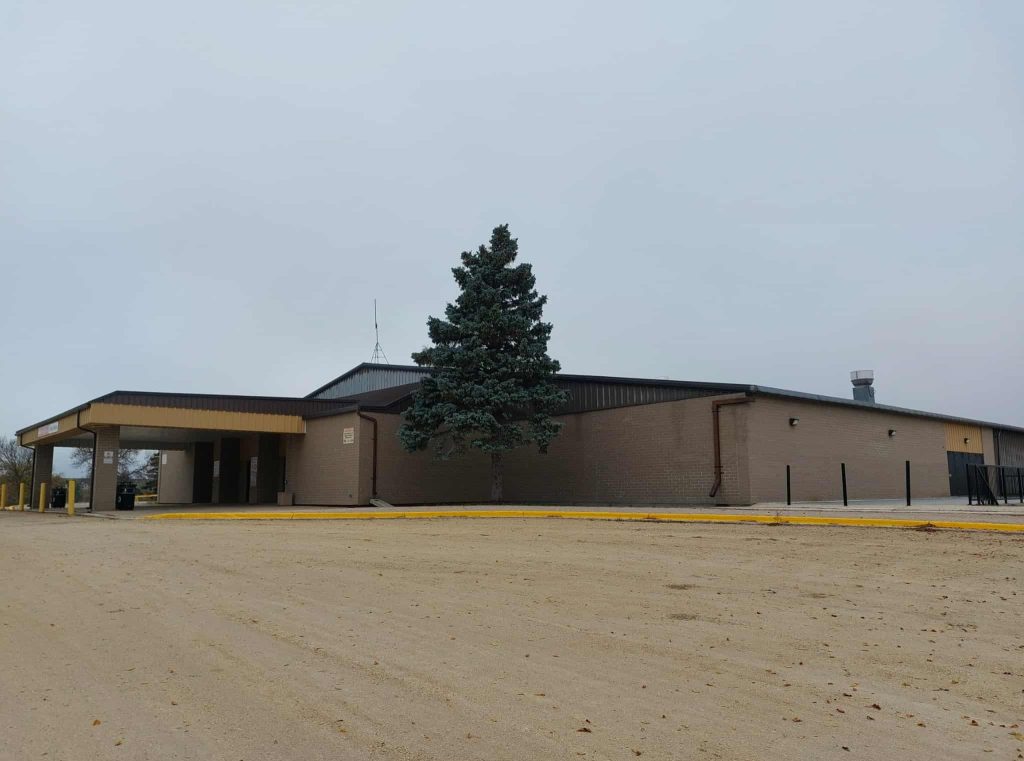
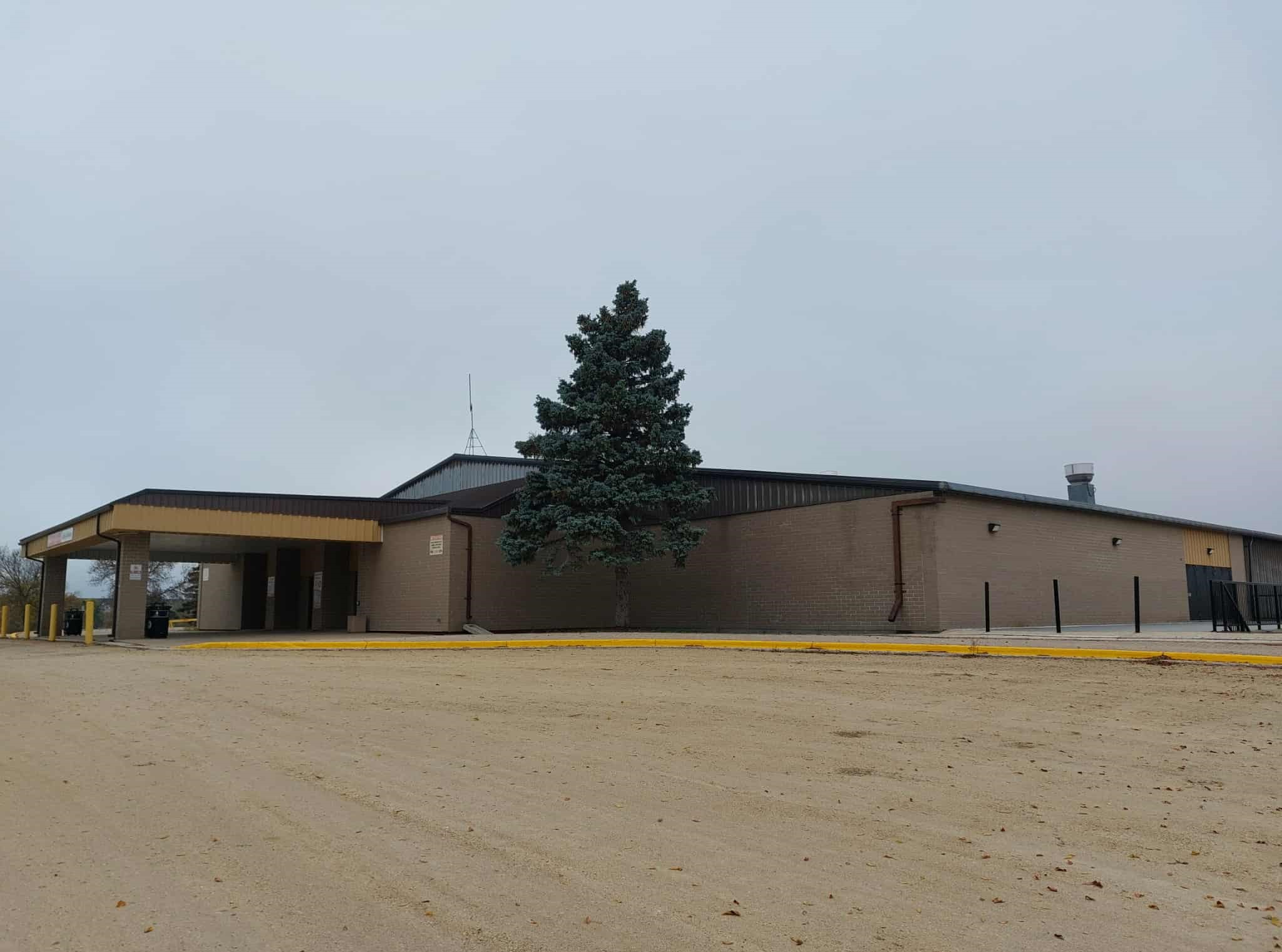
The Selkirk Recreation Foundation (SRF) was formed to assemble the necessary funds to replace the old arena, affectionately known as “The Barn,” with a modern facility. Russ Farrell chaired the Foundation committee and funding from all levels of government, as well as local clubs and individuals was sought. The local Kinsmen organization showed unwavering commitment and donated $80,000.
Former Kinsmen and Member of Parliament for Selkirk, Dave Bjornson recalled the details of one particular story of this building project that showed “great community spirit” in Selkirk:
As the Arena neared completion the last thing needed was to purchase proper seating. The concrete steps where seats would eventually be installed were complete, but spectators needed to bring a cushion from home to make sitting through three periods of a hockey game tolerable. Fundraising for 2,000 seats would be necessary. One evening SRF Chair, Russ Farrell was watching a ball game on television and saw a short vignette about how Comiskey Park, the iconic home of the Chicago White Socks of the American League was being demolished. He called his local member of Parliament, friend and fellow Kinsmen Dave Bjornson in Ottawa and asked if perhaps Bjornson could talk to someone and find out if the seats from the Comiskey Park would be available. Bjornson wrote a letter to the Chicago organization and pulled at the organization’s heartstrings by saying that kids in the United States admire Shoeless Joe and want to grow up to be great baseball players, but Canadian kids want to be great hockey players and this new arena needed seats. The dark green seats that historically were witness to four World Series were donated by the Chicago club and would have a renewed purpose in the home of the Selkirk Steelers. They only needed to be picked up. Kinsmen Hans Jehle owned a trucking firm that took shipments into the United States and trucks often “deadheaded” back to Canada. He arranged for a number of his trucks to detour to Chicago to pick up 2,000 seats, free of charge.
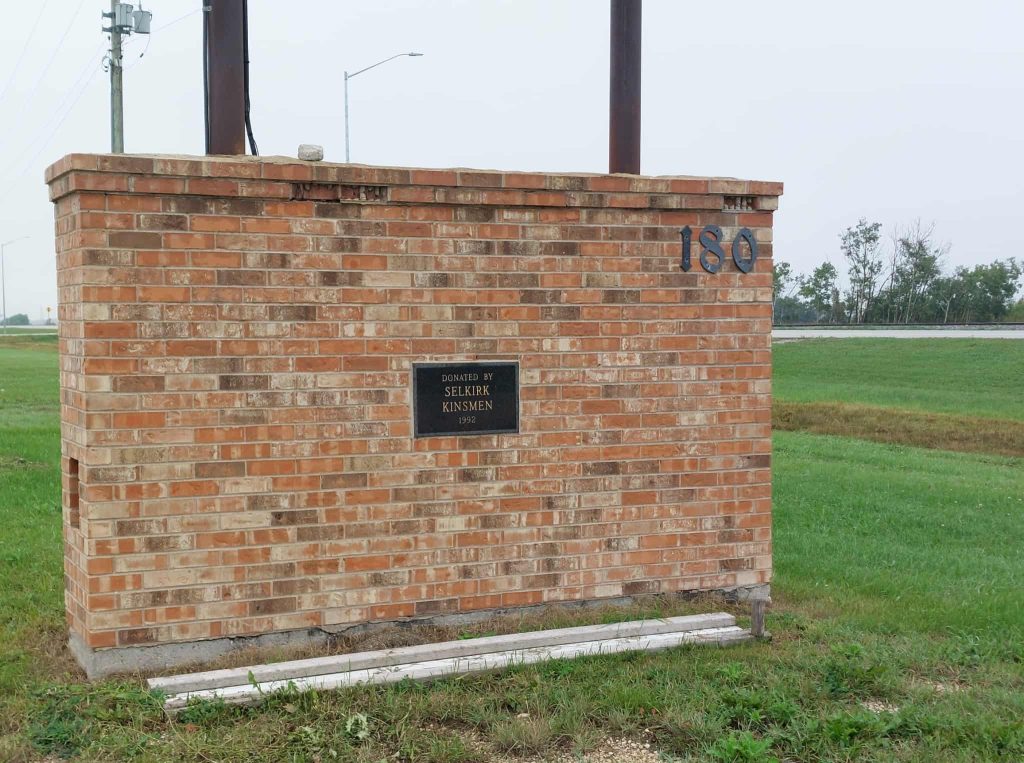
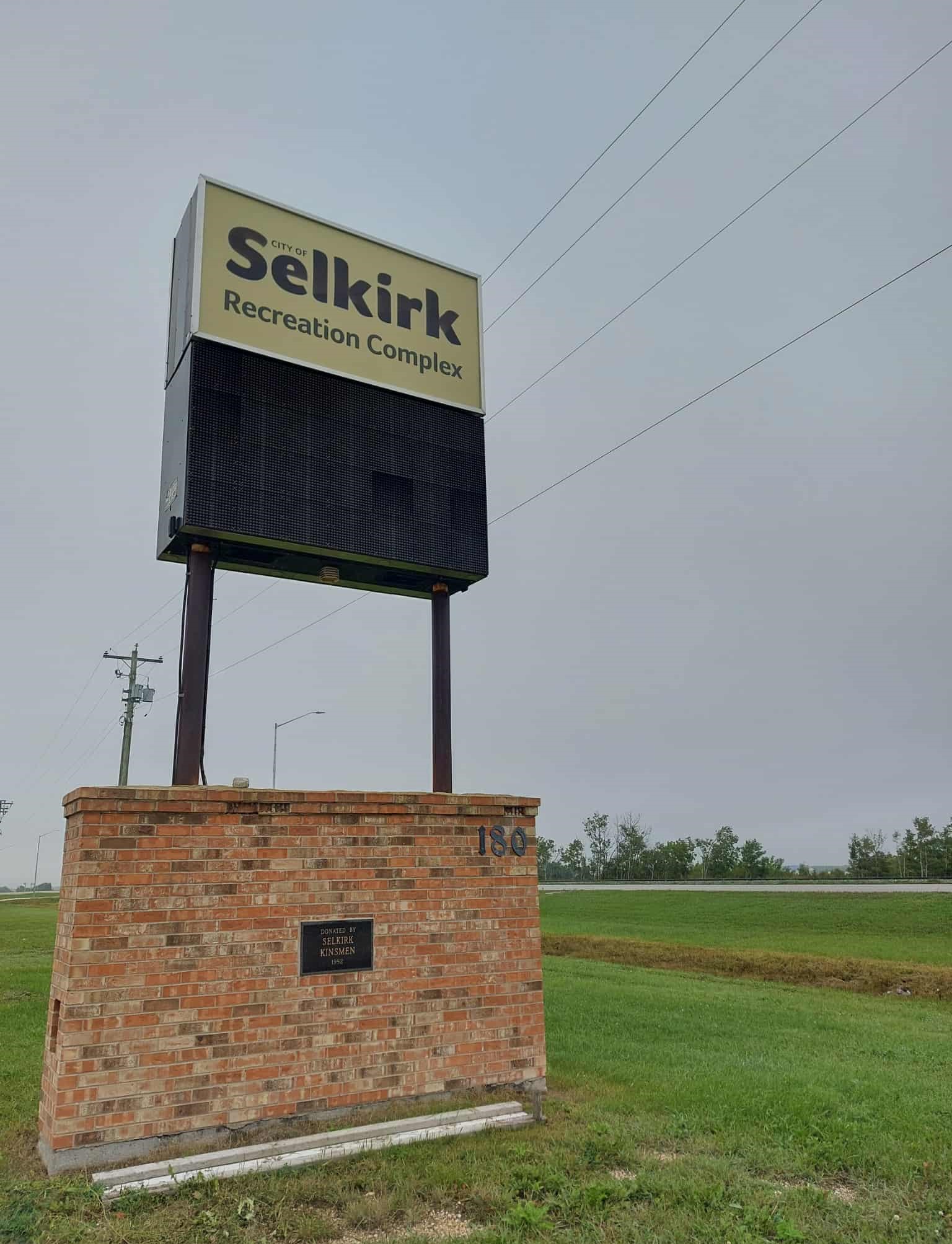
The clubs sponsored the official opening of the Selkirk Recreation Complex in 1992.
Kin Centre Drop-in Zone
In 1975, the members picked up their hammers and saws and built a new drop-in recreation centre for local youth, ages 12-17. It was built centrally by the Selkirk Water Tower adjacent the outdoor rink and provided 2,200 feet of space for creativity, curiosity, sports and games. Participation was free of charge and no registration was required.
Lots of Work and Time to Play Too
In 1977, Kinsmen Bob Jefferson reported activities that the local Kinsmen had run in only a two-week period. He noted: a broomball tournament, a Monte Carlo Casino Night, the District Curling Bonspiel, and Bingo at the Memorial Hall (462 attendees) and Curling Rink (529 attendees).
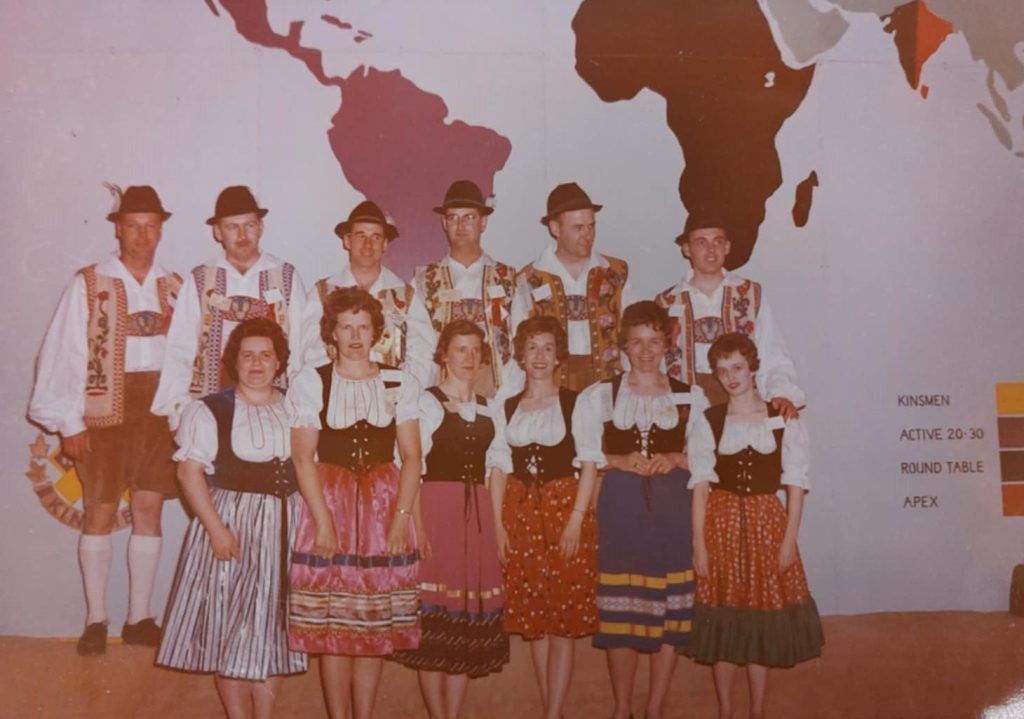
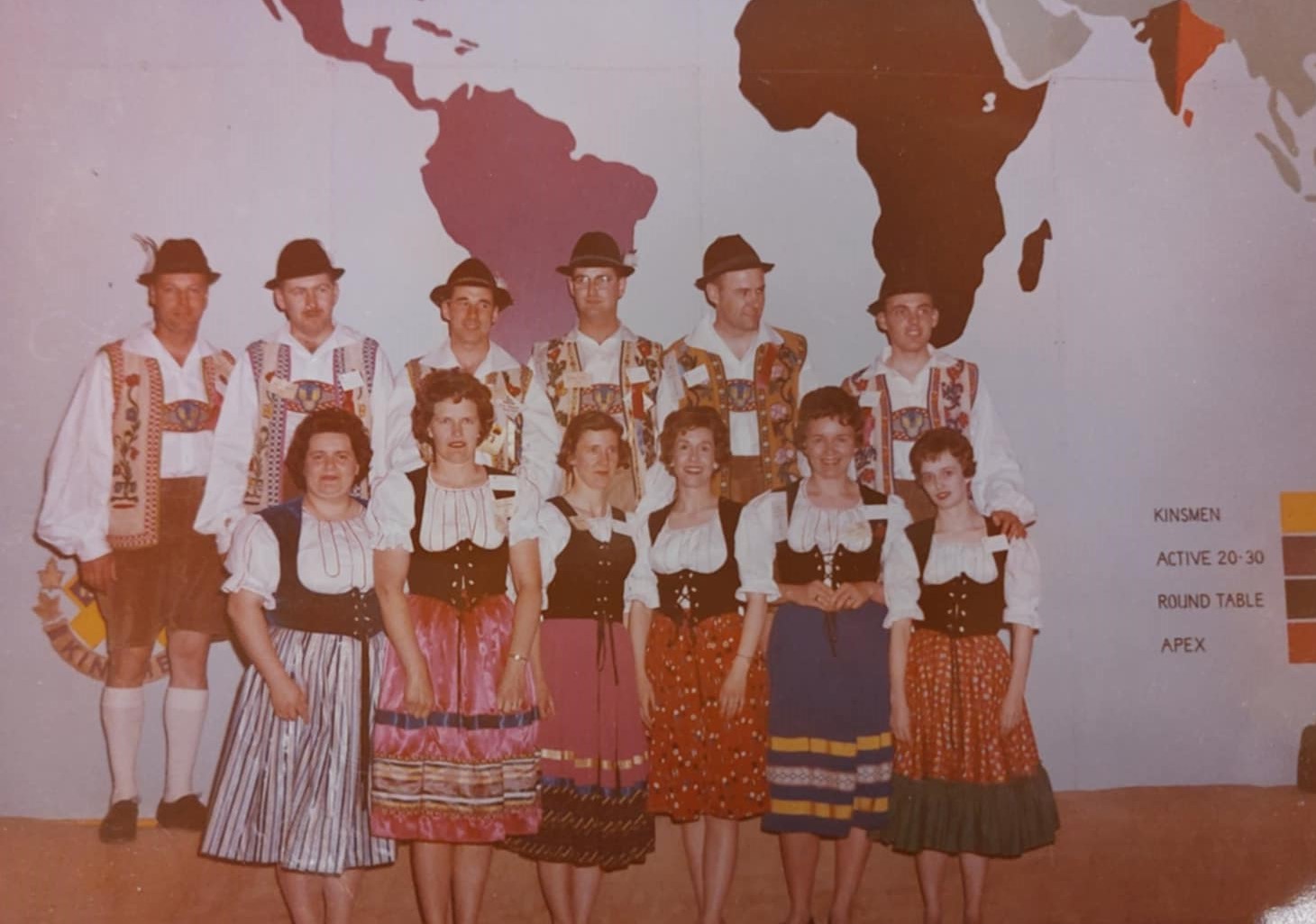
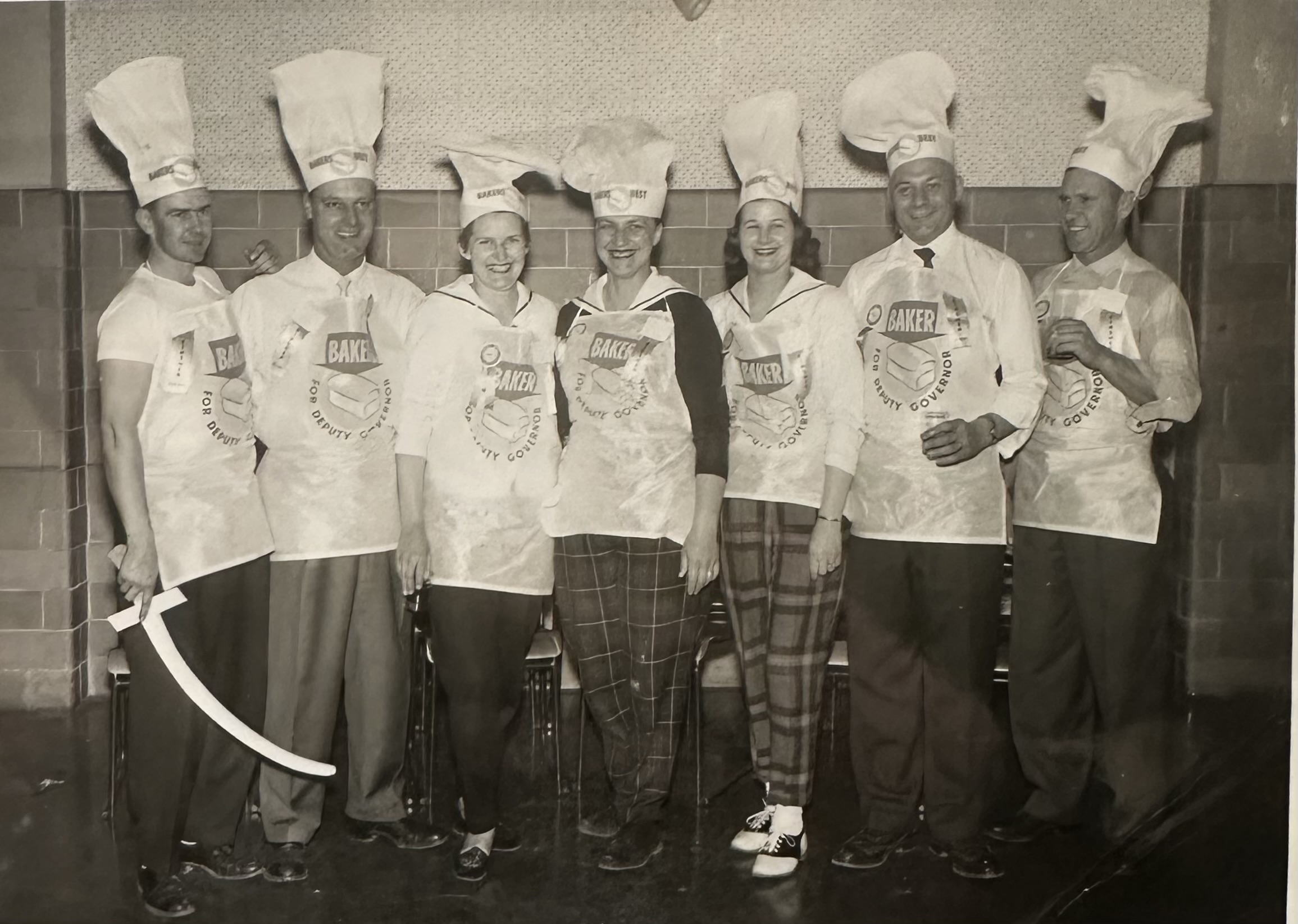
But being a Kinsmen wasn’t just work. The daughters of Life Member, Don Gilbart, recall the deep involvement their parents had in the club. Daughter Barb Cieszynski said, “they were very community minded people and believed in giving back.” Then she added, “There was also fun. I don’t think my mom and dad ever missed attending a district convention. They always had some kind of theme for each convention and I remember them coming up with the best costumes to go along with the theme of the convention.”
Support for the Selkirk General Hospital
1987 saw a $14,000 donation to the Selkirk General Hospital to purchase physiotherapy equipment, $4,500 to purchase stairs for disabled people to access the indoor pool and $2,100 was used to purchase specialized computer equipment for a special needs child.
Membership in Changing Times
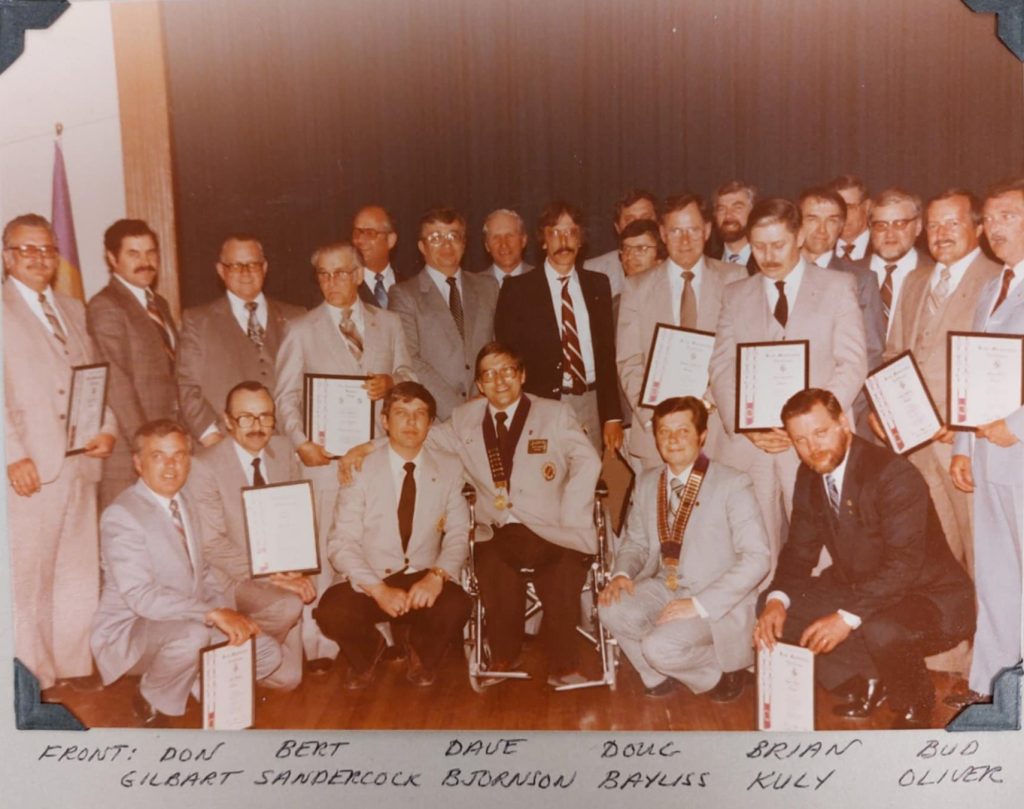
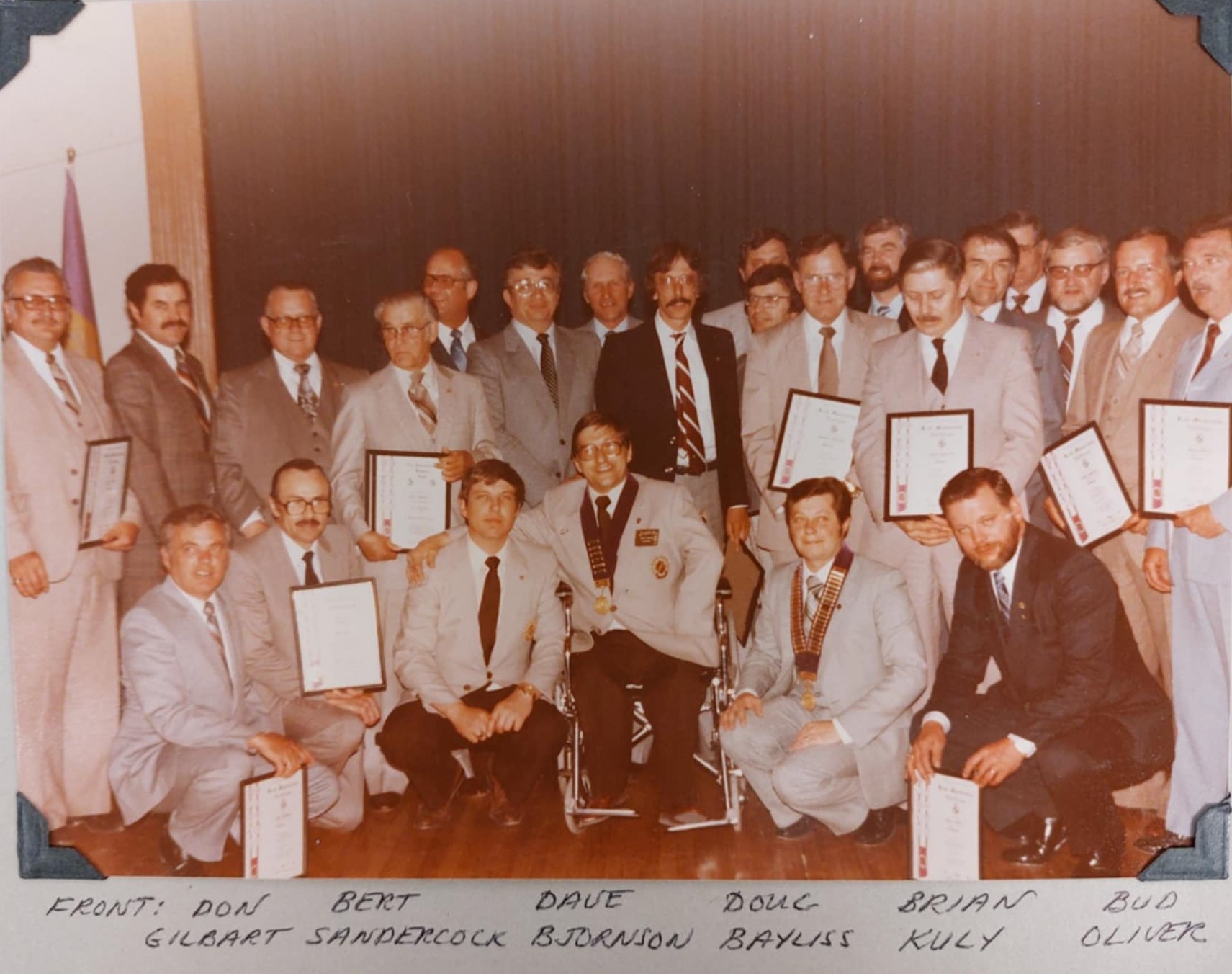
The number of local Kinsmen members varied over the years from about 30 to over 60 plus Kinettes and later, K-40 members. The organization tried to maintain a steady inflow of new members. They aimed for a regular turnover of 20-25%. As members aged out, they could join the K-40, and the hope was that they could be replaced by new younger members. There were contests to see who could bring in the most-new members in any given year. An annual presentation to the Kinsmen and Kinette of the year was always celebrated. In 1975-76, Bud Oliver was elected District 2 Governor and Gail Bodman, the District 2 Kinette Co-ordinator and years later the same honour was bestowed upon Dave Bjornson and Nancy Schreyer. These elections were a great honour for a small-town club and reflected the energy the membership exuded. In 1975, there were 500 clubs with 16,000 members in Canada and Selkirk’s club was considered one of the most viable in the country.
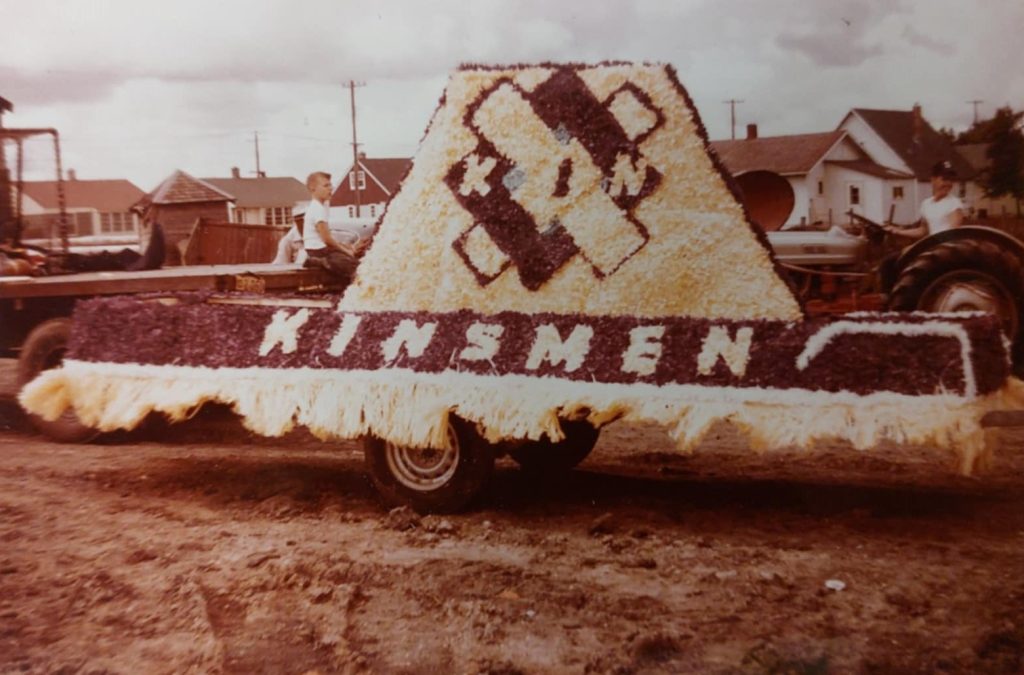
But eventually times seemed to change for the Kinsmen and some other service clubs in the area. Their membership numbers dwindled making the organization gradually unable to provide the entertainment, or offer community service, financial aid, or fellowship to members as it had done in the past. There is no doubt that service clubs were affected by the advent of provincially controlled lotteries and casinos. The provincial government had assumed more of a role in funding projects from the profits earned. Perhaps a younger generation didn’t know Selkirk without all of the extra facilities and activities that the Kinsmen and other service clubs provided. The reason for service clubs may have become far less apparent. It was difficult to pinpoint one specific cause of the gradual decline, but one thing was certain, that by the year 2012 the club was no longer viable and unable to show the same presence in the Selkirk as it had from its inception in 1944 and the decades that followed.
The Kinsmen, Kinettes, and K-40 Clubs of Selkirk Fund
In 2016, the K-40 had a resurgence of interest because some former K-40 members were aware of left over funds that were originally held by The Royal Bank and due to inactivity were transferred to and held by held by the Bank of Canada. Acting chairperson Dale Robbins, and members Bill Bodman and Bob Massey worked to retrieve the inactive funds so they could be donated to the Selkirk & District Community Foundation (SDCF) and used locally. Since the motto of the Kinsmen Club of Canada is “Serving the Community’s Greatest Need” they considered the good work of the foundation to be the perfect place to deposit the remaining $2,622.90 plus other donations for a combined total of $6,835. However, if the club wanted their funds named within the foundation, it would require a minimum donation of $10,000. In December of 2017 the call went out to the former K-40 members and the balance needed was reached from their own out-of-pocket contributions. The Kinsmen, Kinettes, and K-40 Clubs of Selkirk Fund was born to benefit the community into the future and echo the traditions carried by a membership over decades of service.
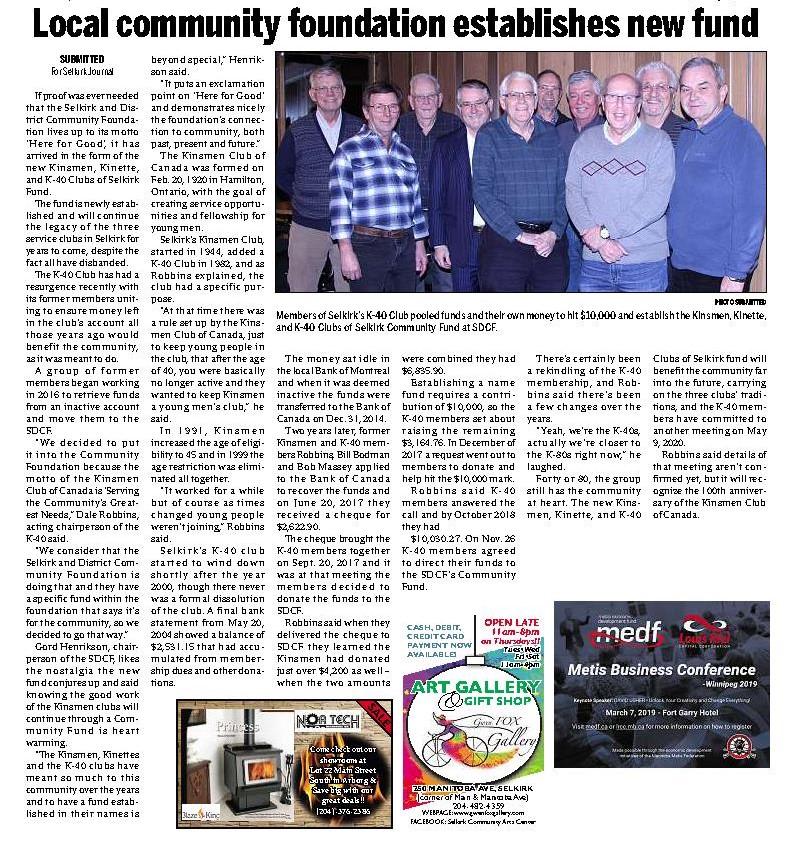
Gord Hendrickson, chairperson of the SDCF referred to the connection between the foundation’s motto and the Kinsmen’s fund when he said,
“It puts an exclamation point on ‘Here for Good’ and demonstrates nicely the foundation’s connection to community, both past, present and future.”
Kinsmenship
“Kinsmenship is not a cloak to be put on and off at each club meeting but rather that it is a life to lead, a splendid philosophy teaching high ideals of service for human welfare and the betterment of your community. A spirit of good fellowship, a ready smile, a word of praise, and a genuine willingness to become better acquainted and mingle with your fellow members is expected. This is Kinsmenship.”
The Kinsmen, Kinettes and K-40 members of Selkirk played a vital role in local history and helped to build this community on a foundation of Kinsmenship.
Kinsmen Presidents
| Eric Sinclair | 1944 |
| Gordon Muirhead | 1945 |
| Frenchy MacDonald | 1945 |
| Hugh Smith | 1946 |
| Ernie Dennison | 1947 |
| Roy Stefanson | 1947-48 |
| Stan Brown | 1948-49 |
| Stan Mowat | 1949-50 |
| Gordon Skinner | 1950-51 |
| Clarence Erickson | 1951-52 |
| Joe Oliver | 1952-53 |
| Jack Copland | 1953-54 |
| Bert Sandercock | 1954-55 |
| Harry Baker | 1955-56 |
| Ralph Paterson | 1956-57 |
| Harold Mertz | 1957-58 |
| Don Stewart | 1958-59 |
| Len Manahan | 1959-60 |
| Gordon Walterson | 1960-61 |
| Wayne Sutherland | 1961-62 |
| Don Gilbart | 1962-63 |
| Don Gordon | 1963-64 |
| Frank Butler | 1964-65 |
| Earl Cook | 1965-66 |
| Ray Anderson | 1966-67 |
| Bud Oliver | 1967-68 |
| Bill Rozecki | 1968-69 |
| Jim Saunders | 1969-70 |
| Stan Pundy | 1970-71 |
| Fraser Stewart | 1971-72 |
| Gary Mowat | 1972-73 |
| Bill Bodman | 1973-74 |
| Bob Kent | 1974-75 |
| Terry Or | 1975-76 |
| Dale Hartley | 1976-77 |
| Al Brigg | 1977-78 |
| Brian Schreyer | 1978-79 |
| Dave Bjornson | 1979-80 |
| Craig Young | 1980-81 |
| Brian Kuly | 1981-82 |
| Heinz Scherle | 1982-83 |
| Gordon Tepleski | 1983-84 |
| Brian Kazuk | 1984-85 |
| Bill Moyer | 1985-86 |
| Dale Robbins | 1986-87 |
| Sig Banmann | 1987-88 |
| Gene Antymis | 1988-89 |
| Bob Massey | 1989-90 |
| Michael Buhr | 1990-91 |
| Dave Thompkins | 1991-92 |
| Brian Creek | 1992-93 |
| Ray Brennan | 1993-94 |
| Leonard Zdrill | 1994-95 |
| Mike Oleksiuk | 1995-96 |
| Derik Milne | 1996-97 |
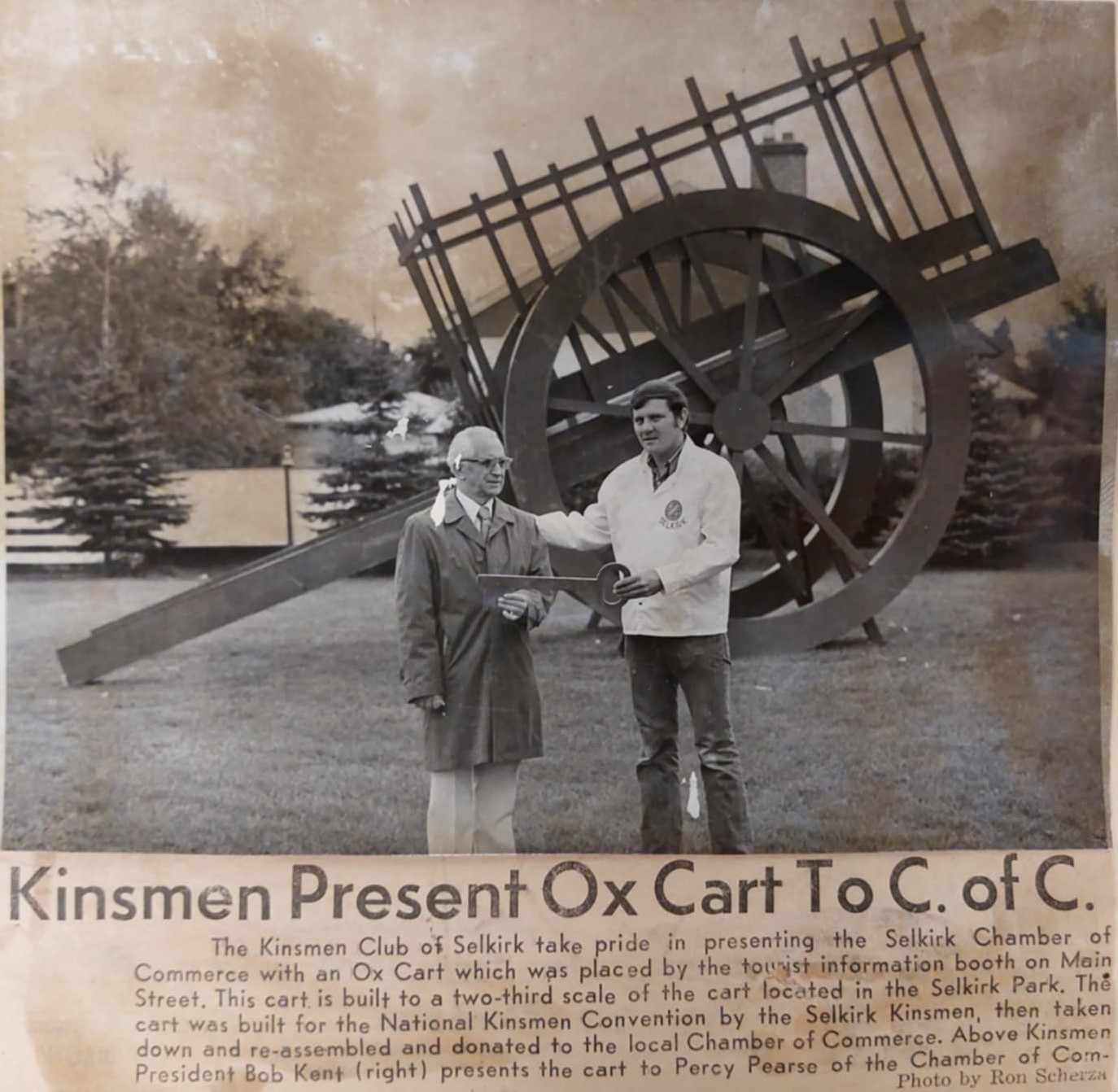
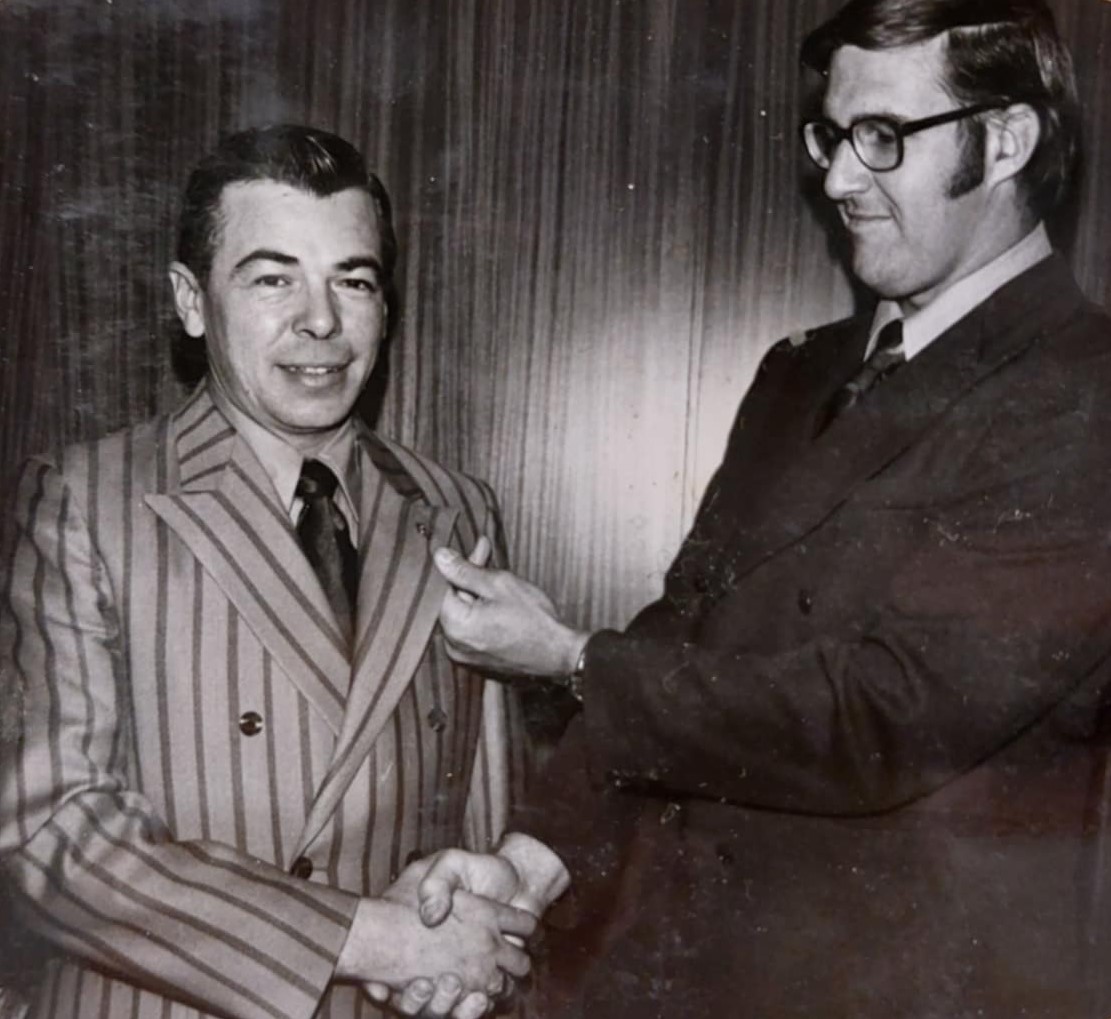
Kinsmen Club of Selkirk Collection
Click on images to enlarge
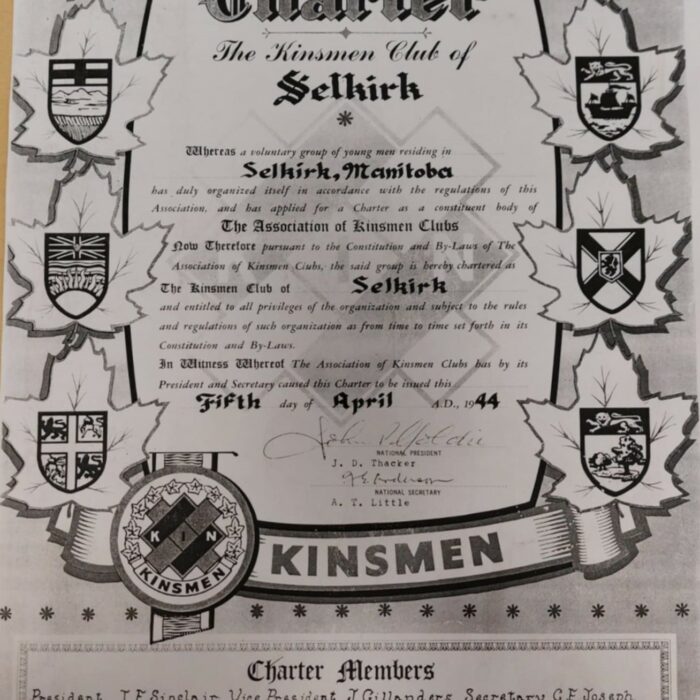 Selkirk Kinsmen Charter, 1944, Kinsmen Scrapbook, Selkirk Museum Collection
Sources
Selkirk Journal, 1970, 2019
Selkirk Enterprise, 1968, 1969, 1975, 1977
Special thanks to the following individuals for sharing their memories:
Dave Bjornson
Bill & Gail Bodman
Barb Cieszynski (Gilbart)
Bud Oliver
Garth Sandercock
Debbie Kurbis Tepleski