
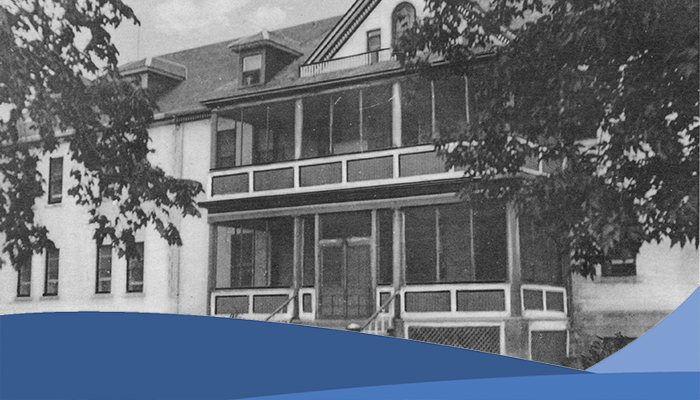
Healthcare has long been a frontline priority in Selkirk, and the community has seen its fair share of healthcare facilities over the years. Before the Selkirk Regional Health Centre, there were earlier versions of the Selkirk General Hospital dating back to the early 20th century. As times evolved, so too did the level of care required from the facility, sparking a push for expansion in 1929.
Rising Demand and Capacity Strain
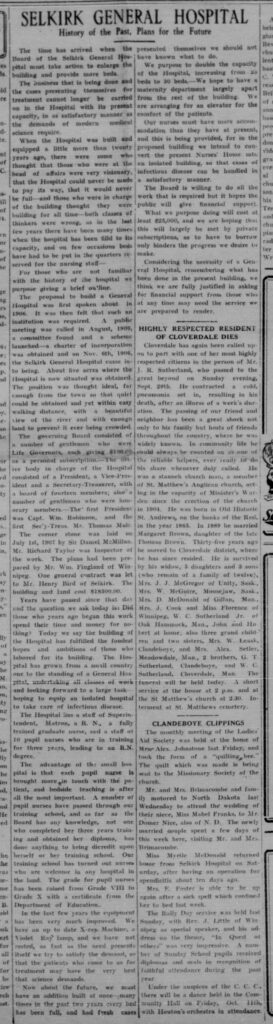
“The business that is being done and the cases presenting themselves for treatment can no longer be carried on in the Hospital with its present capacity, in a satisfactory manner as the demands of modern medical science require,” stated the minutes of an October 1929 hospital board meeting.
The Selkirk General Hospital had only existed for a little more than two decades at that point. Engineers had not expected it to reach full capacity so quickly, yet the hospital did just that. At times, it even exceeded capacity, with beds being placed in the nursing staff quarters.

The Origins of the Hospital
The proposal for a premier general hospital came about in 1906. On November 6, 1906, a charter of incorporation was obtained, and the Selkirk General Hospital officially came to life. Occupying approximately five acres of land along Eveline Street at Idell Avenue (now 113 Manchester Avenue), the site was considered ideal, far enough from town to provide quiet, yet within easy walking distance. It also offered a beautiful view of the river and enough land to ensure the hospital would never be crowded. The cornerstone was officially laid on July 1, 1907, and the hospital opened on January 7, 1908, to resounding success.
“Today we say the building of the Hospital has fulfilled the fondest hopes and ambitions of those who laboured for its building,” one Selkirk Weekly Record article stated. “The Hospital has grown from a small country one to the standing of a General Hospital, undertaking all classes of work and looking forward to a large task—hoping to equip an isolated hospital to take care of infectious disease.”
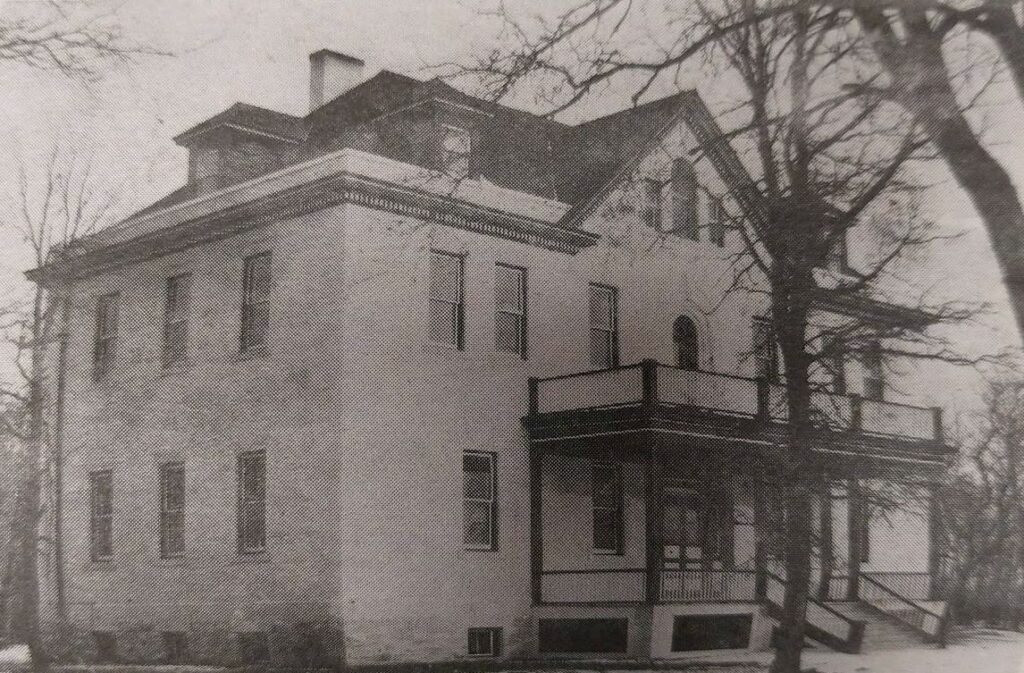
The Push for Expansion (1929–1930)
As demand continued to rise, an expansion became necessary. This included advancements in medical equipment such as an X-ray machine and a Violet Ray lamp. Staff and board members emphasized that they had not rested in their efforts to meet modern healthcare demands.
The planned expansion was designed to nearly double capacity from 30 beds to 55. It included a spacious operating room, a large maternity ward with nursery and case room, increased nursing accommodations, and an automatic elevator—features considered standard for the time. The addition was also to be constructed using fireproof materials.
The estimated cost began at $25,000, with board members noting they were “willing to do all the work that is required, but it hopes the public will give financial support.” Funding was expected to come through loans and private subscription contributions.
Legacy and Later Developments
While no specific opening date, images, or final costs are readily available, it is known that the expansion continued to serve its purpose until 1948. Following the Second World War, healthcare services in Selkirk underwent a major revitalization, including the addition of a diagnostic unit and expanded X-ray facilities.
Sources
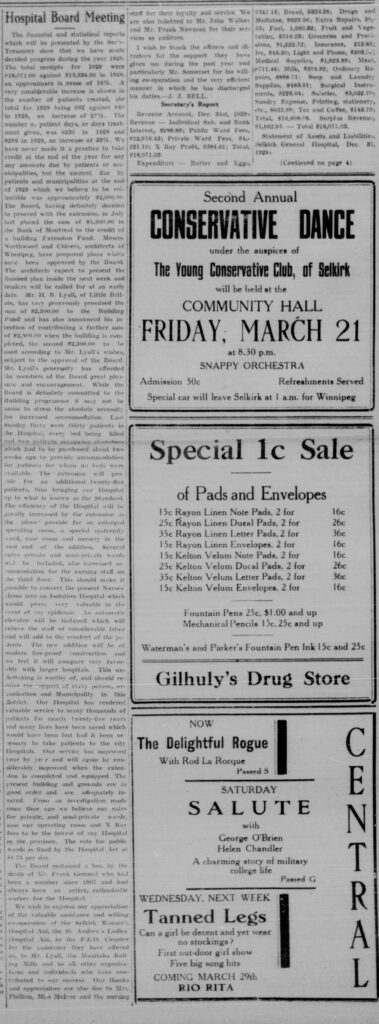
Selkirk Weekly Record, October 1929, March 1930
Hospitals of Selkirk, Selkirk Museum