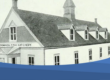
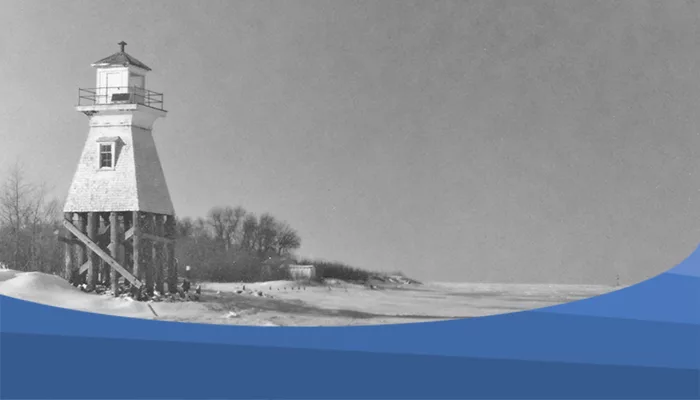
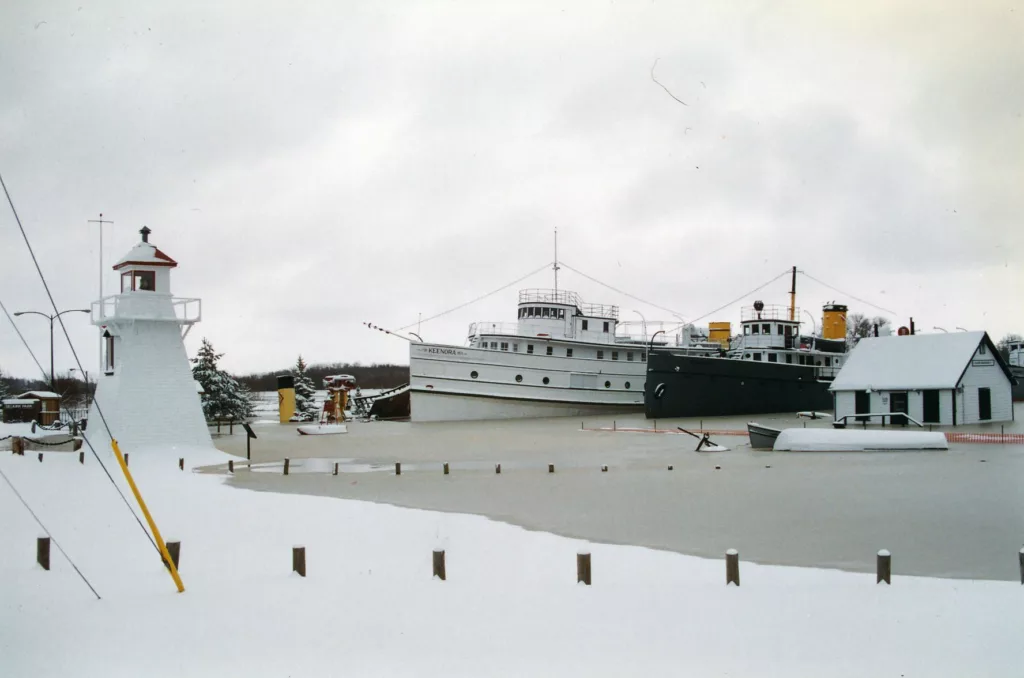
Two lighthouses, once stationed on Lake Winnipeg, are now found in Selkirk at the Marine Museum of Manitoba.
Black Bear Island Lighthouse
Lake Winnipeg is the eleventh-largest freshwater lake in the world. For several centuries the Lake, stretching 416 kilometers from north to south, served as an important trade route.
Lake Winnipeg can be dangerous. The Lake has had perilous storms that resulted in the death of sailors. Additionally, near the middle, Lake Winnipeg narrows to just 2 kilometers. It is near this narrow passage that Black Bear Island lies.
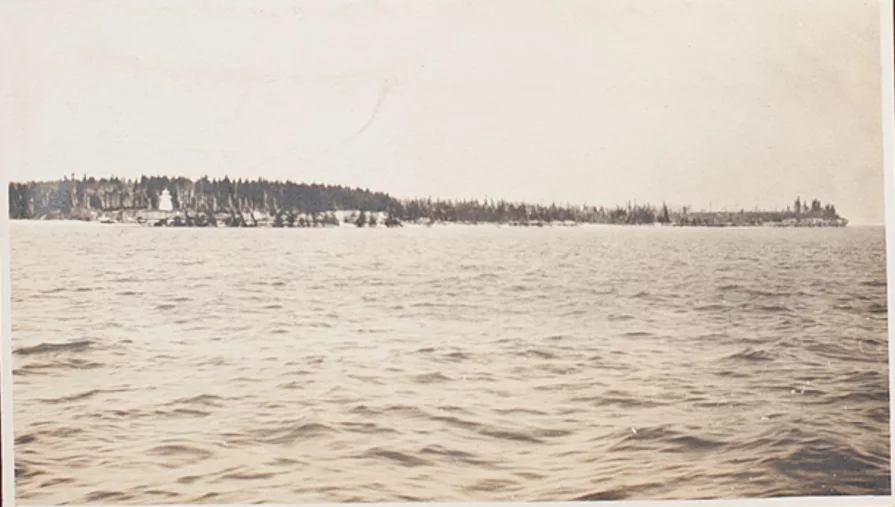
In 1898, the Department of Marine announced that a lighthouse would be built on Black Bear Island to help sailors more safely navigate this narrow passage.
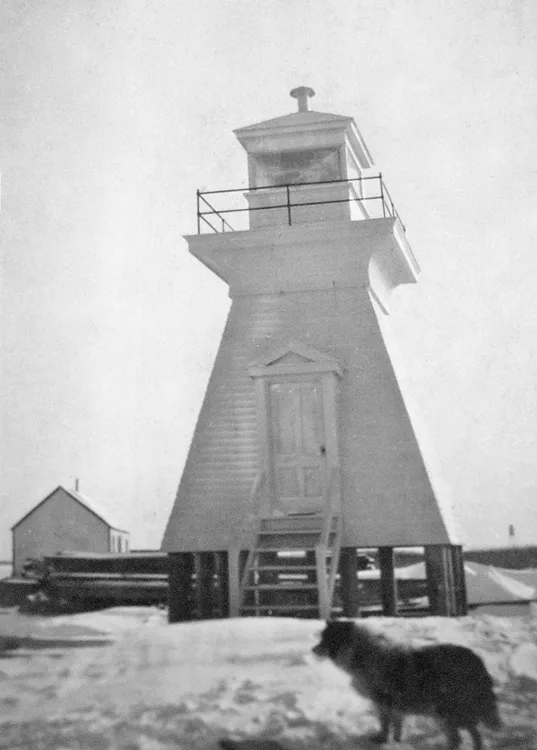
The Black Bear Island lighthouse was square, made from wood, and painted white. It was built by John W. Scott, a resident of Selkirk.
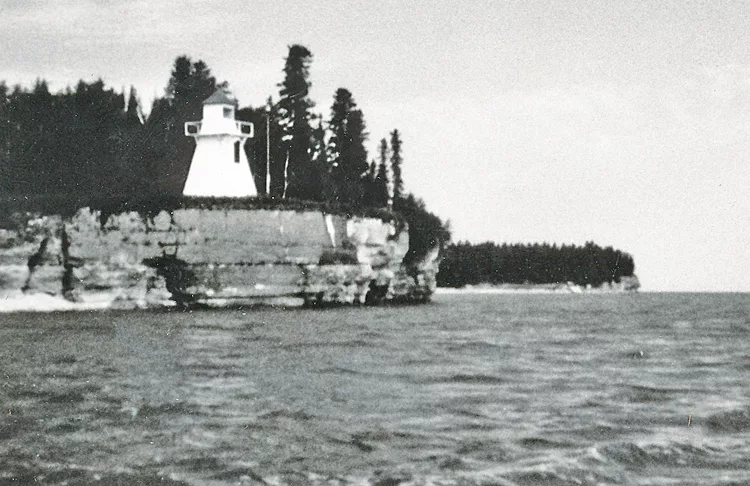
Daniel Matheson was the first light keeper, hired in 1899. In 1910, a hand-operated foghorn was added to the lighthouse. Matheson continued operate the lighthouse until 1919. A. Coullard worked at the lighthouse from 1919 to 1920. J.A. McLennan was employed as lightkeeper from 1920 until at least 1937.
In 1989, the lighthouse was moved to the Marine Museum of Manitoba.
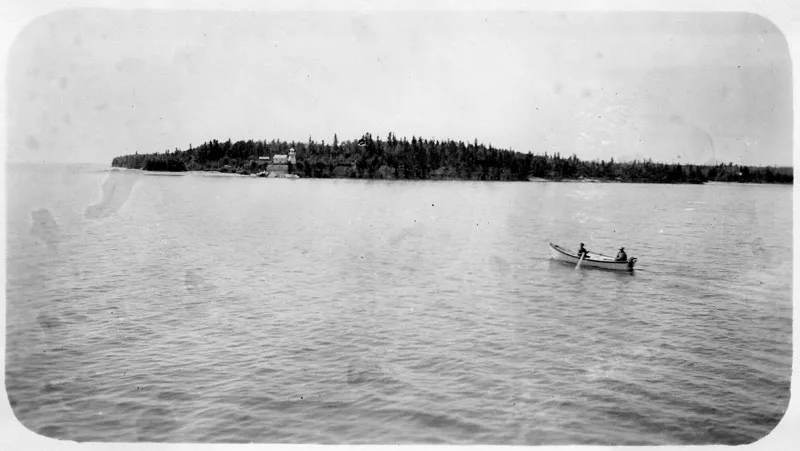
Red River Lighthouse
The Red River was a key trade route for many people and companies over hundreds of years. As people began to use the Red River more and more for commercial use the need for a lighthouse grew.
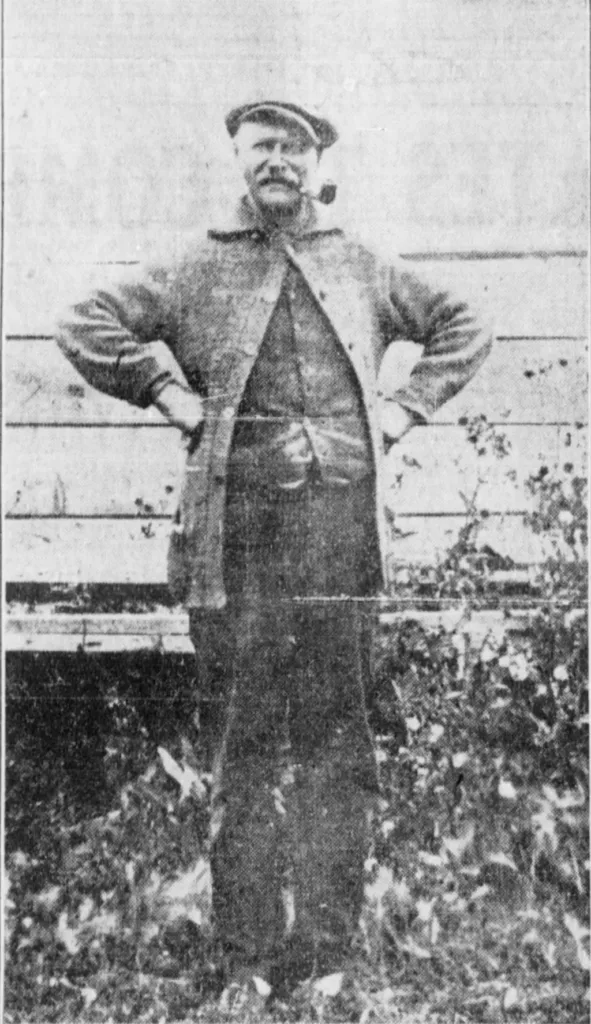
The first light placed on Lake Winnipeg at the mouth of the Red River, in 1880, was a lightship. Joseph Monkman was the keeper from 1880 until 1883. Then William Hughes became the new lightkeeper, a job he would have for 41 years, until 1924.
Eventually the lightship beached on shore and served as a shore light until 1893. At this point the lantern was removed from the lightship and placed atop a pole.
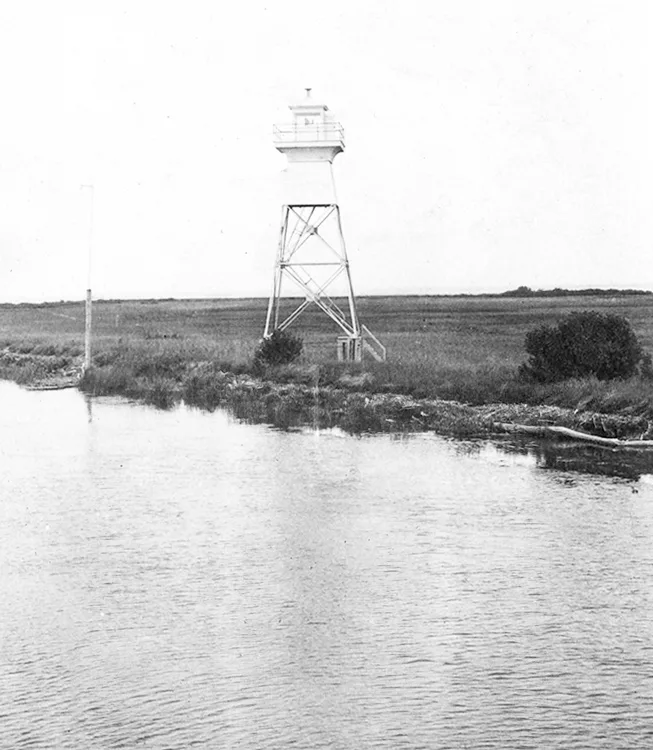
The Department of Marine decided in 1894 to build two lighthouses at the mouth of the Red River. These lighthouses began operation on September 2nd, 1895.
The back tower was wooden and square and 47 feet tall. It was almost all white, except for the lantern base and a stripe, on the water side of the tower, which was red.
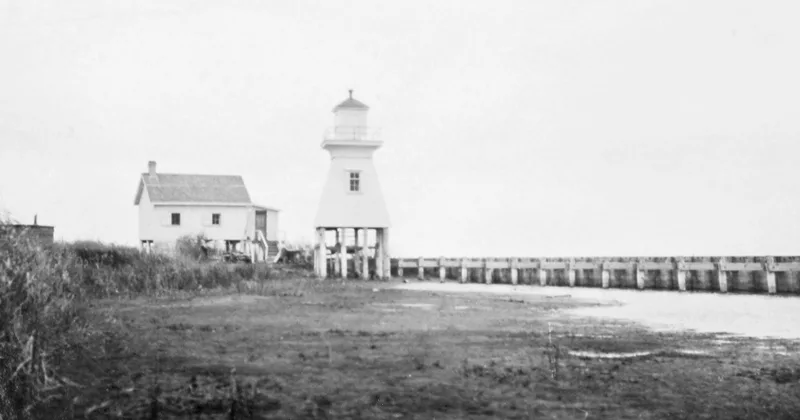
The front lighthouse was similar. It was a square, wooden building. The bottom part of the building was left open. It stood 27 feet tall. It was also mostly white, except for the red lantern base and a stripe down the middle of the side which faced the water.
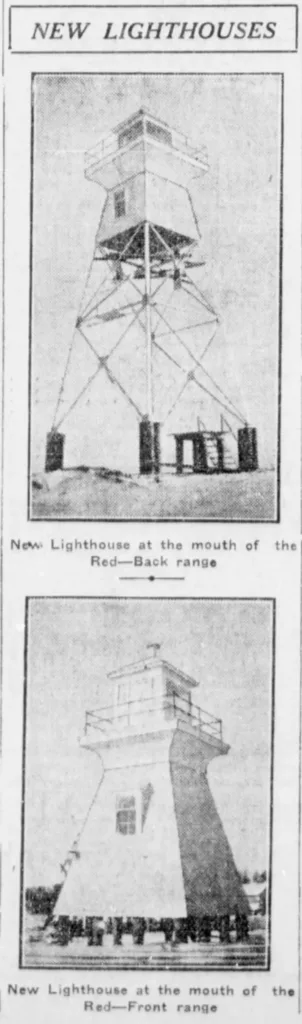
These two buildings were replaced in 1914. M.J Egan oversaw the project. The new back light was a steel skeletal tower, with only the top portion enclosed by a wooden building.
The new front lighthouse remained almost identical to its predecessor. It was 27 feet tall, wooden, and square. The bottom of the building was still open, while the top was completely enclosed.
Roderick E. Spence served as light keeper from 1924 until at least 1937. Hughie Reed replaced him as keeper.
These two new lighthouses served until 1992, when the back light was demolished, and the front lighthouse was moved to the Marine Museum of Manitoba in Selkirk.
Modern towers were placed at the entrance to Red River. These range lights served until 2019. At that point, the front light was discontinued, and the back light was renamed the Red River Mouth Light.
Sources
Historic Sites of Manitoba: Marine Museum of Manitoba (490 Eveline, Selkirk) (mhs.mb.ca)
Black Bear Island Lighthouse, Manitoba Canada at Lighthousefriends.com
Red River Lighthouse, Manitoba Canada at Lighthousefriends.com