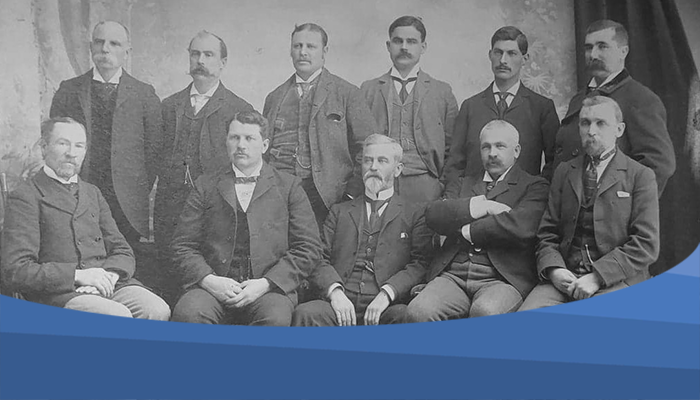
Since 1882, Selkirk’s councils have remained dedicated to making this a safe, meaningful and transformative community for all.
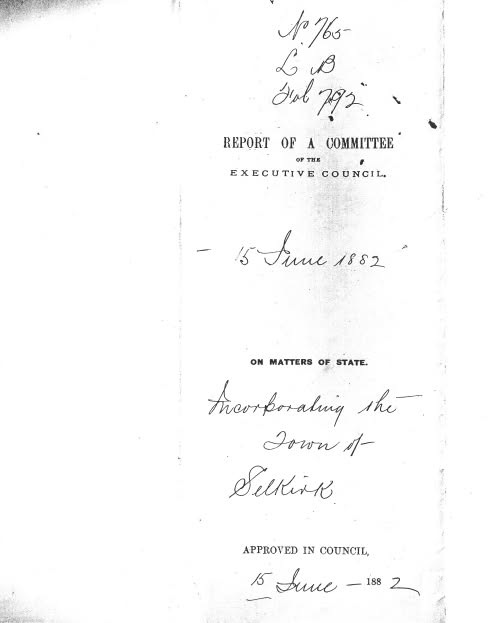
Selkirk would first be incorporated as a town on June 15, 1882 under the provincial Municipal Act. The newly formed town would hold its first council meeting at noon on Monday, July 24, 1882, in the School House located on the site of the Town Hall. In attendance were the first-ever council members and the mayor-elect, marking a pivotal moment in the community’s history.
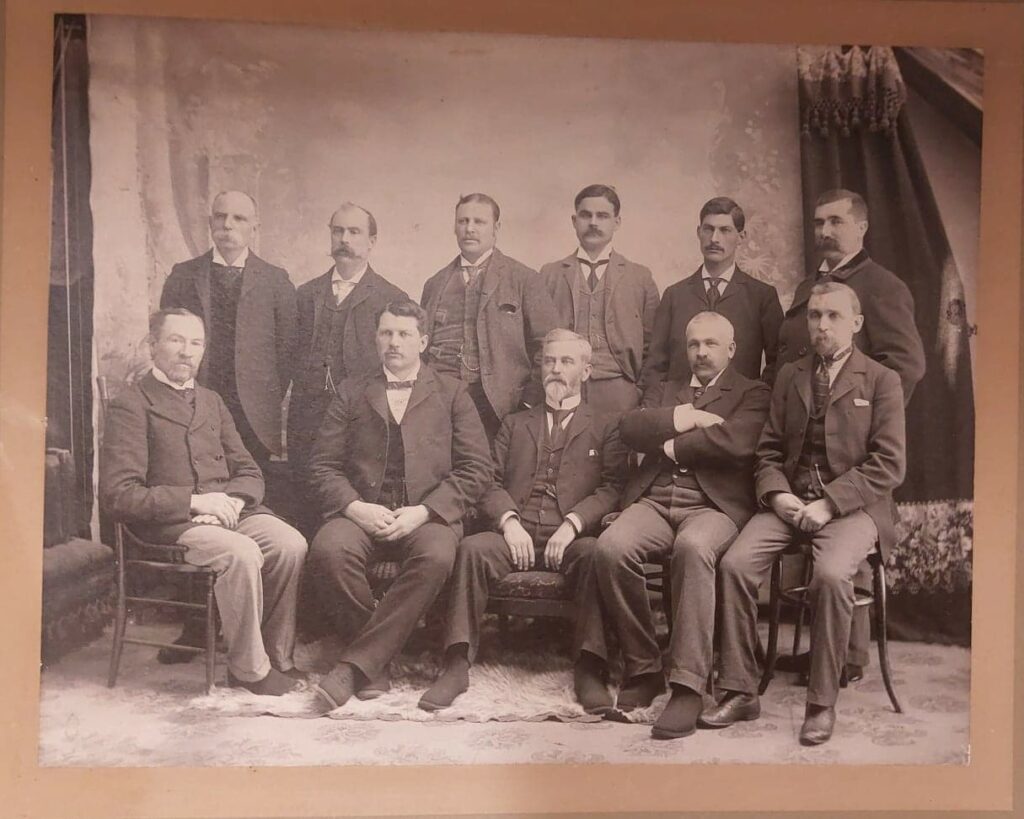
The meeting minutes detailed the topics discussed throughout the afternoon. Mr. Richard Dickson, the current returning officer at the time, served as chair for the opening proceedings.
One of the first orders of business was the election of Selkirk’s inaugural mayor, James Colcleugh. In conformity with the proclamation meeting of Selkirk’s electors of the Corporation held in the School House on July 10, the first council members had been elected. Colcleugh was described as a “fit and proper person for the office of mayor.”
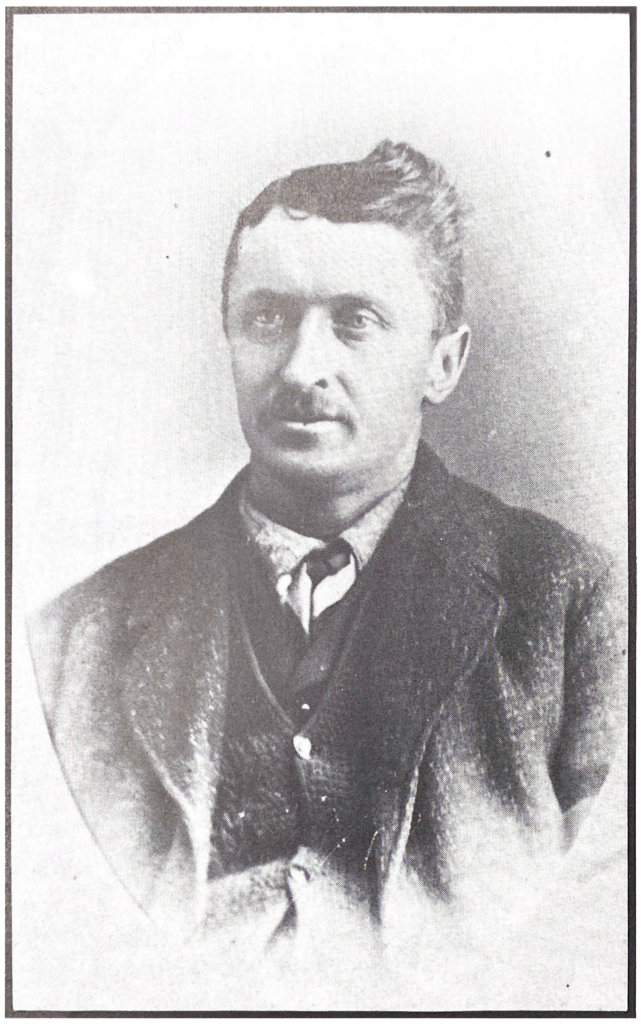
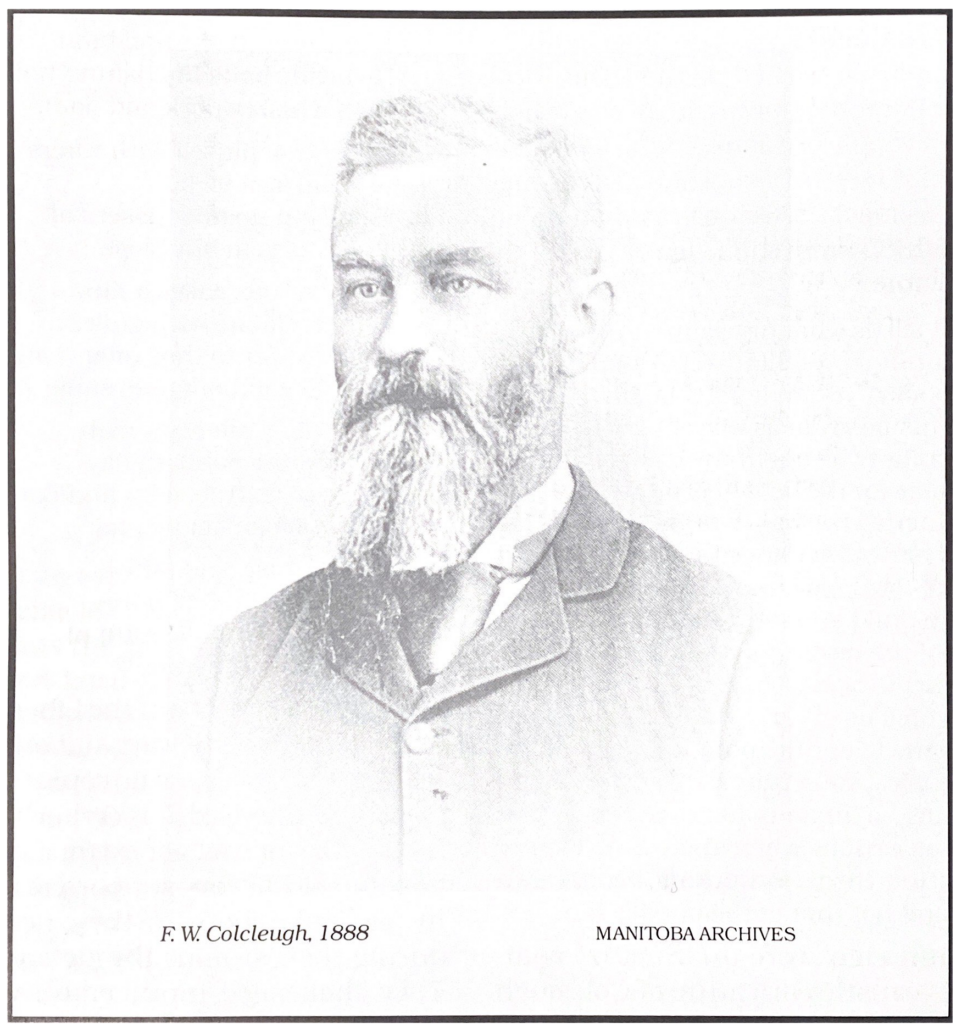
Mr. F. W. Colcleugh formally swore in the mayor and soon assumed the role of chair for the meeting. Mr. Dickson then presented the Letters Patent granted by the Crown, officially recognizing Selkirk’s municipal status.
Mayor Colcleugh proceeded to administer the oath of office to the councillors. Those sworn in were:
Ward No. 1
- John D. Campbell (nominated by F. R. Gemmel and Alex McDonald)
- Francis R. Gemmel (nominated by Robert Bullock and John A. Howell)
Ward No. 2
- Amos H. Vaughan (nominated by John Morrison and J. B. Quigley)
- Dr. David Young (nominated by J. E. Gemmel and J. W. Irving)
Ward No. 3
- Frederick W. Colcleugh (nominated by J. E. Gemmel and Jas. S. Greig)
- John E. Gemmel (nominated by James Colcleugh and Robert Bullock)
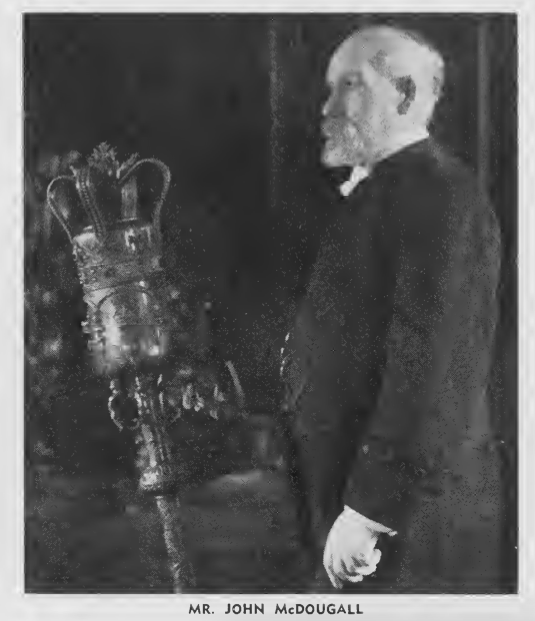
The newly formed council then moved to appoint key administrative roles. Mr. John McDougall was named secretary-treasurer and was to be paid $300 for the remainder of the year. William McKay Taylor was appointed weeds inspector, earning $2.50 for each day of duty.
Additional committees were established and members appointed, laying the groundwork for local governance and civic responsibility.
The meeting concluded with the introduction of the first bylaw by councillor J. E. Gemmel: “To appoint Richard Dickson Assessor for the year 1882,” formally marking Selkirk’s transition into an incorporated town.

Centennial Re-Enactment
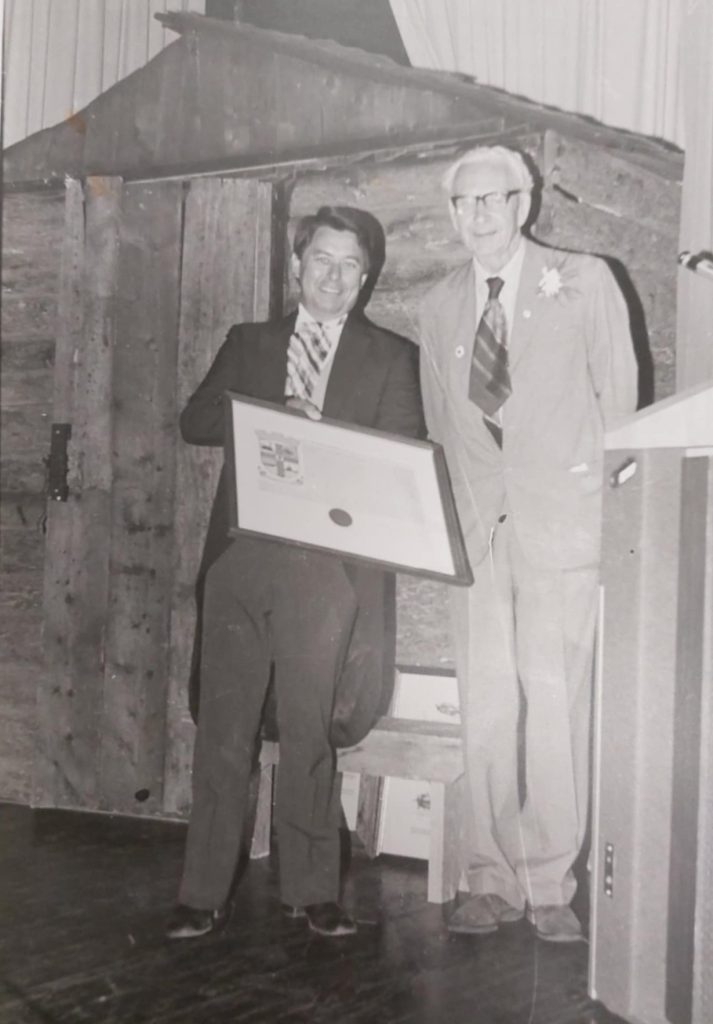
In 1982, as part of the City of Selkirk’s centennial anniversary celebrations, a re-enactment of the first council meeting took place in the Lord Selkirk Regional Comprehensive Secondary School theatre.
Mayor Bill Shead and fellow councillors dressed in period costumes and read a part of the proceedings that took place during the first meeting. Afterwards, the 10th Earl of Selkirk, George Nigel “Geordie” Douglas-Hamilton, presented Shead with the official Selkirk coat of arms.
Sources
Howard, K., Stories of Selkirk’s Pioneers and Their Heritage
Selkirk Enterprise, May 1957
Selkirk’s 75th Anniversary, 1957
Selkirk Coat of Arms and Flag, Selkirk Museum
Selkirk Councils 1882-Present, Selkirk Museum
The Beginning 1882-1883, Selkirk Museum