Soap Box Derbies were once an international phenomenon that showcased the creativity and craftsmanship of youth across the globe including right here in Selkirk.
Originating in Dayton, Ohio, in 1933, the Soap Box Derby quickly rolled its way into the hearts of communities worldwide. The event invited children to design, build, and race motorless cars down a hill or ramp, powered only by gravity and their own ingenuity. What began as a local pastime soon evolved into an international celebration of imagination and engineering skill, inspiring countless young builders to test their creativity in a friendly competition.
Derbies on a Roll
The earliest derby cars were simple contraptions fashioned from soap crates and roller-skate wheels, hence the name “Soap Box Derby.” The spirit of the event was rooted in creativity, problem-solving, and hands-on learning. As years passed, the cars became more sophisticated, often constructed from wooden crates, stroller wheels, and other common household items. Despite their humble materials, these homemade racers were symbols of youthful innovation and community pride.
Part of the derbies’ enduring appeal came from their accessibility and the excitement they generated. Races were affordable to enter, easy to organize, and thrilling to watch. Major companies often sponsored the events, offering prizes and publicity that drew large crowds and even larger enthusiasm.
Selkirk Joins the Race
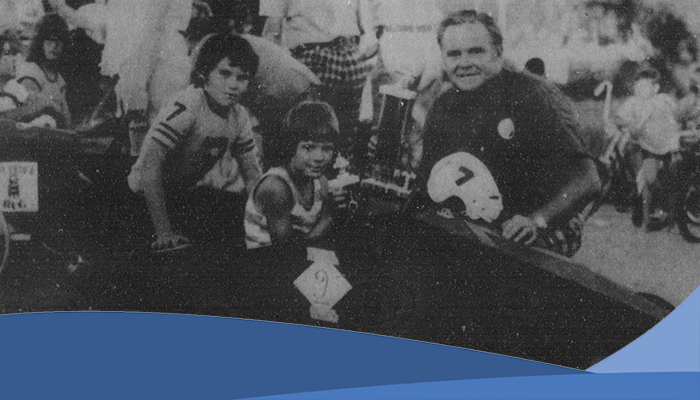
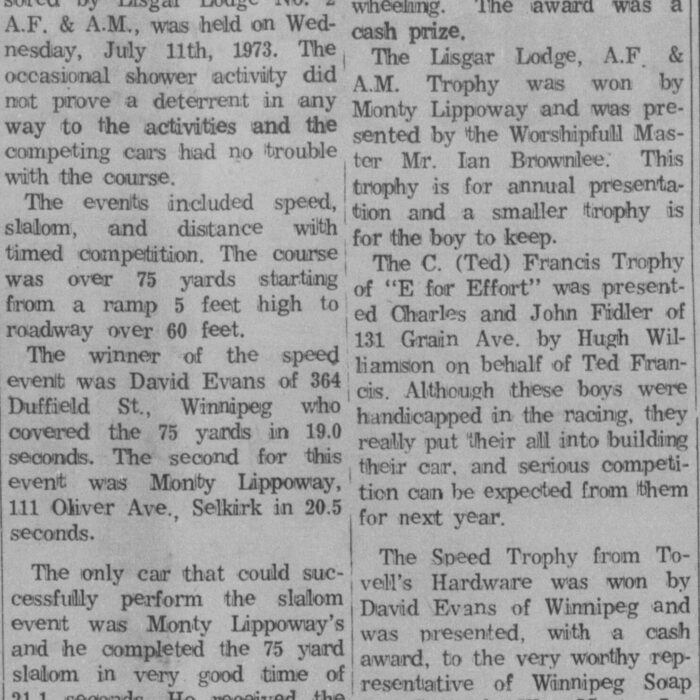
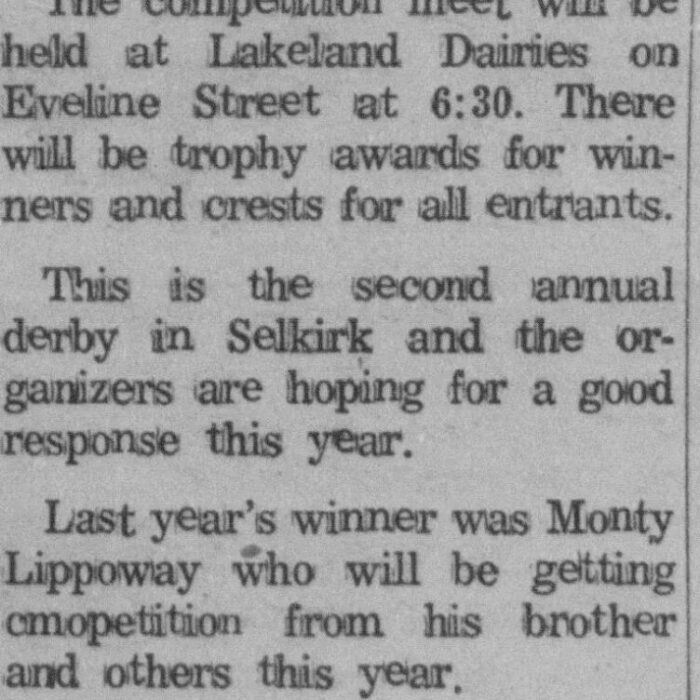
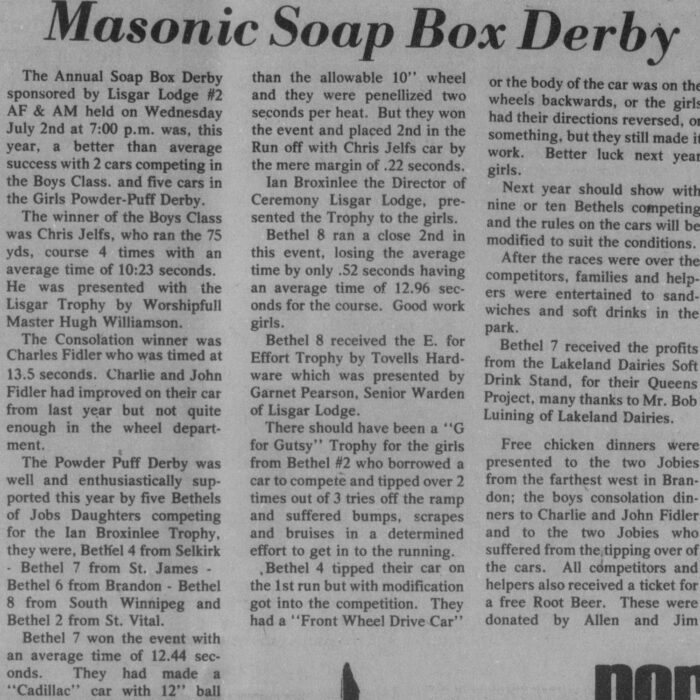
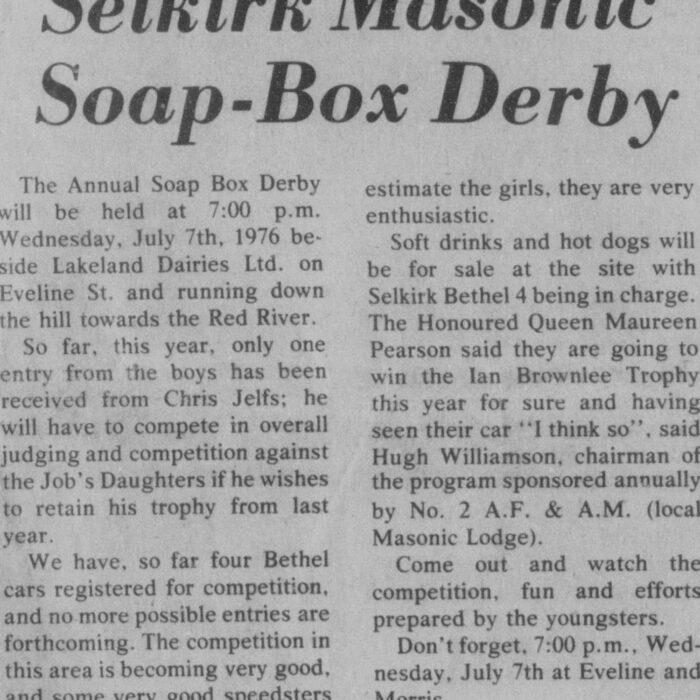
Soap Box Derbies had a delayed arrival to Selkirk, with the first being hosted in 1973. In total, four annual derbies were held in July, usually hosted near the weekend of the Selkirk Fair and Rodeo and were sponsored by the Lisgar Masonic Lodge. Selkirk’s inaugural Soap Box Derby was called the, Gravity Grand Prix and invited boys aged 10 to 14, to test their skills in three categories: speed, slalom, and distance. Competitors launched from a five-foot ramp and raced more than 60 feet down Eveline Street. To ensure the event remained true to its spirit, participants had to be residents of Selkirk and the Selkirk School District, and each car had to be built entirely by the youth themselves. Adults could offer advice, but hands-on help was off limits.
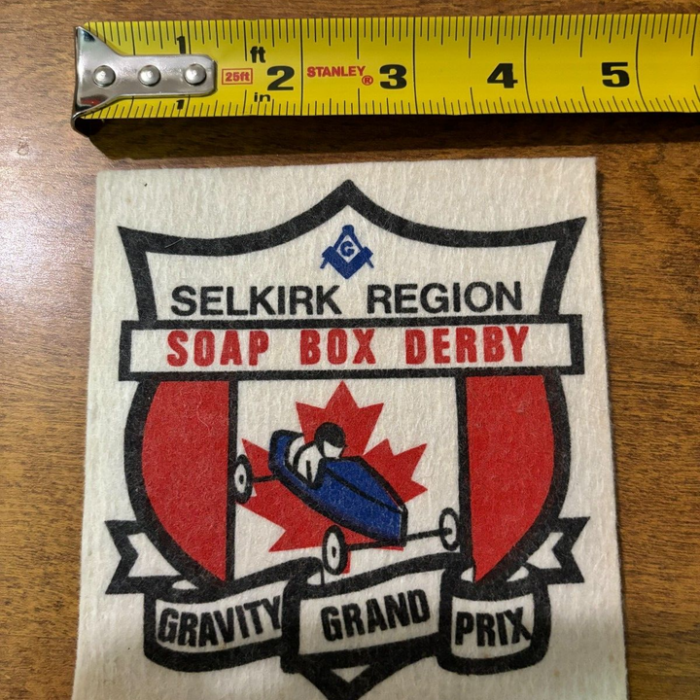
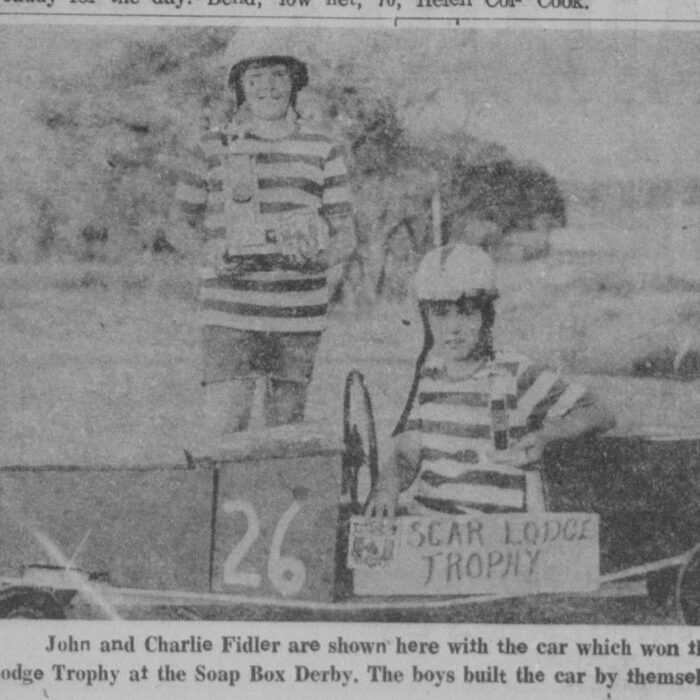
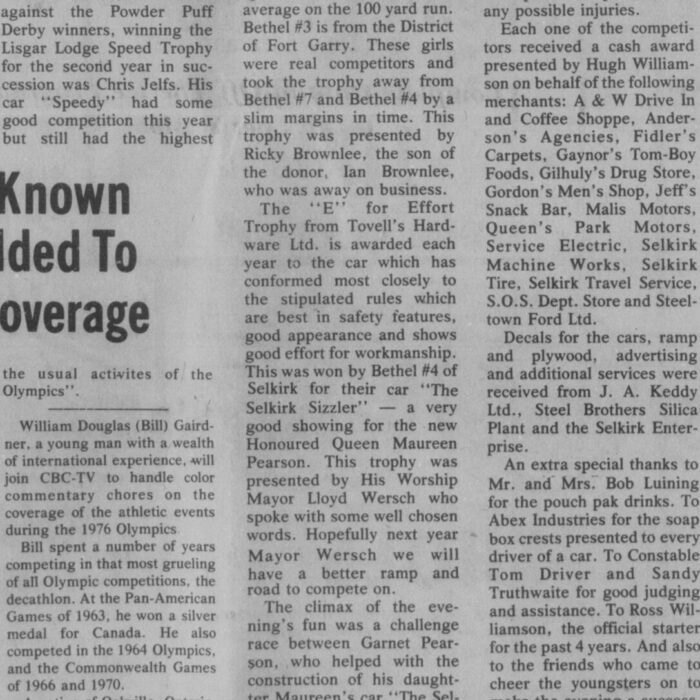
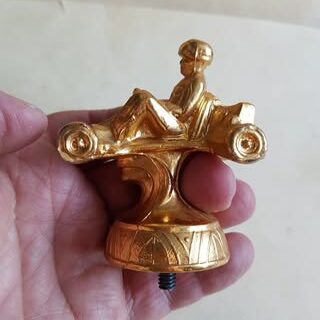
Winning racers received trophies and cash prizes and a Gravity Grand Prix crest was given to all participating competitors. An “E for Effort” trophy was also presented to the racer who didn’t win but made an effortful attempt. Organizers hoped these awards would encourage more young racers to join in future years.
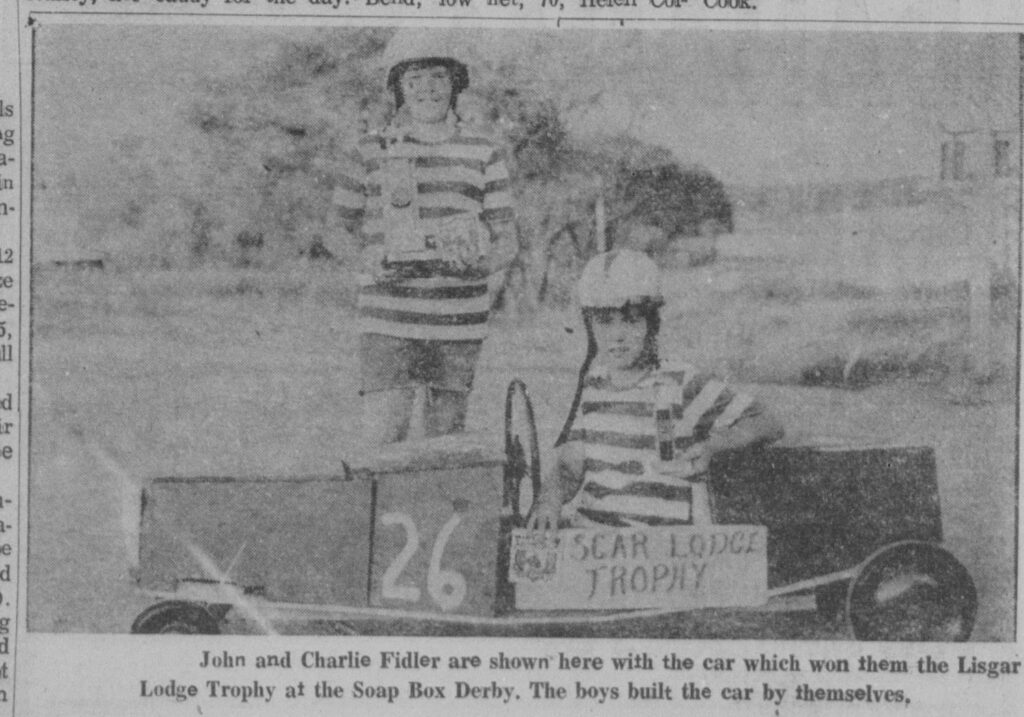
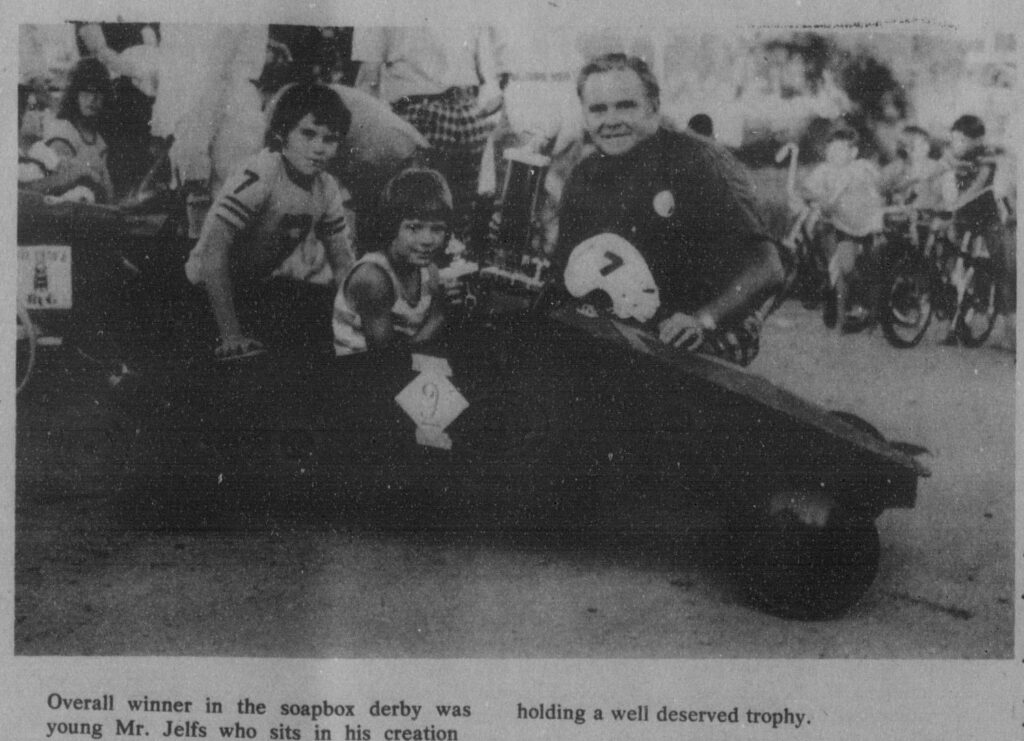
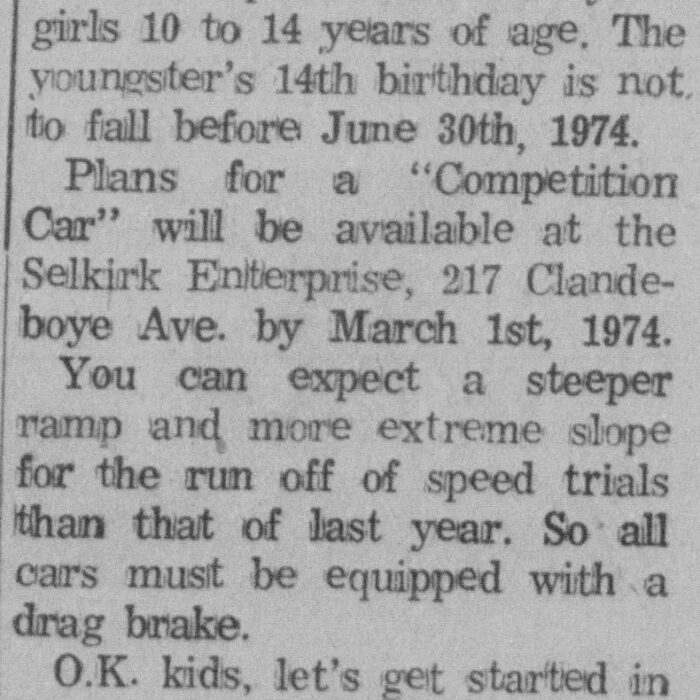
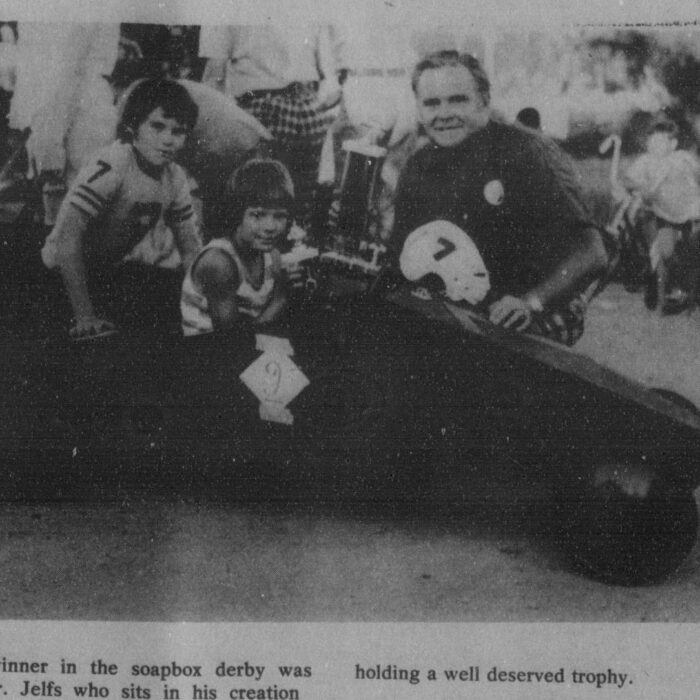
In 1974, the event expanded to include girls, creating separate male and female divisions. The Selkirk Enterprise newspaper even sold official derby car blueprints for $1 at their Clandeboye Avenue office. By 1975, the derby had two cars entered in the boys’ league and five in the girls. The last local derby was held in 1976, marking the end of a brief but memorable chapter in Selkirk’s community history.
The World-wide Derby Impact
Globally, Soap Box Derbies reached their height from the late 1940s through the early 1960s. Canadian cities like Mission, B.C., and Montreal hosted major events that drew crowds of more than 20,000 spectators. But by the 1970s, rising costs, stricter insurance rules, and the rise of other youth activities caused their popularity to dwindle.
While only a handful of derbies remain today, their legacy continues to roll on. The Soap Box Derby remains a cherished reminder of a time when creativity, resourcefulness, and community spirit were the driving forces behind every race.
Selkirk’s Short-Lived Soap Box Derby Craze Collection
Click on images to enlarge
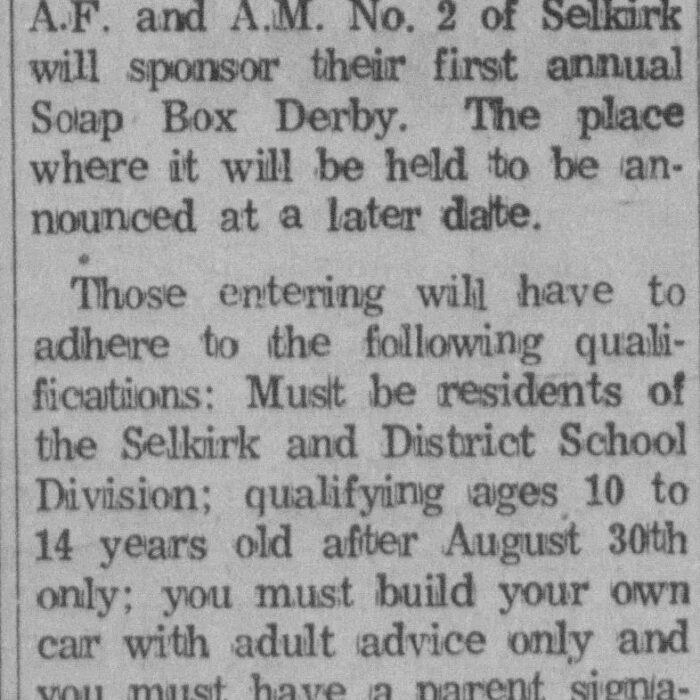 Local Announcement of Lisgar Manor to Sponsor Soap Box Derby, 1973, Selkirk Enterprise
Sources
Selkirk Enterprise, 1973, 1974, 1975, 1976
Mr. Local History Project, The Soap Box Derby and Ties to New Jersey
Soap Box Derby History, Soap Box Derby