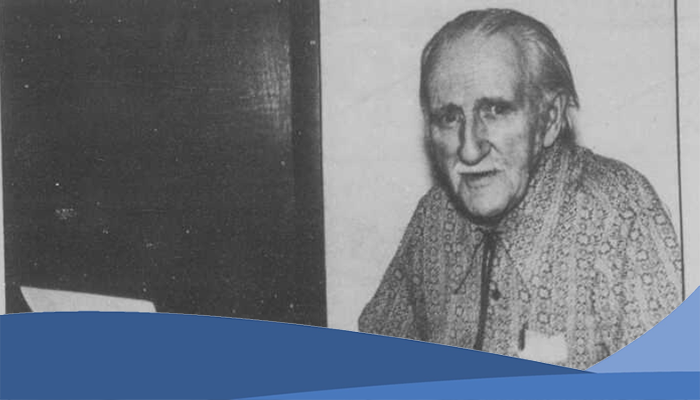
Travelling to teach about different cultures is common, but Frank Walters had a passion for it! Frank Walters was born in 1898 to Eugene Walters and Eva Neeham. The family immigrated to Winnipeg in 1904, where they lived for many years. The Walters family also had a summer home in Petersfield, just north of Selkirk.
Frank Walters married Minnie Foord, a Métis woman, and together they raised five children. Frank and Minnie lived in Netley Creek until 1970. Frank Walters, though he is not Métis, is considered a Métis historian and cultural preservationist due to his wife and her family. He is also noted to have had a particular interest in Bungee, a Métis language that his wife’s family spoke.
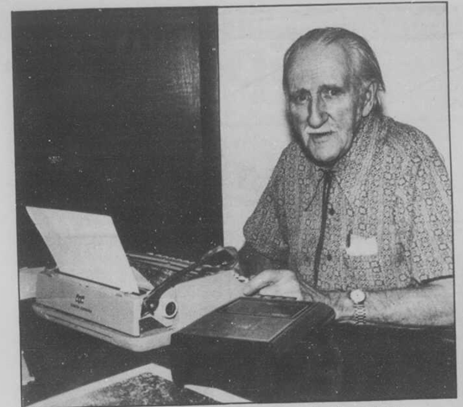
In his work to preserve Métis culture, Frank published a book titled Pieces of the Past in 1993, which contained information that covered the history of the Selkirk, Petersfield and Netley Creek areas. He also created a travelling suitcase that contained natural history specimens, which Frank brought to school classrooms to teach about Métis culture.
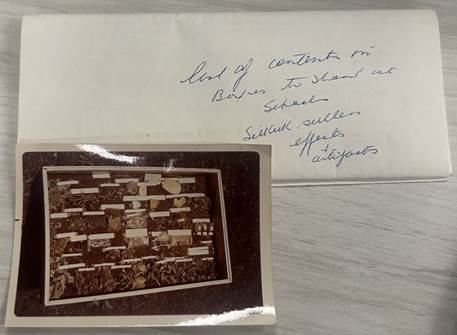
When Frank visited classrooms in Selkirk, he brought a yellow and brown suitcase containing 39 different specimens that he used to teach children about Métis and First Nations cultures. Each specimen is kept in a container, and on each container is a label with its contents, a small write-up of what it was used for, and if it has a name in an Indigenous language. There is no indication as to which language Frank used when referencing some of the Indigenous names, but it could either be Cree or Anishinaabemowin. An example of this is item 22, titled Mac-a-meena, which was a cookie (Walters spelt it as cooky) which was common among Indigenous peoples; these cookies were made with raisins or currants and eaten with hot butter.
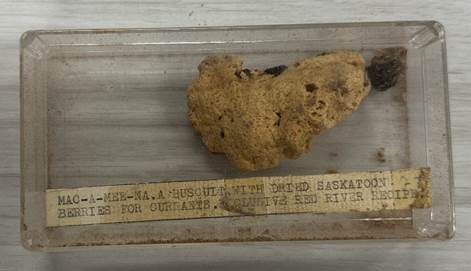
Other specimens that are in this case are as follows:
- Goose Oil
- Skunk Oil
- Coal Oil
- Wild June berries
- Goose wing
- Pemmican
- Bannock
- Lye Soap
- Cana-bunayan-squayag (known as side hair)
- Min-da-min (Corn)
- Wild Hawthorne
- Wild Rose hips
- Milk weed
- Wax
- Sinew
- Raw hide
- Dandelions
- Tabacco
- Piece of a crock
- Wild Rice
- Decade Wood
- Wild Chokecherries
- High bush Cranberries
- Rabbit Skin
- Weeds
- Wild Fern Shoots
- Untanned Hide (known as Babiche)
- Birch bark
- Moss
- Wild Nanny Berries
- Wild Hazel nut
- Wild Chee-poo-nuts
- Wild Mint
- Wild Buffalo Droppings
- Wild Strawberries
- Wild Saskatoon berries
- Spruce Gum
- Wild Water Lily root
- Buston (Browned Wheat)
- Cow hide
- Wild Carrot
- Wild Wee-case
- Senica Root
- Wild Cannary Seed
- Wild Currants
- Wild Hops
- Deer and Moose fat
- Wild Saskatoons
- Wild Pin Cherries
- Wild Plums
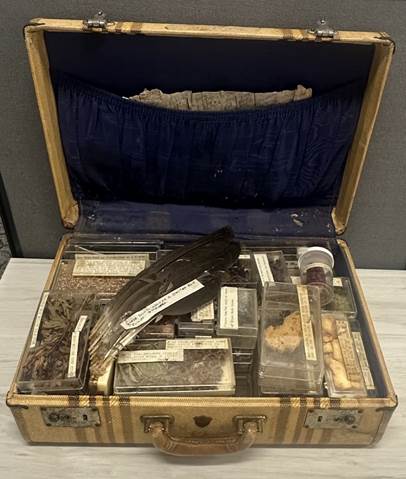
Frank Walters and his relentless pursuit of preserving Indigenous cultures and languages made a large impact on the community through the attention to detail from the in-depth research he conducted. Frank Walters took the time to extensively research and collect specimens for his travelling case, which he would use to teach children about Indigenous culture. He wanted to showcase the way in which both settlers and Indigenous peoples collected different berries, weeds, and animal products and how they used them to sustain themselves.
Sources
Frank Walters- Virtual Museum of Métis History and Culture
Francis Jenkinson (Frank) Walters- Red River Ancestry
Selkirk Journal, 1985