

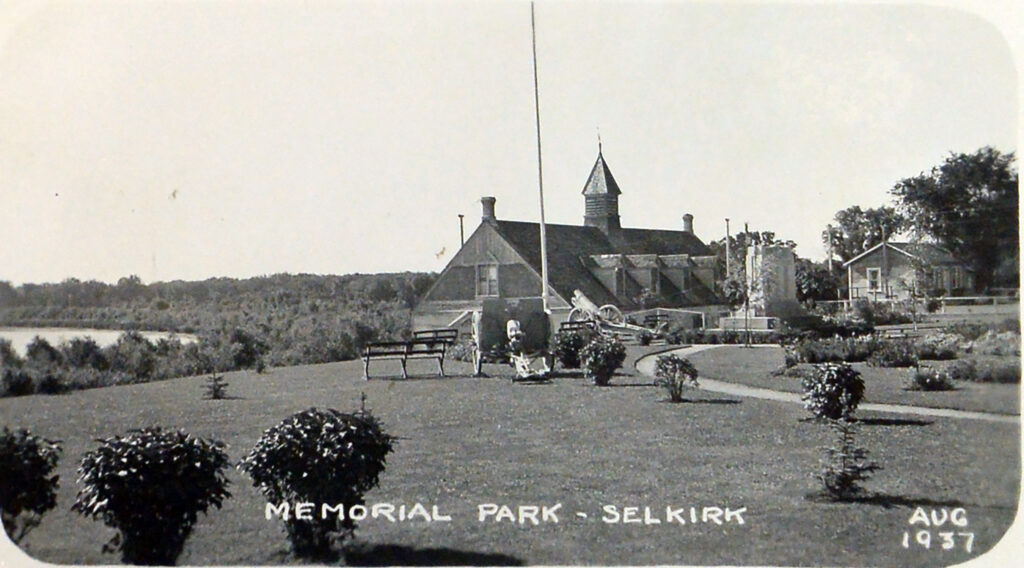
Today, visitors strolling through Selkirk’s Veterans Memorial Gardens may have no idea they are standing on the site of what was once considered one of the most ambitious fisheries projects in Canada.
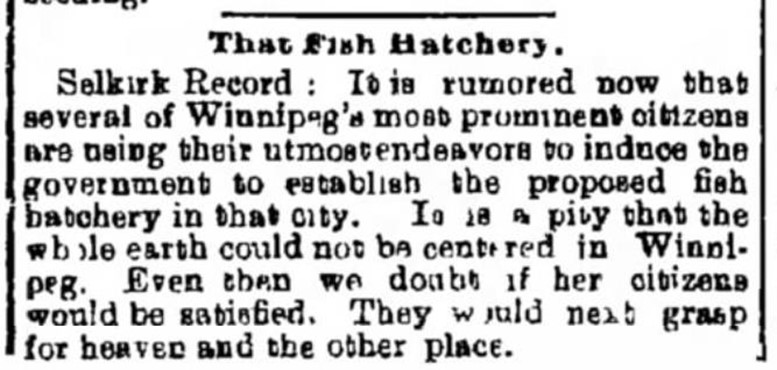
Located near 314 Eveline St. at Britannia Avenue, the site was home to Manitoba’s first fish hatchery, operating from 1893 to 1914. Built during a time when fish stocks were becoming increasingly important to communities and commercial fisheries, the Selkirk hatchery was envisioned as a groundbreaking facility that would help replenish lakes across the province.
For more than two decades, it played a major role in Manitoba’s fishing industry, earning both praise and criticism before eventually fading into history.
Building Canada’s Largest Hatchery
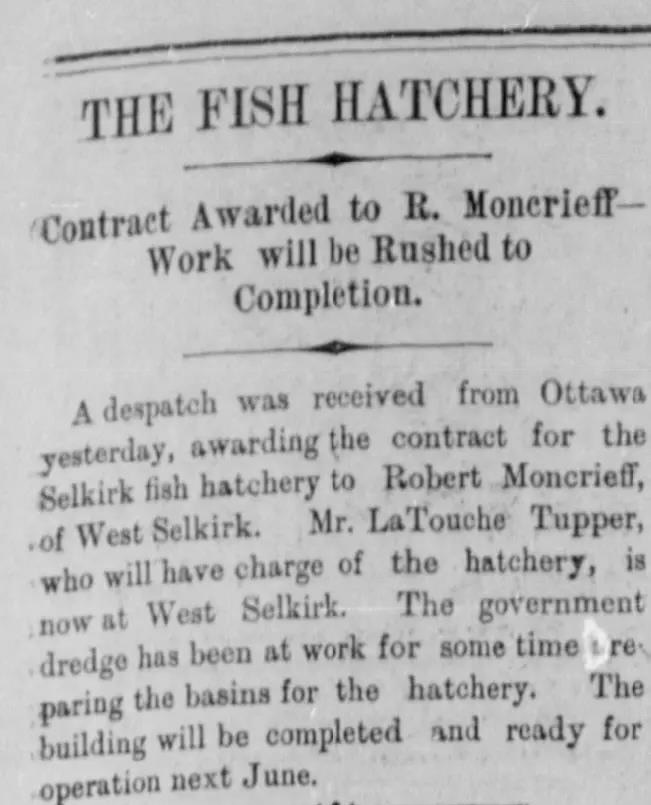
Construction of the whitefish hatchery began in 1892 after the contract was awarded to R. Moncrieff. The facility was designed with a bold purpose: to raise and stock whitefish in Manitoba’s smaller lakes while supporting fish populations throughout the region.
The scale of the project was remarkable. Contemporary reports described the hatchery as the largest in Canada, with a capacity equal to all thirteen other Canadian hatcheries combined.
Completed in the spring of 1893, the hatchery was capable of producing up to 150 million eggs. During its years of operation, it averaged approximately 35 million hatched fish annually, an impressive achievement for the era.
Inside the State-of-the-Art Facility
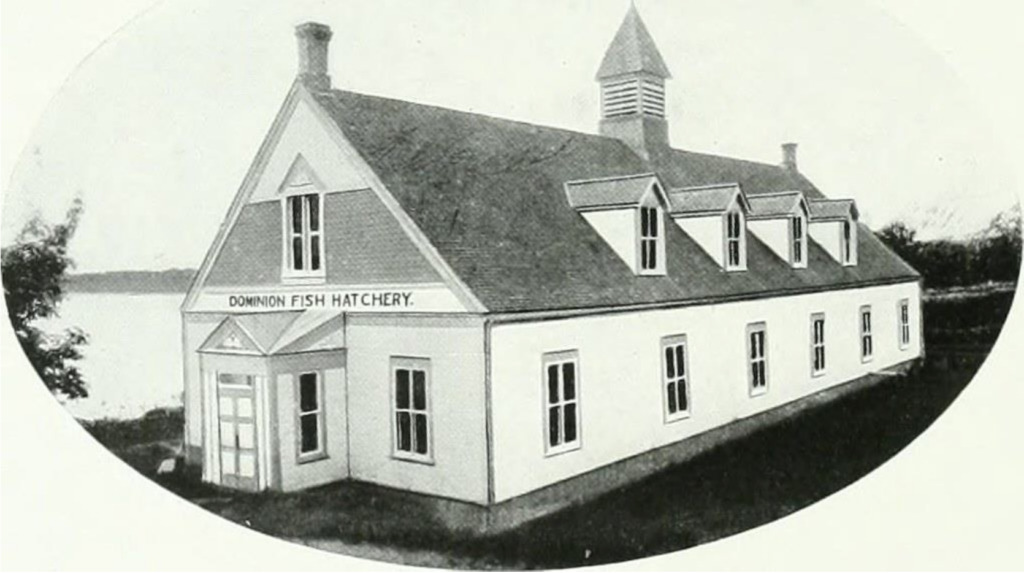
The hatchery itself was an engineering marvel by late-19th-century standards. The main structure measured 100 feet by 40 feet and featured multiple floors, including a breeding house. Inside were automatic glass incubators and specially designed troughs that held breeding trays filled with developing eggs.
A steam boiler powered a duplex pump capable of supplying large volumes of water every minute, an essential requirement for maintaining healthy fish stocks. Reports of the day described both the building and its equipment as being in an advanced state, reflecting the federal government’s significant investment in the project.
In an 1893 fisheries report, Selkirk’s hatchery was noted as one of the most exceptional facilities of its kind in the country.
Richard La Touche Tupper’s Vision
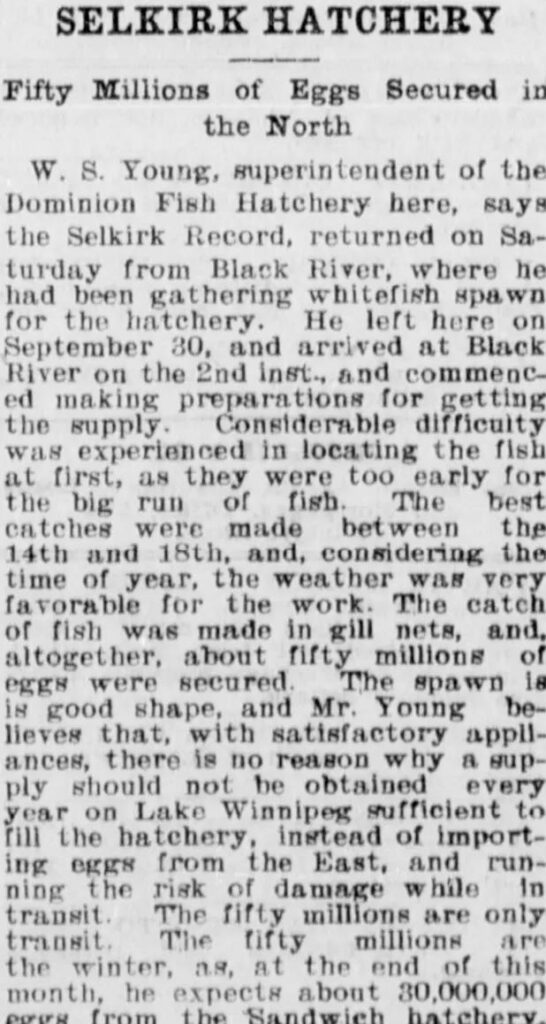
Overseeing operations was Richard La Touche Tupper, superintendent of the Selkirk Dominion Fish Hatchery.
In his first annual report, Tupper acknowledged the challenges of establishing a new operation but remained optimistic about its future. He described the facility as extensive and commodious, suggesting it was likely among the finest hatcheries in the Dominion.
Running the hatchery was far from easy. Staff regularly battled difficult weather conditions, including high winds and storms. Equipment issues, such as aging nets, also created obstacles.
Despite these challenges, fish populations appeared promising. Whitefish were reported as “unusually abundant,” according to an early Government of Canada fisheries report.
Tupper was particularly encouraged by conservation measures that had been introduced to protect spawning areas. He wrote:
“I am confident the closing of the mouths of rivers and of the best-known spawning beds to the fishermen has, even at this early date, had a marked effect. Several white men and Indians informed me that the Little and Big Saskatchewan Rivers were swarming with young whitefish, more having been seen than for several years past. As far as I can learn, the law is well observed.”
His comments reflected the growing belief that hatcheries and conservation regulations could work together to rebuild fish populations.
Growing Criticism and Political Controversy
Not everyone shared Tupper’s optimism. By the early 1900s, questions were being raised about the hatchery’s effectiveness and management. One of the most vocal critics was Selkirk MP George Bradbury. In a speech delivered in Parliament in 1909, Bradbury claimed the hatchery was being operated by “a man who knew nothing about fish culture, who had driven a dray in Selkirk for 30 years.”
Bradbury further alleged that the federal government had spent $10,000 attempting to secure a spawn in Lake Winnipeg, only to fail because of Tupper’s lack of expertise. He called for the hatchery to be closed and criticized what he viewed as inefficient management and excessive spending that produced limited results.
The criticism reflected a growing debate over whether hatcheries were truly solving fishery problems or simply consuming government resources.
Did the Hatchery Really Work?
As the years passed, the number of fish catches began to decline, and hatchery production also decreased. This led many observers to question whether the operation was achieving its intended goals.
Among the critics was John W. Jones, who later remarked:
“The Dominion Government built a good Fish Hatchery at Selkirk, but it was poorly managed by the Government. The young fish were emptied into the river here at Selkirk, and were devoured by jackfish before they could reach the lake.”
Others argued that the hatchery actually made it harder for local fishers and fish dealers to earn a living. Some believed fish populations were becoming concentrated in specific areas while traditional fishing grounds suffered. Critics questioned whether the hatchery represented an effective conservation strategy or simply an expensive experiment.
The End of an Era
By 1914, the Selkirk hatchery’s days were numbered. Newer hatcheries farther north were achieving better results and were better positioned to support fish populations in Lake Winnipeg and surrounding waters. As a result, the federal government closed the Selkirk facility after just over two decades of operation.
Though the building itself is long gone, the hatchery remains an important chapter in Selkirk’s history. It was a bold attempt to combine science, conservation, and industry at a time when fishery management was still in its infancy.
Today, few traces remain of the once-massive operation, but its legacy lives on as a fascinating reminder of Selkirk’s role in shaping Manitoba’s fishing industry.
Sources
Winnipeg Tribune, November 1982, February 1983
Richard La Touche Tupper, Manitoba Historical Society
Veterans Memorial Gardens, Selkirk Museum
A Brief History of the Manitoba Fisheries, Manitoba Historical Society
Report of Fish-Breeding Operations of Canada, 1906
Nicholson, K., A History of Manitoba’s Commercial Fishery
Fisheries, Government of Canada publications
Speech of Mr. Geo. H. Bradbury on Manitoba fisheries, May 1909