
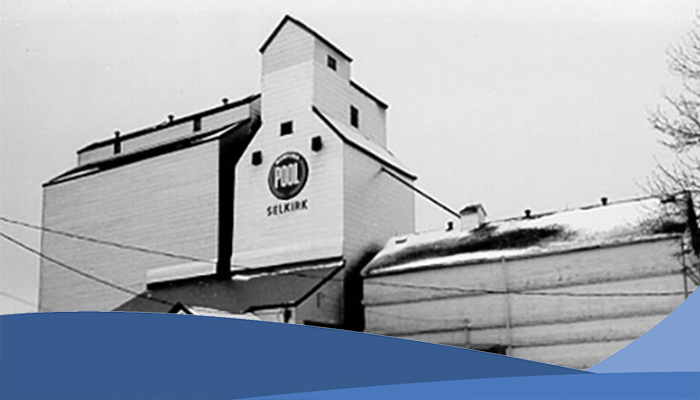
The history of grain elevators in Manitoba first began in 1878, with a 25,000 bushel structure built in Niverville. The demand for more grain elevators eventually grew, and more were constructed across the province. Grain elevators were typically built following guidelines provided by the Canadian Pacific Railway. There were five different designs for the grain elevators that were erected.
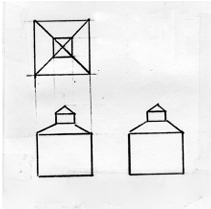
The first design was called the Pyramidal Plan, which, when viewed from above, resembled a pyramid.
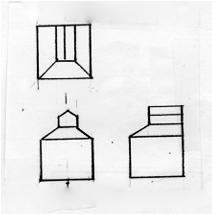
The second design was called the Hybrid Plan. This design featured an offset ‘head’, and a slanted roof.
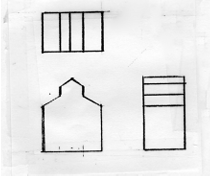
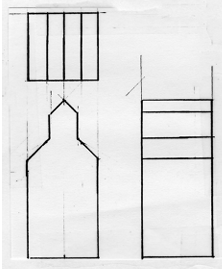
The third design was the Standard Plan: Squat. This design meant that the top view of the structure would not indicate the way in which the top of the grain elevator sat. The front or back profile of the building would show that the top of the elevator was centered with the roof, and the roof was very slanted. This structure was also shorter in height.
The fourth design was similar to the Standard Plan: Squat. This fourth design was called Standard Plan: Medium, where the top of the structure was slightly taller than the Standard Plan: Squat. This is considered the first development of the classic elevator shape.
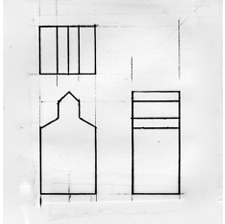
The fifth and final structure was the Standard Plan: Tall, which was identical to Standard Plan: Squat and Standard Plan: Medium. The only difference between those two and the Standard Plan: Tall is that the Standard Plan: Tall was a taller version of the Standard Plan: Medium. Standard Plan: Tall was built between 1910 and 1965, and then converted to the Modern Tall, which was built after the 1950s. Modern Tall is how most current grain elevators are built.
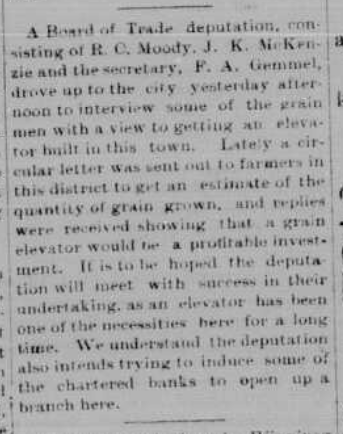
In Selkirk discussions about building a grain elevator began as early as 1902, when the Board of Trade deputation got together to discuss the need for a grain elevator in Selkirk. The board consisted of R. C. Moody, J. K. McKenzie and F. A. Gemmel. In an update posted to the Selkirk Record and Canadian Fishing Gazette in 1902, the board had travelled to get an estimate on how much it would cost to have a grain elevator in Selkirk.
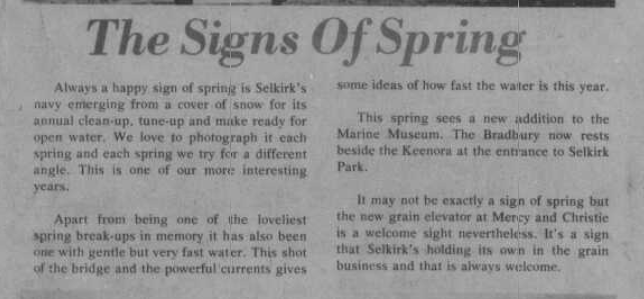
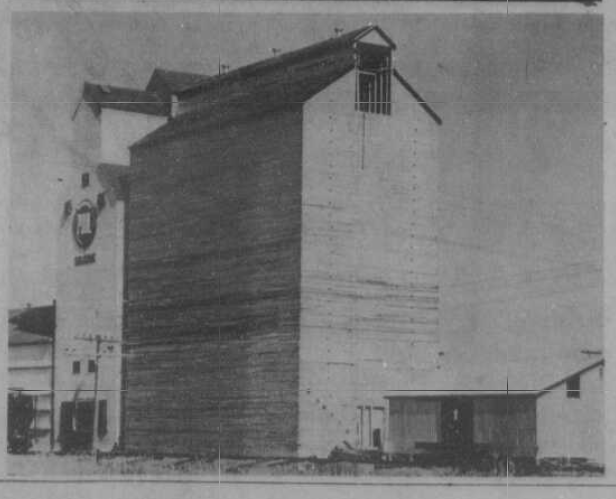
The topic disappeared from local newspapers until 1948, when Manitoba Pool Elevators built a 40,000 bushel wooden grain elevator at the corner of Mercy Street and Christie Avenue.
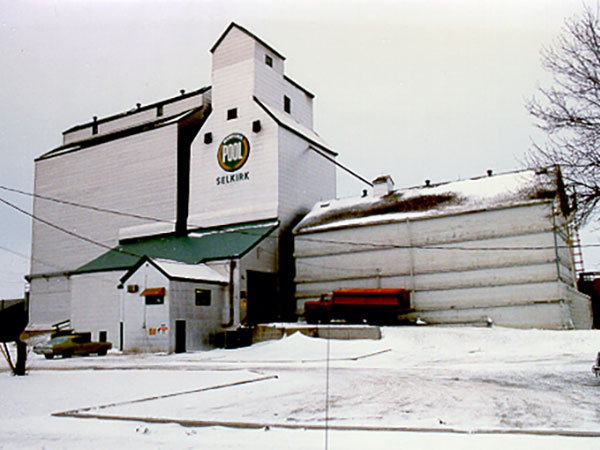
Following its success, the elevator was fully renovated in 1971. A second addition came in 1976 with the construction of an annex capable of holding up to 100,000 bushels. This expansion helped meet increased demand that had been building since 1953.
Despite its success, the use and need for grain elevators began to decline in the 1980s as Manitoba Pool Elevators were dismantled in various communities. In 1989, the Selkirk location faced a serious staff shortage, raising concerns about its long-term future. Around that time, the elevator closed temporarily for necessary renovations, including the replacement of its foundation, cribbing, and its wooden mechanical legs with steel ones.
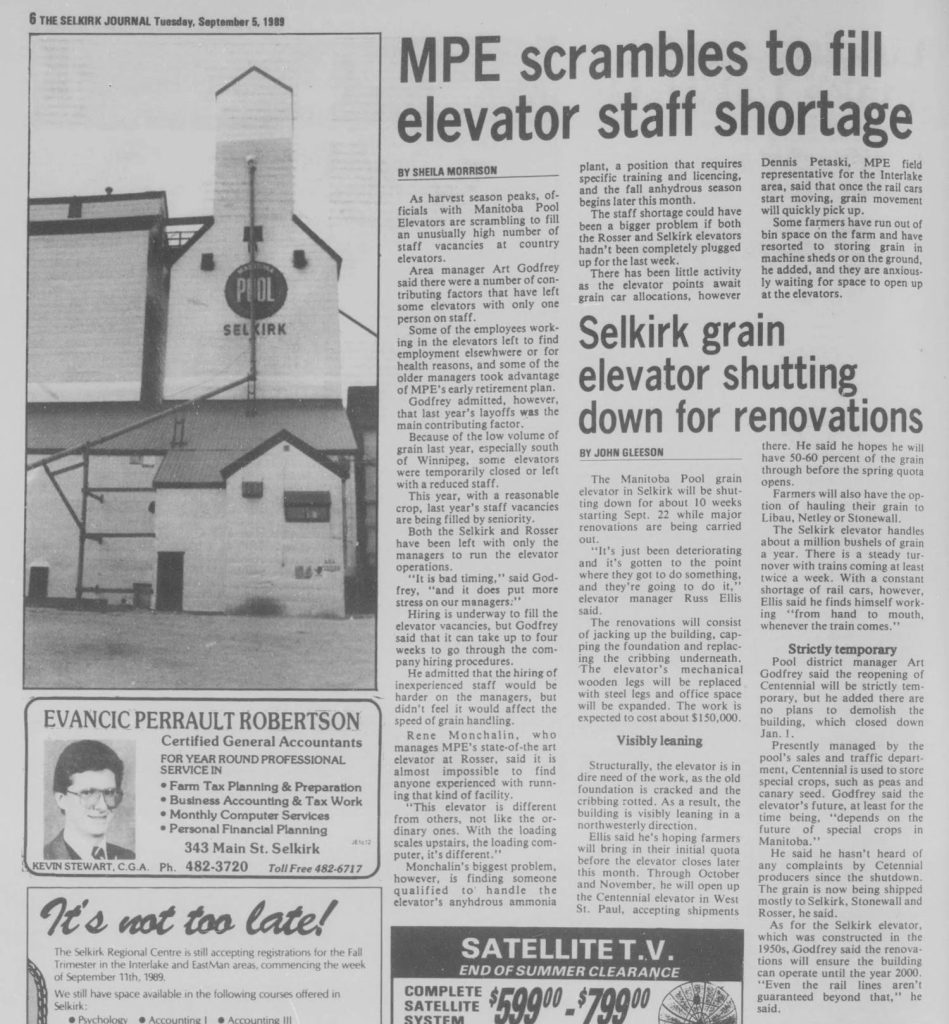
The Selkirk Grain Elevator operated for a while longer until Agricore shut it down in October 2000. The structure remained vacant until April 2002, when it was demolished.
Sources
Selkirk Enterprise, 1976
Selkirk Journal, 1985
Selkirk Journal, 1986
Selkirk Record and Canadian Fishing Gazette, 1902
Selkirk Journal, 1989
Selkirk Journal, 2001
Selkirk Journal, 1998
Selkirk Journal, 2004
A History of Grain Elevators in Manitoba
Manitoba Pool Grain Elevator- Manitoba Historical Society
Grain Elevators of Canada