Selkirk’s 1926 Picnic with Prime Minister Arthur Meighen
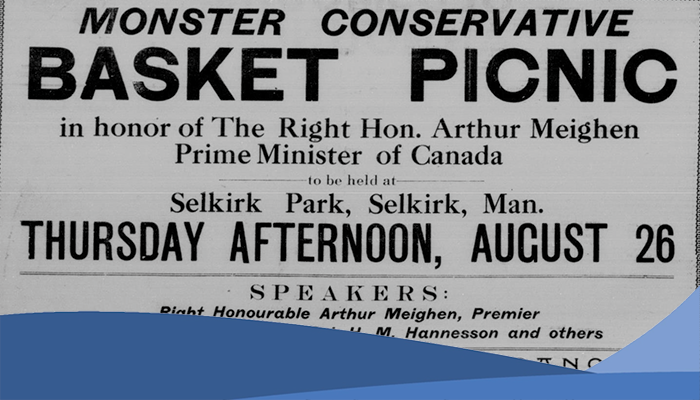
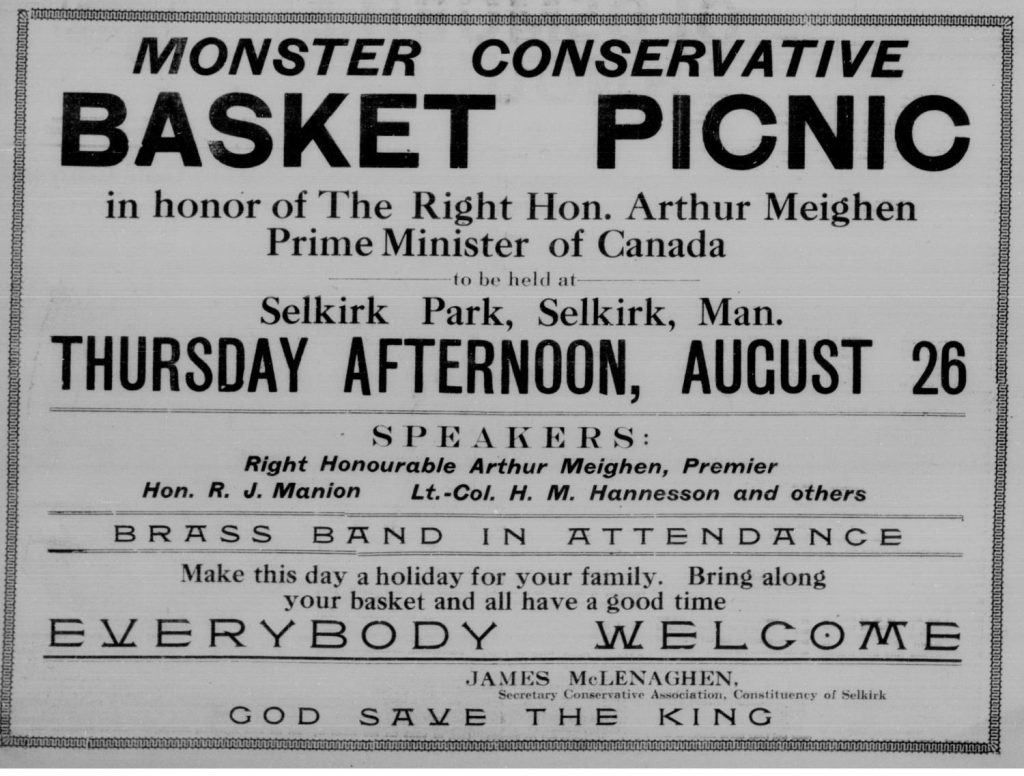
On Aug. 26, 1926, Selkirk Park became the stage for one of the largest political gatherings in its history. Nearly 2,000 people from Selkirk and neighbouring communities gathered for a basket picnic headlined by Prime Minister Rt. Hon. Arthur Meighen. At the time, it was the biggest event ever hosted in the park–– marking a memorable day in local history.
Meighen’s History
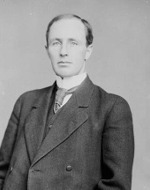
Meighen was the leader of the Conservative party and the ninth prime minister of Canada from 1920 to 1921. He briefly became Prime Minster again from June to September 1926 due to the constitutional crisis of the “King-Byng Affair” when Sir William Lyon Mackenzie King, Liberal party leader, resigned. Born in Ontario, Meighen built his political career in Manitoba, having been elected in Portage la Prairie in 1908, where he also practiced law. Over the years, he served in key cabinet roles including Solicitor General and Minister of the Interior before succeeding Sir Robert Borden and King as Prime Minister.
A political picnic in Selkirk Park
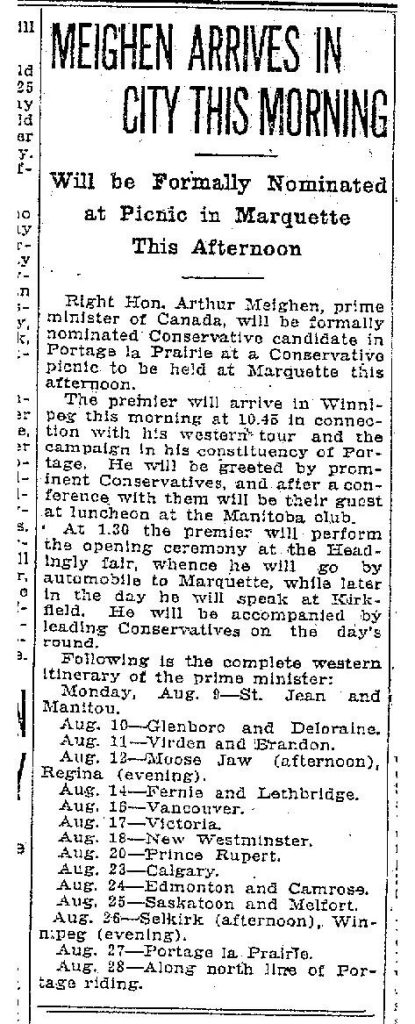
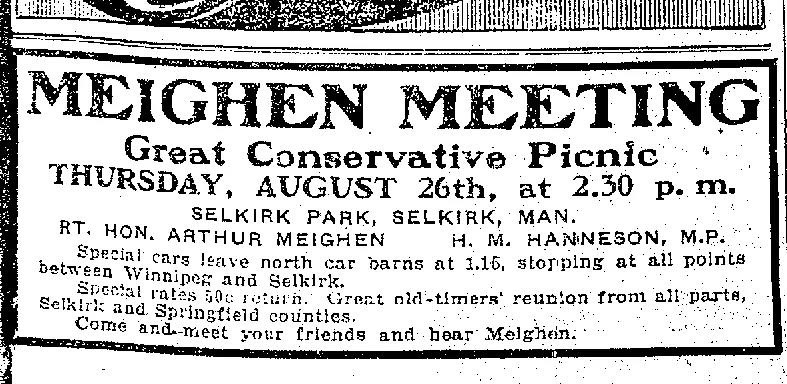
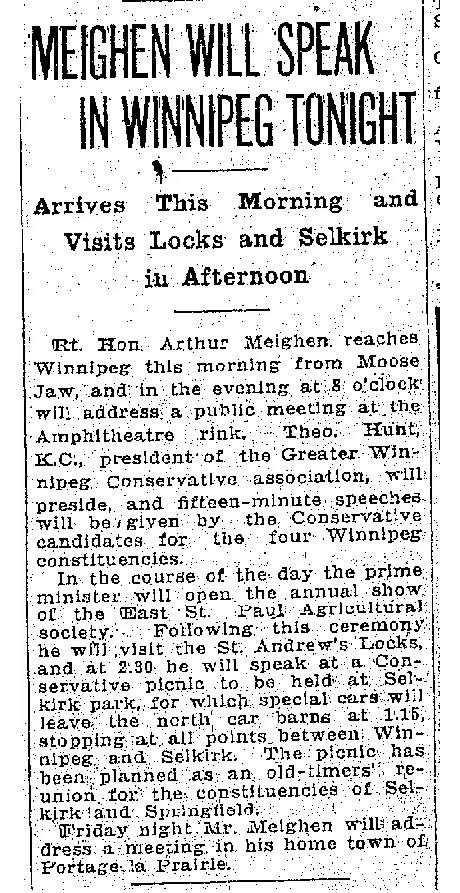
The 1926 Selkirk Park picnic was part of Meighen’s cross-country campaign to shore up support for his newly formed government–– one already on the verge of collapsing. With high political tensions and a looming non-confidence vote, the picnic gave him an opportunity to directly engage with citizens and hopeful supporters, aiming to establish a strong, supportive team leading up to the next election. The highly promoted picnic invited citizens from Winnipeg, Springfield, Stonewall, Selkirk and their surrounding areas to share a moment with Meighen as he attempted to save his government from being in crisis mode. Extra train routes were scheduled from Winnipeg with discounted fares, enticing more visitors to visit Selkirk Park.
The picnic began at 2:30 p.m. and lasted the afternoon. Meighen defended his campaign about why he remains to be a qualified leader and continues to be a faithful member of parliament despite the sudden collapse of the Conservative government. He was joined by notable figures including Hon. Robert James Manion, a Conservative member of parliament, and Lt.-Col. Hannes Marino Hannesson, who also made speeches in the afternoon.
The event served as a high-profile moment in Meighen’s campaign, but it was far from his only stop–– he toured across Manitoba and beyond, visiting towns and cities such as, Glenboro, Deloraine, Virden, Brandon, Moose Jaw, Regina, Fernie, Lethbridge, Vancouver, Victoria, New West Minister, Prince Rupert, Calgary, Edmonton, Canrose, Saskatoon, Melfort, Winnipeg, Portage la Prairie and communities just north of Portage la Prairie all in an effort to build momentum and develop a sturdy base of supporters before the election.
A Controversial Feud
The King-Byng Affair involved current Prime Minister King and Governor General Lord Byng of Vimy. In 1926, King proposed an election to Byng after raised concerns of a weak parliament. Byng denied the request as he believed the Conservatives should have a chance at running the government without of vote. King resigned, and Byng asked Meighen to become Prime Minister and he agreed, even though other members of parliament and Canadians didn’t have confidence in this change.
Election Cut Meighen’s Power Short
Despite Meighen’s campaign efforts, his second term as Prime Minister was short-lived. On Sept. 25, 1926 –– just a month after the Selkirk Park picnic –– his government fell short in a general election. The Conservatives captured only 91 seats compared to the Liberals’ 116, securing just 46% of the popular vote. The defeat marked the end of Meighen’s brief and controversial return to power.
Sources
1926 Election, Canada History
Arthur Meighen, EBSCO Knowledge Advantage
The Editors of Encyclopaedia Britannica, Arthur Meighen, Encyclopaedia Britannica
Forsey, Eugene A., King-Byng Affair, The Canadian Encyclopedia