
Firsts for Selkirk’s Women on Council
Meet Alice Belanger and Darlene Swiderski—two trailblazing leaders who broke barriers and brought vital new perspectives to Selkirk’s town council.

Meet Alice Belanger and Darlene Swiderski—two trailblazing leaders who broke barriers and brought vital new perspectives to Selkirk’s town council.
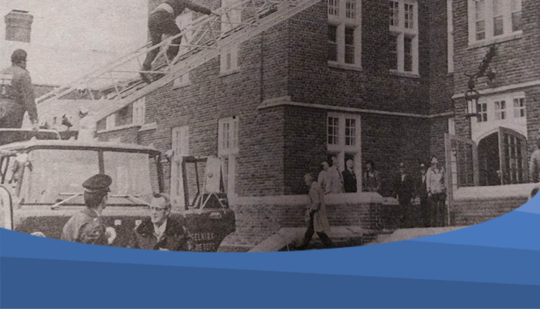
From bucket brigades to motorized engines, explore the history of the Selkirk Fire Department and the hilarious, lighthearted story behind the legendary Frank Hooker Driving Award.

Born in St. Peters in 1906 and a descendant of Chief Peguis, Amy Clemons was a pillar of Manitoba’s Friendship Centre movement. As Executive Director of the Selkirk Friendship Centre, she dedicated her life to community service, youth programs, and Cree language preservation. Her tireless advocacy against prejudice earned her Manitoba’s 1970 “Woman of the Year” honors and the Order of Canada in 1973.
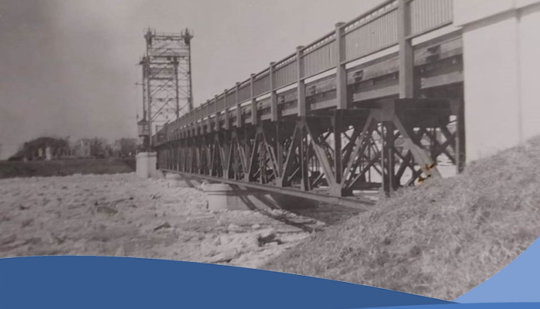
Announced in 1934 as a vital Great Depression infrastructure project, the Selkirk Lift Bridge was completed by 1936—but it sat completely unused for nearly a year because no government level wanted to absorb its ongoing maintenance costs. The gridlock broke on April 29, 1937, when a frustrated local man lowered the span himself; when officials rushed to shut it down, they were blocked by a defiant, celebratory crowd of townsfolk demanding the bridge stay open, forcing its official historic opening days later.

Born into a Métis family in Grand Marais in 1921, Elsie Bear became a monumental figure of advocacy, community service, and cultural pride in Selkirk. A founding force behind the Selkirk Friendship Centre in 1967, she dedicated her life to empowering women, children, and Indigenous peoples, while personally fostering around 40 children and launching a massive annual community Christmas dinner. Her decades of selfless giving earned her Manitoba’s prestigious Order of the Buffalo Hunt and the MMF’s Order of the Shawl.

Born in Selkirk in 1929, Melvin “Mel” Joseph Clifford Bedard was a legendary Métis fiddler who dedicated his life to preserving Indigenous and regional musical heritage. A master of the Red River Jig style who counted Don Messer and Andy de Jarlis as close friends, Bedard won over 80 competition awards, recorded acclaimed albums, and mentored generations of performers before his induction into the Fiddlers Hall of Fame in 2013.
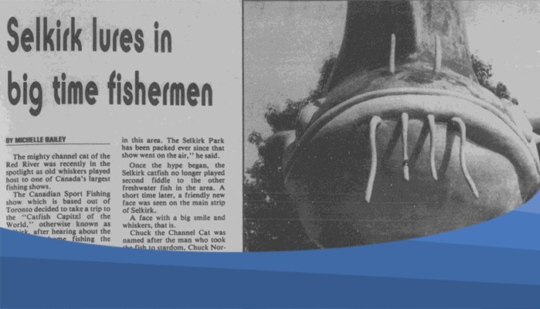
In 1989, a fierce but friendly culinary battle erupted between Selkirk and Emerson to claim the undisputed title of “Catfish Capital of Manitoba.” The high-stakes rivalry culminated in a televised cookoff on CBC’s The Journal, where a blind taste test by local judges ultimate crowned Selkirk’s pan-fried preparation over Emerson’s deep-fried entry, cementing Selkirk’s legendary status on the map.

Established in 1884 by the St. Andrews Agricultural Society, the Selkirk Fair and Rodeo stands as one of Manitoba’s oldest agricultural fairs. Evolving over 145 years from a traditional autumn showcase for livestock, baking, and plowing matches into the action-packed “Triple S” semi-pro rodeo and community festival at Selkirk Park, this beloved annual tradition continues to bring together residents from St. Andrews, St. Clements, and Selkirk.
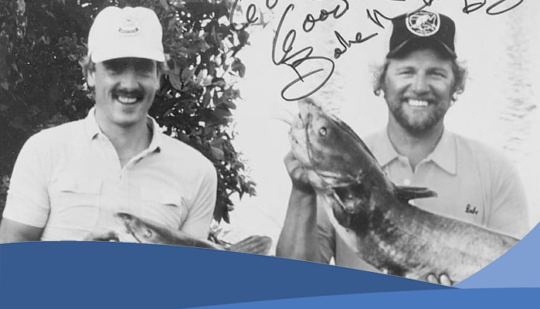
In 1985, local fisherman Chuck Norquay wrote to Babe Winkelman, host of the American television show Good Fishing, hoping to showcase Selkirk as the “Catfish Capital of North America.” His letter caught Winkelman’s eye, leading to a filming session along the Red River where the crew caught nearly 200 pounds of catfish in a single day—a massive success that launched Norquay’s successful new career as a local fishing guide for eager tourists.

Founded in 1967 to secure equal rights and opportunities for all people, the Selkirk Friendship Centre has served as a vital community pillar for decades. From its modest beginnings in a former plumbing shop to the opening of its dedicated Eveline Street facility in 1975 and the 2.3-million-dollar Tyro Housing project in 1990, the Centre—propelled by its passionate volunteers—continues to deliver essential recreational, cultural, and social programming.